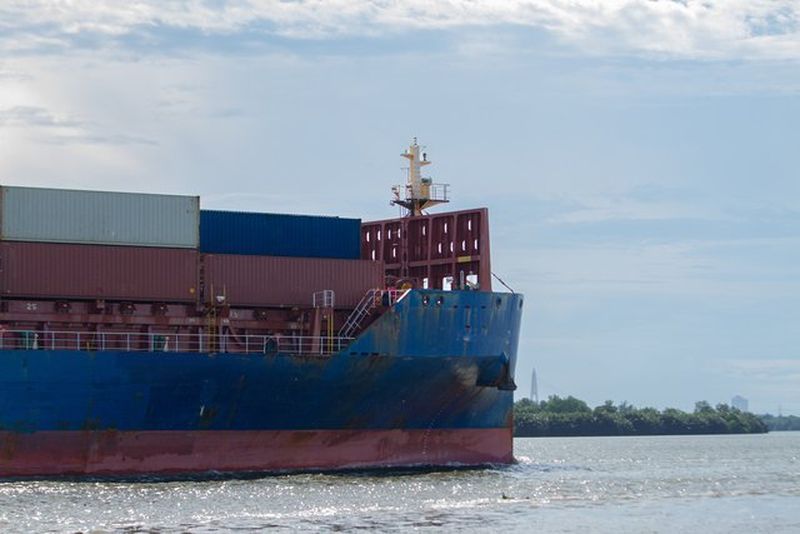
Multimodal shipping combines two or more transportation modes, such as truck, rail, and ocean, to move cargo from pickup to final destination. This guide explains how multimodal transport works, how it differs from intermodal shipping, and when it can save time and money. You’ll also learn how to compare routes, avoid extra fees, and choose a cost-effective option for vehicle or freight delivery.
Table of Content:
- What Is Multimodal Shipping and How Does It Work?
- What Is the Difference Between Multimodal and Intermodal Transport?
- What Are the Main Benefits of Multimodal Transport?
- When Does Multimodal Shipping Make Sense for Vehicle and Freight Delivery?
- How Do You Choose and Plan a Multimodal Shipment?
What Is Multimodal Shipping and How Does It Work?
Multimodal shipping is a transportation method that uses two or more types of transport to move one shipment from its starting point to the final destination. A single route may include a truck, train, ship, or airplane.
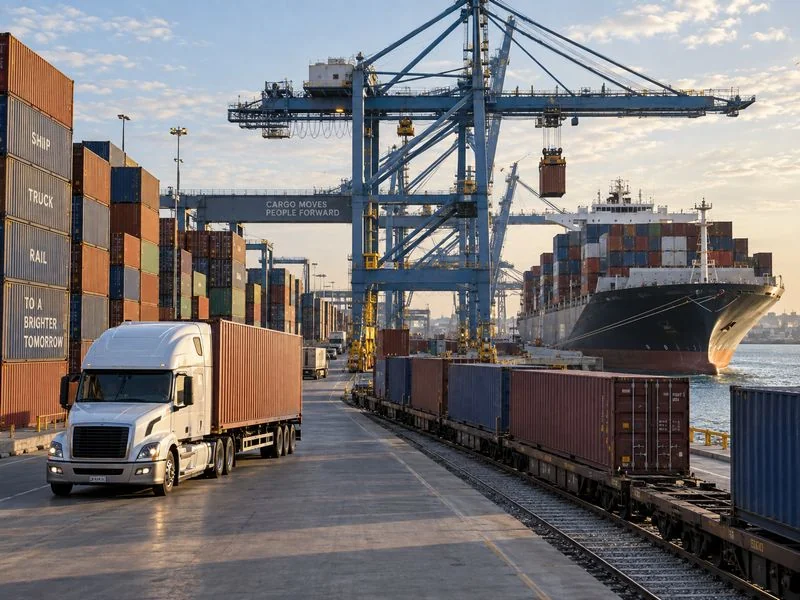
This approach is useful when one transportation mode cannot complete the entire trip efficiently. For example, a vehicle may need to travel by truck from an auction yard to a port, then by ocean vessel to another country, and finally by truck again to the buyer.
The main advantage is that the entire transportation process can be organized under one contract. Instead of arranging every part of the route separately, the shipper works with one provider that coordinates the full journey.
What Does Multimodal Transport Mean?
Multimodal transport means moving cargo with at least two different transportation modes while keeping the shipment under one overall transportation agreement.
The cargo itself does not have to change. What changes is the way it moves.
For example, imagine you buy a vehicle at an auction several hundred miles from a port. A typical multimodal route could look like this:
Truck from the auction yard to a rail terminal → rail transportation to a port city → truck delivery to the port → ocean shipping to the destination country.
Even though several transportation modes are involved, the shipment is managed as one transportation process.
For a budget-conscious shipper, this can be useful because the cheapest route is not always a direct truck move. Rail or ocean transportation may reduce the cost of the longest part of the journey, while trucks handle the shorter first and final sections.
This is one reason multimodal transportation is common in long-distance and international shipping.
Which Transportation Modes Can Be Combined in One Shipment?
A multimodal shipment can combine almost any transportation modes that make sense for the route.
The most common options include:
- Truck transportation for pickup, final delivery, and shorter distances.
- Rail transportation for moving freight efficiently over long inland routes.
- Ocean shipping for international and port-to-port transportation.
- Air freight for urgent or high-value shipments that need faster delivery.
For vehicle shipping, truck, rail, and ocean transportation are usually the most relevant combinations.
For example, a customer buying a vehicle in the Midwest may not need to pay for a truck to move it all the way to a coastal port. The vehicle could be transported by truck to a rail terminal, moved by train for most of the distance, and then transferred to a truck for the final trip to the port.
Another common example is international vehicle shipping. The vehicle is picked up by truck, delivered to a port or export facility, shipped overseas by vessel, and then moved locally after arrival.
The best combination depends on distance, location, delivery deadline, cargo type, and price.
YK Freight can help coordinate different transportation stages when a shipment requires more than one mode instead of relying on a single long-distance option.
How Does a Multimodal Shipment Move From Pickup to Final Delivery?
A multimodal shipment usually starts with planning the full route before the cargo begins moving.
First, the transportation provider reviews the pickup location, destination, shipment type, delivery requirements, and available transportation options. The goal is to find a practical balance between cost and transit time.
The first part of the route is often handled by truck. Trucks are flexible and can pick up vehicles or freight directly from an auction, warehouse, terminal, or other location.
The shipment may then be transferred to rail, ocean, or another mode for the longer part of the journey.
For example, a vehicle purchased at an auction could follow this route:
- A truck picks up the vehicle from the auction yard.
- The vehicle is delivered to a terminal or port.
- Rail or ocean transportation handles the longest part of the route.
- Another truck moves the vehicle from the arrival terminal to its final destination.
The provider coordinates these transfers so the customer does not have to contact a different company every time the shipment changes transportation modes.
This coordination is especially important when timing matters. If one part of the journey arrives late, the next carrier or terminal may need to adjust the schedule.
A well-planned multimodal route can also help avoid unnecessary storage time, missed connections, or extra handling.
Who Is Responsible for the Shipment Under a Single Contract?
One of the main differences between multimodal shipping and intermodal shipping is responsibility.
With multimodal transportation, the customer normally works with one transportation provider under one main contract or bill of lading. That provider coordinates the different carriers involved in the route.
This does not necessarily mean that the same company owns every truck, train, or vessel used during transportation. Different carriers may still physically move the shipment.
The important difference is that the customer does not need to manage each carrier separately.
For example, if your vehicle moves by truck, rail, and truck again, you may still have one main point of contact for:
- pickup coordination,
- transportation updates,
- schedule changes,
- documentation,
- delivery status,
- and problems that happen during transit.
This can make the process much easier for someone shipping a vehicle for the first time.
Instead of calling three different transportation companies to find out where the vehicle is, the customer can communicate with one provider responsible for coordinating the route.
What Is the Difference Between Multimodal and Intermodal Transport?
Multimodal and intermodal transport both use two or more transportation modes to move freight from origin to destination. A shipment may travel by truck, rail, ocean vessel, or another mode before it reaches the customer.
The main difference is how the shipment is managed.
With intermodal transport, different carriers usually handle different parts of the route under separate agreements. With multimodal transport, one provider coordinates the full shipment under one main contract.
For a customer, this difference affects communication, paperwork, control, and responsibility when something goes wrong.
A simple example makes the difference easier to understand. Suppose a vehicle must move from an auction yard in the Midwest to an overseas buyer. The route may include truck transportation to a rail terminal, rail transportation to a port, and ocean shipping to another country.
Under an intermodal setup, the customer may arrange each part separately. Under a multimodal setup, one transportation provider coordinates the full route.
How Does Intermodal Transport Work?
Intermodal transport uses several transportation modes, but each part of the route can be handled by a different carrier.
The cargo often stays inside the same container or transport unit while the mode changes. This reduces direct handling of the freight itself.
A typical intermodal route may look like this:
Truck pickup → rail transportation → truck delivery.
For example, a shipper may hire one trucking company to move a container from a warehouse to a rail terminal. A rail carrier then transports it across several states. Another trucking company picks it up from the destination rail terminal and completes the final delivery.
The shipper may have separate agreements, invoices, tracking systems, and contacts for each stage.
This approach can provide flexibility because the customer can choose individual carriers based on price or service.
However, managing several companies takes more time.
If the rail shipment arrives late and the final trucking company cannot pick it up as planned, the customer may need to coordinate a new pickup time directly with both companies.
For someone trying to save money, intermodal transport may be attractive when individual low-cost carriers can be combined efficiently. The potential savings need to be compared with the extra work and risk of coordinating the route.
How Does Multimodal Transport Work?
Multimodal transport also combines several transportation modes, but the entire shipment is managed as one transportation service.
The customer works with one main provider instead of arranging every stage separately.
For example, a vehicle shipment could move:
Truck from the auction → rail to a port city → truck to the export terminal → ocean vessel to the destination.
Different companies may physically operate the truck, train, and ship. However, the customer deals mainly with the multimodal transportation provider that coordinates those carriers.
That provider plans the route, schedules transfers, manages transportation documents, monitors progress, and helps address delays.
This can make the shipment easier to manage.
Imagine you buy a vehicle at an auction and need to move it several states before export. Instead of finding a local transporter, rail provider, port carrier, and ocean shipping option separately, you can work with one company that builds the transportation chain for you.
The main benefit is not that multimodal transport always uses fewer carriers. It is that those carriers are coordinated through one transportation arrangement.
How Do Contracts and Bills of Lading Differ?
Paperwork is one of the clearest differences between intermodal and multimodal shipping.
In an intermodal shipment, each carrier may operate under its own transportation agreement. This can mean separate bills of lading, invoices, terms, and liability rules for different parts of the route.
For example, a shipper may receive one document for the truck movement, another for rail transportation, and another for ocean shipping.
That gives the customer direct agreements with individual carriers, but it also creates more paperwork to manage.
Multimodal shipping is usually organized under one main transportation contract or multimodal bill of lading covering the journey from origin to destination.
The transportation provider then coordinates the carriers needed to complete the route.
For a customer, this means fewer documents to track and a clearer point of contact.
It can also make problems easier to handle. If a shipment is delayed between two transportation stages, the customer does not have to immediately determine which carrier should be contacted first.
The exact documents still depend on the cargo, route, country, and transportation mode. International vehicle shipments, for example, may require additional export and customs documents even when transportation is arranged under one main contract.
Which Option Gives the Shipper More Control?
Intermodal transport generally gives the shipper more direct control over individual carriers.
The customer can select the trucking company, rail provider, ocean carrier, or other transportation partner separately.
This may be useful for experienced shippers who already know reliable carriers and understand how to coordinate terminals, pickup appointments, and transfer schedules.
It can also make it easier to compare prices for each part of the route.
However, more control also means more responsibility.
The shipper must keep track of multiple contacts, schedules, documents, and payments.
Multimodal transport gives the customer less direct control over each individual carrier but more convenience over the shipment as a whole.
Instead of choosing every transportation company separately, the customer relies on one provider to build and manage the route.
For someone shipping one or two vehicles and trying to keep the process simple, this can be a practical advantage.
For example, saving $100 on one section of transportation may not be worthwhile if poor coordination creates several days of storage charges at a terminal.
The better option depends on how much experience, time, and direct involvement the shipper wants.
When Is Multimodal Shipping Better Than Intermodal Shipping?
Multimodal shipping can be a better choice when simplicity, coordination, and predictable communication are more important than managing each transportation stage separately.
It is especially useful when a shipment travels a long distance or passes through several transfer points.
For example, consider someone who buys a used vehicle at an auction far from the export port. The cheapest practical route might require truck and rail transportation before the vehicle reaches the port.
If the buyer has never arranged this type of shipment before, finding and coordinating several carriers can become difficult.
A multimodal provider can organize the route as one transportation process.
Multimodal shipping may be the better option when:
- the shipment requires several transportation modes;
- the customer does not want to manage multiple carriers;
- timing between transportation stages is important;
- the route includes ports, rail terminals, or other transfer points;
- simpler tracking and communication are priorities;
- delays could create storage or other extra charges.
Intermodal shipping may make more sense for experienced shippers who already work with several carriers and want more control over individual rates and services.
For budget-conscious customers, the cheapest option should be judged by the total transportation cost, not only the lowest carrier quote.
A slightly higher coordinated rate can sometimes cost less overall if it helps avoid missed pickups, additional storage, or unnecessary transportation legs.
What Are the Main Benefits of Multimodal Transport?
Multimodal transport can make long-distance shipping easier, faster, and more cost-effective by combining different transportation modes under one coordinated plan.
Instead of forcing one mode to handle the entire route, the shipment can use the option that works best for each part of the journey. A truck may handle pickup, rail may cover a long inland distance, and ocean shipping may move the cargo internationally.
For budget-conscious shippers, this flexibility matters. The cheapest transportation method for the first 100 miles may not be the cheapest for the next 1,000 miles. Multimodal shipping allows the route to be built around total cost, transit time, and availability.
The main benefits include lower transportation costs in some cases, easier communication, simpler tracking, fewer coordination problems, and better use of each transportation mode.
How Can Multimodal Shipping Reduce Transit Time?
Multimodal shipping can reduce transit time by using the most practical transportation mode for each section of the route.
A truck is often the fastest and most flexible option for short-distance pickup and final delivery. For longer inland routes, rail may move large amounts of freight efficiently without relying on one truck driver for the entire distance. Ocean transportation can then handle the international part of the shipment.
This allows the transportation provider to build a route around available connections instead of depending on one mode from start to finish.
For example, imagine a vehicle needs to travel from an auction location in the Midwest to an export terminal near the coast. Moving it entirely by truck may be possible, but truck availability, driver schedules, and long-distance rates can affect both timing and price.
A multimodal route may use:
Truck pickup → rail transportation → truck delivery to the port.
If rail capacity and terminal connections are available, this combination can keep the vehicle moving while reducing dependence on a single long-haul truck.
Good coordination is important. A poorly planned transfer can create delays instead of saving time. The benefit comes from matching transportation schedules so the next stage is ready when the shipment arrives.
How Can Combining Transport Modes Help Lower Shipping Costs?
Different transportation modes have different cost advantages.
Truck transportation is flexible because it can reach auction yards, warehouses, ports, and customer locations directly. However, using a truck for a very long distance may become expensive.
Rail can be more economical for certain long-distance inland movements, especially when freight can travel between major terminals. Ocean shipping is usually the practical option for moving vehicles and large freight internationally.
Multimodal shipping allows these options to work together.
For example, a customer may buy a vehicle far from the export port. Paying for a truck to move it the entire distance could be expensive. A shorter truck move to a rail terminal followed by rail transportation may lower the cost of the longest part of the trip.
The final price depends on factors such as:
- pickup and delivery locations;
- distance;
- fuel costs;
- terminal fees;
- rail or vessel availability;
- vehicle size and condition;
- storage time;
- required handling.
This is why the lowest individual carrier quote does not always create the lowest total shipping cost.
Suppose one trucking company offers a low rate but cannot pick up the vehicle for several days. If the auction or storage facility charges daily storage fees, the cheaper transportation quote may become the more expensive option overall.
A good multimodal plan looks at the full cost from pickup to destination, not only one part of the route.
Why Is Communication Easier With One Transportation Provider?
One of the biggest practical advantages of multimodal transport is having one main point of contact.
Without coordinated transportation, a shipper may need to communicate separately with a trucking company, rail operator, terminal, ocean carrier, and final delivery provider.
That can become confusing quickly.
If a truck arrives late, the shipper may need to call the rail provider. If the rail schedule changes, the port delivery may also need to be rescheduled. Each change can create another call or email.
With multimodal transportation, one provider coordinates these stages.
The customer can ask one company questions such as:
“Has my vehicle been picked up?”
“Did it reach the terminal?”
“When will it arrive at the port?”
“Has the next transportation stage been scheduled?”
This is especially helpful for first-time vehicle shippers who may not understand how rail terminals, ports, and trucking appointments work.
It also saves time. Instead of spending hours contacting several companies, the customer can focus on one communication channel.
How Does Multimodal Shipping Make Freight Tracking Easier?
Tracking can become complicated when several carriers handle different parts of one shipment.
Each company may use its own tracking system, reference number, or status terminology.
For example, a truck carrier may show the vehicle as “delivered” once it reaches a rail terminal. That does not mean the vehicle has reached its final destination. It only means the trucking portion is complete.
The customer then needs information from the next transportation provider.
With a coordinated multimodal shipment, these updates can be collected through one provider.
The customer can receive information about the shipment as it moves through different stages, such as:
Pickup completed → terminal arrival → rail movement → port delivery → vessel departure → destination arrival.
This gives the customer a clearer view of the full route.
Tracking is particularly important for vehicle shipping because delays can lead to additional costs. If a vehicle remains at an auction yard, terminal, or port longer than expected, storage charges may apply.
Knowing where the shipment is helps the customer react earlier if something changes.
How Can One Provider Reduce Delays and Shipping Problems?
Many shipping delays happen between transportation stages rather than while the cargo is actually moving.
For example, the truck may arrive after the rail cutoff time. The rail shipment may reach the destination terminal before a truck is available. A container may arrive at the port before the required appointment is confirmed.
These gaps can create waiting time and extra fees.
A multimodal transportation provider can reduce these problems by coordinating the schedule before each transfer.
The provider can check when the shipment should arrive, when the next carrier is available, and whether any appointment or paperwork is required.
This does not mean delays can never happen. Weather, port congestion, equipment shortages, rail schedules, road conditions, and other factors can still affect transportation.
The advantage is that the customer does not have to solve every problem alone.
If one stage changes, the transportation provider can work on adjusting the next stage as well.
For someone trying to keep shipping costs under control, this coordination can be valuable because delays often create expenses that were not included in the original transportation rate.
How Can YK Freight Coordinate Different Parts of a Multimodal Shipment?
YK Freight can help connect the different transportation stages needed to move freight or vehicles from origin to destination.
The process can begin with reviewing the pickup location, final destination, cargo type, timing requirements, and available transportation options.
From there, the route can be planned around the combination that makes the most sense.
For example, a shipment may require truck transportation to a rail or port terminal, another transportation mode for the long-distance portion, and truck delivery for the final leg.
YK Freight can help coordinate the trucking and transfer points so the customer does not have to manage every carrier independently.
This can be particularly useful when a customer is focused on cost.
Instead of choosing a route only because it looks cheapest on the first quote, the full transportation chain can be considered. That includes pickup timing, terminal access, possible storage charges, transfer requirements, and final delivery.
When Does Multimodal Shipping Make Sense for Vehicle and Freight Delivery?
Multimodal shipping makes sense when one transportation mode cannot move a vehicle or freight efficiently from pickup to final destination.
This often happens on long routes, international shipments, or deliveries that start far from a major port or terminal. A truck may be ideal for pickup, but using it for the entire trip may cost too much. Rail may be better for the long inland section, while ocean shipping is needed for export.
For vehicle buyers on a limited budget, the main goal is usually simple: keep the total shipping cost under control without creating unnecessary delays or handling.
A multimodal route can help by using the most suitable transportation mode for each part of the trip.
When Is Truck-Only Transportation Too Expensive or Impractical?
Truck transportation is flexible because it can pick up a vehicle directly from an auction yard, dealership, warehouse, or storage facility.
But long-distance trucking can become expensive.
The price may increase because of:
- long mileage;
- fuel costs;
- driver time;
- limited carrier availability;
- tolls;
- oversized or heavy cargo;
- remote pickup locations;
- urgent pickup requirements.
For example, suppose you buy a vehicle at an auction in the Midwest and need to move it to an East Coast port.
Hiring one truck for the entire trip may be simple, but it may also be expensive. If a nearby rail terminal is available, a shorter truck move followed by rail transportation could reduce the cost of the longest part of the route.
Truck-only shipping can also become impractical when capacity is limited.
A customer may find a reasonable rate but discover that the carrier cannot pick up the vehicle for several days. If the auction charges storage fees after a free pickup period, waiting for the cheaper truck can erase the savings.
This is why transportation cost should be compared with pickup timing and possible storage charges.
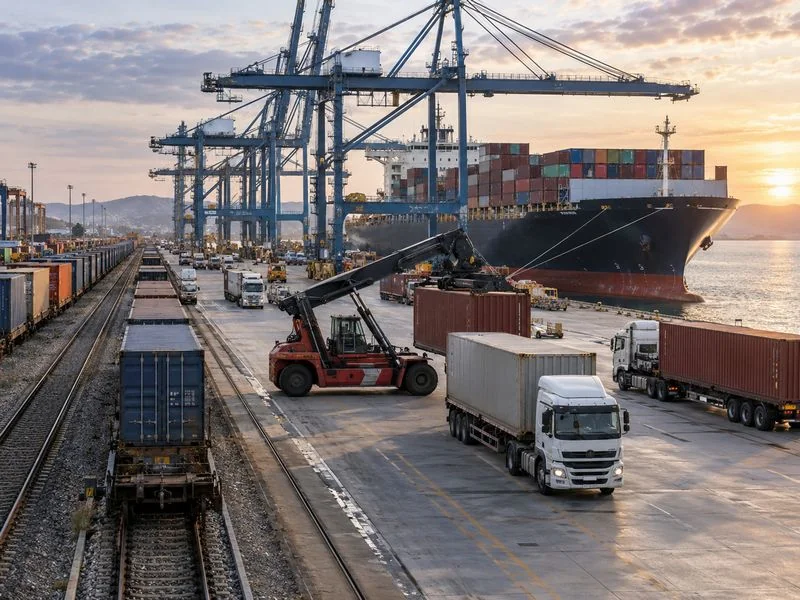
How Can Truck, Rail, and Ocean Shipping Be Combined?
Truck, rail, and ocean transport can be connected to create one long-distance shipping route.
Each mode handles the part of the journey where it works best.
Truck transportation is often used for the first and last sections because trucks can reach locations that rail and ships cannot.
Rail can handle a long inland distance between terminals.
Ocean shipping can then move the vehicle or freight internationally.
A route might look like this:
Auction yard → truck → rail terminal → train → port city → truck → export terminal → ocean vessel → destination port.
Not every shipment needs all three modes.
Some routes may only use truck and ocean shipping. Others may use truck and rail without any international movement.
For example, a vehicle purchased near Atlanta and shipped overseas may be moved by truck to a port and then loaded onto a vessel. A vehicle purchased much farther inland may first need a longer rail or truck leg before reaching the port.
The best combination depends on where the shipment starts, where it is going, and what transportation options are available along the route.
How Can Multimodal Transport Help Budget-Conscious Vehicle Shippers?
For someone trying to save money on vehicle shipping, multimodal transport can provide more routing options.
The cheapest route is not always the most direct one.
A buyer may assume that sending a vehicle straight from the auction to the port by truck is always the best choice. In some cases, it is. In others, using rail for the longest part of the trip may reduce the total transportation cost.
The key is to compare the complete route.
Imagine two options.
Option A uses a truck for the full inland trip and costs less to arrange but has a long pickup delay.
Option B uses a short truck pickup, rail transportation, and another short truck leg. The transportation rate may be similar, but the vehicle can leave the auction sooner.
If the auction charges storage every day after the pickup deadline, Option B may end up costing less overall.
Budget-conscious shippers should also think about risk.
Saving a small amount on transportation is not useful if the route creates extra terminal storage, missed appointments, or additional handling charges.
Multimodal planning helps compare several options before the shipment starts.
What Does a Typical Vehicle Shipping Route Look Like?
A typical vehicle shipping route depends on whether the vehicle is moving domestically or internationally.
For a domestic shipment, the route may be simple:
Auction yard → truck → rail terminal → train → destination terminal → truck → final location.
For an export shipment, the route may include more steps:
Auction yard → truck pickup → inland terminal or port → ocean vessel → destination port → local transportation.
Consider a customer who buys a used vehicle at an auction far from the coast.
First, a carrier picks up the vehicle from the auction.
If rail is part of the route, the vehicle is moved to a terminal and transported closer to the export port.
A truck then completes the final inland leg to the port or export facility.
After the required export process is completed, the vehicle moves by ocean vessel to the destination country.
Local transportation may then be needed after arrival.
The route may sound complicated, but the customer does not necessarily need to manage every stage separately when the transportation is coordinated as one multimodal shipment.
What Costs Should You Compare Before Choosing a Multimodal Route?
The transportation quote is only one part of the total shipping cost.
Before choosing a route, compare all charges that may appear between pickup and delivery.
Important costs can include:
- vehicle pickup;
- long-distance trucking;
- rail transportation;
- ocean freight;
- terminal handling;
- port charges;
- storage;
- loading and unloading;
- chassis or equipment charges where applicable;
- additional handling;
- final delivery.
Timing can also affect cost.
For example, a truck quote may be $150 cheaper than another option. But if that carrier cannot pick up the vehicle before auction storage begins, several days of storage fees may make the route more expensive.
The same problem can happen at terminals and ports.
A shipment that arrives too early may wait for the next connection. A shipment that arrives late may miss a scheduled transfer.
For a customer with a tight budget, the most useful number is the estimated total cost from pickup to destination.
YK Freight can help compare transportation stages as part of the full route rather than looking at each rate separately.
What Problems Can Occur When Freight Changes Transportation Modes?
Every transfer creates another point where something can go wrong.
The shipment may arrive late, paperwork may be incomplete, equipment may not be available, or the next carrier may miss the planned pickup.
Common problems include:
- missed terminal or port appointments;
- delays between carriers;
- storage charges;
- incorrect pickup information;
- damaged or missing documentation;
- limited equipment availability;
- weather delays;
- rail or port congestion;
- additional handling.
Vehicles may also require special planning.
A non-running vehicle, for example, may need equipment that is not available at every terminal. A vehicle with damage may be harder to load or unload. These details should be known before the route is booked.
Communication becomes especially important when the shipment changes modes.
If a train is delayed, the trucking company scheduled for the next leg may need a new pickup time. If a port appointment changes, the carrier may also need to adjust the delivery schedule.
How Do You Choose and Plan a Multimodal Shipment?
Planning a multimodal shipment starts with one simple goal: choose the route that gives you the best balance of price, transit time, and reliability.
The cheapest option is not always the lowest-cost option in the end. A route with a low transportation rate may create extra storage, terminal, or handling charges if the timing between carriers is poor.
For vehicle shippers, this matters even more. A car may need pickup from an auction, delivery to a rail terminal or port, ocean transportation, and final delivery after arrival. Each stage has its own timing and possible costs.
A good plan looks at the full route before the shipment moves.
What Information Should You Prepare Before Requesting a Shipping Quote?
The more accurate information you provide, the more accurate your shipping quote is likely to be.
Before requesting a multimodal transportation quote, prepare the basic shipment details.
For a vehicle, this should include:
- pickup address or auction location;
- final destination;
- vehicle year, make, and model;
- whether the vehicle runs and drives;
- vehicle size and approximate weight;
- pickup deadline;
- preferred delivery timing;
- title or export status if international shipping is involved;
- any known damage that could affect loading;
- whether special equipment may be needed.
For general freight, the provider may also need the number of pallets, dimensions, weight, commodity type, container size, and loading requirements.
Small details can change the route.
For example, a running sedan may be easy to move by standard vehicle transport. A heavily damaged SUV that cannot roll may require additional loading equipment. That can affect both cost and terminal options.
Timing is also important.
If you bought a vehicle at an auction and free storage ends in two days, mention that before the quote is prepared. A route that saves $100 but starts four days later may cost more once storage fees are added.
How Should You Compare Cost, Transit Time, and Handling Risk?
Do not compare multimodal routes using transportation price alone.
Look at three things together: total cost, estimated transit time, and handling risk.
A useful comparison may look like this:
|
Route |
Cost |
Transit Time |
Handling |
|
Direct truck |
Higher |
Shorter |
Fewer transfers |
|
Truck + rail |
Lower on some routes |
Moderate |
More transfers |
|
Truck + ocean |
Practical for export |
Longer |
Port handling required |
|
Truck + rail + ocean |
Potentially cost-effective for long routes |
Longer |
Multiple transfer points |
The right choice depends on your priorities.
If you need the vehicle quickly, paying more for direct trucking may make sense.
If your main goal is saving money and you have a flexible deadline, rail or another multimodal combination may be more attractive.
You should also consider the condition and value of the vehicle.
A low-cost used vehicle may not justify paying a premium for the fastest possible route. On the other hand, a damaged vehicle can require special handling, so choosing the cheapest route without checking loading requirements may create problems later.
Handling risk increases each time freight is transferred.
That does not mean multimodal shipping is unsafe. It simply means the route should be planned carefully, especially for damaged, oversized, non-running, or high-value vehicles.
What Should You Ask a Multimodal Transportation Provider?
Before booking, ask questions that help you understand the full transportation process.
Start with the route.
Ask which transportation modes will be used and where transfers will happen.
Then ask who will coordinate the shipment from pickup to final delivery.
Important questions include:
- What transportation modes will be used?
- Is the quoted price for the full route or only part of it?
- Which charges are included?
- Are terminal, port, or handling fees included?
- Who arranges each transfer?
- What happens if one carrier is delayed?
- How will I receive shipment updates?
- Are there possible storage or waiting charges?
- Does the vehicle need to be running?
- Are there restrictions based on vehicle size or condition?
- What documents are required before pickup?
- Who should I contact if there is a problem?
For international shipments, also ask what part of the export process is included in the service.
Clear answers before booking can prevent expensive surprises later.
For example, a low quote may look attractive until you find out that terminal handling, port delivery, or final drayage is not included.
How Can You Avoid Extra Storage, Chassis, and Delay Charges?
Many unexpected transportation costs come from waiting.
A vehicle or container may sit at an auction, warehouse, rail terminal, or port because the next transportation stage is not ready.
The easiest way to reduce these charges is to plan each connection before the shipment starts.
For auction vehicles, confirm the last free storage day and schedule pickup early enough.
For containers, check terminal availability, pickup appointments, chassis requirements, and return deadlines.
Chassis charges can apply when a container needs a chassis for local drayage. Extra costs may appear if the chassis is kept longer than expected or if equipment availability is limited.
Port and terminal delays can also create storage or demurrage-related costs depending on the shipment and facility.
To reduce the risk:
- provide correct pickup information from the beginning;
- confirm cargo readiness before sending a truck;
- check storage deadlines;
- schedule appointments as early as possible;
- make sure required documents are ready;
- confirm equipment requirements;
- avoid booking transportation stages that do not connect well;
- react quickly when a schedule changes.
Consider a simple example.
You buy a vehicle at auction and have three free storage days. A cheaper carrier can pick it up on day five, while another carrier costs $100 more but can pick it up tomorrow.
If two extra storage days cost more than $100, the more expensive carrier may actually be the cheaper choice.
The same logic applies to multimodal shipping in general. Total cost matters more than the rate shown for one transportation leg.
How Can YK Freight Help Plan a Cost-Effective Multimodal Shipment?
YK Freight can help plan a route by looking at the shipment as one complete transportation process rather than several unrelated moves.
The first step is understanding where the cargo is, where it needs to go, how quickly it must move, and what special requirements may apply.
From there, YK Freight can help coordinate the transportation stages that fit the route, including trucking, terminal moves, port-related transportation, and other connections when needed.
For example, if a vehicle or container needs to move from an inland location to a port, the route can be planned around pickup timing, terminal access, equipment availability, and the next transportation connection.
The goal is not simply to choose the lowest individual rate.
A better route may be the one that reduces waiting, avoids unnecessary storage, and keeps the shipment moving through each transfer point.
For budget-conscious customers, this can make a real difference.
Further Reading
What is Intermodal Trucking?
Intermodal Freight Guide: Save Money on Long-Distance Car Shipping
Benefits of Intermodal Transportation: Lower Costs and Smarter Shipping
What is the Transloading Process


ASK YOUR QUESTIONS