
Peak shipping season can mean higher rates, limited carrier capacity, and longer pickup times. This guide explains when the busy season usually happens, why it affects vehicle shipping, and what can make costs rise. You’ll also learn simple ways to plan ahead, avoid delays, and keep shipping expenses under control.
Table of Content:
- What Is Peak Shipping Season and When Does It Usually Happen?
- Why Is Peak Shipping Season Important for Freight and Vehicle Shipping?
- What Can Make Peak Shipping Season More Difficult?
- How Can You Save Money and Avoid Delays During Peak Shipping Season?
- How Should You Plan Your Next Shipment Before Peak Season Begins?
What Is Peak Shipping Season and When Does It Usually Happen?
Peak shipping season is the part of the year when more freight is moving across the country and transportation capacity becomes harder to find. For many parts of the freight industry, the busiest period begins around mid-August and continues through the fall, often lasting until Thanksgiving or the start of the holiday shopping rush.
During these months, retailers, manufacturers, warehouses, and other businesses all need transportation at the same time. More trucks are booked, terminals become busier, and carriers have less open capacity. As a result, shipping rates can rise and pickup or delivery times may become less predictable.
This matters even if you are shipping only one vehicle. A customer moving a car from one state to another is competing for space on the same transportation network used by thousands of other shipments. When demand increases, finding a carrier at the lowest possible rate can take longer.
For example, imagine you buy a used car in Georgia and need it delivered to another state. In a slower month, several carriers may have open space on that route. During a busy fall week, those same trucks may already be booked. If you need immediate pickup, you may have to pay more to secure available capacity.
Understanding when peak season happens can help you plan earlier, avoid unnecessary rush charges, and make better decisions about your vehicle shipping budget.
Why Does Shipping Demand Increase in Late Summer and Fall?
Shipping demand usually increases in late summer because several busy buying and distribution periods begin to overlap.
Retailers start moving products for the fall season. Schools and families purchase supplies for the new school year. Businesses begin preparing inventory for major holiday sales. At the same time, companies may still be moving remaining summer inventory between warehouses, stores, and distribution centers.
All of this creates more freight that needs to move within a limited amount of time.
The number of available trucks does not always increase as quickly as the number of shipments. When more customers are looking for transportation than carriers can easily handle, capacity becomes tight. Carriers can choose from more loads, and rates may increase on busy routes.
Vehicle transportation can feel the same pressure. Auto transport carriers have a limited number of spaces on each trailer. If a carrier has eight or nine positions available and many customers want their vehicles moved during the same week, those spaces can fill quickly.
This is especially important for customers trying to keep costs low. Waiting until the last minute can reduce your options. You may need to accept a higher price simply because fewer trucks are available.
Planning ahead gives you more flexibility. If your car does not need to be picked up on one exact day, a carrier may be able to match it with an existing route and offer a more reasonable rate.
How Do Retail Demand, Back-to-School Shopping, and the Holiday Season Affect Freight?
Peak shipping season is not caused by one event. Several major shopping periods happen close together and create a steady increase in freight volume.
Back-to-school shopping is one of the first major drivers. Retailers need clothing, electronics, school supplies, furniture, and other products delivered before students return to school. These shipments begin moving well before shoppers see the products on store shelves.
Soon after that, retailers begin preparing for the holiday season. Warehouses need to be stocked before major sales periods, and stores cannot wait until the last minute to receive inventory. Large quantities of freight therefore move during September, October, and November.
Online shopping adds even more pressure. Products must move from manufacturers to warehouses, from warehouses to distribution centers, and eventually to customers. Even when the final delivery is a small package, much of that inventory first travels through the freight network by truck, rail, or container.
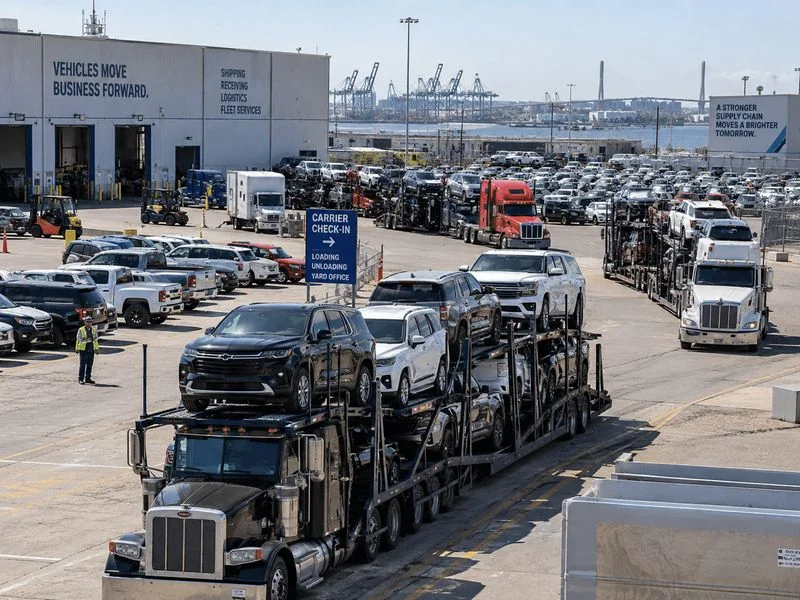
For someone shipping a vehicle, this may seem unrelated at first. However, different types of freight often depend on the same roads, ports, terminals, drivers, and transportation companies. When the entire logistics network gets busier, vehicle transportation can also become more expensive or slower.
Consider a buyer who purchases an auction vehicle in early October because the price is attractive. If the buyer waits several weeks before arranging transportation, shipping demand may increase while available carrier capacity decreases. The savings from buying the car at a good price could partly disappear if transportation becomes more expensive.
That is why the total cost of a vehicle should include transportation planning from the beginning. A low vehicle price does not always mean a low total cost if pickup is arranged during a busy period with little flexibility.
Does Peak Shipping Season Start at the Same Time Every Year?
No. Peak shipping season follows a general pattern, but it does not begin on exactly the same date every year.
Demand can rise earlier or later depending on economic conditions, retail activity, port traffic, weather, fuel costs, international trade, and unexpected disruptions in the supply chain.
Retailers may decide to bring inventory into the country earlier if they expect congestion or delays. Major storms can temporarily reduce available transportation capacity. Port problems can create a sudden backlog of containers. Changes in consumer demand can also affect how much freight moves during a particular month.
Some routes can become busy even when the national freight market is relatively calm. For example, a large increase in freight moving through a particular port or distribution center can make trucks harder to find in that region.
This means customers should not rely only on a calendar. Mid-August through late fall is a useful general guide, but current market conditions also matter.
If you are trying to save money on vehicle transportation, it is usually better to start checking rates and availability before your preferred pickup date. You do not necessarily need to book months in advance, but knowing what the market looks like gives you more choices.
For example, if you are planning to move a vehicle in October, requesting a quote early can help you understand whether rates are already rising. You can then decide whether to arrange transportation sooner, keep your pickup dates flexible, or compare alternative options.
Why Is Peak Shipping Season Important for Freight and Vehicle Shipping?
Peak shipping season matters because it changes the balance between freight demand and available transportation capacity. More businesses need trucks, drivers, warehouse space, terminal access, and delivery appointments at the same time. When demand rises faster than available capacity, shipping becomes more expensive and less flexible.
For freight companies, this means tighter schedules and more competition for equipment. For customers shipping a vehicle, it can mean higher rates, fewer pickup options, and longer wait times.
This is especially important if you are trying to control costs. A vehicle may be ready for pickup, but the cheapest carrier may not be available on the exact day you want. During a slower period, you may have several options. During peak season, those options can disappear quickly.
A customer who understands this can plan differently. Instead of waiting until the vehicle must be moved immediately, they can request a quote earlier, leave some flexibility in the pickup window, and avoid paying extra for urgent service.
Why Do Freight Rates Usually Increase During Peak Season?
Freight rates usually rise during peak season because more customers are competing for the same limited amount of transportation capacity.
Carriers have a fixed number of trucks, trailers, drivers, and working hours. If demand increases sharply, they cannot always add capacity fast enough. This creates a basic supply-and-demand problem: more loads need to move, but the number of available trucks may stay almost the same.
Rates can also rise because carriers face higher operating costs during busy periods. Drivers may spend more time waiting at warehouses, terminals, ports, or pickup locations. Routes can become less efficient, and congestion can add hours to a trip.
Vehicle shipping is affected in a similar way. An auto transport carrier may have only a few open spaces on a trailer. If many customers want those spaces at the same time, the carrier can prioritize loads that fit the route well or pay a stronger rate.
For example, imagine you need to move a car 600 miles. In a slower week, several carriers may be looking for vehicles along that route. You may be able to choose a lower rate. During peak season, those carriers may already be full, so the remaining options may cost more.
This does not mean every shipment becomes expensive. Rates still depend on distance, route, vehicle condition, fuel costs, location, and timing. However, peak demand can reduce the number of low-cost options available.
Why Does Truck and Carrier Capacity Become Limited?
Carrier capacity becomes limited because each truck can handle only a certain number of shipments.
In general freight, a trailer has limited space and weight capacity. In vehicle transport, an open car carrier may move several cars at once, but each position on the trailer is limited. Once those spots are booked, the carrier must complete the route before taking on more vehicles.
Peak season also creates scheduling pressure. Drivers may already have full routes planned several days or weeks ahead. Some may avoid certain areas if they expect heavy congestion, long loading times, or difficult return loads.
Location matters too. A large city or major freight corridor may have many carriers available, while a rural auction yard or remote pickup point may have fewer trucks passing through. During a busy season, carriers are more likely to focus on routes where they can keep the truck full and avoid unnecessary miles.
For someone shipping a vehicle on a budget, this is important because the cheapest shipment is often one that fits naturally into an existing route.
For example, if a carrier is already moving several cars from Atlanta toward the Midwest, adding one more vehicle along that route may be efficient. But if your car requires a long detour, the carrier may charge more or skip the load completely.
That is why flexibility can help. A wider pickup window gives dispatchers more opportunities to match your vehicle with the right truck instead of forcing an expensive last-minute solution.
How Can Peak Season Affect Vehicle Pickup and Delivery Times?
Peak season can make both pickup and delivery times less predictable.
During a slower period, a carrier may have enough open space to pick up a vehicle quickly. During peak season, the same carrier may already have a full schedule. Your vehicle may need to wait until another truck becomes available.
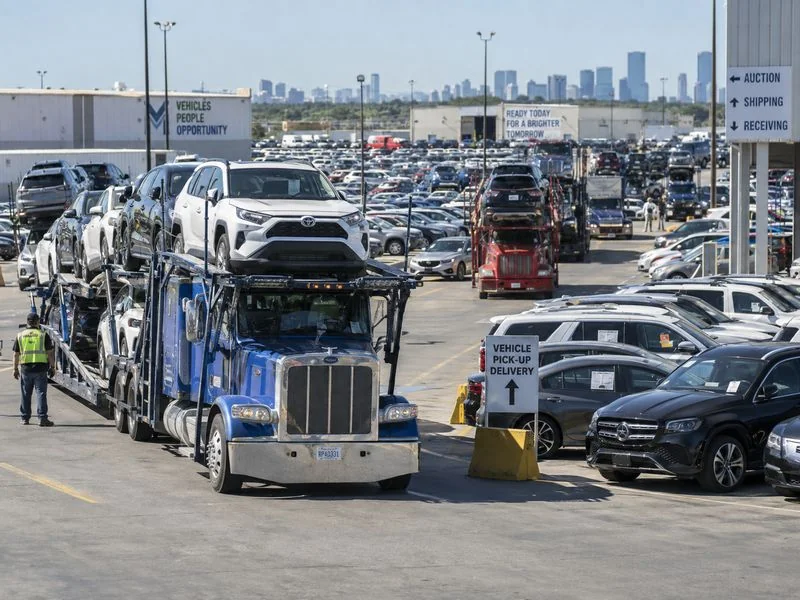
Pickup delays can happen because of:
- limited carrier availability;
- crowded auction or storage facilities;
- port or terminal congestion;
- traffic and weather;
- delays from earlier stops on the same route;
- changes in driver schedules.
Delivery can also take longer for similar reasons. Auto carriers usually make multiple pickups and deliveries along one route. If one location causes a delay, the rest of the schedule may shift.
For example, suppose your car is scheduled for pickup on Monday, but the carrier spends several extra hours at a previous auction location. The pickup may move to Tuesday. If the route includes several more stops, the final delivery date may also change.
This is why estimated dates should be treated as a window rather than a guaranteed minute-by-minute schedule.
Customers can reduce stress by planning extra time. If you need a vehicle before a specific event, move, trip, or repair appointment, it is safer to arrange transportation earlier instead of scheduling delivery too close to the deadline.
Why Does Peak Season Matter More When You Are Shipping on a Tight Budget?
Peak season can be more difficult for budget-conscious customers because low-cost shipping often depends on flexibility.
If you need the cheapest possible rate, you usually have more options when you can wait for a carrier that already has space on your route. If you need pickup immediately, you may have to offer a higher rate to attract a truck quickly.
This difference can matter when the vehicle itself was purchased to save money.
For example, imagine you buy a used or auction vehicle for $4,500 because it was a good deal. If you wait until the last moment to arrange transportation and end up paying several hundred dollars more for urgent pickup, part of your original savings is lost.
A better approach is to consider transportation before the purchase is complete. Check the pickup location, estimate the distance, ask about likely carrier availability, and include shipping in your total budget.
It also helps to avoid unnecessary restrictions. If possible, give the carrier a few days of flexibility instead of requiring one exact pickup date. Make sure the vehicle information is accurate, especially whether it runs and drives. A non-running vehicle may require special equipment, which can further reduce available capacity.
Working with an experienced freight provider can also help identify practical options before the market gets tight. YK Freight can help customers review timing and transportation needs so they can plan around busy periods instead of reacting after rates have already increased.
What Can Make Peak Shipping Season More Difficult?
Peak shipping season becomes more difficult when several problems happen at the same time. High demand is already putting pressure on trucks, drivers, warehouses, ports, and terminals. If fuel costs rise, bad weather slows transportation, or a major facility becomes congested, the effect can spread through the entire shipping network.
For customers moving vehicles, these problems may show up as higher quotes, longer pickup windows, or changing delivery estimates. A route that normally has plenty of available carriers can suddenly become difficult if too many loads are competing for the same trucks.
The important point is that peak season is not controlled by one factor. Rates and transit times are affected by the combination of demand, operating costs, available equipment, traffic conditions, and disruptions along the route.
For someone trying to save money, understanding these factors can help explain why a quote may change from one week to the next and why booking early can sometimes make a significant difference.
How Do Fuel Prices, Labor Costs, and Carrier Demand Affect Shipping Rates?
Fuel is one of the largest operating expenses for trucking companies. When diesel prices increase, carriers spend more to complete the same route. Some of that additional cost can be reflected in shipping rates.
Labor costs also matter. Drivers, dispatchers, warehouse workers, terminal staff, and other employees are needed to keep freight moving. During busy periods, companies may need more workers, longer shifts, or additional support to handle increased volume.
Carrier demand adds another layer.
When there are more shipments than available trucks, carriers have more choices. They can select loads that fit their routes better or offer stronger rates. This makes it harder for low-paying shipments to receive quick pickup.
Imagine that several vehicles need to move from the same auction location during one busy week. One customer is flexible and can wait several days. Another needs pickup immediately. If only a few trucks are available, the customer asking for urgent service may need to pay more to secure a spot.
Route balance can also affect pricing. A carrier wants to avoid driving long distances with an empty trailer. If many vehicles are moving in one direction but very few are available for the return trip, the carrier may need to charge more to make the route worthwhile.
This is why two trips covering a similar distance can have different prices. Mileage matters, but so do demand, equipment availability, fuel costs, and the chances of finding another load nearby.
How Can Port, Warehouse, and Terminal Congestion Cause Delays?
Ports, warehouses, rail terminals, and distribution centers can become especially busy during peak season. When too much freight arrives at the same time, trucks may have to wait longer to enter, load, unload, or leave the facility.
A delay at one location can affect several later stops.
For example, a driver may plan to pick up your vehicle in the afternoon after completing another delivery. If the previous stop takes three hours longer than expected because of terminal congestion, your pickup may be pushed to the next day.
The same issue can happen at vehicle auctions and storage yards. During busy periods, many transporters may arrive at once to collect vehicles. Drivers can spend extra time waiting for paperwork, locating a car, loading it, or getting access to the yard.
Ports can create similar problems for imported or exported vehicles. A container or vehicle may physically arrive at the port, but that does not always mean it can leave immediately. Terminal processing, customs procedures, truck appointments, or heavy traffic may add extra time.
Congestion can also increase costs. A truck that spends several hours waiting is not moving other loads. Carriers may factor that lost time into future quotes or add charges when unusual waiting is required.
Customers can reduce some of this risk by making sure pickup information is complete before dispatch. Correct contact details, vehicle release information, operating hours, and the exact condition of the vehicle can prevent avoidable delays once a driver arrives.
How Do Weather, Holidays, and Supply Chain Disruptions Affect Shipping?
Peak season overlaps with months when weather can become less predictable in many parts of the country.
Heavy rain, hurricanes, early snow, flooding, strong winds, and other severe conditions can slow traffic or temporarily close roads. Drivers may need to change routes, stop driving, or wait until conditions improve.
Safety comes first, so a delivery estimate can change even when the vehicle was picked up on time.
Holidays create another challenge. Warehouses, auctions, terminals, repair shops, and other facilities may operate on reduced schedules or close completely. More passenger traffic on the roads can also make travel slower around major holiday weekends.
A vehicle that is ready for pickup just before Thanksgiving, for example, may have fewer transportation options than it would during a normal week. Some drivers may already have full schedules, while others may be planning time off.
Supply chain disruptions can create wider effects. A problem at a port, rail terminal, warehouse, or major highway may affect freight moving far beyond that exact location.
Even if your vehicle is not directly involved in the disruption, carriers may need to change their routes. This can reduce the number of trucks available in other areas.
For budget-conscious customers, unexpected delays are another reason to avoid making the shipping schedule too tight. If you need the car delivered before a specific date, adding extra time to your plan can be much cheaper than trying to arrange emergency transportation later.
How Has the Growth of Online Shopping Changed Peak Shipping Season?
Online shopping has made freight demand more complex.
Retailers no longer move products only from large warehouses to physical stores. Inventory may travel between fulfillment centers, local warehouses, distribution hubs, stores, and customers.
This means products can move through several transportation stages before reaching the buyer.
Online retailers also face pressure to keep popular items in stock and deliver orders quickly. When holiday shopping increases, this creates additional demand for trucking, warehouse capacity, and local delivery networks.
Vehicle shipping is different from parcel delivery, but both depend on parts of the same broader logistics system. Trucks use the same highways. Drivers face the same traffic. Ports and terminals may handle several types of freight. Increased activity in one part of the network can put pressure on another.
For example, a major distribution area may experience much heavier truck traffic during the holiday shopping season. A vehicle carrier traveling through that region could face longer travel times even though it is not transporting retail products.
Online shopping has also made demand less concentrated around traditional store hours. Orders can be placed at any time, and businesses may need to replenish inventory quickly. This keeps freight networks active for longer periods during the busy season.
For a vehicle shipping customer, the practical lesson is simple: the transportation market can become busy before the holidays actually arrive. Waiting until November to start planning may mean you are already competing with a large amount of seasonal freight.
Why Can Unexpected Events Change the Start or Length of Peak Season?
Peak shipping season does not follow a perfect schedule because businesses react to what is happening in the market.
If companies expect future delays, they may start moving inventory earlier. If demand stays strong longer than expected, busy shipping conditions can continue beyond the traditional peak period.
Unexpected events can include:
- major storms or natural disasters;
- port or terminal disruptions;
- road closures;
- sudden fuel price changes;
- shortages of drivers or equipment;
- changes in international trade;
- unusually strong consumer demand;
- delays elsewhere in the supply chain.
These events can change where trucks are needed and how quickly capacity becomes available.
For example, if a major storm disrupts transportation in one region, carriers may spend several days catching up on delayed shipments. This backlog can continue affecting rates and pickup schedules even after the weather improves.
Another example is a sudden increase in freight arriving through a major port. More trucks may be pulled toward that area to handle the volume. Customers in nearby markets may then find fewer carriers available for other types of transportation.
This is one reason peak shipping season should be treated as a flexible period rather than a fixed set of dates.
Customers do not need to predict every disruption. They simply need to leave enough room in the schedule to deal with changes.
How Can You Save Money and Avoid Delays During Peak Shipping Season?
Peak shipping season can make vehicle transportation more expensive, but higher demand does not always mean you have to overpay. The biggest advantage you can give yourself is time.
Customers usually spend more when they wait until the last minute, require a very narrow pickup window, or provide incomplete information about the vehicle. When carriers are already busy, every extra restriction can make a shipment harder to arrange.
A better approach is to plan the shipment as part of the vehicle purchase itself. Before you commit to a car, check where it is located, whether it runs, how soon it must be removed, and roughly what transportation may cost.
For example, a buyer may save $700 by choosing a cheaper auction vehicle in another state. But if the vehicle must be picked up immediately during a busy week, a higher transport rate could reduce much of that saving.
Peak season rewards customers who can plan ahead, stay flexible, and avoid unnecessary last-minute changes.
Why Should You Book Vehicle Shipping as Early as Possible?
Booking early gives you access to more carrier options.
During peak season, trucks fill quickly. A carrier that has space available today may have a full trailer tomorrow. If you start looking for transportation before the pickup becomes urgent, there is more time to match your vehicle with a truck already traveling in the right direction.
This can be especially helpful for customers focused on price.
A last-minute shipment gives you very little room to wait for a better option. If the vehicle must leave today or tomorrow, the priority becomes finding any available carrier rather than finding the most efficient carrier.
Suppose your vehicle is ready on Friday but the storage yard begins charging extra fees on Monday. If you wait until Friday morning to arrange transportation, you may have to accept a higher rate simply to avoid storage charges.
If you start planning several days earlier, there may be enough time to find a carrier whose route already includes your pickup area.
Early planning is also useful when:
- the vehicle is located far from a major city;
- the pickup point has limited business hours;
- the vehicle does not run;
- special loading equipment may be required;
- the shipment involves a port, auction, or terminal;
- you need the vehicle delivered before a specific date.
Booking early does not guarantee the lowest possible price, but it usually gives you more choices and reduces the chance that urgency will control the final cost.
How Can Flexible Pickup and Delivery Dates Help Lower Costs?
Flexibility makes it easier for a carrier to fit your vehicle into an existing route.
Auto transport works most efficiently when trucks can keep their trailers full. A driver may be moving several vehicles through the same region and looking for one additional car that fits the route.
If your vehicle can be picked up over a two- or three-day window instead of at one exact time, the carrier has more ways to include it without making a major detour or changing the rest of the schedule.
That can help keep the rate more reasonable.
For example, imagine two customers need identical vehicles moved from Atlanta to the same destination. One requires pickup Tuesday morning only. The other allows pickup anytime from Monday through Thursday.
The second shipment is easier to match with an available truck because the carrier has more scheduling options.
The same principle applies to delivery. If you can accept the vehicle within a reasonable delivery window, the carrier can build a more efficient route around several stops.
Of course, some deadlines cannot be changed. You may need to avoid auction storage fees, coordinate with a repair shop, or receive the vehicle before moving to another location.
In those cases, make the carrier aware of the deadline as early as possible. A real deadline is much easier to plan around than an unexpected request for immediate pickup.
Should You Compare Different Shipping Options Before Booking?
Yes. The cheapest quote is not always the cheapest shipment in the end.
Before booking, compare what each option actually includes. A lower starting price can become more expensive if there are extra charges for special equipment, waiting time, an inoperable vehicle, storage, or difficult access at the pickup location.
You should also compare transportation methods when more than one is practical.
For vehicle shipping, the main choice is often between open and enclosed transport. Open transport is generally the more budget-friendly option and is commonly used for regular used vehicles. Enclosed transport provides additional protection but usually costs more.
The right option depends on the vehicle and your priorities.
If you bought an affordable used sedan and want to keep your total cost down, paying extra for enclosed transportation may not make sense. If you are moving a high-value collector vehicle, the additional protection may be worth considering.
Route and timing also matter. A shipment along a major transportation corridor may have more carrier competition than a shipment going to a remote area.
Instead of comparing quotes only by price, look at:
- the transportation type;
- estimated pickup window;
- estimated delivery window;
- whether special equipment is included;
- possible additional charges;
- insurance information;
- communication and tracking process.
A clear quote helps you avoid selecting a low price that later turns into a higher final bill.
How Can Accurate Vehicle and Pickup Information Prevent Extra Charges?
Incorrect information can cause both delays and extra costs.
Carriers plan each load based on vehicle size, weight, condition, pickup location, and available equipment. If the information changes when the truck arrives, the vehicle may no longer fit the original plan.
One of the most important details is whether the vehicle runs and drives.
A running vehicle can usually be loaded normally. A non-running vehicle may require a winch or other equipment. If a customer says the car runs but the driver arrives and discovers that it cannot move under its own power, loading may take longer or may not be possible with that truck.
Vehicle modifications matter as well.
Tell the carrier if the vehicle has:
- oversized tires;
- very low ground clearance;
- suspension damage;
- missing wheels;
- major collision damage;
- unusual dimensions;
- loose exterior parts.
Pickup details are just as important.
If the vehicle is at an auction, provide the correct lot number, release information, pickup address, and business hours. If it is at a private location, make sure someone will be available to release the vehicle.
Consider a budget-conscious buyer who books transportation for a damaged auction car and reports it as running. When the truck arrives, the car has a broken wheel and cannot roll. A different truck may be required, which can mean another dispatch, a longer wait, and a higher price.
Providing accurate information from the beginning is usually much cheaper than fixing a problem after the carrier is already at the pickup location.
Why Is Communication With the Carrier Important During Busy Weeks?
Peak season schedules can change quickly.
A driver may face traffic, weather, a delayed loading appointment, or an unexpected wait at an earlier stop. Good communication helps you understand what is happening and react before a small delay becomes a bigger problem.
Customers should make sure their phone number and email address are correct and that they are available when the carrier or dispatcher needs information.
If another person will release or receive the vehicle, provide that person's contact details as well.
Communication works both ways.
Tell the carrier immediately if:
- the pickup date changes;
- the vehicle has been moved;
- the car no longer runs;
- the auction changes its release instructions;
- the pickup location has limited hours;
- you will not be available for delivery.
A small update can prevent a wasted trip.
For example, if a driver arrives at 5:15 p.m. but the auction closes at 5:00 p.m., the pickup may have to wait until the next business day. If the carrier knew about the closing time earlier, the route could have been planned differently.
During peak season, trucks have less empty time in their schedules. Clear information becomes even more important because there may be little room to recover from avoidable delays.
When Can Working With an Experienced Freight Company Help?
An experienced freight company can be useful when the shipment has several moving parts or when transportation capacity is already becoming tight.
This can include vehicles coming from auctions, ports, terminals, dealerships, storage yards, or locations with specific pickup requirements.
A freight company can help coordinate the timing between the customer, pickup location, and carrier. It can also identify problems before dispatch, such as missing release information, limited operating hours, equipment requirements, or unrealistic delivery expectations.
This matters during peak season because mistakes become harder to fix when most trucks are already busy.
For example, if you buy a vehicle at auction, you may be dealing with a payment deadline, vehicle release date, storage charges, and transportation at the same time. Having the shipping details organized early can reduce the risk of paying extra simply because the vehicle sat too long waiting for pickup.
YK Freight can help customers plan pickup, carrier capacity, and delivery before peak-season demand becomes tighter. The goal is not simply to move the vehicle as fast as possible, but to find a practical balance between timing and transportation cost.
How Should You Plan Your Next Shipment Before Peak Season Begins?
The best way to handle peak shipping season is to prepare before demand becomes tight.
You do not need to know the exact day when rates will rise. What matters is giving yourself enough time to compare options, confirm pickup details, and avoid turning a normal shipment into an urgent one.
For vehicle shipping, early planning can be especially useful if the car is coming from an auction, dealership, storage yard, or another location with pickup deadlines. If you wait until the last minute, you may have fewer carriers to choose from and less flexibility on price.
A simple plan can help:
- confirm when the vehicle will be ready;
- check whether it runs and drives;
- verify the pickup location and business hours;
- estimate how flexible your dates can be;
- request a quote before the shipment becomes urgent;
- ask about any special loading or delivery requirements.
Peak season is easier to manage when transportation is treated as part of the purchase or moving process, not as something to arrange at the very end.
How Far in Advance Should You Start Planning?
There is no single booking window that works for every shipment.
The right timing depends on the route, vehicle condition, pickup location, season, and how flexible you can be.
In general, it is better to start looking at transportation options several days before the vehicle must move. If the route is difficult, the vehicle is inoperable, or pickup is in a remote area, starting even earlier can give you more choices.
The goal is not necessarily to book as far in advance as possible. The goal is to avoid reaching the point where you have only one or two days left and must accept whatever capacity is available.
For example, imagine you buy a vehicle at auction on Monday and storage fees begin the following week. If you start arranging transport immediately, there may be time to find a carrier whose route already passes through the area.
If you wait until the final free-storage day, you may have to choose between paying a higher shipping rate and paying additional storage charges.
Planning becomes even more important when you have a fixed delivery deadline.
If the vehicle must arrive before a move, repair appointment, export deadline, or another event, leave extra time for weather, traffic, terminal delays, and schedule changes.
During peak season, a few extra days of flexibility can be valuable.
What Should You Check Before Requesting a Shipping Quote?
A shipping quote is more useful when the information behind it is accurate.
Before requesting a price, collect the basic details the carrier or freight company will need.
Start with the vehicle itself. Confirm:
- year, make, and model;
- pickup and delivery locations;
- whether the vehicle runs and drives;
- whether it rolls, steers, and brakes;
- whether there is major body or suspension damage;
- whether the vehicle has oversized tires or modifications;
- when it will be available for pickup.
If the car comes from an auction, also check the auction's release rules and pickup hours.
A vehicle may be paid for but still not be ready for release. Giving the carrier the wrong availability date can lead to a failed pickup or unnecessary waiting.
You should also check whether the pickup location can handle a large transport truck.
Some residential streets, apartment complexes, narrow roads, or restricted areas are difficult for multi-car carriers to access. In these situations, you may need to meet the driver at a nearby parking lot or another safe location.
Budget-conscious customers should also ask what is included in the quoted price.
A very low initial quote is less useful if additional charges later appear because the car does not run, the pickup requires special equipment, or the location is difficult to access.
The more accurate the information is from the beginning, the easier it is to compare realistic shipping options.
What Can You Learn From Previous Shipping Costs and Delays?
If you have shipped vehicles before, previous shipments can help you plan the next one more effectively.
Look beyond the final price.
Think about what caused the cost to rise or the delivery to take longer than expected.
For example:
- Did you book at the last minute?
- Was the pickup location difficult to reach?
- Did the carrier have to wait at an auction or terminal?
- Was the vehicle incorrectly listed as running?
- Did a holiday or storm affect the route?
- Were your pickup dates too narrow?
- Did storage fees increase while you waited for transportation?
These details can help you avoid repeating the same problem.
Suppose your last shipment became expensive because you waited until the vehicle was already collecting storage charges. For your next purchase, you can request a transport estimate before bidding or immediately after winning the vehicle.
Or perhaps the last carrier had difficulty loading the car because of damaged suspension. Next time, you can mention the damage when requesting the quote so the correct equipment is arranged from the start.
Even if you have never shipped a vehicle before, you can use the same idea. Think about the parts of the shipment that could create a deadline or extra charge and address them early.
The cheapest transportation decision is often the one that prevents an avoidable problem.
When Should You Contact YK Freight?
You should consider contacting YK Freight as soon as you know that a vehicle or freight shipment will need transportation.
You do not always have to wait until the vehicle is ready for pickup. Getting an early quote can help you understand the likely transportation cost and decide how much flexibility you have with timing.
This can be useful before:
- buying a vehicle from an auction;
- arranging pickup from a dealership;
- moving a vehicle between states;
- transporting a car from a port or terminal;
- planning around a storage deadline;
- scheduling transportation during a busy fall or holiday period.
Early contact also gives you time to explain any special requirements.
For example, if a vehicle does not run, has damaged wheels, or is located at a facility with limited pickup hours, that information can be considered before a truck is dispatched.
Peak shipping season does not automatically mean you have to overpay.
Rates can rise when demand is strong, but customers still have ways to control costs. Planning early, keeping pickup and delivery dates flexible, providing accurate vehicle information, and understanding available transportation options can make a major difference.
The most expensive situation is often the one where a shipment suddenly becomes urgent.
If you know a vehicle will need transportation during a busy period, start planning before capacity becomes tight.
Contact YK Freight for a shipping quote and help planning your vehicle transportation. An early estimate can help you understand your options, avoid unnecessary delays, and keep the total shipping cost under better control during peak season.
Further Reading
Urgent Container Pickups During Peak Season: What to Know
Tips for Time-Sensitive Freight Shipments: Save Money and Ship On Time
Spot Market vs Contract Freight Rates: How to Save on Shipping
Shipping Costs Explained: 12 Smart Ways to Save Without Delaying Delivery


ASK YOUR QUESTIONS