
Air freight shipping offers fast international delivery, but is it worth the extra cost? This guide explains how air freight works, the different shipping options, their advantages and drawbacks, and what affects pricing. Learn when air freight makes sense for vehicles and automotive parts, how it compares with ocean shipping, and how to avoid unnecessary expenses.
Table of Content:
- What Is Air Freight Shipping and How Does It Work?
- What Are the Different Types of Air Freight Shipping?
- What Are the Advantages and Disadvantages of Air Freight Shipping?
- How Much Does Air Freight Shipping Cost?
- When Should You Choose Air Freight Shipping?
What Is Air Freight Shipping and How Does It Work?
Air freight shipping is the transportation of goods by aircraft, either on commercial passenger flights or dedicated cargo planes. It is one of the fastest ways to move shipments across long distances, especially when goods need to reach another country within a few days.
Unlike ocean freight, which can take several weeks, air freight often delivers cargo within a matter of days. However, faster transportation comes at a higher price. Shipping costs depend on the cargo's weight, dimensions, destination, and required delivery speed.
For example, a business importing automotive parts from Germany to the United States might choose air freight to avoid waiting weeks for an ocean shipment. A car buyer who needs a replacement engine urgently could make a similar decision. However, someone purchasing a used vehicle at an auction may find ocean freight more affordable if there is no strict delivery deadline.
Air freight is especially useful for time-sensitive, valuable, or relatively lightweight shipments. Understanding how the process works can help you decide whether the additional expense is worthwhile.
What Types of Goods Can Be Shipped by Air?
Air freight handles a wide range of cargo, from small packages to large industrial equipment. Airlines use different aircraft and handling procedures depending on the shipment's size, weight, and safety requirements.
Common types of air cargo include:
- Automotive parts: Engines, transmissions, electronic components, and replacement parts needed for urgent repairs.
- Electronics: Computers, smartphones, industrial sensors, and other valuable devices.
- Medical supplies: Pharmaceutical products, medical equipment, and temperature-sensitive shipments.
- Consumer goods: Clothing, accessories, retail products, and other merchandise.
- Industrial equipment: Machinery, specialized tools, and components used in manufacturing.
- Perishable goods: Fresh food, flowers, and other products requiring fast transportation or temperature control.
- Vehicles: Cars, motorcycles, and specialty vehicles that meet aircraft size, weight, and safety requirements.
Although vehicles can be transported by air, this option is considerably more expensive than conventional ocean shipping. Aircraft have limited cargo space, and a car occupies much more room than smaller freight.
For example, someone buying a used sedan at a US auto auction would usually save money by shipping it overseas in a container or through a roll-on/roll-off (RoRo) service. Air freight might be worth considering for a rare collector car needed at an international exhibition, where delivery time matters more than transportation cost.
Certain goods also require special approval or packaging. Lithium batteries, flammable liquids, compressed gases, and other dangerous goods are subject to strict aviation regulations. Some may be accepted under specific conditions, while others are prohibited.
Before arranging transportation, always confirm that your cargo meets the airline's requirements. This is particularly important when shipping vehicles containing batteries, fuel, or other regulated materials.
How Does the Air Freight Shipping Process Work?
Air freight involves several stages, from preparing the shipment to delivering it to the final destination. Although procedures vary depending on the airline, route, and cargo type, most international shipments follow a similar process.
1. Request a shipping quote. Contact a freight forwarder or air cargo provider and provide information about your shipment. This typically includes its weight, dimensions, origin, destination, and preferred delivery date. The provider uses these details to estimate transportation costs.
2. Prepare the cargo and documents. Goods must be packaged and labeled according to airline requirements. International shipments generally require a commercial invoice, an air waybill, and customs documentation. Additional paperwork may be necessary depending on the cargo and destination.
3. Arrange pickup and transportation to the airport. The shipment is collected from a warehouse, business, or another agreed location. It is then transported to an airport cargo terminal for processing.
4. Complete cargo screening and acceptance. Before loading, the airline or authorized cargo handler checks the shipment's documentation, packaging, weight, and compliance with aviation security requirements. International exports may also require customs clearance.
5. Load and transport the shipment. Once accepted, the cargo is loaded onto an aircraft. Depending on the service, it may travel directly to the destination or pass through one or more connecting airports.
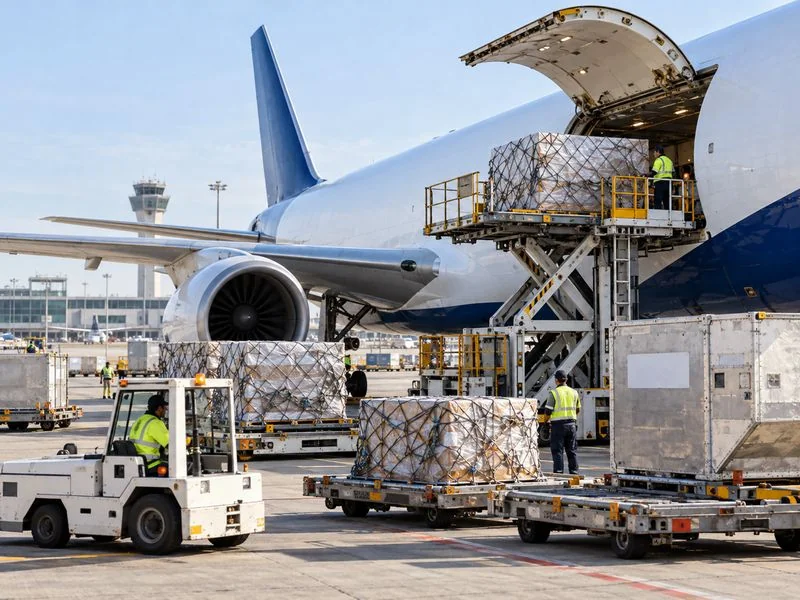
6. Complete import customs clearance. After arrival, the shipment must satisfy the destination country's customs requirements. Import duties, taxes, inspections, or additional documentation may apply.
7. Arrange final delivery. Once customs releases the cargo, a local transportation provider can collect it from the airport and deliver it to the customer's address or warehouse.
Airport-to-airport and door-to-door shipping are not the same service. Airport-to-airport transportation generally covers the flight between designated airports, while door-to-door service also includes pickup and final delivery, subject to the agreed terms.
For instance, a customer importing an automotive transmission from Japan to the United States might receive an attractive airport-to-airport quote. However, that price may exclude pickup in Japan, customs brokerage, import charges, and delivery from the US airport.
These additional expenses can significantly increase the final bill. Before booking, request a detailed quote that identifies which services are included and which require separate payment.
What Role Does a Freight Forwarder Play in Air Shipping?
A freight forwarder helps organize cargo transportation between the sender and the recipient. Instead of operating the aircraft, freight forwarders typically work with airlines, trucking companies, customs brokers, and warehouse operators to coordinate shipments.
Their main responsibility is to help customers move goods efficiently while managing the different stages of transportation.
A freight forwarder can assist with several important tasks:
- Comparing shipping options: Identifying available routes, airlines, and service levels based on the customer's budget and delivery requirements.
- Arranging transportation: Coordinating cargo pickup, airport transfers, airline bookings, and final delivery.
- Preparing documentation: Helping customers understand the paperwork required for international transportation.
- Coordinating customs procedures: Working with customs brokers or other authorized parties to support import and export clearance.
- Tracking shipments: Providing updates about cargo movement and helping resolve transportation delays.
- Estimating total costs: Explaining transportation charges and identifying possible additional expenses before shipping begins.
For customers with limited budgets, one of the most valuable services is comparing different transportation methods.
Consider someone who purchases a used vehicle at a US auction and needs to ship it overseas. Air freight could deliver the vehicle much faster than ocean transportation, but the price difference may outweigh the benefit of receiving it sooner.
A freight forwarder can help the buyer evaluate the available options and understand the trade-off between delivery time and total shipping cost.
YK Freight helps customers arrange international vehicle transportation and evaluate shipping options based on their needs and budgets. Rather than choosing the fastest method automatically, customers can consider whether a longer transit time would result in meaningful savings.
It is also important to understand that freight forwarders cannot guarantee every aspect of transportation. Flight schedules, customs inspections, weather conditions, and airport operations can affect delivery times.
Before selecting a provider, ask for a written estimate, confirm the scope of service, and check whether cargo insurance is available or included.
What Are the Different Types of Air Freight Shipping?
Air freight shipping offers several transportation options depending on the size, weight, urgency, and destination of your cargo. Some shipments travel in the cargo compartments of passenger aircraft, while others require dedicated freighters or privately chartered planes.
Choosing the right service can make a significant difference in shipping costs. For example, a small package containing automotive parts may fit on a regular passenger flight, while a complete vehicle usually requires a specialized cargo aircraft.
The four main options to understand are passenger aircraft cargo, dedicated cargo planes, air charter services, and express or deferred shipping. Each serves different transportation needs and budgets.
How Does Air Freight on Passenger Aircraft Work?
Passenger airlines do more than transport travelers. Many commercial aircraft also carry freight in their lower cargo compartments, commonly called belly cargo.
Airlines use available space beneath the passenger cabin to transport packages, commercial products, and other approved goods. Since the aircraft is already scheduled to carry passengers, airlines can sell part of the remaining cargo capacity to freight forwarders and shipping companies.
This makes passenger aircraft an attractive option for smaller shipments that do not require an entire cargo plane.
Common examples include:
- Small automotive parts: Sensors, headlights, electronic modules, and replacement components.
- Consumer products: Clothing, accessories, and packaged retail goods.
- Business shipments: Documents, product samples, and commercial equipment.
- Electronics: Computers, communication devices, and other approved electronic products.
One advantage is the availability of regular flights between major cities. A shipment may travel on an existing passenger route without requiring a separate aircraft.
However, cargo space is limited. Airlines must account for passenger baggage, aircraft weight restrictions, and available compartment dimensions. Large or unusually shaped items may not fit, even when their weight is acceptable.
For example, a buyer restoring a damaged vehicle might need a replacement electronic control module from another country. Sending this relatively small component as air cargo on a passenger flight could be practical, particularly if the repair cannot continue without it.
Shipping an entire SUV would be a different situation. Most passenger aircraft cannot accommodate a complete vehicle in their lower cargo compartments, making a dedicated freighter or ocean transportation necessary.
For budget-conscious customers, passenger aircraft cargo can be an economical air freight option, provided the shipment meets airline requirements and available routes offer competitive rates. It is not necessarily cheaper than every other air cargo service, so comparing quotes remains important.
When Are Dedicated Cargo Aircraft Used?
Dedicated cargo aircraft, also called freighters, are designed or converted specifically for transporting goods rather than passengers.
Unlike passenger planes, these aircraft use much of their available interior space for freight. Many have large cargo doors, reinforced floors, and specialized loading equipment that allow them to handle heavy or oversized shipments.
Freighters are commonly used to transport:
- Large machinery and industrial equipment.
- Automotive engines, transmissions, and bulky replacement parts.
- Commercial goods shipped in large quantities.
- Approved hazardous materials requiring specialized handling.
- Cars, motorcycles, and other vehicles that meet aircraft specifications.
One important advantage is their ability to accommodate cargo that cannot fit inside passenger aircraft. Some freighters also serve airports or routes with limited passenger flight cargo capacity.
For example, an automotive company may need to transport several engines from Europe to a manufacturing facility in the United States. If the shipment is too large for available passenger aircraft space, a dedicated cargo plane may be the more suitable option.
Complete vehicles can also travel on freighters, although the process requires careful preparation.
The shipping provider must verify the vehicle's dimensions, weight, loading requirements, and compliance with aviation safety rules. Fuel levels, batteries, and other potentially hazardous components must be handled according to the applicable airline regulations.
Despite their advantages, dedicated freighters do not automatically provide inexpensive transportation. Aircraft operating costs, limited cargo capacity, handling equipment, and airport charges all affect the final price.
Consider a customer who purchases a used pickup truck at a US auction for $12,000. Transporting that vehicle internationally by air could cost a substantial portion of its purchase price, or even more, depending on the route and aircraft requirements.
If the customer has no urgent deadline, ocean freight will usually be the more reasonable financial choice.
Dedicated cargo aircraft are most useful when cargo size, handling requirements, or delivery urgency justify the higher transportation expense.
What Is the Difference Between Express and Deferred Air Freight?
Express and deferred air freight are service levels that describe how quickly a shipment is expected to move. They are not separate aircraft types. Both services may use passenger aircraft, dedicated freighters, or a combination of transportation methods.
The main difference is the balance between delivery speed, scheduling priority, and cost.
|
Feature |
Express Air Freight |
Deferred Air Freight |
|
Delivery priority |
Higher |
Lower |
|
Transit time |
Usually faster |
Usually longer |
|
Shipping cost |
Generally higher |
Generally lower |
|
Flight scheduling |
Prioritizes earlier available connections |
Allows more scheduling flexibility |
|
Best suited for |
Urgent or time-sensitive cargo |
Shipments without strict deadlines |
Express air freight prioritizes faster transportation. Depending on the origin, destination, and available services, some international express shipments may arrive within one to three business days. Other routes take longer, especially when customs processing or additional connections are required.
Express shipping is useful when delays would create additional expenses.
For example, a repair shop waiting for an essential engine component may prefer express delivery if receiving the part sooner allows it to finish a customer's vehicle and avoid several days of downtime.
However, faster service usually comes with higher transportation charges.
Deferred air freight provides more flexibility. Instead of prioritizing the earliest possible flight, the shipping provider may book available cargo space on later departures or less direct routes.
International deferred shipments may take several business days or longer, depending on the service and destination. There is no universal delivery window, so customers should request a route-specific estimate.
Deferred shipping can be useful for customers who want the speed advantages of air transportation without paying for the highest-priority service.
For instance, someone restoring a vehicle may order replacement body panels from overseas. If the repair project is not time-sensitive, deferred air freight could offer savings compared with express service.
There is one important consideration: deferred air freight is not always the cheapest transportation method overall.
Large or heavy shipments can still be expensive to move by air, even with a slower service.
A complete vehicle is a good example. If a customer is importing a used sedan and can wait several weeks, ocean freight will typically offer better value than either express or deferred air shipping.
Before selecting a service, compare the total transportation cost, not just the advertised delivery speed. Airport handling, customs clearance, storage, and final delivery charges may apply to both options.
What Are the Advantages and Disadvantages of Air Freight Shipping?
Air freight shipping offers a combination of speed, security, and international reach. It allows businesses and individuals to transport goods across long distances much faster than ocean freight. However, these benefits come with higher costs, cargo restrictions, and potential delays caused by weather or airport operations.
Understanding the advantages and disadvantages of air freight helps you decide whether faster delivery is worth the additional expense. For customers shipping vehicles or automotive parts, the right choice often depends on the shipment's size, urgency, and overall transportation budget.
Advantages of Air Freight Shipping
Why Is Air Freight Faster Than Other Shipping Methods?
Speed is one of the biggest advantages of air freight shipping. Aircraft can travel thousands of miles in a matter of hours, making air transportation especially useful for international shipments with tight deadlines.
While ocean freight often requires several weeks for international transportation, air freight can move cargo between major airports within one or two days. However, the complete delivery process usually takes longer because shipments must go through cargo handling, customs clearance, and ground transportation.
Several factors contribute to faster air freight delivery:
- Shorter transportation times: Aircraft cover long distances much faster than ships or trucks.
- Frequent departures: Major international airports offer regular cargo flights to important commercial destinations.
- Express shipping options: Priority services can reduce waiting times when cargo space and suitable flights are available.
- Direct transportation routes: Some shipments can travel between major airports without intermediate stops.
- Reduced time in transit: Faster movement can help businesses avoid lengthy interruptions caused by missing equipment or supplies.
For example, imagine a mechanic in the United States who needs a specialized transmission component from Germany. Ocean transportation could take weeks, while air freight might deliver the part within several business days.
Receiving the component sooner could allow the mechanic to finish the repair and return the vehicle to its owner without a long delay.
However, faster delivery is not always necessary. Someone purchasing a used car at an auction may have several weeks available before the vehicle is needed. In that situation, paying significantly more for air freight may provide little practical benefit.
Air freight offers the greatest value when saving time also helps save money or prevents an important delay.
How Safe and Reliable Is Air Freight Shipping?
Air freight is generally considered a secure transportation method because airports and airlines operate under strict security and cargo-handling procedures.
Shipments typically pass through controlled cargo facilities, security screening, and documented acceptance processes before being loaded onto an aircraft. These procedures help reduce unauthorized access and support safer transportation.
Air freight also offers several practical advantages for valuable or sensitive goods:
- Controlled cargo handling: Airlines and airport cargo terminals follow established procedures for accepting, storing, and loading shipments.
- Shorter transportation periods: Less time in transit can reduce exposure to certain storage and handling risks.
- Shipment tracking: Many air cargo services provide tracking information through an air waybill number.
- Specialized transportation: Some airlines offer temperature-controlled services and other handling arrangements for sensitive cargo.
- Fewer extended storage periods: Faster transportation can reduce the time goods spend waiting between major shipping stages.
For example, a customer importing an expensive automotive electronic module may prefer air freight because the shipment can reach its destination quickly and spend less time in transit.
However, air transportation does not eliminate the possibility of damage, loss, or delays. Cargo may still be transferred between aircraft, handled by multiple operators, or stored at airport facilities.
The level of protection also depends on packaging quality, shipment characteristics, and the services purchased.
Vehicle shipments require additional attention. Cars must be properly secured, and their batteries, fuel systems, and other components must meet applicable aircraft safety requirements.
Customers transporting valuable vehicles should also consider cargo insurance. Standard carrier liability may not cover the full value of a damaged or lost shipment.
For budget-conscious buyers, reliable shipping means more than choosing the fastest service. It also means using appropriate packaging, understanding insurance coverage, and selecting transportation that matches the cargo's requirements.
How Can Weather Conditions Affect Air Freight Delivery?
Although air freight is fast, it remains vulnerable to weather-related disruptions. Aircraft operations depend on safe flying conditions, and severe weather can delay departures, arrivals, and cargo handling.
Weather problems can affect both passenger aircraft carrying freight and dedicated cargo planes.
Common causes of disruption include:
- Thunderstorms: Severe storms can interrupt airport operations and force aircraft to change routes.
- Snow and ice: Winter weather may require runway clearing, aircraft deicing, or temporary airport closures.
- Strong winds: Dangerous wind conditions can affect takeoffs, landings, and ground handling.
- Dense fog: Low visibility can reduce airport capacity or delay flights, depending on available equipment and operating conditions.
- Hurricanes and other major storms: Severe weather systems may disrupt entire regional transportation networks.
For example, a shipment traveling from Europe to the United States might be delayed if a major winter storm temporarily reduces operations at its destination airport.
Even after weather conditions improve, airlines may need additional time to clear backlogs and reposition aircraft.
Air freight shipments can also experience delays when bad weather affects connecting airports rather than the final destination.
This is important for customers using express services. Paying for priority transportation does not guarantee that a shipment will arrive on schedule during severe weather.
If you are importing an automotive part for a scheduled repair, consider allowing extra time when possible. A small scheduling buffer can help prevent unexpected disruptions.
Customers should also review the carrier's delivery terms to understand how weather-related delays are handled.
How Much Does Air Freight Shipping Cost?
Air freight shipping is generally more expensive than ocean or ground transportation because it offers faster delivery and limited cargo space. The final price depends on the shipment's weight, dimensions, destination, urgency, and handling requirements.
For general cargo, international air freight rates can range from a few dollars to more than $10 per kilogram. However, these figures are only broad estimates, not guaranteed market rates. Small shipments, urgent deliveries, oversized cargo, and specialized transportation can cost considerably more.
Shipping a complete vehicle by air is particularly expensive. Unlike small packages or automotive parts, cars require substantial aircraft space, specialized loading equipment, and additional safety procedures.
For customers working with limited budgets, understanding how freight rates are calculated is essential. A low initial quote does not always mean the shipment will be affordable once handling fees, customs charges, and final delivery costs are included.
What Factors Affect Air Freight Shipping Rates?
Air freight prices are influenced by several factors, and even similar shipments can have different costs depending on their routes and transportation requirements.
The most important pricing factors include:
- Weight and dimensions: Airlines charge based on the space and weight a shipment occupies. Large or heavy cargo generally costs more to transport.
- Shipping distance: Long international routes often cost more than shorter flights, although pricing also depends on available airline capacity and competition.
- Origin and destination: Major airports with frequent cargo services may offer more competitive rates than locations requiring additional connections or ground transportation.
- Delivery speed: Express air freight usually costs more than deferred services because urgent shipments receive higher scheduling priority.
- Cargo type: Vehicles, dangerous goods, temperature-sensitive products, and oversized equipment may require special handling or documentation.
- Seasonal demand: Shipping rates can increase during busy periods when airlines have limited available cargo space.
- Fuel and security surcharges: Carriers may apply additional charges that change with operating costs and applicable requirements.
- Pickup and final delivery: Transporting cargo between the airport and the customer's location can increase the total price.
For example, consider two customers shipping automotive parts from Germany to the United States.
The first customer needs a small electronic control module weighing 5 kg. The second customer needs a complete engine weighing 200 kg.
Even if both shipments follow the same route, the engine will generally cost substantially more because of its weight, dimensions, packaging, and handling requirements.
However, weight alone does not determine the final price. A lightweight but oversized body panel can also be expensive because it occupies valuable aircraft space.
The same principle applies to complete vehicles. A compact sedan may be easier and less expensive to transport than a full-size pickup truck, but both require specialized air cargo arrangements.
Customers should also distinguish between airport-to-airport rates and door-to-door shipping costs.
An airport-to-airport quote may cover only transportation between airports. It may exclude cargo pickup, export handling, customs brokerage, import duties, storage, and delivery to the final address.
Before booking, request a detailed estimate that identifies all included services and potential additional charges.
Is Air Freight or Ocean Freight Cheaper for Shipping a Car?
Ocean freight is almost always the more affordable option for shipping a complete vehicle internationally. Cargo ships can transport large numbers of vehicles or containers at once, allowing transportation costs to be spread across much greater cargo capacity.
Air freight, by comparison, uses limited aircraft space and expensive specialized handling.
The main differences are:
|
Factor |
Air Freight |
Ocean Freight |
|
Transportation cost |
Very high for complete vehicles |
Generally much lower |
|
Transit time |
Often days, depending on the route |
Often weeks |
|
Cargo capacity |
Limited by aircraft size and loading requirements |
Suitable for large volumes and heavy vehicles |
|
Availability |
Specialized vehicle air cargo services |
Established vehicle shipping routes |
|
Best for |
Urgent, high-value, or specialized shipments |
Budget-conscious vehicle imports |
For example, imagine purchasing a used sedan at a US auction for $8,000.
If the vehicle is intended for personal use and there is no urgent delivery deadline, ocean transportation will usually make more financial sense.
Even if air freight could deliver the car much sooner, the additional shipping expense might eliminate the savings achieved by purchasing the vehicle at auction.
Ocean freight also offers different transportation methods.
Roll-on/roll-off (RoRo) shipping allows eligible operational vehicles to be driven onto specialized vessels. It can be an economical option on routes where the service is available.
Container shipping involves loading vehicles into shipping containers. This method is often used when additional protection, different loading arrangements, or transportation of non-running vehicles is required.
The cost of either method depends on the route, vehicle specifications, port charges, and additional services.
Air freight becomes more attractive when the vehicle has exceptional value or must arrive by a strict deadline.
For example, transporting a rare collector car to an international exhibition may justify the additional expense if missing the event would create substantial financial consequences.
However, for someone importing an affordable used vehicle, paying for speed rarely offers the same value.
Customers should compare the total landed cost of each transportation method, including freight charges, handling, customs fees, insurance, and inland transportation.
How Can You Save Money on Air Freight Shipping?
Although air freight is expensive, careful planning can help reduce unnecessary charges. The biggest savings often come from selecting the appropriate service level, avoiding oversized packaging, and understanding the complete shipping cost before booking.
Here are several practical ways to control expenses:
1. Choose deferred shipping when possible. If your shipment does not have a strict deadline, a deferred air freight service may cost less than express delivery. The trade-off is a longer or less predictable transit time.
2. Compare quotes from different providers. Rates can vary depending on airline availability, route selection, and included services. Make sure each quote covers the same transportation stages before comparing prices.
3. Reduce unnecessary packaging volume. Since chargeable weight can depend on package dimensions, compact packaging may lower costs. However, never sacrifice cargo protection to reduce its size.
4. Plan shipments in advance. Last-minute bookings may leave fewer transportation options. Arranging freight earlier can provide more flexibility when choosing flights and service levels.
5. Consider consolidating smaller shipments. Combining several compatible packages into one shipment may reduce certain handling costs or improve the overall freight rate. This depends on the carrier's pricing and consolidation options.
6. Avoid unnecessary express services. Paying for priority delivery is worthwhile only when faster arrival provides a clear benefit. For routine shipments, standard or deferred transportation may be sufficient.
7. Check all additional charges. Ask whether the quote includes fuel surcharges, security fees, airport handling, customs brokerage, storage, and final delivery. Unexpected charges can quickly increase the total cost.
8. Compare air freight with other transportation methods. For heavy or bulky cargo, ocean freight may provide substantial savings. The same applies to complete vehicles that do not need urgent delivery.
Consider a customer restoring a damaged vehicle who needs several replacement parts from overseas.
Shipping each component separately by express air freight could be expensive. If the repair schedule allows, combining compatible parts into one shipment and selecting a slower air service may reduce the overall transportation bill.
For larger items, such as engines or complete vehicles, ocean freight may offer even greater savings.
Working with a freight forwarder can also help customers understand the available options. YK Freight can assist with evaluating international vehicle shipping arrangements and comparing transportation costs, helping customers avoid paying for services they do not need.
The most effective way to save money is to consider the entire shipment rather than focusing only on the initial freight rate.
A slightly more expensive quote that includes pickup, handling, and final delivery may ultimately cost less than a cheaper airport-to-airport offer with multiple additional charges.
When Should You Choose Air Freight Shipping?
Air freight shipping is worth considering when delivery speed matters more than transportation cost. It can move cargo between countries within days, making it useful for urgent shipments, valuable goods, and situations where delays could lead to additional expenses.
However, air freight is not always the most practical choice. For customers importing vehicles, the higher price can outweigh the benefits of faster delivery. Ocean freight usually provides better value when there is no strict deadline.
The right shipping method depends on your budget, cargo size, destination, and how quickly you need the shipment to arrive. Before making a decision, compare the total cost of transportation rather than focusing only on delivery speed.
When Does Air Freight Make Sense for Vehicle Shipping?
Air freight can be a reasonable option for vehicle transportation in specific situations, particularly when a car must reach its destination within a limited time.
Unlike ocean shipping, which often takes several weeks, air transportation can move a vehicle between major airports much faster. However, airport handling, customs clearance, and ground delivery add time to the overall process.
Air freight may be worth considering in the following situations:
- Urgent delivery deadlines: A vehicle must arrive before a scheduled event, exhibition, or competition.
- High-value vehicles: Rare, luxury, or collectible cars may justify the additional transportation expense when faster delivery is important.
- Motorsport transportation: Racing teams may need cars and equipment delivered between international events with limited time available.
- Specialized automotive shipments: Certain vehicles, prototypes, or equipment may require carefully coordinated transportation.
- Time-sensitive replacement parts: Engines, transmissions, or other essential components may need to arrive quickly to prevent costly repair delays.
For example, imagine a collector who purchases a rare sports car in the United States and needs it delivered to an exhibition in Europe within two weeks.
Ocean freight may not meet that deadline. Air transportation could be a practical alternative if suitable aircraft capacity is available and the vehicle meets all shipping requirements.
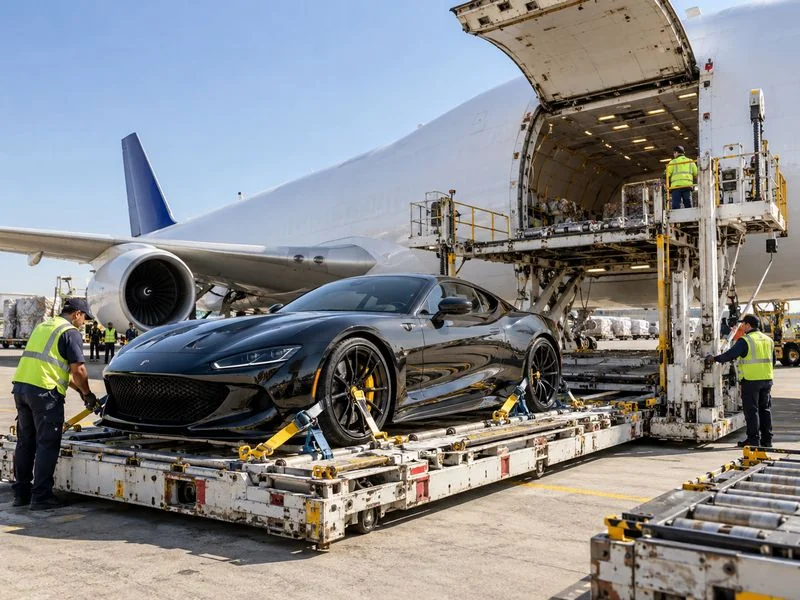
However, the situation is different for someone purchasing a used sedan at an auction.
Suppose you buy a vehicle for $7,500 and plan to import it for personal use. If you can wait several weeks, spending thousands of additional dollars on air freight may eliminate the financial benefit of buying the car overseas.
There are also important logistical requirements to consider. Complete vehicles cannot be loaded onto just any aircraft. The shipping provider must confirm aircraft dimensions, loading equipment, vehicle weight, and compliance with aviation safety regulations.
Fuel systems, batteries, and other potentially hazardous components may require special preparation. Damaged vehicles and electric cars can face additional restrictions.
Air freight makes the most sense when the financial or practical value of receiving a vehicle sooner is greater than the additional shipping expense. For most budget-conscious buyers, that condition is difficult to meet.
How Can YK Freight Help You Choose the Right Shipping Option?
Choosing an international shipping method involves more than comparing transportation rates. Vehicle size, pickup location, destination, delivery deadlines, and additional handling requirements can all affect the final cost.
A freight forwarder can help customers understand these factors and identify transportation arrangements that match their priorities.
YK Freight specializes in vehicle transportation and logistics, helping customers plan shipments based on their individual needs.
When evaluating shipping options, several questions are worth asking:
- What is the total shipping budget? Consider not only the freight rate but also inland transportation, port or airport handling, customs-related expenses, and final delivery.
- How quickly is the vehicle needed? If there is no strict deadline, slower transportation may offer substantial savings.
- What type of vehicle is being shipped? Dimensions, weight, operating condition, and special handling requirements can influence available services.
- Where is the vehicle located? Transportation from an auction facility, dealership, or private seller to the departure terminal may affect the overall cost.
- What services are included in the quote? Confirm whether pickup, export handling, insurance, customs assistance, and destination delivery are included or charged separately.
For example, a customer purchasing a damaged vehicle at a US auction may initially focus on finding the cheapest international freight rate.
However, the vehicle might also require transportation from the auction yard, special loading equipment, and additional handling at the departure port.
A shipping estimate that does not account for these services could leave the buyer facing unexpected expenses.
YK Freight can help customers evaluate vehicle transportation arrangements and understand which costs should be considered before making a decision.
For buyers working with limited budgets, planning ahead is particularly important. Selecting an appropriate shipping method and understanding the full transportation process can help prevent unnecessary spending.
The best shipping decision balances affordability, delivery time, and cargo requirements. Air freight provides exceptional speed when urgent transportation is necessary, but ocean freight is usually the more economical solution for standard vehicle imports.
If you are planning to ship a vehicle internationally, contact YK Freight to discuss your transportation needs and request a shipping quote. Comparing available options before booking can help you choose a practical service without paying extra for speed you may not need.
Further Reading
What is International Shipping and How Does It Work?
10 Interesting Facts About Ocean Freight Shipping for Cost-Savvy Shippers
Tips for Time-Sensitive Freight Shipments: Save Money and Ship On Time
Freight Shipping Cost Explained: How to Save Money on Every Shipment


ASK YOUR QUESTIONS