
Late deliveries can cost small businesses time, money, and customer trust. This guide explains five practical ways to improve on-time delivery, reduce avoidable delays, and control shipping costs. Learn how better planning, accurate information, tracking, and clear communication can make each shipment more reliable.
Table of Text:
- Why Is On-Time Delivery So Important for Small Businesses?
- What Are the Most Common Reasons Small Business Deliveries Are Late?
- How Can Small Businesses Improve On-Time Delivery Before a Shipment Leaves?
- How Can Better Tracking and Shipping Support Keep Deliveries on Schedule?
- What Should You Do to Make Your Next Delivery More Reliable and Affordable?
Why Is On-Time Delivery So Important for Small Businesses?
On-time delivery is important because customers often judge a business by what happens at the end of the order process. A company may offer a good product and a fair price, but if the shipment arrives late, the customer may still remember the delay more than anything else.
For small businesses, this matters even more. A large company may have thousands of orders and many customer service employees. A small business usually has fewer customers, less staff, and a smaller budget. One late shipment can take more time to fix and can have a bigger impact on the customer relationship.
Reliable delivery also helps a business plan its own work. If vehicles, parts, or other freight arrive when expected, employees can schedule inspections, repairs, sales, or customer pickups more accurately.
For example, a small used-car dealer may be waiting for a vehicle to arrive before listing it for sale. If transportation is delayed by several days, the dealer may lose potential buyers while still paying financing, storage, or other holding costs.
This is why on-time delivery is not only a customer service issue. It can affect cash flow, operating costs, and the amount of time employees spend solving avoidable problems.
How Can Late Deliveries Affect Customer Trust and Repeat Business?
Customers usually plan around the delivery date they are given.
A buyer may take time off work to receive a vehicle. A repair shop may schedule space for a car that is supposed to arrive on Tuesday. A dealership may promise a customer that a vehicle will be ready before the weekend.
If the shipment does not arrive as expected, those plans can fall apart.
The delay itself is often frustrating, but poor communication can make the situation worse. Customers are more likely to lose trust when they do not know where the shipment is or when it will arrive.
For a small business, one disappointed customer can matter a lot.
That customer may decide not to order again. They may also tell friends, business partners, or online reviewers about the experience.
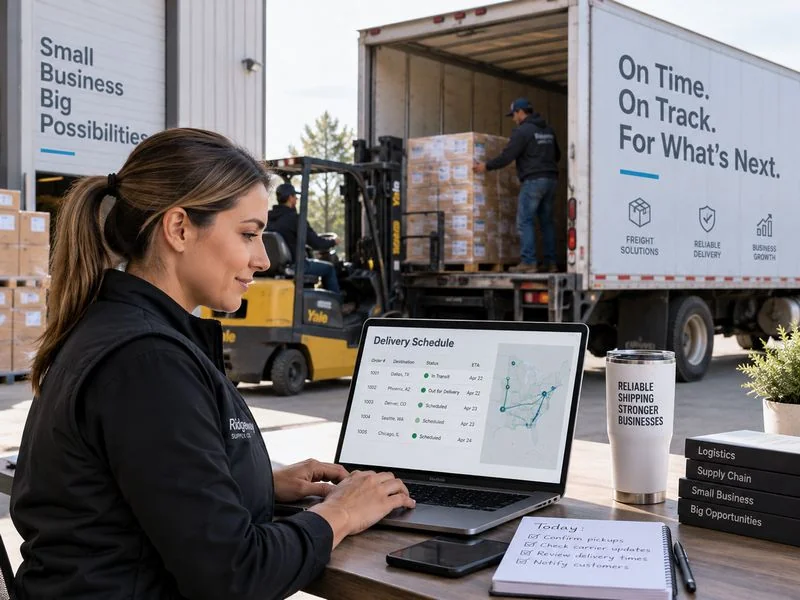
Imagine a small dealership that regularly buys vehicles from auctions. One of its customers has already placed a deposit on a car and expects delivery on Friday. If the vehicle arrives the following Tuesday and the dealership has no explanation, the customer may question whether the business is reliable.
The transportation company may have caused the delay, but the customer usually sees the dealership as responsible for the entire experience.
This is why small businesses should be careful when promising exact delivery dates. It is often better to provide a realistic delivery window and update the customer as soon as anything changes.
Clear expectations can protect trust even when a delay cannot be completely avoided.
Why Can Delivery Problems Cost Small Businesses More Than Large Companies?
Small businesses usually have less room in their budgets for unexpected shipping problems.
A large company may be able to absorb an extra transportation charge, storage fee, or missed delivery. For a small business operating with tight margins, the same expense can significantly reduce the profit from an order.
Late delivery can create several costs at once.
For example, a vehicle may arrive later than planned, which could lead to:
- extra storage charges;
- missed repair appointments;
- employee time spent calling carriers;
- rescheduled customer appointments;
- lost sales opportunities;
- rush transportation costs to correct the problem.
Consider a small dealer that buys a vehicle for $8,000 and expects to make a modest profit after repairs and transportation. If a shipping delay adds storage fees and forces the dealer to pay more for urgent pickup, a large part of that expected profit can disappear.
Small businesses may also have fewer people handling logistics.
The owner, salesperson, or office manager may be responsible for arranging transportation in addition to many other tasks. Every hour spent trying to locate a delayed vehicle is time that cannot be spent helping customers or making sales.
This makes prevention especially valuable.
Confirming pickup information, booking early, and choosing realistic timelines may take a little more effort at the beginning, but they can prevent much more expensive problems later.
How Can Reliable Shipping Help Protect Your Reputation and Budget?
Reliable shipping gives a small business more control over both customer service and operating costs.
When shipments arrive within the expected timeframe, businesses can schedule work with more confidence. Dealers can prepare vehicles for sale, repair shops can plan appointments, and customers can make arrangements to receive their vehicles.
Reliable transportation can also reduce the need for expensive last-minute solutions.
For example, if a business plans a vehicle pickup several days before storage fees begin, there is more time to find a carrier that fits the route and budget. If the business waits until the final day, it may have to choose between paying storage charges or paying more for immediate transportation.
Good planning does not mean every shipment will be perfect. Traffic, weather, mechanical problems, and other issues can still cause delays.
The goal is to reduce the problems that can be controlled.
Small businesses can improve reliability by:
- providing accurate pickup and delivery information;
- confirming when the vehicle or freight is actually ready;
- giving realistic pickup windows;
- avoiding unnecessary last-minute bookings;
- tracking the shipment while it is moving;
- communicating changes quickly.
For businesses working with a limited shipping budget, these simple steps can be just as important as finding a low quote.
The cheapest rate is not always the best value if poor planning leads to extra fees or lost time later. A slightly better-organized shipment can often save more money than choosing the lowest price without considering reliability.
What Are the Most Common Reasons Small Business Deliveries Are Late?
Late deliveries usually do not happen because of one single problem. A shipment can be delayed by incorrect information, missed appointments, long loading times, heavy traffic, limited carrier capacity, or unexpected changes during the route.
For small businesses, even a short delay can create extra costs. A vehicle may stay at an auction yard longer than expected, a customer appointment may need to be moved, or an employee may spend hours trying to find out what happened.
Many of these problems can be reduced with better preparation.
The most important step is to make sure the carrier has accurate information before the truck is dispatched. Small details such as the wrong pickup address, incorrect business hours, or missing vehicle release information can create a delay that affects the rest of the route.
Understanding the most common causes of late delivery makes it easier to prevent them.
How Can Incorrect Shipping Information or Technology Problems Cause Delays?
Shipping depends on accurate information.
A carrier needs to know where the vehicle or freight is located, when it can be picked up, who can release it, and whether any special equipment is required.
If one of these details is wrong, the driver may arrive and discover that the shipment is not ready.
For vehicle transportation, common information problems include:
- an incorrect pickup address;
- missing lot or stock numbers;
- wrong auction release information;
- inaccurate business hours;
- an incorrect contact phone number;
- a vehicle listed as running when it does not run;
- missing information about damage or modifications.
For example, imagine a small dealer buys a damaged vehicle at auction and tells the carrier that it runs and drives. When the truck arrives, the car has a broken wheel and cannot move.
The driver may not have the equipment needed to load it. The pickup could be canceled, another truck may need to be arranged, and the business may have to pay additional storage charges.
Technology can also cause problems.
Tracking systems, dispatch software, electronic documents, and online scheduling tools make shipping easier, but they still depend on correct data and working systems. A technical problem can delay status updates, release documents, or communication between the customer, carrier, and facility.
This is why businesses should not rely only on automated updates.
Before pickup, it is smart to confirm the most important details directly. Make sure the vehicle is ready, the pickup location is open, the release information is valid, and the contact person is available.
A few minutes of verification can prevent a much longer delay.
Why Do Missed Pickup and Delivery Appointments Create Extra Costs?
A missed appointment can affect much more than one shipment.
Drivers usually have several stops planned along the same route. If they arrive at a pickup location and cannot access the vehicle, they may not be able to wait for hours.
They may have to continue to the next stop and return later, or the shipment may need to be assigned to another truck.
This can create extra costs.
A failed pickup may lead to:
- another dispatch;
- additional driver time;
- storage fees;
- rescheduling costs;
- longer delivery times;
- lost customer appointments.
Delivery problems can happen for similar reasons.
If a vehicle requires someone to be present and no one is available, the driver may need to wait or arrange another delivery time.
For a small business, this can be especially expensive because one missed appointment may affect several other plans.
For example, a dealer may schedule a mechanic to inspect a vehicle on the day it arrives. If nobody is available to receive the car and delivery has to be moved to the next day, the inspection may also need to be rescheduled.
The easiest way to avoid this problem is to confirm both sides of the shipment.
Before pickup, check that the vehicle is released and available. Before delivery, make sure the receiving person knows the expected time window and can answer the phone.
If the schedule changes, communicate immediately.
How Can Long Loading and Unloading Times Slow Down a Shipment?
Loading time matters because drivers cannot spend unlimited hours waiting at one location.
A carrier may have several vehicles or freight loads to pick up and deliver during the same day. If one stop takes much longer than expected, the entire schedule can shift.
Long wait times can happen when:
- the vehicle is difficult to locate;
- paperwork is not ready;
- the facility is crowded;
- the vehicle does not start;
- loading equipment is unavailable;
- staff are not ready to release the shipment;
- there is a long line of trucks waiting for service.
For example, a driver may expect to spend 30 minutes at an auction yard. If it takes two hours to locate the vehicle and complete the release process, the next pickup may be delayed.
If enough time is lost, the driver may also reach driving-hour limits before completing the route.
That delay can continue into the next day.
Small businesses can help reduce loading time by preparing everything before the truck arrives.
Confirm that the shipment is ready. Send release documents in advance when possible. Make sure the vehicle can be accessed easily and that the pickup location knows a carrier is coming.
For vehicle shipping, it also helps to report the real condition of the car.
A vehicle that does not roll, steer, or brake normally may take much longer to load. If the carrier knows this in advance, the right equipment can be arranged.
Reducing waiting time helps the driver stay on schedule and can make the shipment more attractive to carriers in the future.
Why Does Peak Shipping Season Make On-Time Delivery More Difficult?
Peak shipping season puts more pressure on the entire transportation network.
During busy periods, more businesses are trying to move freight at the same time. Trucks fill faster, drivers have tighter schedules, warehouses become busier, and terminals may experience longer waiting times.
This means there is less room for mistakes.
During a slower period, a carrier may be able to recover from a missed pickup by returning later the same day. During peak season, the truck may already be fully scheduled.
The shipment could have to wait for another available carrier.
Peak season can also make small problems more expensive.
For example, if a vehicle misses its planned pickup during a quiet week, another truck may be available soon. If the same thing happens during a busy holiday period, finding replacement capacity may take longer and cost more.
Small businesses with limited budgets should pay particular attention to timing during busy months.
Helpful steps include:
- booking earlier;
- keeping pickup dates flexible;
- confirming all shipment details before dispatch;
- avoiding unnecessary last-minute changes;
- building extra time into important delivery deadlines.
Imagine a small dealership that needs three auction vehicles delivered before a weekend sales event. If transportation is arranged only two days before the event, one minor delay could prevent a vehicle from arriving on time.
If the dealer starts planning earlier and leaves a wider delivery window, there is more room to handle traffic, weather, or scheduling changes without paying for emergency transportation.
Peak season does not make delays unavoidable. It simply reduces the amount of flexibility available.
How Can Small Businesses Improve On-Time Delivery Before a Shipment Leaves?
Many delivery problems can be prevented before the truck ever reaches the pickup location.
For small businesses, this is important because correcting a mistake after dispatch can cost more than preventing it. A wrong address, missing release document, or inaccurate vehicle condition can lead to a failed pickup, extra storage fees, or another dispatch.
The goal is simple: make the shipment as easy as possible for the carrier to pick up and move.
That means checking your process, reducing driver waiting time, confirming shipment details, and avoiding unnecessary scheduling restrictions. These steps can improve delivery reliability without forcing you to choose the fastest or most expensive transportation option.
Tip 1: How Can You Find Problems in Your Current Shipping Process?
Start by looking at where delays usually happen.
You do not need complex software or a large logistics department to do this. Even a simple record of recent shipments can show useful patterns.
Review a few past deliveries and ask:
- Was the vehicle ready when the driver arrived?
- Were pickup instructions complete?
- Did the carrier have to wait?
- Were there repeated delays at the same auction, warehouse, or terminal?
- Did incorrect vehicle information create a problem?
- Were deliveries often booked at the last minute?
- Did storage or rush charges increase the final cost?
Look for problems that happen more than once.
For example, suppose a small dealer regularly buys auction vehicles and notices that several pickups were delayed because release information was not ready. That is a process problem the dealer can fix before the next shipment.
Instead of arranging transportation first and checking the release later, the business can confirm that payment has cleared and pickup authorization is available before dispatching a truck.
Another business may discover that its biggest problem is timing. If transportation is always requested one day before a vehicle must leave the yard, the business may be creating its own rush situation.
Tracking basic information can help. Keep a simple record of:
- requested pickup date;
- actual pickup date;
- expected delivery date;
- actual delivery date;
- quoted shipping cost;
- final shipping cost;
- reason for any delay or extra charge.
After several shipments, patterns become easier to see.
The purpose is not to eliminate every delay. Weather, traffic, and mechanical problems cannot always be controlled. The goal is to identify the problems your business can prevent.
Tip 2: How Can Reducing Driver Dwell Time Prevent Delivery Delays?
Dwell time is the amount of time a driver spends waiting at a pickup or delivery location.
A short wait may not cause a problem. A long wait can affect the entire route.
Drivers usually have multiple stops and limited driving hours. If a truck spends two extra hours waiting for one vehicle, the driver may arrive late at the next pickup or may have to stop for the night before finishing the route.
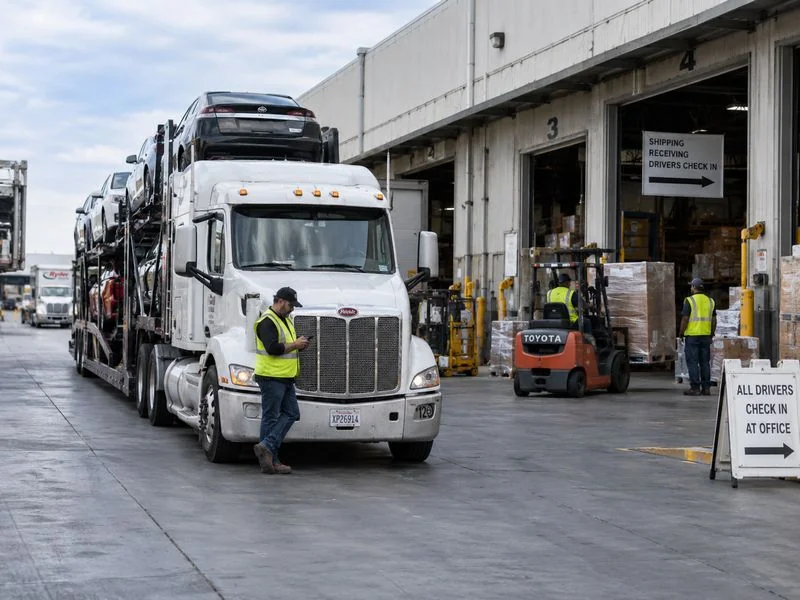
For a small business, reducing dwell time is one of the easiest ways to make a shipment more carrier-friendly.
Before the truck arrives, make sure:
- the vehicle or freight is ready;
- paperwork is complete;
- the release person is available;
- the driver has the correct entrance or gate information;
- the pickup location is open;
- loading equipment is available if needed.
Vehicle condition matters too.
If a car does not start, roll, steer, or brake properly, tell the carrier before dispatch. A driver who arrives expecting a normal running vehicle may not have the equipment needed to load it.
That can turn a simple pickup into a failed one.
For example, imagine a driver arrives at an auction at 3:30 p.m. expecting a quick pickup. The car cannot move, the release paperwork is incomplete, and the facility closes at 5:00 p.m.
The driver may leave without the vehicle. The business could then face another dispatch and an additional day of storage.
A few minutes spent confirming these details earlier could have prevented the delay.
What Vehicle, Pickup, and Delivery Information Should You Confirm in Advance?
Accurate information helps the carrier plan the correct truck, route, and schedule.
Before booking, confirm the basic vehicle details:
- year, make, and model;
- whether it runs and drives;
- whether it rolls, steers, and brakes;
- major collision or suspension damage;
- oversized tires or modifications;
- unusually low ground clearance.
Then verify the pickup information.
You should know:
- exact pickup address;
- contact person's name and phone number;
- business or auction hours;
- lot, stock, or VIN information when required;
- vehicle release requirements;
- earliest available pickup date;
- any storage deadline.
Delivery information should also be clear.
Confirm the correct destination address and make sure someone will be available to receive the vehicle. If a large transport truck cannot safely enter the location, plan a nearby meeting point in advance.
This is especially useful for residential deliveries.
A multi-car carrier may not be able to enter a narrow street, gated community, or low-clearance area. Waiting until the truck arrives to discover this can waste time.
For example, a customer may request delivery directly to a small apartment parking lot. If the carrier cannot enter, both sides must quickly find another location.
Choosing a nearby large parking area ahead of time can make the delivery much easier.
Accurate details also help protect your budget.
A quote based on a running sedan may no longer apply if the vehicle is actually a damaged SUV that requires special loading equipment. Providing the correct information from the start gives you a more realistic cost estimate.
How Can Flexible Pickup Dates Help You Avoid Rush Charges?
A flexible pickup window gives carriers more opportunities to fit your shipment into an existing route.
This can be especially useful for small businesses that care more about cost than same-day pickup.
If you require a vehicle to be collected on one exact day, the number of available carriers may be limited. If you can allow pickup across several days, dispatchers have more time to find a truck already traveling through the area.
That can reduce the need to pay more just to attract immediate capacity.
For example, suppose a dealer needs a vehicle moved from an auction to its lot.
If the dealer says, “It must be picked up Tuesday,” there may be only one available carrier that fits the schedule.
If the dealer can accept pickup between Monday and Thursday, several trucks may become possible options.
This does not mean you should ignore real deadlines.
Auction storage charges, customer appointments, repair schedules, and business events may require the vehicle to move within a certain period. The key is to identify the true deadline and build flexibility before it.
If storage fees begin Friday, do not wait until Thursday to start looking for transportation. Begin earlier and give the carrier a wider pickup window.
That approach can help you avoid two expensive problems at once: rush transportation and storage charges.
How Can Better Tracking and Shipping Support Keep Deliveries on Schedule?
Good planning does not stop once a shipment leaves the pickup location. Small businesses also need visibility while the freight is moving.
Tracking helps you see whether a shipment is progressing normally and gives you more time to react if something changes. This can be especially important when a vehicle must arrive before a repair appointment, customer pickup, sales event, or storage deadline.
Without updates, a small delay may become a bigger problem before anyone notices.
For example, if a vehicle is delayed by weather and you learn about it early, you can reschedule a customer appointment before the customer drives to your location. If you find out only after the vehicle was supposed to arrive, the same delay can create frustration, wasted time, and extra work.
Tracking and reliable shipping support help small businesses stay organized without needing a large logistics team.
Tip 3: How Can Shipment Tracking Help You Spot Delays Earlier?
Shipment tracking gives you a clearer picture of where your freight is and whether the delivery is still moving according to plan.
For vehicle transportation, tracking may include location updates, pickup confirmation, estimated delivery information, or communication from dispatch.
The main benefit is not simply knowing where the truck is. The real value is being able to identify a problem early enough to do something about it.
For example, suppose a vehicle is expected on Thursday, but on Wednesday you learn that the carrier was delayed at an earlier stop. You can immediately adjust your schedule instead of waiting until Thursday afternoon to discover the vehicle will not arrive.
This can help you:
- reschedule repair or inspection appointments;
- notify customers before they start waiting;
- adjust staffing;
- prepare a different delivery location;
- avoid unnecessary calls and confusion.
Tracking is also useful when several shipments are moving at the same time.
A small dealership may have multiple auction vehicles coming from different states. Without clear updates, it can become difficult to know which car will arrive first or when space needs to be available.
Even simple shipment updates can make planning easier.
However, tracking should be treated as a tool, not a guarantee. Traffic, weather, mechanical issues, and delays at earlier stops can still change the schedule. An estimated arrival time may need to be adjusted.
The important thing is to notice those changes early.
Why Should You Keep Customers Updated When a Delivery Schedule Changes?
Customers usually react better to a delay when they hear about it before the expected delivery time.
A late shipment is frustrating, but an unexpected late shipment is usually worse.
If you know that a vehicle will arrive one day later than planned, tell the customer as soon as possible. Give them the best information you have and update them again if the schedule changes.
You do not need a long explanation.
A simple message such as, “The carrier was delayed at an earlier stop, so delivery is now expected Friday instead of Thursday,” gives the customer something useful to plan around.
This can protect trust even when the delay itself cannot be avoided.
For a small business, communication is especially important because customer relationships are often more personal.
Imagine a customer who plans to take time off work to receive a vehicle. If the delivery changes and nobody tells them, they may lose several hours waiting.
If they receive an update the day before, they can change their plans.
The shipment is still late, but the customer experience is much better.
Businesses should also avoid promising a new delivery time unless it is reasonably confirmed. Giving an exact time too early can create another disappointment if the truck is delayed again.
It is often better to provide a realistic delivery window and explain that the driver will confirm the timing closer to arrival.
Good communication does not eliminate delays. It reduces the damage they can cause.
Tip 4: When Does Working With an Experienced Freight Company Make Sense?
Working with an experienced freight company can make sense when transportation starts taking too much time away from the rest of the business.
Small companies often do not have a dedicated logistics department. The owner, manager, salesperson, or office employee may also be responsible for finding carriers, checking pickup details, tracking shipments, and updating customers.
That can work when shipping volume is low. It becomes harder when several vehicles or freight loads need to move at the same time.
Outside support can be particularly useful when:
- you ship regularly;
- vehicles are coming from several locations;
- pickup deadlines are tight;
- freight is moving through ports or terminals;
- vehicles need special handling;
- you frequently deal with changing schedules;
- you do not have staff dedicated to transportation.
An experienced freight company can help coordinate the steps that often create delays.
For example, a small dealership may buy three vehicles from different auctions during the same week. One vehicle is ready immediately, another is waiting for release, and the third does not run.
Trying to arrange all three shipments while also handling sales and customers can become complicated.
A freight company can help organize pickup requirements, match transportation to each vehicle, and keep the business updated as the shipments move.
YK Freight can help small businesses coordinate pickups, transportation schedules, and delivery requirements when they do not have their own logistics team. This can be especially useful when timing matters or several shipments need to be managed at once.
The goal is not simply to add another company to the process. It is to reduce the amount of time the business spends solving transportation problems.
For a budget-conscious small business, that can matter just as much as the freight rate itself. A cheap shipment that requires hours of phone calls, causes storage fees, or misses an important customer deadline may not be the lowest-cost option in the end.
What Should You Do to Make Your Next Delivery More Reliable and Affordable?
Reliable delivery does not always mean paying for the fastest option.
Small businesses can often save money by planning better instead of paying more. Accurate shipment details, shorter loading times, clear communication, and flexible pickup windows can all reduce the risk of delays and extra charges.
The goal is to make the shipment predictable.
If you know when the vehicle is ready, how it can be loaded, where it needs to go, and how flexible the schedule is, you are in a much better position to choose a practical shipping option.
For a small business with a limited budget, this matters because every extra fee can reduce profit.
A shipment that looks cheap at first may become expensive if it creates storage charges, missed appointments, or emergency pickup costs.
Tip 5: How Should You Communicate a Delay Without Losing Customer Trust?
The best time to communicate a delay is as soon as you know about it.
Do not wait until the original delivery time has already passed.
Customers are usually more understanding when they receive clear information early. They may still be disappointed, but they have time to change their plans.
Keep the message simple.
Explain:
- what changed;
- why the schedule changed, if known;
- what the new estimated delivery window is;
- when the next update will be available.
For example, if a vehicle was supposed to arrive Thursday but the carrier was delayed by weather, tell the customer on Wednesday if possible.
A short update can be enough:
“The carrier is running behind because of weather. Delivery is now expected Friday. We will confirm the time once the truck is closer.”
That is better than making the customer wait all day without information.
Avoid promising an exact arrival time unless it is confirmed.
A driver may still face traffic, loading delays, or other stops. Giving a realistic window is usually safer than promising 2:00 p.m. and then changing it again.
Communication should also continue after the first update.
If the delivery changes again, let the customer know.
For small businesses, this can protect trust even when the delay itself is outside your control.
What Can You Learn From Previous Late Deliveries and Extra Shipping Costs?
Every delayed shipment can show you where the process needs improvement.
Look at the last few deliveries that arrived late or cost more than expected.
Ask what caused the problem.
Was the shipment booked too late?
Was the vehicle not ready when the driver arrived?
Did the pickup location have limited hours?
Was the car listed as running when it was not?
Did the carrier spend too much time waiting?
Did storage fees start before transportation was arranged?
Did the customer receive updates too late?
Write down the cause of each problem.
You do not need a complicated system. A simple spreadsheet can be enough.
Track:
- requested pickup date;
- actual pickup date;
- expected delivery date;
- actual delivery date;
- quoted rate;
- final cost;
- extra charges;
- reason for delay.
After several shipments, you may start to see patterns.
For example, a small dealer may notice that most expensive shipments happen when vehicles are booked after storage fees have already started.
The solution is not necessarily to find cheaper carriers. It may be to arrange transportation sooner.
Another business may discover that delays often happen because pickup instructions are incomplete.
That can be fixed by creating a simple checklist before every shipment.
The goal is to use previous problems to make the next shipment easier and cheaper.
How Can Planning Ahead Help You Balance Delivery Speed and Cost?
Shipping usually involves a trade-off between speed, flexibility, and price.
If you need immediate pickup, the carrier may have to change an existing route or prioritize your load. That can make the shipment more expensive.
If you have several days of flexibility, there may be more time to find a truck already traveling in the right direction.
That can help control costs.
For example, imagine a vehicle is ready on Monday and storage fees begin Friday.
If you wait until Thursday to arrange transportation, you may need urgent pickup.
If you start on Monday, you can allow a wider pickup window and compare more options.
Planning ahead also gives you time to:
- confirm the vehicle condition;
- check pickup hours;
- verify release documents;
- prepare the delivery location;
- compare transportation options;
- build extra time around important deadlines.
This does not mean you should always choose the slowest option.
The goal is to pay for the speed you actually need.
If a vehicle must arrive before a customer appointment, faster transportation may be worth the cost.
If there is no urgent deadline, a slightly wider schedule may be more economical.
Small businesses should think about the total cost, not only the freight rate.
Paying a little more for reliable transportation may be cheaper than choosing the lowest quote and then paying storage fees or losing a customer because of a delay.
When Should You Contact YK Freight?
It is usually best to contact YK Freight before the shipment becomes urgent.
You can request a quote as soon as you know:
- where the vehicle is located;
- where it needs to go;
- when it will be ready;
- whether it runs;
- whether there are pickup restrictions;
- whether you have a delivery deadline.
Early contact gives more time to review the route and available transportation options.
This can be especially useful for small businesses that regularly move vehicles, buy from auctions, work with ports or terminals, or do not have a dedicated logistics employee.
If the shipment has special requirements, mention them immediately.
For example, tell the team if the vehicle does not run, has damaged wheels, must be removed before storage fees begin, or can only be picked up during limited hours.
The more complete the information is, the easier it is to plan transportation correctly.
On-time delivery does not always require choosing the fastest or most expensive shipping option.
Small businesses can often reduce delays and control costs by preparing accurate shipment information, minimizing loading time, tracking freight, communicating early, and leaving some flexibility in the schedule.
A reliable shipping process is usually built before the truck starts moving.
Contact YK Freight for a shipping quote and help planning reliable, cost-conscious transportation. Early planning can give you more options, reduce last-minute problems, and make it easier to keep both your customers and your budget on track.
Further Reading
Tips for Time-Sensitive Freight Shipments: Save Money and Ship On Time
A Closer Look at Small Business Shipping and Logistics: Tips to Save
How to Improve LTL Transit Times for Faster, Reliable Freight Delivery
5 Benefits of 3PL for Small Businesses: Save Time, Money & Improve Shipping


ASK YOUR QUESTIONS