Freight shipping costs can quickly increase if you do not understand how pricing works. This guide explains what affects freight rates, how shipping costs are calculated, and what strategies can help businesses and vehicle buyers save money. Learn how transportation mode, distance, weight, and logistics planning impact pricing — and how to avoid unnecessary shipping expenses.
Table of Content:
- What Is Freight Shipping Cost and Why Does It Matter?
- How Is Freight Shipping Cost Calculated?
- How Do Distance and Location Affect Freight Rates?
- What Other Factors Can Increase Freight Shipping Costs?
- How Can You Reduce Freight Shipping Costs Without Sacrificing Reliability?
What Is Freight Shipping Cost and Why Does It Matter?
Freight shipping cost is the total amount businesses or customers pay to move cargo from one location to another. This cost can include transportation, fuel, labor, equipment usage, insurance, storage, and additional service fees depending on the shipment.
For businesses that regularly transport products, vehicles, or equipment, freight shipping can become one of the largest operating expenses. Even small increases in shipping rates can significantly affect profit margins, especially for companies working with tight budgets.
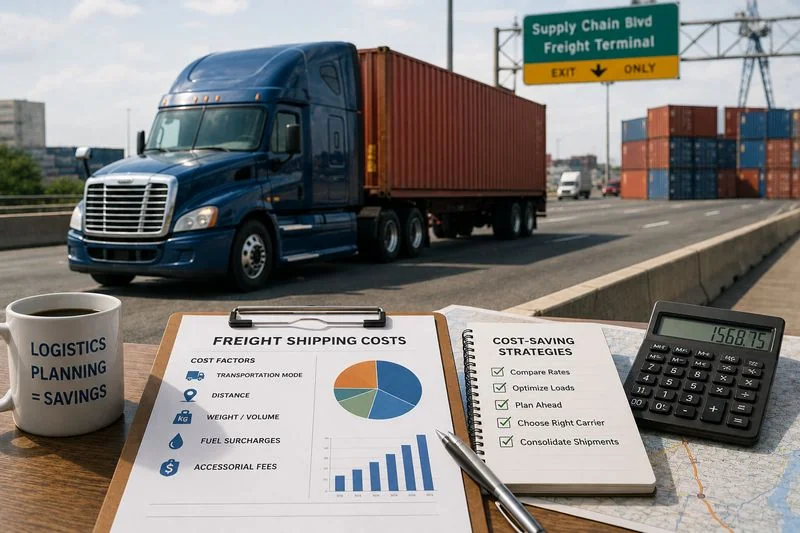
Understanding freight shipping cost is important because transportation affects almost every part of the supply chain. A shipment that costs more than expected can reduce profits, increase product prices, or delay important deliveries.
For example, a customer buying a vehicle from another state may focus mainly on the purchase price, only to later realize that transportation adds several hundred or even thousands of dollars to the total cost. The same problem affects small businesses shipping inventory regularly. Without proper planning, freight expenses can quickly become difficult to control.
Learning how freight pricing works helps businesses and individual buyers make smarter shipping decisions, avoid unnecessary fees, and choose transportation options that fit their budget.
What Does Freight Shipping Cost Include?
Freight shipping cost includes much more than simply moving cargo from point A to point B. Several different expenses are combined to calculate the final shipping price.
The biggest cost is usually transportation itself. This includes paying for trucks, drivers, fuel, trailers, rail transport, ocean freight, or air freight depending on the shipping method.
However, many additional factors also affect pricing, including:
- Shipment weight
- Cargo dimensions
- Pickup and delivery locations
- Fuel costs
- Freight class
- Insurance coverage
- Delivery speed
- Equipment requirements
For example, shipping a running sedan between major cities is usually much cheaper than transporting a non-running oversized truck to a rural location. Special equipment, loading assistance, or limited route access can all increase the price.
Some shipments may also include optional services such as:
- Expedited delivery
- Liftgate service
- Inside delivery
- Storage
- Residential pickup or drop-off
- Appointment scheduling
Many first-time shippers underestimate how quickly these additional services can increase the total freight bill. Understanding what is included in the quote helps customers compare prices more accurately and avoid surprises later.
Why Do Freight Rates Change So Often?
Freight rates constantly change because the transportation industry is affected by many moving factors. Unlike fixed retail pricing, shipping costs depend heavily on market conditions, demand, fuel prices, weather, route availability, and equipment capacity.
One of the biggest reasons freight prices change is supply and demand. When more businesses need transportation than available trucks or containers, freight rates increase. During slower periods, prices may drop because carriers compete for available shipments.
Fuel prices also play a major role. Since fuel is one of the largest transportation expenses, even small increases in diesel prices can affect freight rates quickly.
Seasonal demand changes are another major factor. For example:
- Holiday shopping seasons increase shipping demand
- Agricultural harvest periods create more freight movement
- Severe weather can delay transportation capacity
- Port congestion can increase shipping costs
Location also matters. Routes between major cities are usually cheaper because trucks move through these areas more frequently. Remote locations often cost more because carriers may struggle to find return loads.
For budget-conscious customers, understanding these market changes can help reduce costs. Flexible scheduling and advance planning often create better shipping opportunities compared to last-minute bookings.
How Can High Shipping Costs Affect Small Businesses and Car Buyers?
High freight costs can create serious financial pressure for both businesses and individual buyers. Transportation expenses directly affect overall profitability and purchasing decisions.
For small businesses, expensive shipping may reduce already thin profit margins. A company selling automotive parts, vehicles, or equipment may struggle to stay competitive if transportation costs become too high.
For example, a used car dealer may find a great vehicle deal at auction, but after adding transport expenses, the total cost may no longer make financial sense. The same situation affects customers buying vehicles online from distant states.
High shipping costs can also lead to:
- Increased product prices
- Lower customer demand
- Delayed purchases
- Reduced inventory movement
- Smaller profit margins
Small businesses are especially vulnerable because they often ship lower volumes than large corporations and may not receive discounted freight rates.
Individual car buyers also feel the impact. Someone trying to save money by buying a vehicle from another state may become frustrated when transportation costs are higher than expected.
This is why many buyers and businesses now spend more time comparing shipping methods, planning routes carefully, and looking for logistics providers that offer cost-efficient transportation options.
What Hidden Freight Charges Should You Watch For?
One of the most common frustrations in freight shipping is unexpected charges that appear after the shipment is already booked. Many customers focus only on the base shipping rate without understanding additional fees that may apply later.
Some hidden freight charges are legitimate operational costs, while others happen because shipment details were incomplete or inaccurate during booking.
Common hidden freight charges may include:
- Fuel surcharges
- Residential delivery fees
- Limited access fees
- Storage charges
- Re-delivery fees
- Detention charges
- Liftgate service fees
- Oversized cargo fees
- Appointment scheduling fees
For example, if a vehicle is listed as running but actually cannot move during pickup, additional loading equipment may be required. This can increase the transportation cost unexpectedly.
Storage fees are another common issue. If cargo is not picked up on time after delivery, warehouses or terminals may begin charging daily storage costs.
Incorrect shipment dimensions or weight can also create surprise charges later. If the actual cargo size differs from the original booking information, carriers may adjust the freight bill after inspection.
How Is Freight Shipping Cost Calculated?
Freight shipping cost is calculated using several important factors that help carriers estimate how difficult, expensive, and time-consuming a shipment will be to transport. The final price is rarely based on distance alone.
Transportation companies look at the shipment’s size, weight, route, transportation mode, fuel usage, delivery timeline, and equipment requirements before calculating a quote. Some shipments are simple and inexpensive to move, while others require special handling, extra labor, or more complex transportation planning.
For example, shipping a small pallet between nearby cities using standard truck freight is much cheaper than transporting oversized machinery across multiple states with special permits and loading equipment.
Understanding how freight pricing works helps businesses and individual customers make smarter transportation decisions. It also helps avoid paying for unnecessary services or choosing shipping options that do not fit the shipment properly.
The more accurately a shipment is planned, the easier it becomes to control costs and avoid unexpected freight charges later.
Why Does Transportation Mode Affect Shipping Price?
The transportation mode is one of the biggest factors affecting freight shipping cost because every shipping method has different operating expenses, speed, and capacity limitations.
There are four main freight transportation modes:
- Truck freight
- Ocean freight
- Rail freight
- Air freight
Each option is designed for different shipping needs.
Truck freight is the most common transportation method in the United States because it offers a good balance between cost, flexibility, and delivery speed. Trucks can handle local deliveries, regional freight, and long-distance shipments while providing direct door-to-door service.
Ocean freight is usually the most affordable option for international shipping, especially for large cargo volumes. However, it is much slower than truck or air transportation.
Rail freight works well for heavy bulk cargo moving long distances, but it often requires additional truck transportation before final delivery.
Air freight is the fastest option, but also the most expensive because aircraft operating costs are significantly higher.
The transportation mode affects pricing because carriers calculate:
- Fuel usage
- Equipment costs
- Labor expenses
- Transit time
- Cargo capacity
- Route complexity
Choosing the wrong transportation method can increase costs unnecessarily. Businesses that match the shipping mode to the actual cargo needs usually save much more money over time.
What Is the Difference Between FTL and LTL Shipping?
FTL and LTL are two of the most common truck freight shipping methods in the logistics industry.
FTL stands for Full Truckload. This means one shipment uses most or all of the trailer space. The truck usually moves directly from pickup to delivery without handling freight for multiple customers along the route.
LTL stands for Less Than Truckload. In this case, several smaller shipments from different customers share space inside one truck.
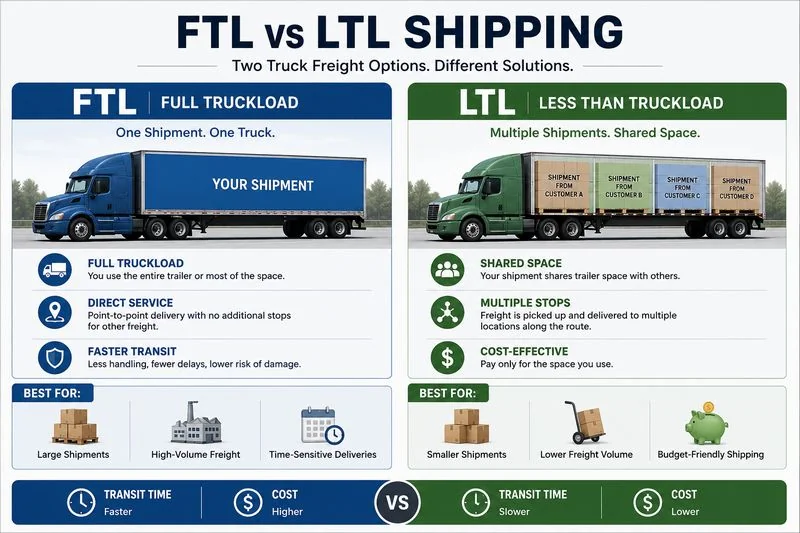
The biggest difference between FTL and LTL is how trailer space is used.
FTL shipping is usually better for:
- Large shipments
- Heavy cargo
- High-value freight
- Faster delivery requirements
- Lower handling risk
LTL shipping is often more affordable for smaller shipments because customers only pay for the portion of trailer space they actually use.
For example, a small business shipping a few pallets of automotive parts may save money using LTL instead of paying for an entire truck.
However, LTL shipments usually involve:
- More loading and unloading stops
- Longer transit times
- Additional handling
- Higher risk of minor freight damage
Choosing between FTL and LTL depends on shipment size, urgency, budget, and cargo sensitivity. Many budget-conscious businesses use LTL shipping regularly to reduce transportation expenses on smaller orders.
When Is Ocean Freight a Better Option Than Truck Freight?
Ocean freight becomes a better option when businesses need to transport large cargo volumes internationally at lower cost and can accept longer delivery times.
Compared to truck freight or air freight, ocean shipping is much slower. However, it is often the most cost-effective solution for international cargo movement, especially for heavy or oversized shipments.
Ocean freight is commonly used for:
- Vehicle exports
- Industrial equipment
- Large inventory shipments
- Bulk cargo
- International container shipping
For example, a customer importing multiple vehicles overseas may save thousands of dollars using ocean freight instead of air transportation.
Ocean shipping typically operates using:
- Full Container Load (FCL)
- Less Than Container Load (LCL)
FCL means one customer uses the entire shipping container. LCL allows multiple customers to share container space and split transportation costs.
While ocean freight is cheaper for large international shipments, it also requires more planning because:
- Transit times are longer
- Port congestion may create delays
- Customs clearance is required
- Additional trucking may still be needed after arrival
For domestic shipments inside the United States, truck freight is usually faster and more practical. However, for international transportation, ocean freight often provides the best balance between cost and cargo capacity.
Why Is Air Freight So Expensive?
Air freight is the most expensive shipping method because aircraft transportation involves extremely high operating costs. Airlines must cover fuel, airport fees, aircraft maintenance, security requirements, and strict cargo handling procedures.
Despite the higher price, air freight remains popular because it offers unmatched delivery speed.
Businesses often choose air freight for:
- Urgent shipments
- High-value cargo
- Medical supplies
- Electronics
- Time-sensitive inventory
For example, a company waiting on critical automotive components may choose air freight to avoid shutting down operations or delaying customer orders.
However, speed comes at a premium. Air freight pricing is affected heavily by:
- Cargo weight
- Cargo dimensions
- Airport location
- Fuel prices
- Available aircraft space
Large or bulky cargo becomes especially expensive because aircraft have limited space and strict weight limitations.
For budget-conscious customers, air freight is usually only practical when delivery speed is more important than transportation cost. Most businesses use truck, rail, or ocean freight whenever possible to reduce shipping expenses.
How Does Chargeable Weight Affect Freight Shipping Cost?
Chargeable weight, also called billable weight, is one of the most important factors in freight pricing. Carriers use chargeable weight to determine how much space and capacity a shipment uses during transportation.
The chargeable weight may be:
- The actual physical weight
- The dimensional weight
Carriers compare both numbers and use whichever is higher.
For example, a shipment may weigh very little physically but take up a large amount of trailer or aircraft space. Even though the cargo is lightweight, it still limits how much additional freight the carrier can transport.
This is why large lightweight shipments sometimes cost more than customers expect.
Chargeable weight directly affects:
- Freight pricing
- Equipment usage
- Load planning
- Transportation efficiency
Accurate shipment measurements are extremely important because incorrect weight information can lead to billing adjustments or additional fees later.
Businesses that understand chargeable weight calculations can often reduce costs by packaging freight more efficiently and minimizing unused shipment space.
What Is Dimensional Weight and Why Does It Matter?
Dimensional weight is a pricing method carriers use to calculate shipping cost based on cargo size rather than actual physical weight.
This system exists because large lightweight cargo still takes up valuable transportation space.
To calculate dimensional weight, carriers measure:
- Length
- Width
- Height
These dimensions are multiplied together to calculate shipment volume. The volume is then divided by a carrier-specific divisor to determine the dimensional weight.
If the dimensional weight is higher than the actual weight, the dimensional weight becomes the chargeable weight.
For example, a lightweight automotive body panel may not weigh much physically, but because it is large and difficult to stack, it occupies significant trailer space. The carrier charges based on space usage instead of actual pounds.
Dimensional weight matters because poor packaging can increase shipping costs dramatically. Oversized boxes, unnecessary empty space, or inefficient pallet layouts may increase the billable shipment size.
Businesses can reduce dimensional weight charges by:
- Using smaller packaging
- Improving pallet stacking
- Reducing empty space
- Packaging freight more efficiently
How Do Distance and Location Affect Freight Rates?
Distance and location are two of the biggest factors affecting freight shipping cost. In most cases, the farther cargo needs to travel, the more expensive the shipment becomes. However, distance alone does not determine the final rate. The type of route, delivery location, fuel usage, traffic conditions, and transportation demand also play major roles.
Freight carriers constantly evaluate how efficiently trucks, trailers, and drivers can move between pickup and delivery points. Routes connected to large shipping hubs are usually easier and cheaper to service because carriers move freight there regularly. Remote or low-demand areas often require additional time, fuel, and coordination, which increases transportation costs.
For example, shipping a vehicle from Atlanta to Dallas is often cheaper than shipping the same vehicle the same distance to a small rural town with limited freight activity. Even if the mileage is similar, the route efficiency is very different.
Understanding how location affects freight pricing helps businesses and vehicle buyers plan shipments more strategically and avoid unnecessary transportation expenses.
Why Are Shipments to Major Cities Usually Cheaper?
Major cities are usually cheaper for freight shipping because they operate as transportation hubs with high shipment volume and constant carrier activity. Trucks regularly move through these areas, making it easier for carriers to combine shipments and find return loads.
Large metro areas also have:
- Better highway access
- More warehouses and terminals
- Higher freight demand
- Larger carrier networks
- More available drivers and equipment
This creates stronger competition between carriers, which often helps lower shipping prices.
For example, transporting a vehicle between cities like Atlanta, Chicago, Houston, or Los Angeles is usually more affordable because trucks already travel these routes daily. Carriers can optimize trailer space and reduce empty miles more efficiently.
Another advantage is scheduling flexibility. Since freight moves constantly through major cities, businesses often have more pickup and delivery options available.
For budget-conscious customers, choosing nearby metro pickup or delivery locations can sometimes reduce shipping costs significantly compared to requesting transportation directly to smaller surrounding towns.
How Does Rural Delivery Increase Shipping Costs?
Rural deliveries usually cost more because carriers must travel farther outside major freight routes to complete the shipment. These routes often involve lower shipment volume, longer travel times, and fewer opportunities to combine freight efficiently.
In many rural areas, trucks may need to drive long distances with partially filled trailers or return empty after delivery. This increases fuel costs and reduces overall transportation efficiency.
Rural deliveries may also involve:
- Narrow or difficult road access
- Limited loading equipment
- Fewer available carriers
- Longer scheduling times
- Additional driver hours
For example, shipping a vehicle directly to a remote farming area may cost considerably more than delivering it to the nearest city terminal or transportation hub.
Some rural areas also have fewer drivers available regularly, especially during busy seasons. When carrier capacity becomes limited, freight rates often increase further.
Customers trying to reduce transportation expenses sometimes choose terminal pickup or nearby city delivery instead of direct rural delivery. This can lower freight costs while still keeping the shipment relatively convenient.
Why Do Fuel Prices and Route Availability Affect Freight Rates?
Fuel is one of the largest operating expenses in the transportation industry. When diesel prices increase, freight rates usually increase as well because carriers must cover higher operating costs.
Long-distance freight shipments consume significant amounts of fuel, especially when transporting heavy cargo or driving through difficult terrain. Even small fuel price increases can affect transportation costs quickly across the entire supply chain.
Route availability also affects freight pricing because not all transportation lanes operate equally efficiently.
For example:
- High-demand routes often have lower pricing
- Congested areas may increase delays and costs
- Seasonal weather conditions may affect scheduling
- Road closures or construction can create detours
- Limited carrier availability may raise rates
During busy shipping periods, some routes become overloaded while others experience equipment shortages. This changes supply and demand across the freight market and affects shipping prices.
For example, severe winter weather can reduce available trucking capacity in certain regions, causing rates to increase temporarily.
Freight pricing constantly adjusts based on these changing market conditions. Businesses that understand these factors can often save money by planning shipments earlier or using more flexible scheduling options.
How Can Better Route Planning Help Reduce Transportation Expenses?
Better route planning helps reduce freight costs by improving transportation efficiency and minimizing unnecessary mileage, delays, and fuel consumption.
Carriers and logistics providers carefully analyze routes to maximize trailer usage, avoid traffic problems, and reduce empty miles whenever possible.
For example, instead of sending a truck long distances with only one partial shipment, carriers may combine multiple compatible shipments moving in the same direction. This helps reduce transportation cost per shipment.
Efficient route planning also helps:
- Reduce fuel expenses
- Improve delivery speed
- Avoid congested highways
- Minimize idle time
- Improve driver scheduling
- Increase trailer utilization
Businesses can also reduce costs by being flexible with pickup and delivery schedules. Last-minute shipping requests often limit route optimization opportunities and increase freight pricing.
For example, a customer who allows a slightly wider pickup window may receive a lower transportation rate because the carrier has more time to combine loads efficiently.
Good route planning becomes especially important for businesses shipping vehicles, automotive parts, or freight regularly. Small improvements in transportation efficiency can create major long-term savings.
How Does YK Freight Help Customers Find More Cost-Effective Shipping Routes?
Finding the most cost-effective freight route requires experience, planning, and strong transportation coordination. Companies like YK Freight help customers reduce shipping expenses by analyzing routes, transportation options, and scheduling opportunities more efficiently.
Instead of focusing only on distance, experienced logistics providers evaluate:
- Carrier availability
- Route demand
- Freight consolidation opportunities
- Delivery flexibility
- Equipment requirements
- Traffic and regional conditions
This helps customers avoid unnecessarily expensive transportation decisions.
For example, combining shipments, adjusting pickup timing, or selecting a nearby delivery hub instead of direct rural delivery can often reduce shipping costs significantly.
YK Freight also helps customers improve transportation visibility and shipment coordination, which reduces delays and prevents avoidable logistics problems that may increase overall freight expenses.
What Other Factors Can Increase Freight Shipping Costs?
Many customers focus only on distance and shipment weight when estimating freight costs. However, several other factors can increase the final shipping price significantly. Some of these expenses are easy to overlook during booking, especially for businesses or vehicle buyers who do not ship freight regularly.
Cargo value, insurance requirements, delays, storage fees, packaging quality, and scheduling problems can all affect transportation costs. In many cases, small mistakes made before pickup create much larger expenses later during transit or delivery.
For example, inaccurate shipment information may require additional equipment, poor packaging can lead to cargo damage, and missed delivery appointments may create storage or re-delivery fees.
Understanding these additional cost factors helps businesses and customers avoid unnecessary charges and improve overall shipping efficiency. Better preparation often leads to lower transportation costs and fewer logistics problems throughout the shipping process.
Why Does Cargo Value Affect Shipping Price?
Cargo value affects freight pricing because higher-value shipments create greater financial risk during transportation. Expensive cargo often requires additional protection, insurance coverage, security measures, or specialized handling procedures.
For example, shipping luxury vehicles, high-end electronics, medical equipment, or specialized automotive parts usually costs more than transporting standard freight with lower replacement value.
Carriers may increase pricing for high-value cargo because:
- Insurance coverage limits are higher
- Theft risk increases
- Additional handling precautions may be required
- Tracking and monitoring become more important
- Liability exposure becomes greater
Some shipments may also require enclosed transportation, restricted access, or additional documentation to reduce risk during transit.
For example, a customer shipping a rare collector vehicle may choose enclosed auto transport instead of open transport to better protect the vehicle from weather, road debris, or accidental damage. While this increases transportation cost, it may help avoid much larger financial losses later.
Understanding cargo value helps businesses decide when additional protection is necessary and when standard transportation options are sufficient.
When Is Freight Insurance Worth Paying For?
Freight insurance is often worth paying for when the shipment value is high enough that potential loss or damage would create serious financial problems.
Although carriers usually provide limited liability coverage, this protection may not fully reimburse the actual cargo value if damage, theft, or loss occurs during transportation.
Freight insurance becomes especially important for:
- High-value cargo
- Long-distance shipments
- International shipping
- Fragile freight
- Vehicle transportation
- Specialized equipment
For example, a business shipping expensive automotive components across multiple states may choose additional insurance because replacing damaged inventory could cost far more than the insurance premium itself.
Insurance can help cover:
- Cargo damage
- Theft
- Lost shipments
- Certain transit-related incidents
However, not every shipment requires maximum insurance coverage. Budget-conscious businesses often evaluate:
- Cargo value
- Damage risk
- Transportation distance
- Packaging quality
- Replacement difficulty
before deciding how much protection is necessary.
The goal is to balance risk and cost. Paying for unnecessary insurance on low-value freight may increase shipping expenses without providing major benefits, while skipping insurance on expensive shipments may create much larger financial risks later.
How Do Delays, Storage Fees, and Missed Appointments Increase Costs?
Shipping delays often create additional costs that customers do not expect initially. Even when transportation itself is reasonably priced, operational delays can increase the final freight bill quickly.
One common issue is storage fees. If cargo is not picked up or received on time, warehouses, ports, or terminals may begin charging daily storage costs.
For example, a customer purchasing a vehicle from auction may delay arranging transportation for several days. During that time, the auction facility may charge daily storage fees that continue increasing until the vehicle is removed.
Missed pickup or delivery appointments can also create:
- Re-delivery fees
- Driver waiting charges
- Detention fees
- Additional scheduling costs
These problems are especially common when shipment information is incomplete or communication between parties is poor.
Traffic delays, weather conditions, or port congestion may also affect transportation schedules and increase operational expenses.
Businesses can reduce these risks by:
- Confirming schedules early
- Preparing cargo before pickup
- Providing accurate contact information
- Maintaining communication with carriers
- Planning shipments ahead of time
Better coordination helps avoid many avoidable costs connected to delays and scheduling disruptions.
Why Can Poor Packaging Lead to Higher Freight Expenses?
Packaging plays a major role in freight shipping cost because it affects cargo protection, transportation efficiency, and handling safety.
Poor packaging increases the risk of:
- Cargo damage
- Shipment rejection
- Repacking fees
- Additional handling charges
- Insurance claims
For example, if freight is not secured properly on a pallet, products may shift during transit and become damaged. The business may then need to replace the shipment, pay for return transportation, or handle customer complaints.
Oversized packaging also increases dimensional weight charges. Large boxes with excessive empty space take up valuable trailer or container capacity, which may increase the billable shipping weight even if the cargo itself is lightweight.
Proper packaging helps businesses:
- Reduce damage risk
- Lower dimensional weight costs
- Improve loading efficiency
- Reduce handling time
- Prevent shipping delays
For vehicle transportation, preparation is important as well. Loose parts, personal items, or incorrect vehicle condition information may create complications during loading and delivery.
Good packaging is not simply about protection. It also helps optimize transportation efficiency and reduce unnecessary freight expenses.
What Common Shipping Mistakes Cost Businesses the Most Money?
Many freight expenses come from avoidable mistakes made during shipment planning or booking. Small errors often create larger operational problems later in the transportation process.
One of the most common mistakes is providing inaccurate shipment information. Incorrect weight, dimensions, or cargo condition details may lead to billing adjustments, equipment problems, or pickup delays.
Another expensive mistake is waiting too long to arrange transportation. Last-minute shipments usually limit carrier options and increase freight pricing significantly.
Poor communication is another major issue. If warehouses, drivers, and customers are not properly coordinated, shipments may be delayed or appointments missed.
Other common shipping mistakes include:
- Choosing the wrong transportation mode
- Poor packaging
- Failing to compare shipping options
- Ignoring fuel surcharge changes
- Not reviewing carrier requirements
- Underestimating transit times
For example, a business trying to save money by selecting the cheapest freight option may later face delays, damaged cargo, or unexpected service limitations that create even higher costs overall.
How Can You Reduce Freight Shipping Costs Without Sacrificing Reliability?
Many businesses and vehicle buyers assume that lower freight costs always mean lower service quality. In reality, smart shipment planning and better logistics decisions can reduce transportation expenses while still maintaining reliable delivery performance.
The key is not simply finding the cheapest shipping option. The goal is finding the most efficient solution for the specific shipment. Businesses that plan ahead, choose the right transportation methods, and work with experienced logistics providers often save money without increasing shipping risks.
For example, a customer shipping a vehicle across several states may lower transportation costs by using flexible pickup dates instead of requesting immediate delivery. A business shipping multiple pallets may save money by consolidating freight instead of booking separate shipments.
Small operational improvements can create major savings over time, especially for businesses that ship regularly. Understanding how freight pricing works allows customers to avoid unnecessary costs while still receiving dependable transportation service.
How Can Shipment Consolidation Lower Transportation Costs?
Shipment consolidation is one of the most effective ways to reduce freight shipping costs. Instead of sending several smaller shipments separately, multiple shipments are combined into one larger load whenever possible.
This improves transportation efficiency because carriers maximize trailer space and reduce empty miles. Operating one partially full truck is much more expensive per shipment than operating one efficiently loaded truck carrying freight for several customers.
For example, a small automotive business shipping parts to nearby states may combine multiple customer orders into one freight shipment instead of paying for several separate deliveries throughout the week.
Shipment consolidation helps reduce:
- Fuel costs
- Labor expenses
- Handling fees
- Per-shipment transportation charges
- Empty trailer space
LTL shipping is one common example of freight consolidation. Multiple customers share trailer space and split the transportation cost instead of paying for an entire truck individually.
Businesses that plan shipments earlier usually have more opportunities to consolidate freight efficiently. Last-minute shipments often limit these options and increase transportation expenses.
Why Does Flexible Scheduling Help You Save on Freight?
Flexible scheduling helps reduce freight costs because carriers can plan routes more efficiently when they have additional time to coordinate shipments.
Urgent or same-day transportation requests often cost significantly more because carriers must prioritize those shipments immediately, sometimes using less efficient routes or partially filled trucks.
For example, a customer who needs a vehicle picked up within a few hours may pay much more than someone who allows a wider pickup window over several days.
Flexible scheduling allows carriers to:
- Combine shipments more efficiently
- Reduce empty miles
- Optimize delivery routes
- Coordinate available equipment better
- Improve overall transportation efficiency
This usually leads to lower freight pricing.
Businesses that consistently plan shipments ahead of time often gain access to more affordable transportation options. They also reduce the risk of delays caused by limited carrier availability during busy shipping periods.
For budget-conscious customers, even small scheduling flexibility can create noticeable savings without affecting overall delivery reliability significantly.
How Can Choosing the Right Shipping Mode Reduce Expenses?
Selecting the right transportation mode is one of the most important decisions in freight shipping because every shipping method offers a different balance between cost, speed, and capacity.
Many customers overpay simply because they choose transportation methods that do not match the actual shipment needs.
For example:
- Air freight is fast but extremely expensive
- Ocean freight is slower but often cheaper internationally
- Truck freight offers flexible domestic transportation
- LTL shipping reduces costs for smaller shipments
- FTL shipping may work better for large cargo volumes
A customer transporting non-urgent freight long distances may save significantly by avoiding air freight and using truck or ocean transportation instead.
Similarly, a business shipping only a few pallets may reduce costs using LTL instead of paying for a full truckload.
The best shipping mode depends on:
- Cargo size
- Delivery urgency
- Shipment value
- Distance
- Budget
- Cargo sensitivity
Choosing the wrong transportation mode can increase expenses unnecessarily or create avoidable delays.
Businesses that regularly review their shipping strategy often discover opportunities to reduce transportation costs simply by adjusting how shipments are moved.
How Can YK Freight Help Businesses and Vehicle Buyers Save on Shipping Costs?
Reducing freight expenses requires more than simply booking the lowest shipping quote available. Efficient transportation planning, route optimization, and strong logistics coordination all play major roles in controlling costs.
Companies like YK Freight help businesses and vehicle buyers reduce shipping expenses by providing more organized transportation solutions and helping customers avoid common logistics mistakes.
Instead of using a one-size-fits-all approach, experienced logistics providers evaluate:
- Shipment size
- Transportation urgency
- Route efficiency
- Carrier availability
- Equipment requirements
- Delivery flexibility
This helps customers choose transportation solutions that fit both their budget and shipping needs.
YK Freight also helps improve shipment visibility and coordination throughout the transportation process. Better planning reduces delays, unnecessary storage fees, and avoidable transportation problems that often increase shipping costs unexpectedly.
Further Reading
How to Get the Best Freight Shipping Rates Today – Save with YK Freight
Spot Market vs Contract Freight Rates: How to Save on Shipping
What Is Cargo Consolidation and How It Saves You Money on Shipping
3 Best Ways to Cut Inbound Freight Costs and Reduce Hidden Expense


ASK YOUR QUESTIONS