
Inventory mistakes, shipping delays, and poor warehouse organization can quietly increase business costs. This guide explains advanced inventory management tips that help businesses improve efficiency, reduce transportation expenses, and avoid costly supply chain problems. Learn how smarter planning, better tracking, and stronger logistics coordination can help you save money and improve delivery performance.
Table of Content:
- What Makes Inventory Management So Expensive Today?
- How Can a Better Inventory Strategy Reduce Costs?
- Why Is Inventory Management Software Important for Modern Logistics?
- How Can Working With a 3PL Improve Inventory Management?
- Final Thoughts: How Can Smarter Inventory Management Help You Save More?
What Makes Inventory Management So Expensive Today?
Inventory management has become more difficult and more expensive for businesses of all sizes. The growth of e-commerce, faster delivery expectations, and constant supply chain disruptions create pressure on companies to keep products moving without delays. Even small inventory mistakes can quickly turn into major financial losses.
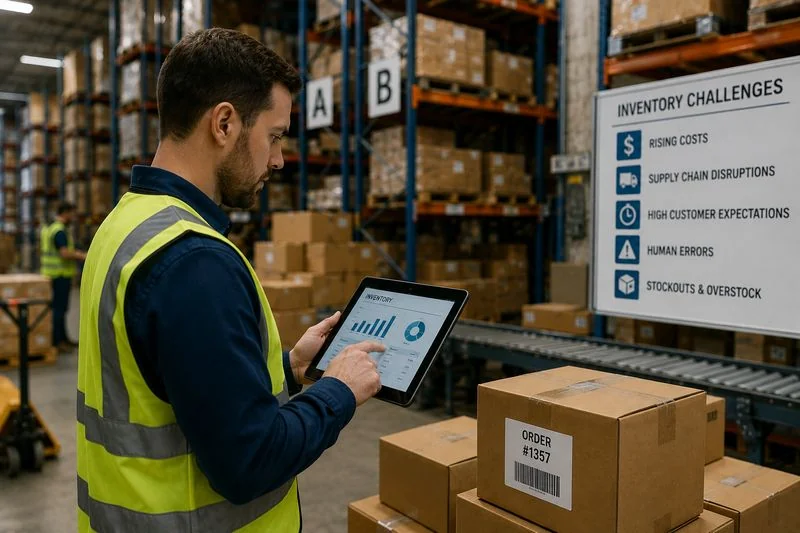
For businesses involved in vehicle transportation, auto parts, or freight shipping, inventory problems often lead to higher storage costs, missed delivery windows, and unnecessary transportation expenses. A company may order too much inventory and pay for extra warehouse space, or order too little and lose customers because products are unavailable.
Today, customers expect fast shipping and accurate delivery updates. This means businesses need better visibility, faster decision-making, and more organized inventory systems than ever before. Without proper planning, costs can increase quietly in the background through fuel waste, emergency shipments, storage fees, and inefficient warehouse operations.
For budget-conscious businesses, improving inventory management is not just about organization. It is one of the most effective ways to reduce shipping costs and improve profit margins.
Why Do Inventory Mistakes Cost Businesses More Than Before?
Inventory mistakes are much more expensive today because supply chains move faster and customer expectations are higher. A single error can affect transportation schedules, warehouse operations, and customer satisfaction at the same time.
For example, imagine a small used car dealer waiting for replacement parts before selling a vehicle. If the inventory count is incorrect and the part is actually out of stock, the dealer may need to pay for expedited shipping. Instead of using affordable ground transportation, they may be forced to use expensive last-minute delivery services just to avoid losing a customer.
Overstocking also creates problems. Businesses often buy extra inventory “just in case,” but too much inventory increases storage costs and ties up money that could be used elsewhere. This becomes especially difficult for smaller companies working with limited budgets.
Manual inventory tracking increases the risk of these mistakes even further. Spreadsheets, paper records, or outdated systems can easily create inaccurate counts, duplicate orders, or missed shipments. Over time, these small errors add up and reduce overall efficiency.
Many businesses also underestimate the hidden costs connected to inventory mistakes, including:
- Extra warehouse fees
- Higher labor costs
- Delayed shipments
- Emergency freight charges
- Lost sales opportunities
- Customer complaints and refunds
The longer an inventory issue goes unnoticed, the more expensive it usually becomes.
How Can Poor Inventory Visibility Increase Shipping Expenses?
Poor inventory visibility makes it difficult to know exactly what products are available, where they are located, and when they need to be shipped. Without real-time information, businesses often make rushed decisions that increase transportation costs.
For example, a company may think inventory is available in one warehouse, only to discover later that the product is stored in another location. This can create longer shipping routes, additional transfers, and unexpected delays. In some cases, businesses must split shipments between multiple warehouses, which increases freight costs even more.
Lack of visibility also makes it harder to plan efficient loads. Trucks may leave partially filled because businesses do not have accurate inventory data ready in time. Paying for unused trailer space is one of the most common ways companies lose money in transportation.
Another major problem is reacting too late. When businesses cannot track inventory properly, they often discover shortages only after customers place orders. This creates panic shipping situations where companies pay premium prices for faster transportation.
Real-time visibility helps businesses avoid these costly situations. Modern inventory and transportation systems allow companies to:
- Monitor stock levels instantly
- Track shipments in real time
- Reduce unnecessary freight movements
- Plan deliveries more efficiently
- Prevent duplicate or incorrect orders
Companies that improve inventory visibility usually gain better control over both logistics costs and customer service performance.
What Problems Do Small Businesses Face When Managing Inventory?
Small businesses often face the biggest inventory challenges because they usually operate with limited warehouse space, smaller teams, and tighter budgets. Unlike large corporations, they may not have access to advanced automation systems or dedicated logistics departments.
Many small businesses still rely on manual inventory management methods. While this may work in the beginning, it becomes difficult to manage as order volume grows. A business owner may spend hours checking inventory manually, updating spreadsheets, or fixing shipping mistakes instead of focusing on sales and growth.
Warehouse space is another common issue. Small businesses often try to store inventory in crowded local facilities or shared spaces that were never designed for efficient logistics operations. This can slow down order picking, increase handling mistakes, and make shipments less organized.
Cash flow pressure also affects inventory decisions. Smaller companies may buy inventory in large quantities to receive discounts, even when they do not have enough space to store products efficiently. On the other hand, they may avoid ordering enough inventory because they are worried about upfront costs, which can lead to stock shortages later.
Transportation costs are especially important for budget-focused businesses. A small company usually cannot absorb expensive shipping mistakes as easily as a large corporation. One delayed delivery or emergency shipment can significantly reduce profit from an entire order.
How Can a Better Inventory Strategy Reduce Costs?
A strong inventory strategy helps businesses reduce waste, improve delivery speed, and avoid unnecessary transportation expenses. Many companies focus only on buying products at lower prices, but the real savings often come from managing inventory more efficiently.
When inventory is organized properly, businesses can move products faster, avoid storage problems, and reduce emergency shipping situations. Even simple improvements in warehouse organization or order processing can create noticeable savings over time.
For companies involved in freight, auto transport, or parts distribution, inventory strategy directly affects transportation costs. Poor planning can lead to partially loaded trucks, missed delivery windows, repeated shipments, or products sitting too long in storage. A smarter strategy helps businesses keep inventory flowing smoothly while controlling operational expenses.
The goal is not simply to store more inventory. The goal is to store the right products, in the right quantities, and move them through the supply chain as efficiently as possible.
Is Your Warehouse Space Being Used Efficiently?
Many businesses lose money because their warehouse space is not organized efficiently. Products may be stored in the wrong locations, frequently used inventory may be difficult to access, or valuable space may be wasted on slow-moving items.
An inefficient warehouse increases labor time and slows down shipments. Employees spend more time searching for products, moving inventory around, or correcting mistakes. These delays eventually affect delivery schedules and customer satisfaction.
For example, a small automotive parts business may store popular parts in the back of the warehouse while rarely used inventory takes up the most accessible space. Every order then requires additional walking, lifting, and handling time. Over hundreds of shipments, this creates major productivity losses.
Warehouse organization also affects freight costs. When shipments are delayed because products cannot be located quickly, businesses may need to pay for expedited transportation to meet customer deadlines.
Simple warehouse improvements can make a big difference, including:
- Placing fast-moving inventory near packing stations
- Labeling shelves clearly
- Removing obsolete inventory regularly
- Organizing products by demand frequency
- Using vertical storage space more effectively
Businesses do not always need larger warehouses. In many cases, they simply need to use their existing space more efficiently.
How Can Better Order Picking Speed Up Deliveries?
Order picking is one of the most important parts of inventory management because it directly affects shipping speed and accuracy. Slow or disorganized picking processes create delays before products even leave the warehouse.
When employees spend too much time locating products, shipments are processed later, trucks wait longer, and delivery schedules become harder to maintain. Small delays inside the warehouse can quickly turn into expensive transportation problems outside the warehouse.
For example, imagine a business shipping auto parts to repair shops. If workers pick incorrect items or miss products during packing, replacement shipments may be needed later. This increases transportation costs and damages customer trust.
A faster and more accurate order-picking process helps businesses:
- Reduce shipping delays
- Improve delivery accuracy
- Lower labor costs
- Avoid return shipments
- Increase daily shipping capacity
Many companies improve efficiency by grouping similar products together or creating dedicated picking zones for high-demand inventory. Some businesses also use barcode scanning systems to reduce human errors.
Even small operational improvements can significantly speed up deliveries and reduce unnecessary shipping expenses.
Should You Store Inventory Yourself or Use a Warehouse Provider?
Many growing businesses eventually face an important question: should they continue storing inventory themselves or work with a warehouse provider?
Self-storage may seem cheaper at first, especially for smaller companies. However, as inventory volume increases, managing storage internally often becomes more expensive and less efficient. Businesses may struggle with limited space, labor shortages, equipment costs, or inefficient shipping operations.
Using a professional warehouse provider can help solve many of these problems. Third-party warehouse services often provide:
- Better inventory organization
- Faster order processing
- Access to transportation networks
- Scalable storage space
- Improved shipping coordination
For example, a small dealer shipping vehicles or parts across multiple states may not have enough warehouse capacity during busy seasons. Instead of renting additional temporary storage space and hiring extra staff, they can use a warehouse partner that already has the infrastructure in place.
Another advantage is flexibility. Businesses only pay for the space and services they actually use, which can help control costs during slower periods.
However, not every business needs outside storage immediately. Companies with lower order volumes or simple inventory systems may still manage efficiently on their own. The key is regularly reviewing whether the current setup supports growth without creating unnecessary costs.
How Can Inventory Planning Prevent Delays and Overstocking?
Good inventory planning helps businesses maintain the right balance between having enough products available and avoiding excessive inventory buildup. Without proper planning, companies often swing between shortages and overstocking, both of which are expensive.
Understocking creates delays and emergency shipping situations. Overstocking increases storage costs and ties up cash in products that may not sell quickly.
For example, a business preparing for seasonal demand may order too much inventory based on inaccurate sales forecasts. Months later, unsold products continue taking up warehouse space while storage and insurance costs increase.
On the other hand, ordering too little inventory can create panic buying situations. Businesses may be forced to split shipments, pay higher freight rates, or delay customer orders.
Effective inventory planning uses historical sales data, shipping timelines, and demand forecasting to improve decision-making. Businesses that plan ahead can:
- Reduce unnecessary storage expenses
- Avoid last-minute freight costs
- Improve delivery consistency
- Increase inventory turnover
- Maintain healthier cash flow
Planning also improves transportation efficiency because shipments can be consolidated and scheduled more effectively instead of being rushed at the last minute.
What Simple Changes Can Help Budget-Conscious Businesses Save Money?
Many businesses assume inventory optimization requires expensive software or major warehouse investments. In reality, small operational changes can often create meaningful savings without a large budget.
One of the easiest improvements is performing regular inventory audits. Even simple weekly checks can help identify inaccuracies before they become expensive problems.
Another effective strategy is reducing unnecessary inventory variety. Some businesses carry too many low-demand products that create storage complexity without generating enough profit. Focusing on faster-moving inventory can simplify operations and improve cash flow.
Improving communication between inventory management and shipping teams also helps reduce mistakes. When logistics teams know inventory levels in advance, they can plan transportation more efficiently and avoid rushed deliveries.
Businesses can also save money by:
- Consolidating shipments whenever possible
- Scheduling deliveries earlier instead of using urgent freight
- Monitoring slow-moving inventory
- Tracking common inventory errors
- Reviewing warehouse layouts regularly
For smaller businesses with limited resources, gradual improvements are often more realistic and sustainable than trying to completely rebuild operations at once.
Why Is Inventory Management Software Important for Modern Logistics?
Modern logistics moves too fast for businesses to rely only on spreadsheets, paper records, or manual inventory updates. As shipping volumes grow and customer expectations increase, inventory management software has become one of the most important tools for controlling costs and improving efficiency.
Inventory software gives businesses real-time access to stock levels, warehouse activity, shipment status, and order history. Instead of reacting to problems after they happen, companies can identify risks early and make faster decisions before small issues become expensive disruptions.
For businesses involved in transportation, vehicle shipping, or parts distribution, software also improves coordination between warehouses, carriers, and customers. Better information leads to better planning, fewer delays, and more predictable transportation costs.
Without proper technology, businesses often operate with limited visibility. They may not know exactly how much inventory is available, where products are located, or which shipments are delayed. This creates confusion across the supply chain and increases the risk of costly mistakes.
Inventory management software helps businesses stay organized, reduce unnecessary expenses, and improve overall logistics performance without relying entirely on manual processes.
How Does Real-Time Inventory Tracking Improve Accuracy?
Real-time inventory tracking allows businesses to see current inventory levels immediately as products move through the supply chain. Every incoming shipment, outgoing order, or inventory adjustment updates automatically, reducing the chance of outdated or incorrect information.
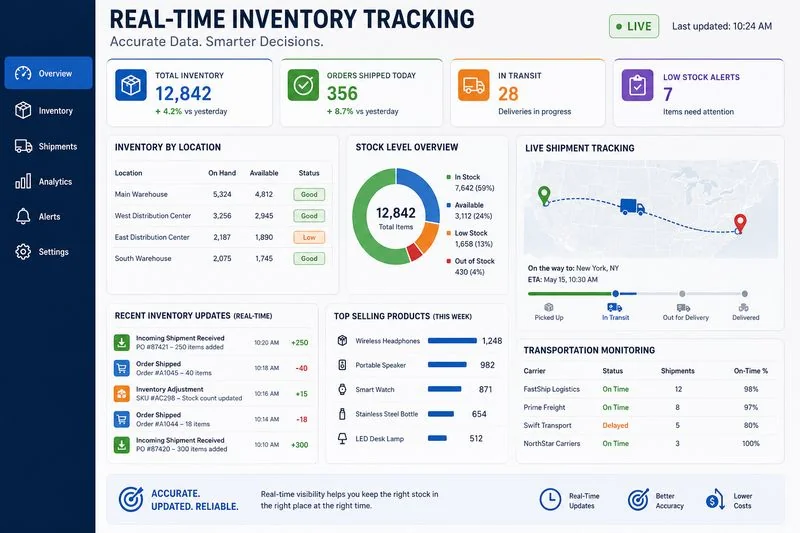
This improves accuracy because businesses no longer rely on delayed manual updates or physical inventory checks alone. Employees can quickly verify product availability, shipment status, and warehouse locations without wasting time searching manually.
For example, imagine an auto parts supplier handling hundreds of orders every week. Without real-time tracking, inventory records may show that a part is available even though it was already sold earlier in the day. This creates shipping delays, frustrated customers, and extra transportation costs.
With real-time systems, businesses can:
- Reduce inventory count errors
- Improve order accuracy
- Prevent duplicate shipments
- Track inventory movement instantly
- Respond faster to supply chain issues
Real-time visibility also improves communication between warehouse teams and transportation providers. Carriers can receive more accurate pickup schedules, while customers receive better delivery updates.
For budget-conscious businesses, reducing inventory inaccuracies helps avoid many unnecessary costs connected to delays, returns, and emergency freight.
How Can Software Help Prevent Out-of-Stock Situations?
Out-of-stock situations are one of the most common and expensive inventory problems businesses face. When products are unavailable unexpectedly, companies may lose sales, delay customer orders, or pay higher shipping costs to restock inventory quickly.
Inventory management software helps prevent these situations by monitoring stock levels continuously and alerting businesses before inventory runs too low.
Instead of waiting until products are already unavailable, businesses can set automatic reorder points based on sales trends and inventory movement. This allows companies to restock inventory earlier and avoid panic ordering.
For example, a business shipping automotive components may notice that brake parts sell faster during certain seasons. Inventory software can identify this trend and help the company reorder inventory before shortages happen.
Software also improves forecasting by analyzing:
- Historical sales data
- Seasonal demand changes
- Shipping timelines
- Supplier performance
- Inventory turnover rates
This helps businesses make smarter purchasing decisions instead of relying on guesswork.
Preventing out-of-stock situations is especially important for smaller businesses with limited budgets. Emergency orders and rushed freight shipments can quickly reduce profit margins. Better inventory planning allows businesses to use more affordable transportation options instead of expensive last-minute shipping.
What Inventory Problems Can Be Detected Before They Become Expensive?
One of the biggest advantages of inventory software is the ability to identify problems early. Many inventory issues start small, but become much more expensive when businesses fail to notice them quickly.
For example, software can detect:
- Unusual inventory shortages
- Slow-moving products
- Overstocked items
- Repeated picking errors
- Delayed shipments
- Supplier delivery problems
- Incorrect inventory counts
Without software, these issues may continue for weeks or months before anyone realizes there is a problem.
Imagine a warehouse consistently miscounting a frequently shipped product. At first, the errors may seem minor. Over time, however, the business may begin overselling products, delaying shipments, and paying for unnecessary replacement freight.
Software allows managers to spot these patterns much earlier through automated reports and tracking tools.
Another common issue is dead inventory. Some products sit in storage for long periods without selling, quietly increasing warehouse expenses. Inventory software helps businesses identify slow-moving inventory faster so they can reduce unnecessary storage costs.
Early problem detection also improves customer service because businesses can respond proactively instead of reacting after delays or shortages already affect customers.
How Do Transportation Management Systems Improve Supply Chain Visibility?
Transportation Management Systems, often called TMS platforms, help businesses manage shipments more efficiently by providing visibility into transportation activity across the supply chain.
A TMS connects inventory management with freight operations, allowing businesses to track shipments, schedule deliveries, monitor carrier performance, and manage transportation costs from one system.
Without proper transportation visibility, businesses may struggle with delayed pickups, inefficient routing, or communication problems between warehouses and carriers.
For example, a company may have inventory ready for shipment, but poor coordination with carriers causes trucks to arrive late or leave partially loaded. This increases transportation costs and slows down deliveries.
A Transportation Management System helps businesses:
- Track shipments in real time
- Monitor delivery progress
- Improve route planning
- Reduce empty trailer space
- Coordinate warehouse and carrier schedules
- Analyze freight expenses more accurately
Supply chain visibility becomes especially important during periods of high demand or transportation disruptions. Businesses with stronger visibility can adjust faster and make better decisions when schedules change unexpectedly.
For smaller businesses, using technology to improve transportation coordination can create major savings without needing a large logistics team.
How Does YK Freight Use Technology to Simplify Inventory and Shipping Management?
Technology plays a major role in helping logistics providers improve efficiency and reduce shipping complications. Companies like YK Freight use modern transportation and logistics systems to help businesses maintain better control over shipments and inventory movement.
Instead of relying on manual communication alone, technology helps streamline scheduling, shipment tracking, and transportation coordination. Businesses can receive more accurate delivery updates, faster responses, and better visibility into freight activity.
For customers shipping vehicles, auto parts, or freight, this improves planning and reduces uncertainty throughout the shipping process.
Technology also helps simplify:
- Load coordination
- Shipment monitoring
- Delivery scheduling
- Transportation reporting
- Communication between carriers and customers
This becomes especially valuable for businesses trying to reduce logistics costs while managing growing shipping volumes.
How Can Working With a 3PL Improve Inventory Management?
As businesses grow, managing inventory, transportation, and deliveries internally becomes more difficult and more expensive. Many companies eventually reach a point where handling logistics alone slows down operations and creates unnecessary costs. This is where working with a third-party logistics provider, commonly called a 3PL, can make a major difference.
A 3PL helps businesses manage transportation, warehousing, shipping coordination, and inventory movement more efficiently. Instead of building an entire logistics infrastructure on their own, companies can use the experience, technology, and transportation networks already established by a logistics provider.
For budget-focused businesses, a 3PL can help reduce operational pressure while improving delivery performance and inventory organization. This allows companies to focus more on sales, customer service, and business growth instead of spending valuable time solving shipping problems.
The right logistics partner also provides flexibility. As shipping demand changes, businesses can scale transportation and storage needs more easily without making large investments in warehouses, trucks, or additional staff.
What Is a 3PL and How Does It Work?
A 3PL, or third-party logistics provider, is a company that helps businesses manage parts of their supply chain and logistics operations. Depending on the business’s needs, a 3PL may handle transportation, warehousing, inventory storage, shipment coordination, freight management, or all of these services together.
Instead of organizing every shipment internally, businesses outsource some logistics responsibilities to a specialized provider.
For example, a small auto parts distributor may use a 3PL to store inventory, process outgoing orders, and arrange transportation to customers across multiple states. The business still owns the products and controls sales, but the logistics provider manages much of the operational work behind the scenes.
A 3PL typically helps with:
- Inventory storage
- Shipment scheduling
- Freight coordination
- Carrier management
- Warehouse operations
- Delivery tracking
- Supply chain reporting
This setup helps businesses improve efficiency without needing to hire a large logistics team or invest heavily in infrastructure.
Many companies also choose 3PL providers because logistics operations have become increasingly complex. Managing multiple shipments, carriers, and delivery schedules manually can quickly become overwhelming, especially for smaller businesses with limited resources.
How Can a 3PL Help Reduce Transportation and Storage Costs?
Transportation and storage are often some of the largest operational expenses for growing businesses. A 3PL can help reduce these costs by improving efficiency across the supply chain.
One major advantage is shipment consolidation. Instead of sending multiple smaller shipments separately, a 3PL can combine freight more efficiently, helping businesses reduce transportation expenses and maximize trailer space.
A 3PL also helps businesses avoid unnecessary warehouse costs. Companies do not always need to lease large storage facilities year-round if inventory demand changes seasonally. Flexible warehouse solutions allow businesses to pay only for the space they actually use.
For example, a company importing automotive inventory may experience heavy demand during certain months and slower activity during others. Instead of maintaining oversized warehouse space all year, they can scale storage needs through a logistics provider.
Transportation planning also improves cost control. Experienced logistics providers optimize routes, coordinate shipments more efficiently, and reduce empty miles whenever possible.
Additional cost-saving benefits may include:
- Lower emergency shipping expenses
- Reduced labor costs
- Better freight rate negotiation
- Fewer delivery delays
- Improved inventory turnover
- Reduced fuel waste
For smaller businesses, these savings can significantly improve profit margins without requiring major operational changes.
Why Is Supply Chain Visibility Important for Budget-Focused Businesses?
Supply chain visibility means being able to clearly track inventory, shipments, transportation activity, and delivery progress throughout the logistics process. Businesses with stronger visibility can make faster and more accurate decisions, which helps reduce unnecessary costs.
Without visibility, businesses often operate reactively. They may discover delays too late, lose track of inventory, or struggle to answer customer questions about shipments.
For example, if a shipment is delayed but the business has no real-time updates, customer service teams may spend hours trying to locate the freight manually. At the same time, warehouse schedules and delivery appointments may already be affected.
Poor visibility also increases the risk of:
- Missed deliveries
- Duplicate shipments
- Inventory shortages
- Communication breakdowns
- Unnecessary transportation expenses
A reliable 3PL helps improve visibility by using transportation management systems, shipment tracking tools, and centralized reporting systems.
For budget-conscious businesses, this visibility is extremely valuable because it helps prevent expensive surprises. Businesses can respond earlier to disruptions, adjust inventory plans faster, and avoid emergency transportation decisions that increase costs.
Better visibility also improves customer confidence. Customers appreciate accurate updates and more predictable delivery timelines, especially in industries where transportation delays can affect sales or operations directly.
How Can a Flexible Logistics Partner Help During Demand Changes?
Shipping demand rarely stays consistent throughout the year. Seasonal sales increases, market changes, supply chain disruptions, or unexpected customer demand can all create sudden pressure on inventory and transportation systems.
A flexible logistics partner helps businesses adapt to these changes without creating operational chaos.
For example, during peak seasons, businesses may suddenly need additional warehouse space, faster transportation scheduling, or increased shipping capacity. Managing these changes internally can be difficult and expensive, especially for smaller companies.
A flexible 3PL can quickly adjust by:
- Expanding storage capacity
- Coordinating additional carriers
- Scaling transportation operations
- Adjusting delivery schedules
- Supporting temporary increases in shipment volume
This flexibility helps businesses avoid major disruptions during busy periods.
Flexibility is also important during slower periods. Businesses do not want to pay for unused warehouse space, underutilized equipment, or extra staff when shipping demand decreases. Working with a logistics partner allows companies to scale operations up or down more efficiently based on actual business needs.
For budget-focused businesses, flexibility reduces the financial risk connected to unpredictable shipping volumes and changing market conditions.
What Should You Look for When Choosing a Reliable 3PL Provider?
Choosing the right 3PL provider is an important decision because logistics performance directly affects customer satisfaction, shipping costs, and inventory efficiency.
A reliable logistics partner should provide more than just transportation services. They should help businesses improve organization, communication, and long-term operational efficiency.
When evaluating a 3PL provider, businesses should look for:
- Strong communication and customer support
- Real-time shipment visibility
- Experience in their specific industry
- Flexible transportation solutions
- Reliable carrier networks
- Scalable warehouse and shipping options
- Clear pricing and reporting
Technology is also extremely important. Modern logistics providers should offer shipment tracking, inventory visibility, and organized reporting systems that help businesses stay informed throughout the shipping process.
Experience matters as well. A provider familiar with automotive logistics, freight shipping, or inventory coordination can often identify inefficiencies and recommend better transportation strategies.
Businesses should also pay attention to responsiveness. Delays in communication can quickly turn small shipping issues into expensive operational problems.
Final Thoughts: How Can Smarter Inventory Management Help You Save More?
Inventory management affects far more than warehouse organization. It directly impacts transportation costs, delivery speed, customer satisfaction, and overall business profitability. Even small inventory improvements can create meaningful savings when businesses reduce delays, improve shipment planning, and avoid unnecessary operational mistakes.
For budget-conscious businesses, smarter inventory management is often one of the most practical ways to stay competitive without dramatically increasing expenses. Companies do not always need expensive automation or massive warehouse facilities to improve efficiency. In many cases, better planning, stronger visibility, and improved logistics coordination can already make a major difference.
As supply chains become more complex, businesses that manage inventory proactively usually gain an advantage over competitors that continue reacting to problems after they happen. The goal is not simply to move products faster, but to create a more predictable, organized, and cost-efficient logistics process.
Which Inventory Mistakes Create the Biggest Hidden Costs?
Some inventory mistakes are easy to notice immediately, while others quietly increase costs over time. Hidden inventory costs are especially dangerous because businesses may not realize how much money they are losing until operational problems become serious.
One of the biggest hidden costs comes from inaccurate inventory counts. When businesses believe products are available but inventory records are incorrect, shipments become delayed and emergency transportation costs increase.
Another common problem is overstocking. Many companies purchase too much inventory to avoid shortages, but excessive inventory creates long-term storage expenses and reduces cash flow flexibility. Products that sit in warehouses for too long also increase the risk of damage, obsolescence, or slow turnover.
Poor warehouse organization creates hidden labor costs as well. Employees spend more time searching for products, correcting mistakes, and handling inefficient workflows. These small delays may seem minor individually, but they become expensive across hundreds of shipments and orders.
Other hidden inventory costs often include:
- Rush freight charges
- Duplicate shipments
- Return processing costs
- Missed delivery appointments
- Unused warehouse space
- Customer refunds or lost sales
Businesses that regularly review inventory performance can often identify these problems early before they significantly affect profitability.
How Can Small Businesses Improve Inventory Without a Huge Budget?
Many small businesses believe inventory optimization requires expensive software, advanced automation, or large warehouse investments. In reality, many improvements can be made gradually and at relatively low cost.
One of the most effective starting points is improving inventory visibility. Even simple tracking systems and regular inventory audits can help businesses reduce errors and improve planning.
Small businesses can also improve efficiency by focusing on operational discipline. Clear labeling systems, organized storage layouts, and standardized shipping procedures often create noticeable improvements without requiring major investments.
For example, a small automotive business may reduce delays simply by reorganizing frequently shipped products closer to packing areas. Another company may reduce transportation costs by planning shipments earlier instead of relying on urgent freight.
Additional low-cost improvements may include:
- Tracking slow-moving inventory
- Reducing unnecessary product variety
- Consolidating shipments
- Improving communication between warehouse and shipping teams
- Using basic inventory management software
- Reviewing inventory data regularly
The key is consistency. Small improvements applied consistently over time often create larger long-term savings than expensive short-term solutions.
Businesses should also focus on solving the biggest operational problems first instead of trying to completely redesign the entire inventory system at once.
Why Do Inventory Strategy and Logistics Need to Work Together?
Inventory management and logistics are closely connected. Even a well-organized inventory system can create problems if transportation planning is weak. At the same time, strong logistics operations become difficult when inventory data is inaccurate or disorganized.
For example, if inventory teams do not communicate effectively with transportation teams, businesses may schedule pickups before orders are fully prepared. This can lead to delayed shipments, carrier rescheduling fees, and wasted transportation capacity.
Similarly, poor inventory forecasting often creates rushed shipping situations where businesses pay premium freight rates because products were not ordered or prepared on time.
When inventory strategy and logistics work together, businesses gain several important advantages:
- Better shipment planning
- Faster order processing
- Lower transportation costs
- Improved warehouse efficiency
- Fewer delivery disruptions
- More accurate customer communication
Coordination also improves supply chain flexibility. Businesses can respond faster to changing demand, transportation disruptions, or inventory shortages when inventory and logistics operations are connected properly.
Companies that treat inventory management and logistics as separate systems often struggle with higher operational costs and avoidable shipping inefficiencies.
How Can YK Freight Help Businesses Improve Inventory Efficiency and Reduce Shipping Costs?
Managing inventory and transportation efficiently requires both organization and experience. Businesses that try to handle every logistics challenge internally often face growing operational pressure as shipment volume increases.
Companies like YK Freight help businesses simplify transportation planning and improve supply chain coordination through more organized freight operations and better shipment visibility.
For businesses shipping vehicles, automotive parts, or freight, transportation delays and inventory inefficiencies can quickly increase costs. YK Freight helps businesses reduce these risks by improving shipment coordination, delivery planning, and overall logistics efficiency.
Working with an experienced logistics provider can help businesses:
- Improve transportation scheduling
- Reduce unnecessary freight expenses
- Increase shipment visibility
- Improve delivery consistency
- Support growing inventory needs more efficiently
For budget-focused businesses, reducing logistics inefficiencies is one of the most practical ways to improve profitability without significantly increasing operational costs.
Further Reading
Best Practices for Robust Warehouse Management to Save Time and Money
How Supply Chain Management Works: A Guide for Small Businesses
How to Choose the Right TMS System for Your Business: Simple Guide
Building a Resilient Supply Chain: Strategies for Reliable, Cost-Friendly Delivery


ASK YOUR QUESTIONS