Omnichannel is changing how customers shop and how businesses ship. This guide explains why buyers want more delivery and pickup options, how flexible logistics can reduce delays, and how smarter supply chains help customers save time and control shipping costs.
Table of Content:
- What Is an Omnichannel Strategy and Why Is It Growing?
- How Does Omnichannel Benefit Businesses and Customers?
- What Can Businesses Learn from Amazon’s Omnichannel Strategy?
- How Does Omnichannel Change Modern Logistics?
- Why Will Omnichannel Continue to Shape the Future of Logistics?
What Is an Omnichannel Strategy and Why Is It Growing?
Consumer shopping habits have changed dramatically over the past decade. Instead of relying on a single way to buy products, people now expect businesses to offer multiple convenient options. They may browse products on a website, compare prices on a mobile app, place an order online, and pick it up in a store—or have it delivered directly to their home.
This shift has led to the rapid growth of omnichannel strategies. Businesses that can connect online and offline experiences provide greater flexibility, which helps attract and retain customers. At the same time, omnichannel operations require a more advanced logistics network capable of managing inventory, transportation, and customer expectations across multiple sales channels.
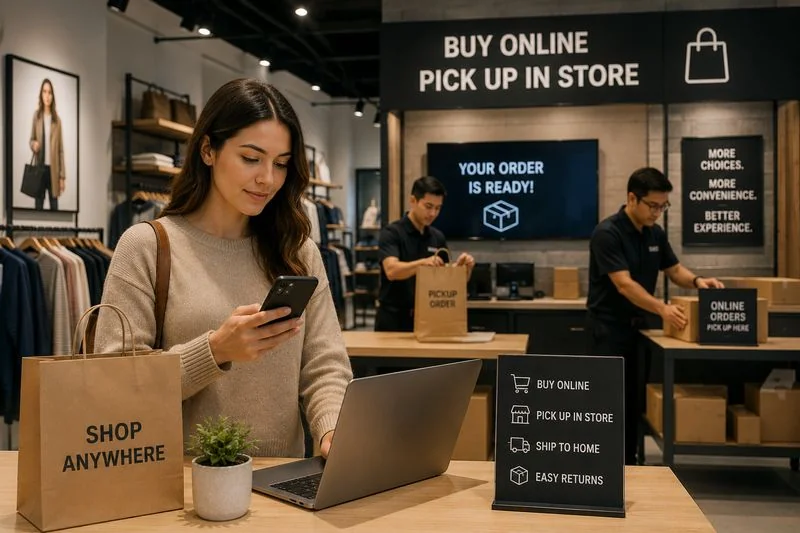
For logistics providers, omnichannel is more than a retail trend. It changes how products are stored, shipped, tracked, and delivered. Companies like YK Freight recognize that flexible transportation and efficient supply chains are becoming increasingly important as customer expectations continue to evolve.
What Does Omnichannel Mean in Retail and Logistics?
An omnichannel strategy allows customers to move seamlessly between different shopping channels while enjoying the same experience throughout the buying process. These channels can include physical stores, company websites, mobile apps, online marketplaces, social media, and customer service centers.
Unlike a traditional multichannel approach, where each sales channel often operates independently, omnichannel connects every channel into one integrated system. Customer information, inventory levels, and order status remain synchronized no matter where the purchase begins or ends.
For example, a customer searching for auto parts may check availability on a retailer's website during lunch, place the order through a mobile app after work, and pick it up at a nearby store the next morning. Another customer may begin shopping on a laptop but complete the purchase using a smartphone while traveling.
From a logistics perspective, this creates additional challenges. Warehouses must fulfill orders coming from several channels at the same time. Inventory must remain accurate across all locations, and transportation providers must support multiple delivery methods without creating unnecessary delays.
Instead of simply moving freight from one warehouse to another, logistics companies now help businesses connect suppliers, distribution centers, retail stores, and customers through one coordinated supply chain.
Why Are More Consumers Choosing Omnichannel Shopping?
Today's consumers value convenience almost as much as price. They want the freedom to choose how and when they shop without being limited to a single purchasing method.
Busy schedules are one of the biggest reasons behind this change. Many people simply do not have time to visit several stores after work. They prefer ordering online, comparing prices from multiple sellers, or selecting home delivery if it saves time.
Budget-conscious shoppers also benefit from omnichannel retail. Instead of driving from store to store looking for the lowest price, they can compare offers online within minutes. Some customers purchase online to access discounts, while others reserve products online and pick them up to avoid delivery fees.
Imagine someone buying replacement parts before shipping a used vehicle. Rather than visiting several stores, they can quickly compare prices online, check local availability, and choose the most affordable purchasing option. Saving even a small amount on parts or delivery can help reduce the total cost of transporting the vehicle.
Customers also appreciate greater transparency. They expect accurate inventory information, real-time order tracking, flexible payment methods, and multiple delivery choices. Businesses that provide these options are more likely to earn customer trust and encourage repeat purchases.
How Did eCommerce and the Pandemic Accelerate Omnichannel Growth?
Although online shopping had been growing for years, the COVID-19 pandemic dramatically accelerated the adoption of omnichannel retail. Consumers who had previously preferred in-store shopping suddenly needed safer alternatives.
Many people began ordering groceries, household goods, electronics, and other everyday products online for the first time. Retailers quickly expanded home delivery, curbside pickup, and click-and-collect services to meet rising demand.
Even after restrictions ended, customer behavior did not fully return to previous habits. Many shoppers discovered that combining online and in-store shopping offered greater convenience than relying on only one method.
Businesses also realized the importance of having flexible sales channels. Companies that already had strong eCommerce platforms adapted more quickly, while those relying entirely on physical stores often struggled to meet changing customer expectations.
The rapid growth of online orders created new logistics challenges. Warehouses needed faster order processing, carriers handled higher shipment volumes, and businesses required better inventory visibility to avoid stock shortages. Distribution centers also became more focused on fulfilling individual customer orders rather than shipping only large quantities to retail stores.
How Does Omnichannel Benefit Businesses and Customers?
Omnichannel helps businesses serve customers in the way that feels most convenient to them. Some people want home delivery. Others want to order online and pick up in person to avoid shipping fees. Some customers still prefer visiting a physical location before making a final decision.
This flexibility is valuable for both sides. Customers get more control over price, timing, and delivery options. Businesses get more chances to complete a sale instead of losing a customer because one shopping method does not work for them.
For logistics, omnichannel also creates a smarter flow of goods. Products can move from warehouses, stores, suppliers, or distribution centers depending on what is fastest and most cost-effective. When done well, this can reduce delays, lower unnecessary shipping costs, and improve customer satisfaction.
How Does Omnichannel Create a Better Customer Experience?
A strong omnichannel system makes shopping easier because customers do not feel locked into one path. They can start in one channel and finish in another without repeating the same steps.
For example, a customer may compare vehicle parts online, call the store to confirm details, pay through a website, and choose pickup instead of delivery to save money. Another customer may check a product in person but later order it online after finding a better delivery window.
This kind of flexibility is especially helpful for budget-conscious customers. A person trying to reduce the total cost of shipping a vehicle may compare transport options, storage fees, delivery dates, and pickup locations before choosing the most affordable solution.
Omnichannel also improves trust. Customers want clear information before they spend money. They want to know whether an item is available, when it can be delivered, what the delivery will cost, and whether pickup is cheaper. When these details are easy to find, customers feel more confident.
A better experience does not always mean the fastest option. Sometimes it means the customer can choose the option that fits their budget.
Why Is Real-Time Inventory Management So Important?
Real-time inventory management means a business can see what products are available at any given moment. This includes inventory in warehouses, stores, distribution centers, and sometimes even goods already in transit.
This is important because omnichannel customers expect accurate information. If a website says a product is available, the customer expects it to be ready for pickup or delivery. If the information is wrong, the result can be canceled orders, delays, refunds, and frustration.
For businesses, poor inventory visibility can also increase costs. They may overstock items “just in case,” pay more for emergency shipping, or lose sales because they cannot locate products quickly enough.
A simple example is a customer buying a used car at auction and waiting for a needed replacement part before arranging transport. If the seller’s system shows the part is in stock but it is actually unavailable, the customer may lose time and pay extra storage fees at the auction yard.
Real-time inventory helps prevent these problems. It allows businesses to make better decisions, ship from the closest location, avoid unnecessary transfers, and give customers more accurate delivery estimates.
How Can Flexible Fulfillment Reduce Costs and Improve Delivery?
Flexible fulfillment means a business can complete an order in different ways depending on cost, location, and customer preference. The order may ship from a warehouse, a retail store, a local distribution center, or a supplier. The customer may choose home delivery, store pickup, curbside pickup, or another available option.
This flexibility can reduce costs because the business does not always need to ship from one central warehouse. If the product is already closer to the customer, it may be cheaper and faster to fulfill the order from that location.
For customers, flexible fulfillment can create real savings. Someone trying to keep vehicle shipping costs low may choose terminal pickup instead of door-to-door delivery. Another customer may wait an extra day for a lower shipping rate instead of paying more for faster service.
The same idea works in retail. A shopper may choose pickup to avoid delivery fees. A business may combine several shipments going in the same direction to reduce transportation costs. A warehouse may send an order through the carrier that offers the best balance of price and timing.
Flexible fulfillment does not mean every option is always available. It means the system gives customers and businesses more ways to find the best option for each situation.
Why Is an Efficient Supply Chain Essential for Omnichannel Success?
Omnichannel only works when the supply chain behind it is organized. A business can offer many shopping options, but if inventory is wrong, deliveries are late, or communication is poor, customers will quickly lose trust.
An efficient supply chain connects purchasing, warehousing, transportation, tracking, and customer service. Each part must work together. When one part fails, the entire customer experience can suffer.
For example, if a customer orders an item online for pickup, the store must know the order exists, the product must be available, and the staff must prepare it on time. If the product needs to move from a warehouse to the store, transportation must be scheduled correctly.
In freight and vehicle shipping, the same principle applies. A customer may want the most affordable transport option, but low cost still requires coordination. The carrier must know where the vehicle is, when it can be picked up, what equipment is needed, and where it should be delivered.
A strong supply chain helps reduce empty miles, missed pickups, storage fees, and repeated handling. These savings matter because unnecessary delays often turn into extra costs.
What Can Businesses Learn from Amazon’s Omnichannel Strategy?
Amazon is often used as one of the strongest examples of successful omnichannel retail. Instead of forcing customers to shop in one way, the company gives them multiple options and allows them to switch between those options whenever it is most convenient.
This strategy goes far beyond simply selling products online. Amazon has invested in physical stores, distribution centers, advanced inventory systems, same-day delivery networks, pickup locations, and digital technology that keeps every part of the shopping experience connected.
For businesses, the biggest lesson is simple: customers value flexibility. The easier it is for people to buy, receive, return, or exchange products, the more likely they are to become repeat customers.
How Does Amazon Fresh Combine Online and In-Store Shopping?
Amazon Fresh is a good example of how an omnichannel strategy works in practice. Customers can shop using a website, a mobile app, or other Amazon services, then decide whether they want home delivery, curbside pickup, or a traditional in-store shopping experience.
This flexibility allows each customer to choose the option that best fits their schedule and budget. Someone with limited free time may order groceries online for delivery, while another customer may choose pickup to avoid delivery fees. Others still enjoy walking through a physical store and selecting products themselves.
Amazon Fresh stores also use technology to simplify shopping. Depending on the location, customers may use digital tools to scan products while shopping and complete payment with minimal waiting. Traditional checkout options are often still available for customers who prefer them.
Behind the scenes, all of these shopping methods rely on one connected inventory and logistics system. Whether the customer places an order online or buys products in person, the business works from the same inventory information and fulfillment network.
This integrated approach reduces confusion, improves order accuracy, and creates a more consistent customer experience.
Why Are Pickup, Delivery, and In-Store Options Important to Customers?
Every customer has different priorities. Some care most about speed, while others focus on convenience or cost. Offering multiple fulfillment options allows businesses to serve a wider range of customer needs.
Home delivery is often the most convenient option for busy families or people who cannot easily visit a store. Pickup services appeal to customers who want to avoid shipping charges while still saving time. Traditional in-store shopping remains important for customers who prefer to see products before making a purchase.
Cost is another important factor. Budget-conscious shoppers frequently compare the price of delivery with the cost of driving to a store. Sometimes paying for delivery makes sense because it saves several hours. In other situations, free pickup is the more economical choice.
The same thinking applies to logistics and vehicle transportation. Someone shipping a vehicle may compare terminal pickup with door-to-door delivery to find the most affordable solution. Another customer may choose a flexible pickup date if it reduces transportation costs.
Giving customers more choices allows them to select the option that provides the best balance between price, convenience, and delivery time.
What Lessons Can Other Businesses Learn from Amazon’s Approach?
Amazon's success is not based on offering the most shopping channels. It comes from making every channel work together. Businesses of all sizes can apply this idea, even without Amazon's resources.
One important lesson is to keep inventory synchronized across every sales channel. Customers should see accurate product availability whether they shop online, through a mobile app, or in a physical store. Reliable inventory information helps prevent canceled orders and improves customer confidence.
Another lesson is to simplify the buying process. Customers should be able to move between devices or channels without starting over. For example, they might add products to a shopping cart on a computer and complete the purchase later on a smartphone.
Businesses should also focus on fulfillment flexibility. Instead of offering only one delivery method, they can provide several options based on customer preferences. Even small improvements, such as local pickup or scheduled delivery windows, can improve customer satisfaction.
Technology also plays an important role. Automated inventory systems, warehouse management software, shipment tracking, and transportation management platforms help businesses respond more quickly to customer demand while reducing manual work.
Finally, successful omnichannel businesses recognize that logistics is no longer just a support function. Fast, accurate, and flexible transportation has become a competitive advantage. Customers remember whether deliveries arrive on time, whether tracking information is accurate, and whether problems are resolved quickly.
How Does Omnichannel Change Modern Logistics?
Omnichannel has changed logistics from a simple “ship from warehouse to store” model into a much more flexible system. Today, orders can come from websites, apps, marketplaces, retail stores, and customer service teams. Each order may need a different delivery path.
This creates more pressure on transportation, warehousing, tracking, and communication. Businesses need to know where products are, how fast they can move, and which shipping option makes the most sense for the customer.
For customers trying to save money, this matters because better logistics can create more affordable choices. A buyer may choose pickup instead of delivery, a slower but cheaper route, or a nearby fulfillment location to reduce shipping costs.
Why Are Distribution Centers Evolving for Direct-to-Consumer Shipping?
Traditional distribution centers were built mainly to move large quantities of products to stores. Omnichannel changed that. Now many businesses need to ship individual orders directly to customers.
Direct-to-consumer shipping requires different processes. Instead of loading pallets for one retail location, workers may need to pick, pack, label, and ship hundreds or thousands of separate orders every day. Each order may have a different address, carrier, delivery speed, and cost.
This is why distribution centers are becoming more automated and more connected to inventory systems. Businesses need faster order processing, accurate stock information, and better coordination with carriers.
For example, a customer buying a part for a vehicle before arranging transport does not want to wait a week because the item was stored in the wrong location. If the distribution center can process the order quickly and ship it from the closest facility, the customer saves time and may avoid extra storage or delay fees.
Modern distribution centers also support pickup, returns, store replenishment, and local delivery. This flexibility helps businesses serve customers through different channels without creating unnecessary delays.
How Can Third-Party Logistics (3PL) Providers Support Omnichannel Operations?
A third-party logistics provider, or 3PL, helps businesses manage transportation and supply chain tasks. This can include inbound freight, outbound shipping, route planning, dock scheduling, carrier coordination, tracking, and documentation.
For many businesses, omnichannel logistics becomes difficult to manage alone. More sales channels mean more orders, more delivery options, and more customer expectations. A 3PL can help organize these moving parts.
A reliable 3PL can also help companies choose the right transportation method for each shipment. Some orders may need fast delivery. Others may need the lowest possible rate. Some freight may require special equipment, while other shipments can move through standard carrier networks.
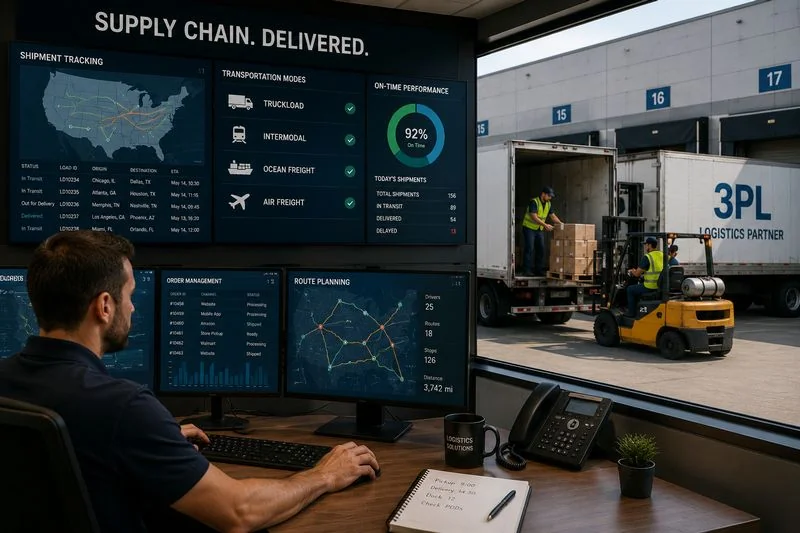
This is especially important when cost matters. A customer shipping a vehicle or auto-related goods may not need the fastest option. They may need the most practical option that keeps the total cost under control. Good logistics planning can help avoid empty miles, missed appointments, storage charges, and poor routing.
3PL providers also give businesses better visibility. Instead of guessing where a shipment is, customers and companies can receive updates, track progress, and respond earlier if something changes.
How Is YK Freight Helping Businesses Build More Flexible Supply Chains?
YK Freight helps businesses build more flexible supply chains by focusing on reliable transportation, practical planning, and clear communication. In an omnichannel environment, flexibility is important because customer demand can come from many directions at once.
A business may need freight moved from a port, warehouse, rail terminal, distribution center, or customer location. Each shipment may have a different schedule, budget, and delivery requirement. The right logistics partner helps match the shipment with the most efficient transportation option.
YK Freight supports this process by helping coordinate freight movement, improve shipment visibility, and reduce unnecessary delays. For businesses, this can mean better control over delivery timelines and fewer surprises. For customers, it can mean a smoother experience and more realistic shipping expectations.
This is useful for budget-conscious vehicle shipping customers as well. For example, someone buying a car at auction may need the vehicle picked up before storage fees increase. Another customer may choose a flexible delivery window to reduce transportation costs. In both cases, strong coordination can make a real difference.
Why Will Omnichannel Continue to Shape the Future of Logistics?
Omnichannel will continue to shape logistics because customers now expect more choice, more transparency, and more control. They want to shop online, pick up in person, compare delivery prices, track shipments, and choose the option that fits their budget.
For businesses, this means logistics can no longer be treated as a back-office task. Delivery speed, shipping cost, inventory accuracy, and communication directly affect customer satisfaction. A good product is not enough if the order is hard to receive or too expensive to ship.
This is especially true for customers trying to save money. Whether someone is ordering groceries, buying auto parts, or shipping a vehicle from another state, they want clear options before they commit. Omnichannel logistics helps create those options.
What Should Businesses Expect from Omnichannel Over the Next Decade?
Over the next decade, omnichannel will likely become the standard way many businesses operate. Customers will expect online and offline channels to work together without confusion.
Businesses should expect more demand for real-time inventory updates, flexible delivery windows, pickup options, and accurate shipment tracking. Customers will not want to call several times just to find out where an order is or whether a product is available.
Companies should also expect more pressure to control shipping costs. As customers compare prices online, expensive or unclear delivery fees can cause them to leave before completing a purchase. Businesses that offer practical delivery options will have an advantage.
Distribution centers may become more automated and more focused on direct-to-consumer fulfillment. Instead of shipping only large orders to stores, warehouses will continue handling individual orders, returns, local delivery, and store replenishment at the same time.
For freight and vehicle transportation, the same trend will continue. Customers will want more visibility, better scheduling, and choices that help them balance cost and convenience.
How Can Companies Prepare for Changing Customer Expectations?
Companies can prepare by making their logistics systems more flexible and easier to understand. The first step is improving inventory visibility. Businesses need to know what they have, where it is located, and how quickly it can be delivered.
The next step is offering realistic fulfillment options. Not every customer needs the fastest delivery. Some want the lowest price. Others want a specific pickup time. Businesses that show clear options help customers make better decisions.
Communication is also important. Customers should receive updates when an order is confirmed, shipped, delayed, or ready for pickup. This reduces frustration and prevents unnecessary calls.
Businesses should also review their transportation partners. A company may have a strong website and good products, but poor delivery can damage the entire customer experience. Reliable carriers and logistics providers help protect customer trust.
A simple example is a person buying a used car at auction on a tight budget. They may be willing to wait a few extra days if it lowers transport costs. But they still need clear pickup timing, honest pricing, and updates before storage fees start adding up. Good logistics planning makes that possible.
Why Does YK Freight Continue to Invest in Modern Logistics Solutions?
YK Freight continues to invest in modern logistics solutions because customer expectations are changing quickly. Businesses and individual customers want shipping that is reliable, organized, and cost-conscious.
Modern logistics tools help improve route planning, shipment visibility, communication, and scheduling. These improvements can reduce unnecessary delays and help customers make better decisions about transportation.
For businesses using omnichannel strategies, dependable freight support is especially important. Orders may come from several channels, and each one may require a different delivery plan. A flexible logistics partner helps keep freight moving without adding confusion.
For budget-conscious vehicle shipping customers, this matters in a practical way. Better coordination can help avoid missed pickup windows, extra storage charges, and unclear delivery timelines. The goal is not only to move freight quickly, but to move it in the most efficient way possible.
Further Reading
The Future of Omnichannel Retailing: Trends Shaping Retail Success
How Supply Chain Management Works: A Guide for Small Businesses
Sustainable Supply Chain: How Green Logistics Saves Money & Boosts Efficiency
Advanced Inventory Management Tips to Reduce Shipping and Storage Costs


ASK YOUR QUESTIONS