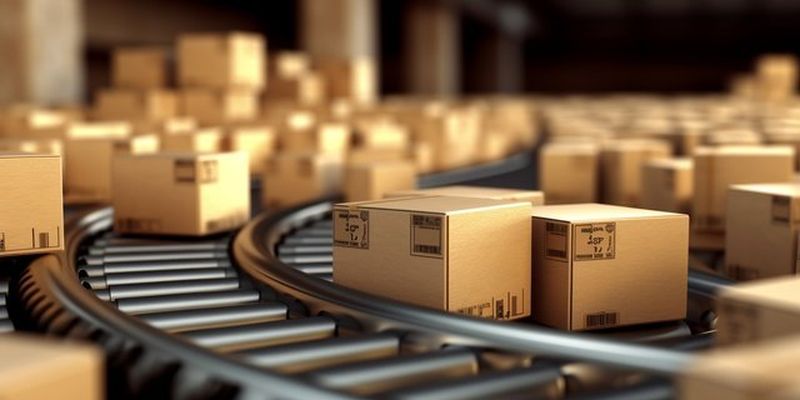
Cross-docking can help move freight faster while reducing storage, handling, and transportation costs. This guide explains how cross-docking works, its main types, benefits and risks, and when it makes sense to use it. You’ll also learn how the right cross-docking strategy can help create more efficient loads and keep shipping costs under control.
Table of Content:
- What Is Cross-Docking in Supply Chain Management?
- When Does Cross-Docking Make the Most Sense?
- What Are the Main Benefits and Risks of Cross-Docking?
- What Are the Main Types of Cross-Docking?
- How Can Cross-Docking Improve Logistics With a 3PL?
What Is Cross-Docking in Supply Chain Management?
Cross-docking is a logistics process where freight moves from an inbound vehicle to an outbound vehicle with little or no long-term storage in between.
Instead of placing goods in a warehouse for days or weeks, a cross-dock facility receives them, sorts them, and prepares them for the next part of the trip. In many cases, the freight moves through the facility very quickly.
The main goal is to reduce unnecessary handling and storage.
This can help lower warehouse costs, shorten delivery times, and keep freight moving more efficiently through the supply chain.
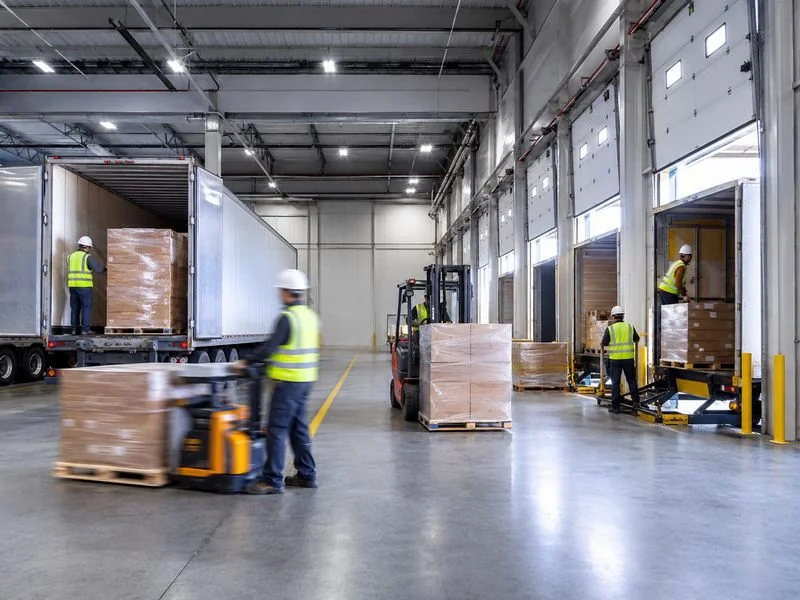
For budget-conscious customers, this can be important because every extra storage day or handling step can increase the final shipping cost.
Imagine a vehicle shipment or automotive parts load arriving at a regional facility. Instead of being stored for several days, the load can be transferred to another truck that is already headed toward the final destination. That can reduce waiting time and help avoid extra warehouse charges.
Cross-docking works best when shipments are well organized and the inbound and outbound schedules are closely coordinated.
How Does Cross-Docking Work Step by Step?
The cross-docking process usually starts when an inbound truck arrives at the facility.
The freight is unloaded at the receiving side of the building. Workers then check the shipment, identify where each item needs to go, and move it toward the correct outbound area.
A typical process may include these steps:
- the inbound truck arrives;
- freight is unloaded;
- shipment information is checked;
- goods are sorted by destination;
- smaller shipments may be combined;
- larger loads may be divided;
- freight is moved to the outbound dock;
- the outbound truck is loaded;
- the shipment continues to the next destination.
The key difference is that the freight does not usually stay in storage for long.
For example, imagine several small automotive shipments arrive from different locations. If they are all headed toward the same region, they may be combined into one larger outbound load.
This can make transportation more efficient because the truck leaves with more usable capacity.
Cross-docking can also work in the opposite direction. One large inbound shipment may be divided into several smaller loads that go to different customers or facilities.
The exact process depends on the shipment type and delivery plan.
How Is Cross-Docking Different From Traditional Warehousing?
Traditional warehousing is designed to store products until they are needed.
Goods may arrive at a warehouse, be placed on racks, remain there for days or weeks, and later be picked, packed, and shipped.
Cross-docking is designed to minimize that storage step.
The freight moves through the facility rather than staying there.
This difference can have a major effect on cost and speed.
Traditional warehousing often requires more space, more inventory handling, and more labor. Cross-docking usually requires less long-term storage because the main purpose of the building is to receive, sort, and transfer freight.
For example, suppose a company receives a shipment of automotive parts that are already assigned to customers.
With traditional warehousing, those parts might be unloaded, stored, entered into inventory, picked again later, and then loaded onto another truck.
With cross-docking, the same parts may be unloaded, sorted by destination, and moved directly to the outbound dock.
That removes several steps.
However, traditional warehousing still makes more sense when goods need to be stored for longer periods or when demand is uncertain.
Cross-docking is better suited to shipments that already have a clear next destination.
Why Do Cross-Dock Facilities Use Less Storage Space?
Cross-dock facilities need less storage because freight is not expected to remain inside for very long.
The building is usually designed around movement rather than inventory.
One side may be used for inbound trucks, while the other side handles outbound trucks. Between them, there is space for sorting, staging, and moving freight.
Because products spend less time sitting on shelves, the facility does not need as many storage racks or large inventory areas.
This can reduce several costs, including:
- warehouse rent;
- long-term storage fees;
- inventory handling;
- labor;
- shelving and storage equipment;
- repeated loading and unloading.
For a customer trying to reduce transportation costs, fewer storage steps can be valuable.
Consider a shipment that arrives at a facility in the morning and leaves later the same day. The customer may avoid paying for several days of warehouse storage simply because the freight keeps moving.
Less storage space does not mean cross-docking is simple.
The facility still needs enough room to separate loads, inspect shipments, and stage freight before the outbound vehicle arrives.
Good organization is essential because delays can quickly create congestion.
How Long Do Goods Usually Stay at a Cross-Docking Facility?
Cross-docking is designed for short stays.
In many operations, freight may remain at the facility for only a few hours. Some shipments may stay longer if they are waiting for another load or for an outbound truck to arrive.
The exact time depends on the type of cross-docking being used.
In continuous cross-docking, freight may move almost directly from one truck to another.
In consolidation cross-docking, smaller loads may wait until enough freight is available to build a fuller outbound shipment.
That wait can sometimes be worthwhile because combining freight may reduce the transportation cost per shipment.
For example, sending one small load on its own may be expensive. Waiting a little longer so it can share space with other freight headed in the same direction may create a more cost-effective move.
The important point is that cross-docking is not intended for long-term storage.
The faster and more accurately freight moves through the facility, the more useful the process becomes.
When Does Cross-Docking Make the Most Sense?
Cross-docking works best when freight needs to keep moving and there is little reason to store it for a long time. It is especially useful when the next destination is already known and inbound and outbound transportation can be coordinated closely.
This method can help reduce handling, shorten transit time, and lower storage costs. But it is not the right solution for every shipment.
Cross-docking makes the most sense when freight is already sorted, pre-labeled, time-sensitive, moving in high volume, or ready to continue to another destination soon after arrival.
For customers trying to keep transportation costs low, cross-docking can be useful when it removes unnecessary warehouse time. Instead of paying to store freight for several days, the shipment may move through a facility and continue on the same day or shortly after.
The biggest savings usually come when the process is planned well. If trucks arrive at the wrong times or freight is not ready, delays can reduce the benefits.
Which Types of Freight Are Best Suited for Cross-Docking?
Not every type of freight is a good fit for cross-docking.
The best candidates are shipments that already have a clear destination and do not need long-term storage or complicated processing.
Common examples include:
- pre-sorted and pre-labeled goods;
- automotive parts;
- packaged consumer products;
- food and beverages;
- time-sensitive freight;
- supplier components;
- high-volume shipments;
- freight that can be consolidated with other loads;
- large loads that need to be divided into smaller shipments.
Cross-docking is also useful when products move on a predictable schedule.
For example, if automotive parts arrive regularly from several suppliers and need to move to the same manufacturing or distribution area, they can be sorted and transferred without sitting in storage.
Freight that requires inspection, repackaging, repair, or long-term inventory holding may be less suitable.
Customers should also consider timing. If the outbound truck will not arrive for several days, traditional storage may make more sense than keeping freight in a cross-dock staging area.
Which Industries Use Cross-Docking Most Often?
Cross-docking is common in industries where speed and frequent freight movement are important.
Retailers often use it to move products from suppliers to stores or distribution points without holding large amounts of inventory.
Food and beverage companies use cross-docking because many products need to move quickly and should not spend unnecessary time in storage.
Manufacturers may use it to receive components from multiple suppliers and send them toward production facilities.
The automotive industry also benefits from cross-docking because vehicles, parts, tires, engines, and other components often move between auctions, suppliers, warehouses, repair facilities, dealerships, and transportation hubs.
Other industries that commonly use cross-docking include:
- automotive;
- consumer goods;
- food and beverage;
- chemicals;
- retail;
- manufacturing;
- parcel and e-commerce distribution.
The exact benefit depends on the type of freight and how well transportation schedules are coordinated.
How Is Cross-Docking Used in the Automotive Industry?
The automotive industry uses cross-docking in several ways.
Parts from different suppliers may arrive at one facility and then be combined into outbound loads headed to a manufacturing plant, repair center, dealership, or another warehouse.
Large shipments may also be broken down into smaller loads going to different destinations.
Vehicle-related freight can benefit in similar ways.
For example, imagine several automotive shipments arriving from different locations but all needing transportation toward the same region. Instead of moving each one separately, a logistics provider may be able to coordinate them through a cross-dock facility and build a more efficient outbound load.
Cross-docking can also help when freight needs to change transportation modes or carriers.
A shipment may arrive on one truck, be sorted or transferred, and then continue on another vehicle better suited for the next part of the route.
For budget-conscious customers, this can be useful because efficient consolidation may reduce empty truck space and improve the overall use of transportation capacity.
However, vehicle-related cross-docking must be planned carefully. Different types of automotive freight may require different equipment, loading methods, and handling procedures.
When Can Cross-Docking Help Reduce Vehicle Shipping Costs?
Cross-docking can help lower shipping costs when it removes unnecessary storage or allows freight to move more efficiently.
One common opportunity is consolidation.
Suppose several smaller automotive shipments are heading toward the same destination area. Moving them individually may cost more because each shipment uses only part of a truck's capacity.
If those loads can be combined at a cross-dock facility, the outbound truck may leave with a fuller load.
That can reduce the transportation cost per shipment.
Cross-docking may also save money when it helps avoid warehouse fees.
For example, a customer may need to move automotive parts or vehicle-related cargo through a regional facility. If the shipment stays there for several days, storage charges can add up.
If it can be transferred quickly to the next truck, those costs may be reduced.
Another advantage is lower handling.
Every time freight is unloaded, stored, picked again, and reloaded, more labor is required. Cross-docking can remove some of those steps.
Still, cross-docking is not automatically cheaper in every situation.
If the facility is far from the normal route, if outbound transportation is not ready, or if the freight requires special handling, the extra transfer may not make financial sense.
The best approach is to compare the total transportation cost, not just one part of the shipment.
How Can YK Freight Use Cross-Docking to Support Faster Freight Movement?
YK Freight can use cross-docking as part of a transportation plan when freight needs to move through a facility quickly rather than remain in storage.
The process can be useful for shipments that need sorting, consolidation, deconsolidation, or transfer between inbound and outbound transportation.
For example, several smaller loads moving in the same direction may be brought together before the next stage of transportation. A large inbound shipment may also be divided into smaller loads for different destinations.
This can help improve truck utilization and reduce unnecessary storage time.
For customers working with limited budgets, the main value is better coordination.
A well-planned cross-dock move can help reduce waiting, warehouse handling, and storage charges. It may also make it easier to match freight with the right outbound transportation.
YK Freight can also help customers determine whether cross-docking actually makes sense for a particular shipment.
Sometimes direct transportation is the simplest and least expensive option. In other cases, using a cross-dock facility can create a more efficient route.
What Are the Main Benefits and Risks of Cross-Docking?
Cross-docking can make a supply chain faster and more cost-efficient, but only when the process is well planned.
The main advantage is simple: freight spends less time sitting in storage. Instead, it moves from an inbound truck to an outbound truck with only the handling needed to sort, combine, or separate the load.
That can reduce warehouse costs, shorten delivery times, and lower the number of times freight must be moved.
For customers with limited budgets, these savings can be important. If a shipment can avoid several days of storage or an extra round of handling, the total transportation cost may be lower.
At the same time, cross-docking creates its own risks. The process depends on timing, accurate shipment information, and close coordination between inbound and outbound transportation. If one truck is late or freight arrives without the correct information, the entire schedule can be affected.
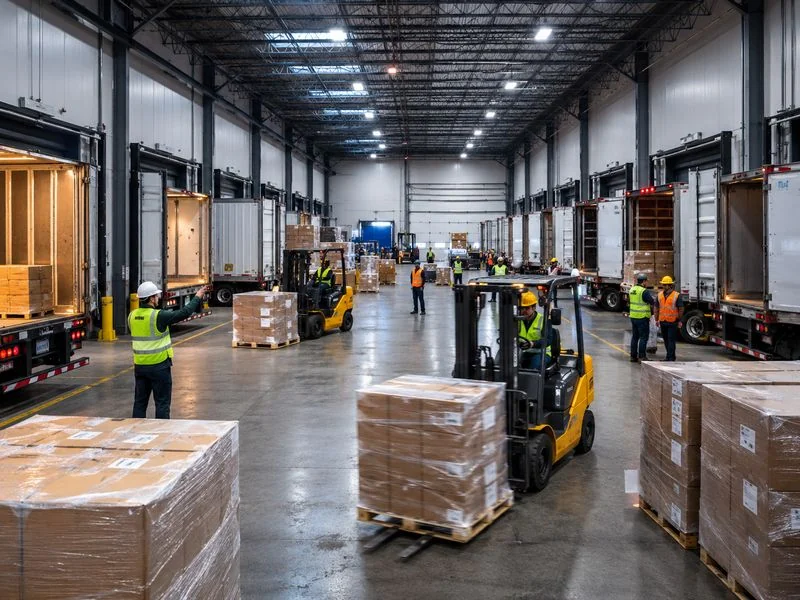
How Can Cross-Docking Reduce Storage and Handling Costs?
Traditional warehousing usually includes several steps.
Freight arrives, gets unloaded, moves into storage, stays there until needed, gets picked again, and is later moved to an outbound dock.
Each step requires time, labor, equipment, and warehouse space.
Cross-docking removes much of that process.
Instead of storing freight for a long period, workers move it from receiving to the outbound side of the facility. Some loads may be sorted or briefly staged, but the goal is to keep them moving.
This can reduce costs related to:
- long-term warehouse storage;
- repeated forklift movements;
- inventory handling;
- picking and restocking;
- additional packaging;
- warehouse labor;
- storage equipment.
For example, imagine a shipment of automotive parts arrives in the morning and is already scheduled to leave on another truck that afternoon.
Putting those parts into regular warehouse storage for only a few hours would create unnecessary work. Cross-docking allows the shipment to move directly toward the outbound dock instead.
For budget-conscious customers, fewer warehouse steps can mean fewer charges built into the total shipping cost.
How Can Cross-Docking Shorten Delivery Times?
Cross-docking can shorten delivery time because freight does not wait in storage before continuing to the next destination.
In a traditional warehouse, a shipment may remain for several days until someone picks it, prepares it, and schedules outbound transportation.
With cross-docking, the next transportation step is often already planned.
Once the inbound truck arrives, the freight can be unloaded, sorted, and transferred to the outbound vehicle.
For example, suppose a shipment needs to move from one region to another through a distribution point. If the freight is placed in storage, it may wait until the next warehouse processing cycle.
If the facility uses cross-docking, the load may continue the same day.
That can be useful when timing matters.
A faster move may help avoid storage charges, keep customer deliveries on schedule, or reduce the time valuable freight spends sitting at a facility.
However, speed depends on coordination. Cross-docking only saves time when the outbound truck, paperwork, and handling plan are ready.
How Can Fewer Handling Steps Reduce the Risk of Damage?
Every time freight is moved, there is some risk of damage.
A forklift can hit a pallet. A package can be dropped. A part can be placed in the wrong location. Repeated loading and unloading also increases the chance of scratches, dents, or other handling issues.
Cross-docking can reduce this risk by cutting out unnecessary movements.
A shipment may only need to be unloaded, checked, sorted, and loaded again.
That is usually fewer steps than unloading it, placing it into storage, moving it again for picking, and later transferring it to an outbound dock.
This can be especially important for automotive freight.
Body panels, glass, wheels, electronics, and other vehicle parts may be damaged if handled too many times.
Reducing the number of movements does not eliminate all risk, but it can lower the number of opportunities for something to go wrong.
Careful handling still matters. Cross-docking should not become rushed handling simply because the goal is to move freight quickly.
What Are the Main Risks of Cross-Docking?
Cross-docking is efficient, but it leaves less room for mistakes.
One major risk is timing.
If the inbound shipment arrives late, the outbound truck may have to wait or leave without the freight. If the outbound truck is delayed, the facility may suddenly need temporary space for a load that was not supposed to stay.
Another risk is incorrect shipment information.
If freight is labeled for the wrong destination or the paperwork is incomplete, the shipment can be placed on the wrong truck.
Other common risks include:
- missed truck appointments;
- congestion at loading docks;
- limited temporary storage space;
- incorrect sorting;
- damaged freight;
- poor communication between carriers;
- equipment shortages;
- unexpected labor needs;
- delays caused by weather or traffic.
Cross-docking can also require investment.
A company may need suitable dock space, warehouse management software, tracking systems, scanners, forklifts, and trained workers.
If the operation does not have enough volume, the cost of setting up the process may be greater than the savings.
This is why cross-docking should be used where it clearly improves the transportation plan.
Why Does Cross-Docking Require Careful Planning and Real-Time Coordination?
Cross-docking depends on several activities happening in the right order.
Inbound trucks need to arrive when expected. Workers need to know where the freight is going. Outbound trucks must be available. Shipment information has to be correct.
If one part changes, the rest of the plan may need to change quickly.
For example, imagine an inbound truck is delayed by three hours.
If the logistics team knows about the delay early, they may be able to adjust the outbound schedule, move another shipment first, or keep the driver informed.
Without real-time communication, the outbound truck may arrive, wait, and leave before the freight is ready.
That creates extra cost instead of savings.
Tracking systems and warehouse software can help by showing where shipments are, which dock they need, and what outbound load they belong to.
Human communication is just as important.
Drivers, dispatchers, warehouse teams, and customers need accurate updates when something changes.
What Are the Main Types of Cross-Docking?
Cross-docking can be organized in different ways depending on the size of the shipment, the number of destinations, and how quickly the freight needs to move.
The most common methods are continuous cross-docking, consolidation cross-docking, and deconsolidation cross-docking. Cross-docking can also be described as pre-distribution or post-distribution, depending on when the final destination of the freight is decided.
Each method has a different purpose.
Some are designed for speed. Others focus more on combining shipments to reduce transportation costs. For budget-conscious shippers, the best option depends on whether saving time or building a fuller, more efficient load provides the bigger benefit.
How Does Continuous Cross-Docking Work?
Continuous cross-docking is the fastest and simplest form of cross-docking.
Freight arrives at the facility, is unloaded, checked, and moved almost immediately to an outbound truck. There is little or no temporary storage.
This method works best when the inbound and outbound schedules are closely coordinated.
For example, an inbound truck may arrive with automotive parts that are already assigned to another truck leaving for a nearby distribution center. Instead of moving the parts into warehouse storage, workers transfer them directly to the outbound side.
This saves time because the shipment does not go through a full storage and picking process.
Continuous cross-docking can be useful when:
- the destination is already known;
- freight is properly labeled;
- outbound transportation is already scheduled;
- delivery speed is important;
- the shipment does not require additional processing.
The main challenge is timing.
If the outbound truck is late, the freight may need to wait. If the inbound truck is delayed, the outbound carrier may have to wait or leave.
For this reason, continuous cross-docking requires accurate schedules and fast communication.
What Is Consolidation Cross-Docking and When Is It Useful?
Consolidation cross-docking combines several smaller shipments into one larger outbound load.
Instead of sending each small shipment separately, freight from different sources is brought together at a cross-dock facility.
Once enough freight is available, it is loaded onto one truck headed toward the same destination or region.
This method can be especially useful for reducing transportation costs.
For example, imagine three smaller automotive parts shipments are moving toward the same city. Shipping each load separately may require three partially filled trucks.
With consolidation cross-docking, those shipments can be combined into one fuller load.
This can improve truck utilization and lower the transportation cost per shipment.
Consolidation works well when:
- several shipments are traveling in the same direction;
- customers have some flexibility with timing;
- freight can be combined safely;
- the savings from a fuller load are greater than the cost of waiting.
Unlike continuous cross-docking, consolidation may require short-term staging.
Freight may remain at the facility until enough volume is available to create an efficient outbound load.
For someone working with a limited shipping budget, this small delay can sometimes be worthwhile if it leads to a lower overall transportation cost.
What Is Deconsolidation Cross-Docking and How Does It Work?
Deconsolidation cross-docking is the opposite of consolidation.
Instead of combining several smaller loads, one large inbound shipment is divided into multiple smaller outbound shipments.
For example, a full truckload of automotive parts may arrive at a cross-dock facility. The shipment could then be separated into smaller loads for several dealerships, repair shops, or distribution centers.
The process usually works like this:
- a large inbound shipment arrives;
- workers unload and sort the freight;
- the load is divided by destination;
- smaller shipments are prepared;
- each shipment is loaded onto the correct outbound vehicle.
Deconsolidation can make the final part of transportation more efficient because smaller vehicles or regional carriers can deliver freight to multiple locations.
It can also reduce the need to send a large truck to every final destination.
This is useful when one supplier ships a large volume into a region but the freight needs to reach many different customers.
What Is the Difference Between Pre-Distribution and Post-Distribution Cross-Docking?
Pre-distribution and post-distribution cross-docking describe when the final destination of the freight is decided.
In pre-distribution cross-docking, the destination is known before the shipment arrives at the facility.
The freight is already labeled or assigned to a specific customer, store, warehouse, or route.
This makes the process faster because workers know where each shipment needs to go as soon as it arrives.
For example, automotive parts may arrive already assigned to three different repair facilities. Workers simply sort them by destination and move them to the correct outbound trucks.
Post-distribution cross-docking works differently.
The final destination is decided after the freight reaches the facility.
The shipment may be held briefly while the company reviews customer orders, demand, inventory needs, or delivery priorities.
Once the decision is made, the freight is sorted and sent to the appropriate destination.
Post-distribution can provide more flexibility, but it may require more time and temporary space.
Pre-distribution is usually better when speed is the main priority. Post-distribution can be more useful when the company needs flexibility before deciding where the freight should go.
Which Cross-Docking Method Can Be More Cost-Effective for Budget-Conscious Shippers?
There is no single cross-docking method that is always the cheapest.
The most cost-effective option depends on the shipment.
For customers focused on lowering transportation costs, consolidation cross-docking can often provide the biggest opportunity for savings.
Combining several smaller loads into one fuller truck can reduce unused space and lower the cost per shipment.
For example, if you have a smaller automotive shipment and do not need immediate delivery, waiting briefly for other freight moving in the same direction may be cheaper than paying for a dedicated or partially filled truck.
Continuous cross-docking can also save money when speed helps avoid other expenses.
If a shipment needs to leave quickly to prevent storage charges or meet a deadline, transferring it directly from one truck to another may be the better financial choice.
Deconsolidation can be cost-effective when a large shipment needs to reach several locations in the same region. Instead of sending the original truck on multiple inefficient stops, the load can be divided and moved using more suitable local transportation.
Budget-conscious shippers should compare the full cost of each option.
That means looking at transportation, storage, handling, waiting time, and possible delay fees together.
How Can Cross-Docking Improve Logistics With a 3PL?
A third-party logistics provider, or 3PL, can make cross-docking easier to manage by coordinating trucks, facilities, freight transfers, and delivery schedules.
Cross-docking depends on timing. Inbound freight needs to arrive close to the time when outbound transportation is ready. If those schedules are not coordinated, the shipment may sit longer than planned and some of the cost savings can disappear.
A 3PL can help organize these moving parts and choose the most practical transportation plan.
For budget-conscious customers, this can be useful because better coordination may reduce storage time, improve truck capacity, and prevent unnecessary handling.
Instead of managing several carriers and facilities separately, the customer can work with one logistics partner that helps organize the full process.
How Can a 3PL Coordinate Cross-Docking More Efficiently?
A 3PL can coordinate cross-docking by managing communication between inbound carriers, warehouse teams, and outbound carriers.
The process may include confirming arrival times, assigning dock space, checking shipment details, arranging outbound transportation, and making sure freight is ready when the next truck arrives.
For example, imagine several automotive shipments are arriving from different locations and need to continue toward the same region.
Without coordination, one load may arrive in the morning, another late in the evening, and the outbound truck may already be gone.
A 3PL can help plan the schedule so the freight arrives within a workable time window.
It can also react when plans change.
If one truck is delayed, the logistics team may adjust the outbound schedule, move another shipment first, or arrange a different carrier.
This flexibility is important because cross-docking leaves less room for long delays than traditional warehousing.
Good coordination helps keep freight moving instead of turning a cross-dock facility into temporary storage.
How Can Cross-Docking Help Build Fuller and More Cost-Effective Loads?
One of the biggest advantages of cross-docking is the ability to combine smaller shipments into fuller truckloads.
A partially filled truck can be expensive because the transportation cost is spread across less freight.
When several shipments are moving toward the same area, a cross-dock facility can bring them together before the next part of the trip.
For example, three smaller automotive parts loads may arrive from different suppliers. Instead of sending three separate trucks toward the same city, the shipments may be consolidated into one larger outbound load.
This can improve truck utilization and reduce transportation cost per shipment.
For customers trying to save money, fuller loads can be especially useful when delivery timing is flexible.
Waiting a short time for compatible freight may cost less than paying for a dedicated truck.
However, consolidation only makes sense when the savings are greater than the extra waiting or handling costs.
A good 3PL should compare both options instead of assuming that consolidation is always cheaper.
Why Are Tracking Systems and Warehouse Technology Important?
Cross-docking works best when everyone knows where the freight is and where it needs to go next.
Tracking systems and warehouse technology help provide that information.
These tools can record arrival times, shipment numbers, destinations, dock assignments, and outbound schedules.
They can also help reduce sorting mistakes.
For example, if a facility is handling many shipments at the same time, workers need to know which freight belongs on which truck. Barcode scanning, warehouse management systems, and digital shipment records can make this process more accurate.
Tracking also improves communication with customers.
If a shipment is delayed, transferred, or loaded onto an outbound truck, the logistics team can provide a more useful update.
Technology can help with:
- shipment identification;
- dock scheduling;
- inventory visibility;
- carrier coordination;
- arrival and departure records;
- freight sorting;
- customer updates.
Still, technology does not replace good planning.
A tracking system can show that a truck is late, but someone still needs to decide what to do about the delay.
The best cross-docking operations combine technology with experienced coordination.
What Should Customers Ask Before Choosing a Cross-Docking Provider?
Customers should ask a few important questions before choosing a company for cross-docking.
The first is whether cross-docking is actually the right option for the shipment.
A provider should be willing to explain when the service can save money and when traditional storage or direct transportation may be better.
Useful questions include:
- How long does freight usually stay at your cross-dock facility?
- Can you consolidate smaller shipments?
- Can you divide large loads for multiple destinations?
- What types of freight can you handle?
- How do you track inbound and outbound shipments?
- How do you handle late trucks or missed appointments?
- Are short-term storage charges possible?
- What equipment is available for loading and unloading?
- How are handling fees calculated?
- Can you coordinate transportation before and after the cross-dock?
Customers should also ask how pricing works.
A low cross-docking fee may not mean much if additional handling, waiting, or transportation costs are high.
For budget-conscious shippers, the total cost is more important than one individual fee.
When Is Cross-Docking Better Than Traditional Warehousing?
Cross-docking is usually better when freight already has a clear destination and needs to keep moving.
It can be a good option when:
- the shipment does not need long-term storage;
- outbound transportation is already planned;
- freight is time-sensitive;
- several small loads can be consolidated;
- a large load needs to be divided;
- storage costs are high;
- reducing handling is important.
Traditional warehousing may be better when freight needs to stay in one place for days or weeks.
It can also make more sense when customer demand is uncertain or when products need inspection, repair, packaging, or other processing before shipment.
For example, automotive parts that already have customers waiting for them may be ideal for cross-docking.
Parts that need to be stored until future orders arrive may be better suited to a regular warehouse.
The right choice depends on how quickly the freight needs to move and whether storage adds useful value.
Why Choose YK Freight for Cross-Docking and Transportation Support?
YK Freight can help customers use cross-docking as part of a larger transportation plan rather than treating it as a separate service.
That can make coordination simpler.
A shipment may need inbound transportation, a quick transfer at a cross-dock facility, and outbound delivery. Managing those steps together can help reduce waiting and avoid unnecessary storage.
For customers trying to control shipping costs, YK Freight can also help compare different options.
In some cases, direct transportation may be the cheapest choice. In others, cross-docking and consolidation may create a more efficient load.
The goal is to look at the entire shipment, including handling, storage, timing, and transportation costs.
YK Freight also focuses on communication throughout the process. When schedules change or a delay appears, customers need clear information quickly.
Cross-docking works best when freight keeps moving and every step is coordinated.
By combining transportation support, cross-docking planning, and clear communication, YK Freight can help customers choose a practical solution that balances speed and total cost.
Further Reading
What is the Transloading Process?
Inbound Logistics vs. Outbound Logistics: Key Differences Explained
Best Practices for Robust Warehouse Management to Save Time and Money
How Supply Chain Management Works: A Guide for Small Businesses


ASK YOUR QUESTIONS