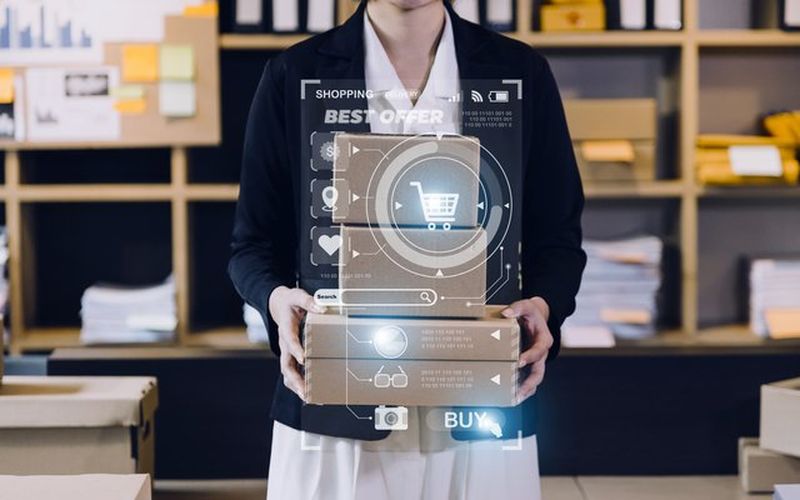
Customers today expect to shop whenever and wherever they want—online, in-store, through mobile apps, or on social media. As these expectations continue to grow, retailers must create connected experiences that make buying, delivery, and returns simple across every channel. This guide explores the future of omnichannel retailing, the technologies driving it, the challenges businesses face, and the strategies that can help retailers improve fulfillment, reduce costs, and meet evolving customer demands.
Table of Content:
What Is Omnichannel Retailing and Why Is It Becoming the Standard?
What Will Omnichannel Fulfillment Look Like in the Future?
What Challenges Must Retailers Overcome to Succeed in Omnichannel Retailing?
Which Technologies Will Drive the Future of Omnichannel Retailing?
How Can Retailers Build a Future-Ready Omnichannel Supply Chain?
What Is Omnichannel Retailing and Why Is It Becoming the Standard?
The way people shop has changed dramatically over the last decade. Customers no longer rely on a single store, website, or device when making a purchase. Instead, they move between online marketplaces, mobile apps, social media platforms, physical stores, and company websites throughout the buying journey. As a result, retailers must create a connected experience that allows customers to interact with the brand seamlessly regardless of where they shop.
This shift has made omnichannel retailing one of the most important strategies in modern commerce. Rather than treating each sales channel as a separate operation, omnichannel retailing connects them into a unified system. Customers can browse products on a smartphone, complete a purchase on a laptop, track delivery through an app, and return the item at a physical store. Every step is linked together to create a smooth and convenient experience.
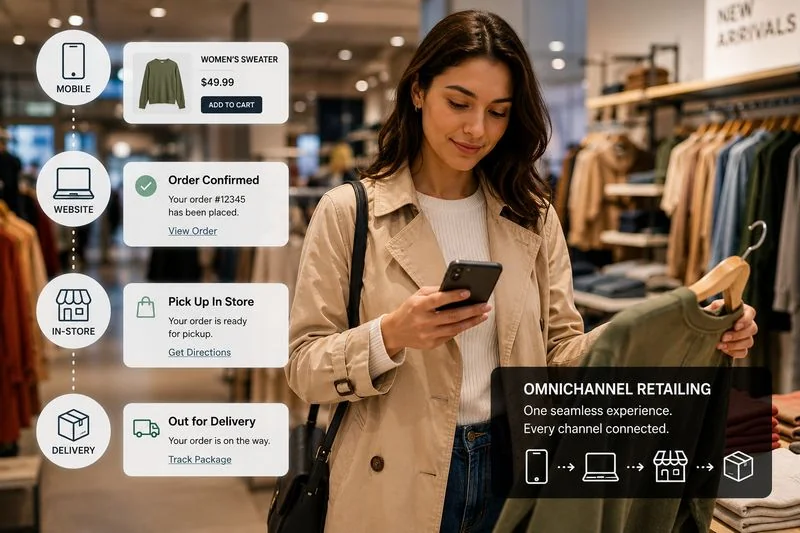
The future of retail will largely depend on how effectively businesses can connect inventory, fulfillment, transportation, and customer service across multiple channels. Companies that successfully integrate these functions will be better positioned to meet growing customer expectations while controlling operational costs.
How Does Omnichannel Retailing Differ From Traditional Retail Models?
Traditional retail models typically operate each sales channel independently. A physical store may have its own inventory, pricing, and customer service processes, while an online store functions separately. This approach often creates inconsistencies that frustrate customers.
For example, a customer may find a product online only to discover that it is unavailable in a nearby store. Another customer may see one price on a website and a different price in-store. These disconnects can reduce customer trust and lead to lost sales.
Omnichannel retailing solves these issues by connecting all channels through shared systems and real-time information. Inventory levels, product details, promotions, and customer data are synchronized across every touchpoint. This allows customers to enjoy a consistent experience whether they shop online, through a mobile device, or in person.
A practical example is a customer purchasing a vehicle accessory online and choosing in-store pickup. The customer can check availability, place the order, receive notifications, and collect the item without experiencing any gaps in communication. The process feels like a single transaction rather than multiple disconnected interactions.
For retailers, this model also creates opportunities to improve fulfillment efficiency. Stores can serve as local distribution points, helping reduce transportation distances and delivery costs while improving service levels.
Why Do Modern Customers Expect a Seamless Shopping Experience?
Consumer expectations continue to rise as technology becomes more advanced. Fast internet access, mobile shopping applications, and on-demand delivery services have changed what customers consider normal.
Today’s shoppers expect convenience at every stage of the purchasing process. They want accurate inventory information, multiple delivery options, easy returns, and real-time updates. If a retailer cannot provide these features, customers can often switch to a competitor within minutes.
Consider a budget-conscious shopper searching for a replacement auto part. They may compare prices on several websites, read reviews on social media, check availability through a mobile app, and place an order online. If the delivery estimate is too long or inventory information is inaccurate, they are likely to choose another seller.
The demand for convenience is particularly strong when delivery speed is involved. Many customers now expect next-day or even same-day delivery for certain products. While not every retailer can offer the fastest shipping options, customers still expect transparency, reliable delivery windows, and clear communication throughout the process.
A seamless shopping experience reduces friction and gives customers confidence in their purchase decisions. It also increases customer loyalty because shoppers are more likely to return to businesses that consistently provide a smooth experience across all channels.
How Are Consumer Expectations Shaping the Future of Retail?
Consumer behavior is influencing nearly every aspect of retail operations, from inventory management to transportation planning. Businesses are investing heavily in technology and logistics solutions to meet customer demands for speed, flexibility, and convenience.
One major trend is the growth of flexible fulfillment options. Customers increasingly want the freedom to choose how they receive products. Some prefer home delivery, while others choose curbside pickup or buy-online-pickup-in-store services. Retailers must be prepared to support all of these options simultaneously.
Another important trend is visibility. Customers want to know exactly where their order is and when it will arrive. Real-time tracking, automated notifications, and accurate delivery estimates are becoming standard features rather than competitive advantages.
At the same time, customers continue to look for value. Rising transportation costs and economic uncertainty make shoppers more sensitive to pricing and shipping fees. Retailers that can optimize their logistics networks and reduce fulfillment costs will have a significant advantage.
What Will Omnichannel Fulfillment Look Like in the Future?
The future of omnichannel retailing will be shaped by one key goal: giving customers more flexibility while making fulfillment faster and more efficient. Consumers no longer think in terms of online stores, physical locations, or mobile apps. They simply want to receive products in the most convenient way possible.
To meet these expectations, retailers are transforming stores into fulfillment centers, investing in real-time inventory visibility, and expanding delivery options. The companies that succeed will be those that can move products through their supply chains quickly while keeping transportation and operational costs under control.
Future fulfillment strategies will focus on speed, convenience, transparency, and flexibility. Retailers will need systems that allow inventory, orders, transportation, and customer information to work together in real time. This level of integration will help businesses respond quickly to changing demand while delivering a consistent customer experience across every channel.
Why Are Buy Online, Pick Up In Store (BOPIS) Services Growing?
Buy Online, Pick Up In Store (BOPIS) has become one of the fastest-growing fulfillment options because it offers convenience for both customers and retailers. Consumers can place orders from anywhere while avoiding shipping fees and delivery wait times.
For many shoppers, especially those trying to save money, BOPIS provides the best of both worlds. They can browse products online, compare prices, complete the purchase, and collect the item the same day. This eliminates concerns about missed deliveries, shipping delays, or additional transportation costs.
For example, a customer searching for vehicle maintenance supplies may find the desired product online and reserve it for pickup at a nearby store. Instead of paying for expedited shipping, they can pick up the item during their daily commute and begin using it immediately.
Retailers also benefit from BOPIS programs. Customers frequently make additional purchases when they visit the store to collect their orders. At the same time, businesses reduce last-mile delivery expenses, which are often the most expensive part of the fulfillment process.
As inventory visibility and order management systems continue to improve, BOPIS services will become even more popular. Customers will increasingly expect retailers to provide accurate product availability and flexible pickup options at convenient locations.
How Will Ship-From-Store Strategies Improve Delivery Speed?
Traditional retail fulfillment often relies on large distribution centers located far from customers. While this approach can be effective, it may increase transportation distances and delivery times.
Ship-from-store strategies offer a more flexible alternative. Instead of shipping every order from a central warehouse, retailers can fulfill orders from the store location closest to the customer. This approach turns retail stores into mini distribution centers and allows products to reach customers much faster.
For example, if a customer orders an automotive accessory online, the retailer's system can identify the nearest store that has the item in stock and ship it directly from that location. Because the product travels a shorter distance, delivery can often be completed more quickly and at a lower cost.
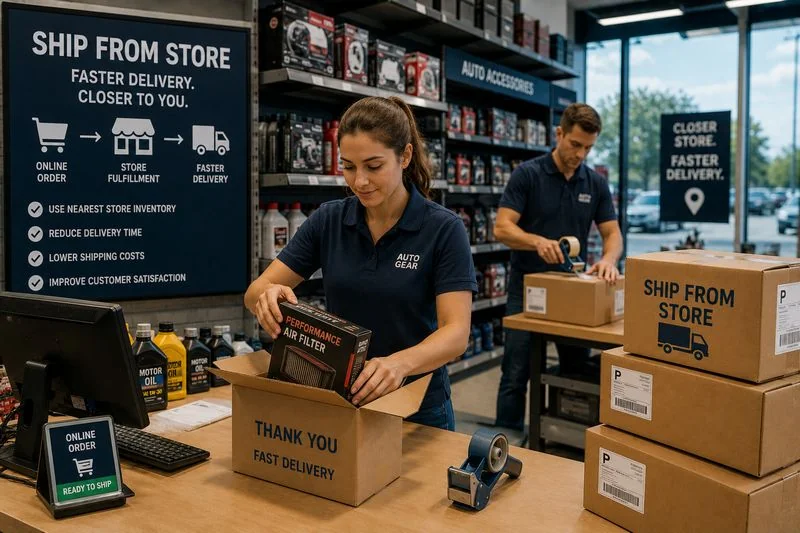
This strategy also helps retailers balance inventory across multiple locations. Products sitting on store shelves can be used to fulfill online orders, reducing excess inventory while improving stock utilization.
As consumer expectations for rapid delivery continue to rise, ship-from-store fulfillment will become an essential component of successful omnichannel operations.
What Role Will Same-Day and Next-Day Delivery Play in Customer Satisfaction?
Fast delivery is no longer viewed as a premium service by many consumers. In many product categories, it has become an expected part of the shopping experience.
Same-day and next-day delivery services provide immediate gratification and help customers solve problems quickly. Whether someone needs replacement vehicle parts, household essentials, or business supplies, faster delivery often influences purchasing decisions.
Imagine a customer whose vehicle requires a replacement battery or component. Waiting several days may not be practical. A retailer that can offer next-day delivery gains a significant competitive advantage compared to one that requires a week-long shipping window.
Beyond speed, fast delivery builds trust. Customers are more likely to purchase from retailers that consistently meet promised delivery dates. Reliable delivery performance reduces uncertainty and improves overall satisfaction.
In the future, retailers will continue investing in regional fulfillment centers, local inventory positioning, route optimization technologies, and transportation partnerships to support increasingly aggressive delivery expectations.
How Can Retailers Reduce Delivery Costs While Meeting Faster Delivery Expectations?
One of the biggest challenges in omnichannel retailing is balancing delivery speed with profitability. Faster shipping often increases transportation expenses, making cost control a critical priority.
The future of omnichannel fulfillment will depend heavily on smarter logistics strategies rather than simply spending more money on transportation. Retailers are increasingly using inventory visibility tools to place products closer to customers before orders are placed. This reduces shipping distances and lowers delivery costs.
Ship-from-store models, inventory sharing across locations, and demand forecasting all help improve fulfillment efficiency. When businesses know where inventory is located and where future demand is likely to occur, they can position products strategically and avoid costly last-minute shipments.
Transportation technology also plays an important role. Route optimization software, real-time shipment tracking, and transportation management systems help reduce unnecessary miles and improve carrier utilization. These improvements can significantly lower operational costs while maintaining fast delivery performance.
Many retailers also partner with experienced logistics providers to streamline transportation operations. By leveraging established carrier networks, flexible transportation solutions, and supply chain expertise, businesses can improve delivery speed without dramatically increasing costs.
What Challenges Must Retailers Overcome to Succeed in Omnichannel Retailing?
While omnichannel retailing offers significant opportunities for growth, it also introduces new operational challenges. Connecting physical stores, e-commerce platforms, mobile applications, marketplaces, and fulfillment networks requires careful coordination across the entire business.
Customers expect every channel to work together seamlessly. They want accurate inventory information, consistent pricing, fast delivery options, and personalized experiences. Meeting these expectations can be difficult when data is spread across multiple systems and locations.
As omnichannel retailing continues to evolve, retailers must overcome several key challenges related to inventory management, visibility, consistency, and customer understanding. Businesses that successfully address these areas will be better positioned to improve customer satisfaction while maintaining efficient operations and controlling costs.
How Can Retailers Maintain Accurate Inventory Across Multiple Sales Channels?
Inventory management becomes significantly more complex when products are sold through multiple channels simultaneously. A retailer may offer products through physical stores, its website, mobile applications, online marketplaces, and third-party platforms. Every sale affects inventory levels, and all systems must remain synchronized.
Without accurate inventory management, problems quickly emerge. Customers may purchase items that are no longer available, stores may run out of popular products unexpectedly, or businesses may hold excessive stock that increases storage costs.
For example, imagine a customer purchasing an automotive accessory online after seeing that it is listed as available. If the inventory system is not updated in real time, the item may have already been sold in a physical store. The retailer must then cancel the order, creating frustration and potentially losing a future customer.
To prevent these issues, retailers are investing in centralized inventory management systems that update stock levels across all channels automatically. These systems help ensure that inventory information remains accurate regardless of where the sale occurs.
Accurate inventory management also supports flexible fulfillment options such as buy online, pick up in store, ship-from-store, and same-day delivery. Without reliable inventory data, these services become difficult to execute consistently.
Why Is Real-Time Inventory Visibility Becoming Essential?
Inventory visibility goes beyond simply knowing how many products are available. It provides retailers with a complete view of where inventory is located throughout the supply chain, including warehouses, distribution centers, retail stores, and products currently in transit.
As customer expectations continue to rise, real-time visibility is becoming one of the most important elements of successful omnichannel fulfillment. Consumers want immediate answers regarding product availability, delivery times, and pickup options. Retailers can only provide these answers when inventory information is current and accurate.
Real-time visibility also helps businesses make smarter fulfillment decisions. Instead of shipping an order from a distant warehouse, a retailer can identify a nearby store that has the product available and fulfill the order from that location. This reduces transportation costs while improving delivery speed.
For budget-conscious customers, this can translate into lower shipping fees and shorter delivery times. For retailers, it creates opportunities to improve operational efficiency and maximize inventory utilization.
In the future, inventory visibility will become even more important as fulfillment networks grow increasingly complex. Retailers that lack real-time insight into their inventory may struggle to compete with businesses that can provide faster and more reliable service.
How Can Businesses Keep Pricing and Product Information Consistent Everywhere?
Consistency plays a critical role in customer trust. When shoppers move between channels, they expect to see the same product descriptions, specifications, promotions, and pricing regardless of where they interact with the brand.
Inconsistent information creates confusion and can damage credibility. A customer who finds one price on a website and another in a physical store may question the retailer's reliability. Similarly, outdated product details can lead to incorrect purchases and increased return rates.
Maintaining consistency becomes more difficult as businesses expand into additional sales channels. Product information must be updated across websites, mobile apps, marketplaces, social media shops, and physical locations. Any delay or discrepancy can negatively affect the customer experience.
Many retailers are solving this challenge by using centralized product information management systems that distribute updates across all channels simultaneously. This approach ensures that customers receive the same information regardless of where they shop.
Consistency is especially important in competitive markets where customers can easily compare products and prices across multiple retailers. A seamless experience with accurate information encourages trust and increases the likelihood of repeat purchases.
Why Is Understanding Consumer Behavior More Important Than Ever?
One of the greatest advantages of omnichannel retailing is access to customer data. Every interaction across websites, mobile apps, stores, and marketing channels provides valuable insights into customer preferences and purchasing habits.
However, collecting data is only the first step. Retailers must also understand how customers behave and use that information to improve the shopping experience.
Consumer behavior has become more complex than ever before. A customer may discover a product through social media, research it on a mobile device, compare prices online, visit a physical store, and complete the purchase through a website. Understanding this journey helps retailers identify which channels influence purchasing decisions and where improvements are needed.
For example, if analytics reveal that customers frequently abandon their carts due to unexpected shipping costs, a retailer may decide to offer alternative delivery options or adjust fulfillment strategies. If customers consistently choose in-store pickup over home delivery, businesses can invest more heavily in BOPIS programs.
Modern analytics tools allow retailers to track customer interactions across multiple channels and build comprehensive customer profiles. These insights help businesses personalize marketing efforts, optimize inventory placement, improve fulfillment decisions, and create more relevant shopping experiences.
Which Technologies Will Drive the Future of Omnichannel Retailing?
Technology has become the foundation of modern omnichannel retailing. As customer expectations continue to evolve, retailers need tools that can connect inventory, transportation, fulfillment, customer service, and data management into a single ecosystem. Without the right technology, it becomes increasingly difficult to deliver the speed, visibility, and flexibility that consumers now expect.
The future of omnichannel retailing will be shaped by solutions that improve operational efficiency while providing better customer experiences. Retailers are investing in transportation management systems, real-time tracking capabilities, advanced analytics platforms, automation tools, and artificial intelligence to remain competitive in a rapidly changing marketplace.
These technologies allow businesses to make faster decisions, reduce costs, improve inventory utilization, and provide customers with greater transparency throughout the purchasing journey.
How Are Transportation Management Systems (TMS) Transforming Retail Logistics?
A Transportation Management System (TMS) is becoming one of the most valuable tools in omnichannel logistics. As fulfillment networks become more complex, retailers need better control over transportation operations to ensure products move efficiently between suppliers, warehouses, stores, and customers.
A TMS helps businesses plan, execute, and monitor shipments across the supply chain. Instead of managing transportation manually, retailers can automate many processes, including carrier selection, route planning, shipment tracking, and performance reporting.
One of the biggest advantages of a TMS is visibility. Retailers can monitor shipments in real time and quickly identify delays or disruptions before they affect customers. This allows businesses to take corrective action and maintain delivery commitments.
For example, if a shipment is delayed due to weather or traffic conditions, a TMS can alert supply chain managers immediately. Alternative routes, inventory transfers, or updated delivery estimates can then be provided to customers before the situation becomes a larger problem.
Transportation management systems also help reduce costs. By optimizing routes, consolidating shipments, and selecting the most efficient carriers, businesses can lower transportation expenses while maintaining service quality.
As omnichannel fulfillment continues to expand, TMS platforms will play an increasingly important role in helping retailers manage complexity and improve operational efficiency.
How Can Real-Time Tracking Improve the Customer Experience?
Modern consumers want visibility into every stage of the delivery process. Once an order is placed, customers expect to know when it ships, where it is located, and when it will arrive.
Real-time tracking has transformed the delivery experience by providing continuous shipment updates. Instead of waiting for a package without knowing its status, customers can monitor progress through mobile apps, websites, or automated notifications.
This level of transparency reduces uncertainty and improves trust. Customers feel more confident when they can see that their order is moving through the supply chain as expected.
Consider a customer ordering a vehicle accessory that is needed for an upcoming repair. Being able to track the shipment in real time helps them plan installation schedules and avoid unnecessary delays. Even if a shipment encounters a problem, proactive updates are often appreciated more than silence.
For retailers, real-time tracking can also reduce customer service inquiries. When customers have easy access to shipment information, they are less likely to contact support teams for delivery updates.
In the future, tracking systems will become even more sophisticated, providing predictive arrival times, automated delay notifications, and enhanced visibility across entire fulfillment networks.
What Role Will Data Analytics and Customer Insights Play in Future Retail Strategies?
Data has become one of the most valuable resources in retail. Every customer interaction generates information that can help businesses understand preferences, improve operations, and make better decisions.
Data analytics allows retailers to convert raw information into actionable insights. By analyzing customer behavior, purchasing trends, inventory movements, and fulfillment performance, businesses can identify opportunities for improvement throughout the supply chain.
For example, analytics may reveal that customers in a specific region frequently purchase certain products during particular seasons. Retailers can then position inventory closer to those customers before demand increases, reducing delivery times and transportation costs.
Customer insights also support personalized shopping experiences. Retailers can recommend relevant products, create targeted promotions, and improve communication based on individual shopping patterns.
In addition, analytics can improve forecasting accuracy. Better demand forecasts help retailers avoid stock shortages, reduce excess inventory, and allocate resources more effectively.
As omnichannel retailing becomes increasingly data-driven, businesses that effectively use analytics will gain a significant competitive advantage. They will be able to anticipate customer needs, optimize operations, and make strategic decisions based on real-world behavior rather than assumptions.
How Can Automation and Artificial Intelligence Improve Fulfillment Operations?
Automation and artificial intelligence (AI) are expected to play a major role in the future of omnichannel fulfillment. As order volumes increase and customer expectations continue to rise, retailers need technologies that can improve speed, accuracy, and efficiency without significantly increasing labor costs.
Automation is already being used in warehouses to streamline picking, packing, sorting, and inventory management tasks. Automated systems can process orders faster and with fewer errors than traditional manual workflows.
Artificial intelligence adds another layer of capability by helping retailers make smarter decisions. AI-powered systems can analyze large amounts of data, identify patterns, and recommend actions that improve performance across the supply chain.
For example, AI can forecast future demand based on historical sales, seasonal trends, and market conditions. Retailers can use these forecasts to position inventory more strategically and reduce costly stock imbalances.
AI can also improve transportation planning by identifying the most efficient shipping routes, predicting potential delays, and optimizing carrier selection. These improvements help reduce delivery costs while maintaining high service levels.
Customer service is another area where AI is creating value. Intelligent chatbots, automated support systems, and personalized recommendations allow businesses to respond more quickly to customer needs while reducing operational workload.
How Can Retailers Build a Future-Ready Omnichannel Supply Chain?
The future of omnichannel retailing will depend on a retailer’s ability to build a supply chain that is flexible, connected, and customer-focused. As consumers continue to expect faster deliveries, more fulfillment options, and greater transparency, businesses can no longer rely on traditional supply chain models designed around a single sales channel.
A future-ready omnichannel supply chain must connect inventory, fulfillment, transportation, customer service, and data systems into a unified operation. Every part of the network must work together to ensure products move efficiently from suppliers to customers, regardless of where an order originates.
Retailers that invest in integrated operations today will be better prepared to adapt to changing customer expectations, market conditions, and technological advancements in the years ahead.
Why Is Merging Online and Offline Channels Critical for Long-Term Success?
Customers do not think about channels the way businesses often do. They simply expect a convenient shopping experience. A customer may discover a product online, visit a physical store to examine it, place the order through a mobile app, and later return the item in person. From the customer’s perspective, these interactions are all part of the same shopping journey.
When online and offline operations remain disconnected, the customer experience suffers. Inventory information may be inaccurate, promotions may differ between channels, and fulfillment options may be limited. These inconsistencies create frustration and increase the likelihood of losing customers to competitors.
Merging channels allows retailers to create a unified experience across every touchpoint. Inventory can be shared between stores and e-commerce platforms. Customers can choose flexible fulfillment options such as buy online, pick up in store or ship-from-store services. Returns can be processed more efficiently regardless of where the original purchase occurred.
For example, a customer searching for a product online may see that it is available at a nearby store and choose same-day pickup. Without integrated systems, this option may not be possible. With a connected omnichannel network, the retailer can satisfy the customer's needs quickly while reducing shipping expenses.
As omnichannel retailing continues to evolve, businesses that successfully combine digital and physical operations will be better positioned to improve customer satisfaction, increase sales, and maximize inventory utilization.
How Can a Customer-Centric Approach Improve Fulfillment Performance?
Successful omnichannel supply chains are built around customer needs rather than internal processes. While operational efficiency remains important, fulfillment strategies must ultimately support the customer experience.
A customer-centric approach begins with understanding what customers value most. In many cases, this includes fast delivery, accurate inventory information, flexible fulfillment options, transparent communication, and simple return processes.
Retailers can improve fulfillment performance by using customer data to identify preferences and buying behaviors. These insights help businesses determine where inventory should be located, which delivery options should be offered, and how fulfillment resources should be allocated.
For example, if customers in a particular region consistently choose in-store pickup over home delivery, retailers can adjust inventory placement and staffing accordingly. Similarly, if shoppers frequently abandon purchases due to high shipping costs, businesses can explore alternative fulfillment methods that reduce transportation expenses.
Customer-centric fulfillment also improves communication. Real-time order updates, delivery notifications, and accurate estimated arrival times help build trust and reduce uncertainty throughout the purchasing process.
As competition increases, retailers that prioritize customer convenience while maintaining operational efficiency will be more likely to earn repeat business and long-term loyalty.
When Does It Make Sense to Partner With YK Freight for Omnichannel Logistics Support?
As retailers grow, logistics operations often become more complex. Managing inventory movements, coordinating transportation, handling increasing order volumes, and meeting tighter delivery windows can place significant pressure on internal teams.
For many businesses, there comes a point when partnering with an experienced logistics provider becomes more efficient than managing every aspect of transportation internally.
A logistics partnership can be especially valuable when retailers are expanding into new markets, adding e-commerce capabilities, increasing shipment volumes, or implementing omnichannel fulfillment strategies. These changes often require additional transportation capacity, improved visibility, and more sophisticated supply chain coordination.
For example, a retailer that previously relied on a single distribution center may begin fulfilling orders from multiple stores and warehouse locations. Coordinating inventory transfers and transportation across a growing network can quickly become challenging without dedicated logistics expertise.
Working with YK Freight allows retailers to access transportation solutions that support evolving omnichannel requirements while maintaining flexibility as demand changes. Instead of investing heavily in transportation assets and management resources, businesses can leverage experienced logistics support to help scale operations more efficiently.
How Can YK Freight Help Retailers Improve Delivery Efficiency and Control Transportation Costs?
Transportation is one of the largest expenses within an omnichannel supply chain. At the same time, delivery speed has become one of the most important factors influencing customer satisfaction. Balancing these competing priorities requires careful planning and execution.
YK Freight helps retailers improve delivery efficiency by providing transportation solutions that support inventory movement between ports, distribution centers, warehouses, fulfillment facilities, and retail locations. Reliable transportation networks help ensure products are positioned where they are needed to support faster order fulfillment.
Visibility is another important advantage. Access to shipment information and transportation updates allows retailers to make better decisions, respond to disruptions more quickly, and maintain more accurate delivery expectations for customers.
Cost control is equally important. By optimizing transportation routes, reducing unnecessary delays, improving asset utilization, and supporting efficient freight movement, retailers can lower logistics costs without sacrificing service quality.
As omnichannel retailing continues to evolve, transportation will remain a critical component of supply chain performance. Businesses that combine strong inventory management, integrated technology, customer-focused fulfillment strategies, and dependable logistics support will be better prepared to meet future customer expectations while maintaining profitable operations.
A future-ready supply chain is no longer simply a competitive advantage—it is becoming a necessity. Retailers that invest in flexibility, visibility, and efficient transportation partnerships today will be better equipped to succeed in the increasingly connected retail environment of tomorrow.
Further Reading
Logistics Solutions for E-commerce: Container Drayage
What is Managed Transportation?
How Automation Improves Container Drayage Processes
How Supply Chain Management Works: A Guide for Small Businesses


ASK YOUR QUESTIONS