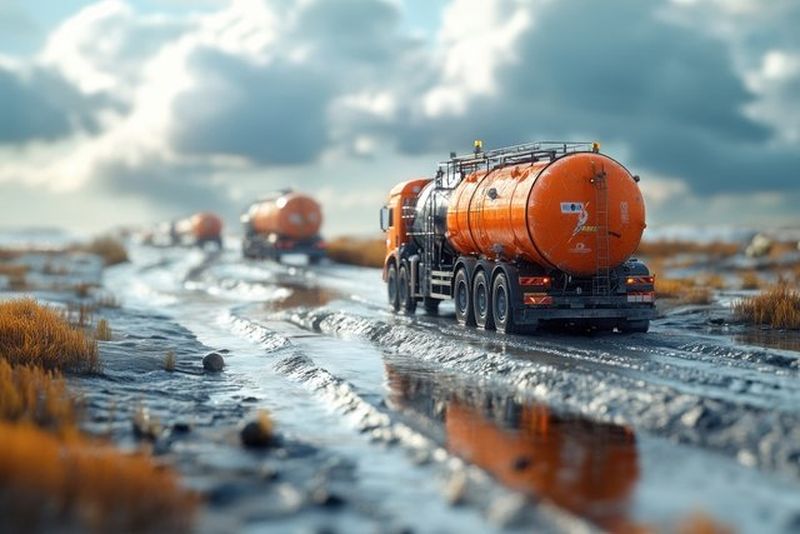
Oil and gas logistics requires precise planning, reliable transportation, and complete supply chain visibility. This guide explains how a third-party logistics (3PL) provider can reduce shipping costs, improve delivery performance, strengthen compliance, and minimize costly disruptions. You'll also learn practical strategies for optimizing freight operations and choosing the right logistics partner for complex energy projects.
Table of Content:
- Why Is Oil and Gas Logistics So Complex?
- What Challenges Do Oil and Gas Companies Face Without a 3PL?
- How Can a 3PL Improve Oil and Gas Logistics?
- What Strategies Help Optimize Oil and Gas Supply Chains?
- Why Should You Partner With a 3PL for Oil and Gas Logistics?
How Can 3PL Facilitate Oil and Gas Logistics?
The oil and gas industry depends on one thing above all else—moving equipment, materials, and supplies exactly where they are needed and exactly when they are needed. Every drilling project, refinery, pipeline, or production facility relies on a continuous flow of freight. If that flow stops, operations can quickly slow down or shut down completely.
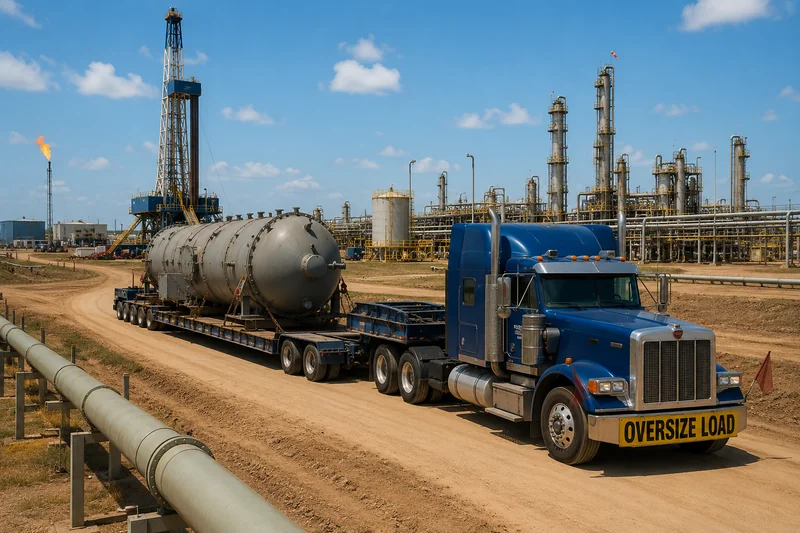
Unlike standard freight transportation, oil and gas logistics involve oversized machinery, hazardous materials, specialized equipment, and shipments that often travel to remote locations with limited infrastructure. Every delivery must meet strict safety standards while staying on schedule. This makes planning and coordination far more challenging than in most other industries.
For many companies, managing these operations internally requires significant time, labor, and investment. That is why businesses increasingly partner with third-party logistics (3PL) providers that specialize in freight planning, carrier management, shipment visibility, and regulatory compliance. A reliable 3PL helps companies simplify complex transportation processes, improve efficiency, and reduce unnecessary logistics costs without sacrificing safety or service quality.
Why Is Oil and Gas Logistics So Complex?
Oil and gas logistics is one of the most demanding sectors in the transportation industry because every shipment plays a critical role in keeping operations running. Unlike retail or consumer goods, energy projects cannot simply wait for delayed deliveries. Drilling equipment, replacement parts, pipes, fuel, chemicals, and heavy machinery often need to arrive within strict time windows to avoid expensive downtime.
The complexity increases because shipments typically involve multiple transportation modes, numerous suppliers, and deliveries to isolated job sites. A single project may require coordination between trucking companies, rail carriers, ports, warehouses, and local delivery partners. Every stage must be synchronized to prevent disruptions.
Safety regulations also make this industry unique. Many shipments involve hazardous materials or oversized loads that require specialized permits, trained drivers, and carefully planned routes. Missing even one compliance requirement can delay transportation and increase operating costs.
As projects become larger and supply chains expand across multiple regions, coordinating every shipment internally becomes increasingly difficult. This is where experienced 3PL providers help companies streamline transportation while maintaining visibility and control throughout the entire supply chain.
What Makes Oil and Gas Supply Chains Different From Other Industries?
Most supply chains focus on moving finished products from manufacturers to customers. Oil and gas supply chains are much more complicated because they support every stage of exploration, drilling, production, refining, and distribution.
Instead of shipping small parcels or palletized freight, companies often transport drilling rigs, steel pipes, compressors, generators, pumps, construction materials, fuel, and sensitive equipment. Many of these shipments require flatbed trailers, step-deck trailers, heavy-haul trucks, or multimodal transportation involving trucks, rail, and ocean freight.
Remote locations add another layer of complexity. Exploration sites are frequently located far from major highways or distribution centers. Deliveries may need to travel hundreds of miles before reaching a drilling location, making route planning and scheduling much more challenging than standard freight operations.
Supply chains must also remain flexible. Weather conditions, equipment failures, production schedules, and changing project priorities can require immediate shipment adjustments. Companies need logistics partners that can quickly adapt without creating costly delays.
How Does the Oil and Gas Logistics Process Work?
Oil and gas logistics begins long before freight leaves a warehouse. Every shipment starts with careful planning that considers delivery deadlines, cargo specifications, transportation methods, safety requirements, and destination accessibility.
Equipment and materials are first sourced from manufacturers or suppliers. Depending on the cargo, shipments may move through warehouses, ports, rail terminals, or cross-docking facilities before continuing toward production sites. Transportation often combines several freight modes to balance cost, speed, and availability.
Throughout the process, logistics teams monitor shipments, coordinate with carriers, track documentation, and ensure compliance with transportation regulations. Real-time visibility is especially valuable because project managers need accurate updates to coordinate labor, equipment installation, and ongoing operations.
For example, imagine a drilling company waiting for replacement hydraulic pumps after unexpected equipment failure. Every hour the site remains idle increases operating costs while delaying production. A well-organized logistics network can quickly identify available carriers, optimize routing, monitor shipment progress, and keep all stakeholders informed until the freight reaches its destination.
Modern 3PL providers simplify these processes by combining transportation planning, carrier management, shipment tracking, and communication into a single coordinated solution.
Why Can a Single Delay Cost Millions of Dollars?
In many industries, a delayed shipment may simply postpone customer delivery by a day or two. In oil and gas operations, the financial impact is often much greater because entire projects depend on critical equipment arriving on time.
If drilling equipment, replacement parts, or specialized tools fail to reach the site as scheduled, expensive machinery and large work crews may sit idle. Contractors, engineers, and operators continue to incur costs while waiting for essential materials. Even a relatively small missing component can prevent an entire operation from moving forward.
Unexpected delays also create additional expenses such as emergency freight, overtime labor, equipment rentals, storage fees, and production losses. Companies frequently resort to expedited transportation to recover lost time, significantly increasing shipping costs.
For example, a remote drilling operation waiting for a replacement valve cannot simply purchase one from a nearby supplier. The required component may need to travel hundreds of miles using specialized transportation. Without proper planning and shipment visibility, what begins as a minor transportation issue can quickly become a major financial problem.
What Challenges Do Oil and Gas Companies Face Without a 3PL?
Oil and gas companies manage some of the most demanding supply chains in the world. Every project depends on a steady flow of equipment, replacement parts, pipes, chemicals, fuel, and specialized machinery. These materials often come from different suppliers and must reach remote sites within strict delivery windows.
Without support from a third-party logistics provider, companies must coordinate carriers, routes, permits, warehouses, tracking, and delivery schedules on their own. This requires experienced staff, reliable technology, and strong relationships with transportation providers. Smaller companies may not have enough resources to manage every part of this process efficiently.
The risks are also greater than in many other industries. A missed delivery may stop drilling, delay maintenance, or leave workers and expensive equipment idle. Poor planning can lead to emergency shipping, excess inventory, lost production time, and higher operating costs.
A 3PL helps bring these moving parts together. Without one, companies often struggle with fragmented communication, limited shipment visibility, inconsistent carrier service, and difficulty controlling transportation expenses.
Why Are Transportation Costs Higher for Oil and Gas Shipments?
Oil and gas shipments usually cost more because the cargo is heavier, larger, more sensitive, or more dangerous than standard commercial freight. Drilling tools, generators, pipes, tanks, compressors, and construction equipment may require flatbeds, step-deck trailers, lowboys, or heavy-haul vehicles.
Specialized freight also requires more planning. Oversized loads may need permits, route surveys, escorts, or restricted travel schedules. Hazardous materials must be handled by trained drivers and transported according to strict federal, state, and local regulations. These requirements increase both administrative and transportation costs.
Distance is another major factor. Many oilfields, refineries, and exploration sites are located far from major manufacturing centers. Equipment may need to travel across several states or move through ports and rail terminals before reaching the final destination.
Costs also rise when companies book shipments one at a time without contracted rates or a broad carrier network. A shipper may have limited options and accept a higher rate simply because a truck is urgently needed.
For example, a small energy contractor may need to move a heavy pump to a drilling site within two days. Without established carrier relationships, the company may spend hours searching for a suitable truck and still pay a premium rate. A 3PL can often compare several qualified carriers, select the right equipment, and negotiate a more competitive price.
How Do Remote Locations Affect Delivery Performance?
Remote drilling and production sites are difficult to serve because they may be far from highways, cities, warehouses, and repair facilities. The final section of a delivery route may include narrow roads, unpaved surfaces, steep grades, or areas with limited mobile coverage.
These conditions make delivery times harder to predict. Weather can turn an accessible road into an unsafe route. Heavy rain, snow, flooding, or extreme heat may slow trucks or force dispatchers to change the route completely.
Drivers may also have difficulty locating the correct entrance or unloading area. Some sites do not have standard street addresses, clear signs, or staff available around the clock. Without detailed instructions and communication, a driver may lose time waiting for directions or site access.
Remote deliveries require careful coordination with site managers. The receiving team must be ready, unloading equipment must be available, and safety procedures must be followed. If any part of the process is missing, the truck may wait for hours and generate detention charges.
For instance, a company may send pipes to a new exploration site several hours from the nearest city. If the crane operator is not scheduled when the truck arrives, the carrier cannot unload. The company may then pay for driver waiting time, rescheduling, or temporary storage.
A strong logistics plan includes route checks, site instructions, weather monitoring, delivery appointments, and backup options. Without this level of planning, remote locations can quickly create delays and unexpected costs.
Why Do Inventory Surpluses and Shortages Happen?
Oil and gas companies often keep more inventory than they need because they do not fully trust their transportation network. If suppliers or carriers have missed deadlines in the past, managers may order extra materials to avoid running out.
This approach may reduce one risk, but it creates several others. Excess equipment and parts require warehouse space, inventory control, security, insurance, and handling. Some materials may become damaged, outdated, or unsuitable for future projects before they are used.
Inventory shortages usually occur when companies lack accurate information about demand, supplier lead times, and shipment status. A part may appear available in an internal system even though it is still in transit, delayed at a terminal, or assigned to another site.
Decentralized purchasing can make the problem worse. Different departments or locations may order the same materials without sharing information. One site may have too much stock while another site urgently needs the same item.
For example, a company may store several replacement motors at one warehouse because deliveries have been unreliable. Meanwhile, another facility may order an emergency motor because managers do not know that suitable equipment is already available within the company’s network.
A well-managed supply chain connects transportation data with inventory planning. When businesses know where shipments are, when they will arrive, and how much material each site actually needs, they can reduce unnecessary stock without increasing the risk of shortages.
How Does Poor Supply Chain Visibility Increase Costs?
Supply chain visibility means knowing where freight is, whether it is moving on schedule, and when it is expected to arrive. Without reliable tracking, companies must depend on phone calls, emails, spreadsheets, and updates from individual carriers.
This creates gaps in information. A shipment may be delayed for several hours before the operations team learns about it. By that time, workers may already be waiting, unloading equipment may have been reserved, and the company may have lost the chance to arrange an alternative.
Poor visibility also makes cost control more difficult. Managers may not know which carriers are consistently late, which routes create the most delays, or which facilities generate detention charges. Without accurate data, they cannot identify the true causes of rising transportation expenses.
Limited visibility can also lead to duplicate work. Employees may spend hours contacting drivers, checking delivery times, updating internal teams, and searching for documents. These manual processes take time away from more important operational tasks.
Consider a refinery waiting for a critical valve. If the logistics team cannot see that the shipment missed a connection at a terminal, the maintenance crew may prepare for an installation that cannot happen. The company may then pay workers for idle time and reschedule other maintenance activities.
A transportation management system can centralize shipment data, delivery documents, carrier updates, and performance reports. Many companies cannot justify buying and maintaining such technology on their own, but a 3PL can provide access to these tools as part of its service.
Why Do Companies Rely on Expedited Freight So Often?
Expedited freight is often used when standard planning fails or an unexpected problem threatens operations. In oil and gas logistics, the pressure to avoid downtime can make emergency transportation feel like the only option.
Companies may request hotshot delivery, team drivers, dedicated trucks, air freight, or other premium services to recover lost time. These solutions can be useful for real emergencies, but they are much more expensive than planned transportation.
Frequent expedited shipping is often a sign of a deeper supply chain problem. Common causes include inaccurate demand forecasts, delayed purchase orders, unreliable suppliers, poor inventory visibility, and inconsistent carrier performance.
For example, a maintenance team may discover that a replacement seal is not in stock one day before scheduled repairs. The company then pays for a dedicated truck to move a small package hundreds of miles. The transportation cost may be much higher than the value of the part itself.
A 3PL can help reduce emergency shipping by improving scheduling, tracking inbound materials, monitoring carrier performance, and identifying likely delays before they become critical. Expedited freight will still be necessary in some situations, but it should be a controlled exception rather than a normal part of daily operations.
How Does Managing Logistics Internally Slow Business Growth?
Internal logistics management requires more than booking trucks. Employees must find carriers, compare rates, verify insurance, prepare documents, arrange permits, track shipments, solve delivery problems, and communicate with suppliers and job sites.
When a company has a small operations team, these tasks can consume most of the working day. Managers who should be focused on production, customer relationships, project planning, or business development may instead spend hours handling missed pickups and searching for shipment updates.
The workload becomes even heavier as the company grows. More projects mean more suppliers, carriers, routes, invoices, and delivery appointments. Without scalable systems, each new shipment adds more manual work and more opportunities for errors.
Building an internal logistics department also creates fixed expenses. The company may need to hire dispatchers, freight specialists, compliance staff, and technology administrators. It may also need to invest in transportation software, training, and carrier management.
For a growing oilfield service company, outsourcing logistics can be more practical than building a large transportation department. The business can use a 3PL’s carrier network, technology, and expertise while keeping its own team focused on core operations.
How Can a 3PL Improve Oil and Gas Logistics?
Managing oil and gas logistics involves far more than arranging transportation from one location to another. Companies must coordinate suppliers, carriers, warehouses, permits, specialized equipment, delivery schedules, and compliance requirements while keeping projects on time and within budget.
A third-party logistics (3PL) provider simplifies these responsibilities by managing transportation operations through a single point of contact. Instead of working with dozens of carriers and service providers independently, businesses gain access to an experienced logistics team that plans shipments, monitors freight, resolves issues, and continuously looks for opportunities to improve efficiency.
For companies operating in the energy sector, this support translates into lower transportation costs, fewer disruptions, improved shipment visibility, and greater flexibility when project requirements change. Rather than replacing internal logistics teams, a 3PL becomes an extension of the business, providing specialized expertise and resources that would otherwise require significant investment to develop in-house.
Which Logistics Services Are Commonly Outsourced?
Oil and gas companies outsource logistics functions that require specialized knowledge, extensive carrier relationships, or continuous operational oversight. The goal is to reduce administrative workload while improving transportation performance.
Transportation management is one of the most commonly outsourced services. A 3PL plans shipments, selects appropriate carriers, negotiates freight rates, schedules pickups, and monitors deliveries throughout the transportation process.
Warehouse management is another area where outsourcing provides value. Some projects require temporary storage for drilling equipment, replacement parts, construction materials, or production supplies before they move to the job site. A logistics partner can coordinate inventory handling, cross-docking, and distribution while helping reduce unnecessary storage costs.
Many companies also outsource yard management and dock scheduling to improve loading efficiency and reduce delays. Coordinating truck arrivals prevents congestion and minimizes waiting time for both carriers and facility personnel.
Additional services often include freight brokerage, multimodal transportation planning, heavy-haul coordination, flatbed transportation, hotshot deliveries, documentation management, shipment tracking, customs support for international freight, and regulatory compliance assistance.
For example, a pipeline construction project may require steel pipe from one supplier, heavy equipment from another, and replacement components from several manufacturers. Rather than coordinating every shipment separately, a 3PL manages the entire transportation process through one integrated logistics plan.
How Can a 3PL Reduce Transportation Costs?
Transportation costs are influenced by much more than fuel prices or shipping distance. Poor route planning, inconsistent carrier selection, emergency shipments, and inefficient scheduling can all increase freight expenses.
A 3PL helps reduce these costs by optimizing transportation across multiple areas. Because logistics providers work with large carrier networks, they often negotiate more competitive freight rates than individual shippers can secure on their own. They also match shipments with the most appropriate equipment, preventing businesses from paying for oversized or underutilized trailers.
Consolidating shipments is another effective strategy. Instead of moving several partially loaded trucks to the same region, a 3PL may combine freight to maximize trailer capacity and lower the cost per shipment.
Planning also plays a significant role. Better scheduling reduces detention charges, unnecessary storage fees, and expensive last-minute transportation requests. By identifying potential delays early, logistics providers help companies avoid premium-priced expedited freight whenever possible.
For example, an energy supplier shipping equipment to several drilling sites in the same state may initially arrange separate deliveries for each location. A 3PL can evaluate the entire transportation schedule, consolidate loads where practical, optimize delivery routes, and significantly reduce total freight spending.
Lower transportation costs do not come from choosing the cheapest carrier. Instead, they result from smarter planning, stronger carrier relationships, and more efficient use of transportation resources.
How Do Transportation Management Systems (TMS) Improve Visibility?
Modern transportation management systems (TMS) give companies greater control over every shipment by centralizing transportation data in one platform. Instead of relying on spreadsheets, emails, or phone calls, managers can monitor freight activity through real-time dashboards.
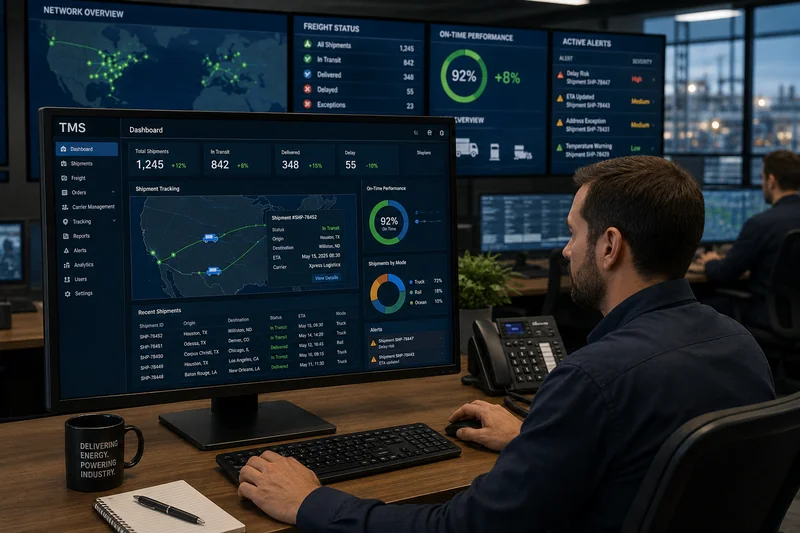
A TMS tracks shipments from pickup through final delivery while storing important information such as carrier assignments, estimated arrival times, delivery documentation, freight invoices, and shipment history. This allows operations teams to quickly identify delays, monitor carrier performance, and make informed decisions before problems escalate.
Improved visibility also supports better planning. Historical transportation data helps companies identify recurring bottlenecks, evaluate shipping costs by lane, measure carrier reliability, and forecast future transportation needs more accurately.
For example, if a drilling operation notices that deliveries to one region consistently arrive later than expected, managers can investigate the cause and adjust routes or carrier selection before future projects begin.
Many companies recognize the value of transportation technology but hesitate to invest in expensive software, implementation, training, and ongoing maintenance. Working with a 3PL allows businesses to benefit from advanced transportation management systems without managing the technology themselves.
Why Are Carrier Networks Important for Reliable Deliveries?
No single transportation company can provide every type of equipment, cover every region, or handle every shipment requirement. Oil and gas logistics often involve oversized freight, hazardous materials, flatbeds, heavy-haul trailers, hotshot trucks, intermodal transportation, and specialized delivery equipment.
A large carrier network gives companies greater flexibility when shipping conditions change. If one carrier experiences equipment shortages or scheduling conflicts, another qualified carrier may be available to keep the shipment moving without significant delays.
Carrier diversity also improves service quality. Rather than depending on one transportation provider for every shipment, logistics companies evaluate carriers based on safety performance, delivery reliability, equipment availability, geographic coverage, and industry experience.
For businesses operating in remote areas, carrier relationships become even more valuable. Local knowledge, regional expertise, and familiarity with difficult delivery locations can make a significant difference in transportation performance.
Imagine a drilling contractor needing immediate transportation for oversized equipment after unexpected maintenance. A limited carrier network may provide only one available option at a premium price. A well-connected 3PL can quickly compare multiple qualified carriers and identify the solution that best balances cost, timing, and equipment availability.
How Do Track-and-Trace Solutions Help Prevent Disruptions?
Real-time shipment tracking has become one of the most valuable tools in modern logistics. Instead of waiting for scheduled updates or manually contacting drivers, companies can monitor freight throughout the transportation process.
Track-and-trace systems provide continuous visibility into shipment locations, estimated arrival times, and transportation status. If delays occur because of traffic, weather, equipment breakdowns, or operational issues, logistics teams receive early notifications and can begin implementing contingency plans immediately.
This proactive approach reduces uncertainty throughout the supply chain. Site managers can adjust unloading schedules, reschedule installation crews, notify suppliers, or prepare alternative transportation before delays affect production.
Track-and-trace data also improves communication among all parties involved. Project managers, warehouse teams, suppliers, carriers, and customers can access consistent shipment information instead of relying on separate updates from different sources.
For example, if a shipment transporting replacement drilling equipment encounters severe weather several hundred miles from its destination, the logistics team can immediately notify the job site, revise arrival estimates, and coordinate any necessary schedule adjustments. Without real-time visibility, the delay might only become apparent after the shipment misses its delivery appointment.
Better visibility allows businesses to respond faster, reduce downtime, and maintain more predictable operations.
How Can YK Freight Help Assess Logistics Improvement Opportunities?
Many companies know their logistics operations can be improved but are unsure where inefficiencies exist. Transportation expenses often increase gradually over time, making it difficult to identify the specific processes responsible for higher costs or lower service levels.
A logistics assessment provides a structured way to evaluate current transportation performance. Instead of focusing on individual shipments, the review examines the entire supply chain, including freight volumes, shipping lanes, carrier utilization, delivery schedules, equipment requirements, inventory movement, and transportation costs.
By analyzing this information, opportunities often emerge to consolidate freight, optimize routing, improve carrier selection, reduce empty miles, strengthen shipment visibility, and eliminate unnecessary transportation expenses.
YK Freight works with businesses to understand their operational requirements before recommending solutions. Every oil and gas operation has unique transportation challenges depending on project locations, shipment frequency, equipment types, and production schedules. Rather than applying the same strategy to every customer, the goal is to develop logistics solutions that align with each company's operational priorities.
What Strategies Help Optimize Oil and Gas Supply Chains?
Building an efficient oil and gas supply chain requires more than finding reliable transportation providers. Companies must continuously evaluate their logistics operations, improve planning, adopt modern technology, and respond quickly to changing project conditions. Even small improvements in transportation efficiency can lead to significant savings across large-scale operations.
Optimization is not about eliminating every challenge. Unexpected weather, changing production schedules, equipment failures, and market fluctuations will always affect the energy industry. The objective is to build a supply chain that can respond to these changes with minimal disruption while maintaining safety, compliance, and cost control.
Companies that regularly review their logistics strategies are often better prepared to handle unexpected events, reduce unnecessary expenses, and improve overall operational performance.
Why Should Companies Analyze Their Logistics Processes First?
Every successful improvement begins with understanding the current process. Before changing carriers, investing in new software, or redesigning transportation routes, companies need to identify where inefficiencies exist.
A logistics assessment examines each stage of the supply chain, from purchasing and inventory management to transportation, warehousing, and final delivery. This review helps identify recurring delays, unnecessary costs, duplicate activities, inefficient routes, and communication gaps.
Many businesses assume transportation costs are simply part of doing business. However, closer analysis often reveals avoidable expenses such as empty truck miles, repeated expedited shipments, excessive inventory, detention fees, or underutilized trailer capacity.
For example, an oilfield services company may discover that several suppliers regularly ship small loads to the same destination throughout the week. By combining those shipments into fewer deliveries, transportation costs can be reduced without affecting project schedules.
Analyzing logistics processes also helps companies prioritize improvements. Instead of making expensive changes across the entire operation, they can focus first on the areas with the greatest potential return on investment.
Regular reviews are equally important because supply chains continue to evolve. New drilling locations, changing customer demand, fuel prices, and transportation regulations all influence logistics performance over time.
How Can Technology Improve Planning and Freight Management?
Technology has become one of the most valuable tools for managing complex transportation operations. Modern logistics platforms help companies replace manual processes with automated workflows, real-time data, and centralized information.
Transportation management systems simplify shipment planning by organizing carrier selection, freight scheduling, routing, documentation, invoicing, and shipment tracking within one platform. Instead of managing separate spreadsheets and email chains, logistics teams gain a complete overview of transportation activities.
Automation also reduces administrative work. Shipping documents can be generated faster, appointments scheduled automatically, and shipment notifications shared with suppliers, customers, and project managers in real time.
Technology improves forecasting as well. Historical transportation data allows companies to identify seasonal demand, evaluate carrier performance, estimate transit times, and plan inventory more accurately.
For example, if previous project data shows that deliveries to a remote production site consistently require two additional days during winter months, planners can adjust future schedules before delays occur.
Emerging technologies such as GPS tracking, telematics, predictive analytics, electronic proof of delivery, and AI-assisted route optimization continue to improve supply chain efficiency. While not every company needs every technology, choosing the right digital tools can significantly improve planning accuracy and operational visibility.
Why Is Flexibility Essential in Oil and Gas Logistics?
Few industries experience as many unexpected changes as oil and gas. Project timelines can shift because of weather conditions, equipment failures, regulatory inspections, market demand, labor availability, or changes in drilling priorities.
A rigid transportation plan often struggles to adapt when these situations arise. Flexible logistics operations, on the other hand, allow companies to adjust delivery schedules, reroute shipments, replace carriers, or secure additional equipment with minimal disruption.
Flexibility also improves resource utilization. Instead of reserving transportation capacity for every possible scenario, companies can adjust resources as operational needs evolve.
For example, a drilling project may unexpectedly require additional casing equipment several days earlier than planned. A flexible logistics strategy allows transportation providers to rearrange schedules, identify available trucks, and coordinate delivery without affecting other critical shipments.
Diversified carrier networks also contribute to flexibility. If one carrier experiences delays or equipment shortages, another qualified transportation provider may be able to maintain the delivery schedule.
Companies that build flexibility into their supply chains recover faster from disruptions and maintain more consistent operations during periods of uncertainty.
How Does Better Communication Improve Supply Chain Performance?
Communication is one of the most overlooked factors in logistics performance. Even when transportation plans are well designed, poor communication between suppliers, carriers, warehouses, and project teams can create unnecessary delays.
Clear communication begins before freight is loaded. Everyone involved should understand shipment priorities, delivery requirements, unloading procedures, site access instructions, and expected arrival times.
Throughout transportation, regular updates help project managers adjust schedules when conditions change. Instead of discovering problems after a shipment is late, teams can respond proactively and minimize operational disruptions.
Internal communication is equally important. Purchasing departments, warehouse staff, maintenance teams, and operations managers should work from the same transportation information to avoid duplicate orders or conflicting schedules.
Customer and supplier feedback also contributes to continuous improvement. Reviewing completed shipments helps identify recurring problems, evaluate carrier performance, and improve future planning.
For example, if drivers repeatedly report long unloading delays at one facility, managers can investigate scheduling procedures, staffing levels, or equipment availability to improve efficiency for future deliveries.
A 3PL often acts as the central communication hub, ensuring all parties receive timely updates while reducing the administrative burden on internal teams.
Why Is Safety and Regulatory Compliance Non-Negotiable?
Safety is one of the highest priorities in oil and gas logistics. Many shipments involve hazardous materials, oversized equipment, heavy machinery, or specialized cargo that must be transported according to strict industry regulations.
Compliance extends far beyond loading freight onto a truck. Companies must ensure that carriers have the proper operating authority, driver qualifications, insurance coverage, permits, and safety certifications. Cargo securement, vehicle inspections, weight restrictions, hazardous material documentation, and route planning must also meet regulatory requirements.
Failure to comply can result in shipment delays, financial penalties, damaged equipment, environmental incidents, or serious injuries. Beyond the immediate costs, compliance failures may damage customer relationships and company reputation.
For example, transporting hazardous chemicals without proper documentation may prevent a shipment from entering a restricted facility or crossing a state border until missing paperwork is corrected.
Experienced logistics providers help companies stay current with changing transportation regulations while ensuring shipments meet applicable federal, state, and local requirements. Investing in compliance reduces operational risk and supports more reliable long-term supply chain performance.
How Can Data and Performance Metrics Support Better Decisions?
Effective supply chain management depends on accurate information rather than assumptions. Companies that regularly measure transportation performance can identify problems earlier and make more informed business decisions.
Key performance indicators (KPIs) provide measurable insight into logistics operations. Common metrics include on-time delivery rates, transportation cost per shipment, carrier performance, transit times, detention charges, inventory turnover, freight claims, and equipment utilization.
Analyzing these metrics helps companies understand where improvements are needed. For instance, if one transportation lane consistently experiences delays, managers can investigate route conditions, carrier performance, or scheduling practices before the problem affects additional projects.
Data also supports better financial planning. Understanding freight costs by project, region, or shipment type allows businesses to develop more accurate budgets and identify opportunities for cost reduction.
Performance reporting encourages continuous improvement as well. Instead of reacting to isolated transportation issues, companies can monitor long-term trends and adjust their logistics strategies based on measurable results.
Why Should You Partner With a 3PL for Oil and Gas Logistics?
Oil and gas logistics has become increasingly complex as supply chains grow larger, projects move into more remote locations, and transportation regulations continue to evolve. Managing these operations internally requires experienced personnel, advanced technology, strong carrier relationships, and constant oversight.
A third-party logistics provider helps companies manage these challenges more efficiently by combining transportation expertise, industry knowledge, and modern logistics technology. Rather than spending valuable time coordinating every shipment, businesses can focus on production, project management, customer service, and long-term growth while experienced logistics professionals handle transportation planning and execution.
Partnering with a 3PL is not simply about outsourcing freight. It is about building a transportation strategy that improves reliability, increases visibility, controls costs, and reduces operational risk throughout the supply chain.
What Should You Look for When Choosing a 3PL Provider?
Not every logistics provider has the experience or resources needed to support oil and gas operations. Before selecting a partner, companies should evaluate more than transportation rates alone.
Industry experience should be one of the first considerations. A provider that understands the unique requirements of the energy sector is better prepared to manage oversized equipment, hazardous materials, remote deliveries, and time-sensitive shipments.
Carrier relationships also matter. A reliable 3PL should maintain a broad network of qualified carriers capable of handling different equipment types, shipment sizes, and delivery locations. Strong carrier partnerships improve flexibility and reduce the risk of delays during periods of high transportation demand.
Technology is another important factor. Modern shipment tracking, transportation management systems, electronic documentation, and performance reporting provide greater visibility and simplify logistics management.
Communication should not be overlooked. Companies benefit from working with logistics providers that respond quickly, provide regular shipment updates, and proactively solve transportation issues instead of reacting after delays occur.
Finally, consider whether the provider offers customized logistics solutions rather than standardized transportation services. Every oil and gas project has different operational requirements, and the best logistics partners adapt their approach to support those specific needs.
Which Transportation Modes and Specialized Services Can a 3PL Coordinate?
Oil and gas projects often require several transportation methods working together within a single supply chain. A 3PL coordinates these services to ensure equipment and materials arrive safely, efficiently, and on schedule.
Truckload transportation is commonly used for moving drilling equipment, construction materials, industrial machinery, and production supplies. Depending on the shipment, transportation may involve dry vans, flatbeds, step-deck trailers, lowboy trailers, heavy-haul equipment, or specialized oversized load carriers.
Intermodal transportation combines trucking, rail, and ocean freight to move cargo across long distances while balancing cost and transit time. This approach is especially valuable for large infrastructure projects involving domestic and international suppliers.
Many logistics providers also coordinate hotshot transportation for urgent deliveries, freight brokerage for carrier sourcing, warehousing, cross-docking, temporary storage, inventory support, and final-mile delivery to remote project locations.
Additional specialized services may include permit coordination, route planning, escort vehicle arrangements, customs documentation, project cargo management, and hazardous materials transportation.
Rather than managing separate vendors for each transportation requirement, companies can rely on one logistics partner to coordinate every stage of the shipment from origin to destination.
When Is the Right Time to Outsource Oil and Gas Logistics?
Many companies wait until transportation problems become expensive before considering outsourcing. In reality, the best time to evaluate logistics support is before recurring issues begin affecting project performance.
If transportation costs continue to increase, deliveries become less predictable, or internal teams spend more time managing freight than supporting core operations, it may be time to consider working with a 3PL.
Frequent expedited shipments, inconsistent carrier performance, limited shipment visibility, inventory imbalances, and communication challenges are all common signs that logistics processes may need improvement.
Business growth is another reason companies choose to outsource transportation management. As projects expand into new regions, logistics operations become more complex. Building an internal transportation department capable of supporting this growth often requires significant investment in staff, technology, and carrier management.
A 3PL provides immediate access to experienced logistics professionals, transportation technology, and established carrier networks without requiring businesses to build these capabilities from the ground up.
Even companies with experienced logistics teams can benefit from outside expertise during seasonal demand, major infrastructure projects, or periods of rapid expansion.
How Can YK Freight Help Simplify Complex Oil and Gas Shipments?
Successful oil and gas logistics depends on careful planning, reliable transportation partners, and complete visibility throughout the supply chain. Coordinating these elements independently can become increasingly challenging as projects grow in size and complexity.
YK Freight helps businesses simplify transportation by developing logistics solutions that match each customer's operational requirements. Instead of applying a one-size-fits-all approach, shipments are planned according to equipment specifications, delivery schedules, project locations, and transportation priorities.
Through access to an extensive carrier network and experienced logistics professionals, YK Freight helps coordinate truckload transportation, heavy-haul shipments, specialized equipment moves, intermodal freight, and time-sensitive deliveries while maintaining clear communication throughout the shipping process.
The company also supports customers with shipment planning, freight coordination, transportation visibility, carrier management, and ongoing logistics optimization. By identifying opportunities to improve routing, reduce transportation costs, and increase operational efficiency, businesses can build more resilient supply chains without increasing internal administrative workload.
Whether supporting a single project or managing ongoing transportation requirements across multiple locations, YK Freight focuses on delivering dependable logistics solutions that help oil and gas companies keep critical operations moving safely, efficiently, and on schedule.
Further Reading
What is 3PL Experience? Benefits of Third-Party Logistics
How to Optimize Your Oil and Gas Supply Chain for Cost and Efficiency
How Oil and Gas Companies Can Save on Logistics and Cut Transportation Costs
Main Challenges of the Oil and Gas Industry and How to Overcome The


ASK YOUR QUESTIONS