Logistics management affects every stage of a shipment, from pickup and route planning to tracking and final delivery. This guide explains how it works, why it matters, and how better logistics can reduce delays, prevent extra fees, improve customer service, and help you control vehicle delivery costs.
Table of Content:
- What Is Logistics Management and What Does It Include?
- What Are the Main Goals of Logistics Management?
- Why Is Logistics Management Important for Businesses and Customers?
What Is Logistics Management and What Does It Include?
Logistics management is the process of planning, organizing, and controlling how goods move from one location to another. It covers every step between the starting point and the final destination. This may include pickup, storage, transportation, delivery, tracking, and communication with the customer.
Many people think logistics is simply about hiring a truck and moving cargo. In reality, every shipment requires several connected decisions. The shipper must choose the right transportation method, plan the route, prepare documents, coordinate pickup times, monitor the cargo, and prevent unnecessary fees.
Good logistics management helps make these steps work together. Its purpose is to move the right cargo to the right place at the right time and at a reasonable cost.
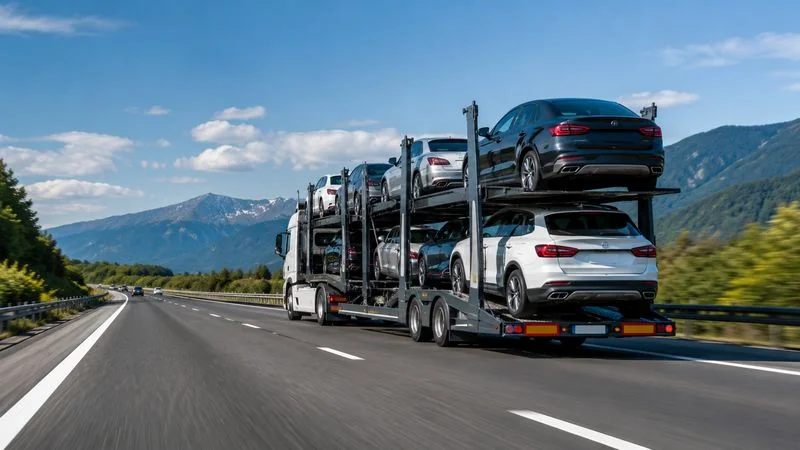
This is especially important when shipping a vehicle. A low-cost car can quickly become expensive if transportation is poorly planned. Storage charges, extra mileage, missed pickup windows, incorrect paperwork, or delays at a terminal can add hundreds of dollars to the final cost.
For example, a customer may buy an affordable vehicle at an auction. The purchase price fits their budget, but the vehicle is located far from the nearest delivery hub. Without proper planning, the customer may pay for a long-distance pickup, several days of storage, and additional handling. Logistics management helps identify these costs before the shipment begins.
How Does Logistics Management Control the Movement of Goods?
Logistics management controls the movement of goods by creating a clear plan for each stage of the shipment. It determines where the cargo is located, where it needs to go, how it will be transported, and when every step should happen.
The process usually begins before the cargo is picked up. A logistics manager reviews important details such as:
- The pickup and delivery locations
- The type, size, weight, and condition of the cargo
- The required delivery date
- Available transportation options
- Possible routes and transfer points
- Loading and unloading requirements
- Documents, permits, and insurance needs
- Expected fees and possible additional costs
Once the shipment is moving, the logistics team tracks its progress and communicates with drivers, terminals, warehouses, and customers. If a delay or route problem occurs, the plan may need to change.
Vehicle transportation provides a simple example. A car that runs and drives may be loaded using standard equipment. A damaged or non-running vehicle may require a forklift, winch, or special trailer. If the transportation company does not know the vehicle’s condition in advance, the driver may arrive without the correct equipment. This can result in a failed pickup and an extra service charge.
Logistics management reduces this risk by collecting accurate information before dispatch. It also helps coordinate pickup deadlines. Auction yards and storage facilities often begin charging daily storage fees after a limited free period. A well-managed pickup can prevent the customer from paying avoidable charges.
Control does not mean that every shipment will move without delays. Weather, traffic, equipment problems, port congestion, and warehouse schedules can affect transportation. However, good logistics management makes disruptions easier to identify and solve.
Which Processes Are Part of Logistics Management?
Logistics management includes several processes that work together. The exact process depends on the type of cargo, the transportation route, and the customer’s needs.
Transportation management is one of the main parts. It involves choosing carriers, comparing rates, planning routes, scheduling pickups, and selecting the right transportation method. For vehicle delivery, this may include open transport, enclosed transport, container shipping, rail, or another suitable option.
Freight management focuses on coordinating the shipment itself. It includes checking cargo details, arranging loading, preparing documents, tracking movement, and communicating with every party involved.
Other important logistics processes include:
- Order processing: Confirming shipment details, addresses, deadlines, and customer instructions.
- Inventory management: Keeping track of goods or vehicles stored at warehouses, terminals, or yards.
- Warehousing: Organizing short-term or long-term storage before the next transportation stage.
- Materials handling: Loading, unloading, moving, and securing cargo safely.
- Route planning: Choosing a practical route based on distance, cost, traffic, and delivery requirements.
- Carrier coordination: Communicating with trucking companies, drivers, warehouses, ports, and rail terminals.
- Shipment tracking: Monitoring the cargo and sharing updates with the customer.
- Document management: Preparing invoices, delivery orders, customs documents, titles, and other required paperwork.
- Risk management: Identifying possible delays, damage risks, penalties, and extra expenses.
- Customer service: Answering questions and helping customers understand what happens next.
Cost control is also a major part of logistics management. The lowest quoted transportation rate is not always the cheapest final option. A carrier may offer a low price but have a long pickup window. If the vehicle remains at an auction yard during that time, storage charges may cancel out the savings.
For example, one carrier may charge $100 less but pick up the vehicle five days later. If the yard charges $40 per day for storage, the customer may spend an extra $200. The supposedly cheaper option would then cost $100 more overall.
A strong logistics plan compares the total expected cost rather than looking only at the base transportation price.
How Do Inbound and Outbound Logistics Differ?
Logistics is often divided into two main categories: inbound logistics and outbound logistics.
Inbound logistics covers the movement of goods into a company, warehouse, terminal, repair facility, or distribution center. It usually begins with a supplier, seller, auction, manufacturer, or another external location.
For example, when a vehicle is collected from an auction and delivered to a warehouse, repair shop, or shipping terminal, that movement is part of inbound logistics. The company receiving the vehicle must coordinate the pickup, inspect the delivery, confirm the vehicle information, and record its arrival.
Outbound logistics covers the movement of goods from a company or facility to the next destination or final customer. It may include transportation from a warehouse to a buyer, from a terminal to a dealership, or from a storage facility to a port.
Consider a customer who buys a vehicle at an auction. The first transportation stage from the auction yard to a warehouse can be treated as inbound logistics. After the vehicle is prepared and sent from the warehouse to a port or final destination, that stage becomes outbound logistics.
Both types require careful planning, but their goals can differ.
Inbound logistics often focuses on:
- Coordinating supplier or seller pickup
- Preventing storage fees
- Checking cargo condition
- Managing receiving schedules
- Keeping warehouse inventory accurate
Outbound logistics often focuses on:
- Meeting delivery deadlines
- Choosing the best final route
- Preparing the cargo for delivery
- Updating the customer
- Confirming that the shipment reaches the correct destination
Poor inbound planning can create problems for outbound delivery. If a vehicle arrives late at a warehouse, misses an inspection, or has incomplete documents, the next transportation stage may also be delayed.
That is why logistics should be managed as one connected process rather than as several unrelated shipments.
Why Is Logistics Management More Complex Today?
Logistics management has become more complex because transportation networks now involve more people, systems, rules, and possible disruptions.
A shipment may pass through several locations before reaching its destination. A vehicle, for example, may move from an auction yard to a storage facility, then to a repair location, rail terminal, port, warehouse, or final delivery address. Each transfer creates another schedule, cost, document requirement, and risk of delay.
Transportation costs can also change due to fuel prices, labor shortages, equipment availability, seasonal demand, and route capacity. A price that was available last week may not be available today.
Customers also expect more visibility. They want to know when the cargo was picked up, where it is now, whether it is delayed, and when it should arrive. This requires accurate tracking and clear communication between logistics companies, carriers, drivers, and facilities.
Other factors that make logistics more difficult include:
- Driver and labor shortages
- Rising fuel and operating costs
- Port and rail congestion
- Limited truck or container availability
- Weather-related disruptions
- Changing regulations
- Strict pickup and delivery appointments
- Storage, detention, and demurrage charges
- Increased customer expectations
- More complicated international documentation
Budget-conscious customers are especially affected by these challenges. When someone is trying to save money on vehicle delivery, even a small planning mistake can have a major impact.
For example, choosing a vehicle based only on its auction price may seem like a good decision. However, a vehicle located in a remote area may cost much more to transport than a similar vehicle located near a major transportation route. A customer could save $300 on the purchase but spend $700 more on delivery.
What Are the Main Goals of Logistics Management?
The main goal of logistics management is to move goods in a way that is reliable, efficient, and cost-effective. A strong logistics plan helps a company avoid delays, reduce unnecessary expenses, improve customer service, and make better use of its people, equipment, and storage space.
Logistics management is not only about getting cargo from one place to another. It is also about controlling the full process. This includes planning the route, choosing the right carrier, scheduling pickup, preparing documents, tracking the shipment, and handling problems when they appear.
For companies, good logistics management supports growth and protects profit margins. For customers, it can mean faster delivery, fewer unexpected charges, and better communication.
This is especially important in vehicle transportation. A customer may find an affordable car at an auction, but the final cost depends on more than the purchase price. Transportation distance, storage fees, loading requirements, and delivery timing can all change the total amount. Logistics management helps keep these costs under control.
The main goals usually include:
- Increasing revenue
- Reducing transportation costs
- Improving the operating cost structure
- Using resources more efficiently
- Preventing delays and mistakes
- Improving customer satisfaction
- Delivering the correct cargo safely and on time
These goals are connected. Lower costs can improve profit. Better delivery can improve customer loyalty. Clear tracking can reduce service problems. When the entire system works well, both the company and the customer benefit.
How Can Logistics Management Increase Revenue?
Logistics management can increase revenue by helping a company serve more customers, complete more deliveries, and reduce lost sales caused by delays or poor service.
A company with an organized logistics process can handle a larger number of shipments without creating the same level of confusion. Routes are planned in advance, pickup times are coordinated, and available equipment is used more effectively. This makes it possible to complete more work with the same resources.
Reliable delivery can also help a business attract repeat customers. When customers receive their cargo on time and understand what is happening during the shipment, they are more likely to use the same company again.
For example, a customer who ships vehicles regularly may choose one logistics provider over another because the first provider gives clear updates, prevents storage fees, and meets pickup deadlines. Even when the base rate is slightly higher, better service may provide more value.
Logistics management also protects revenue by reducing failed deliveries and canceled orders. A missed pickup can lead to storage charges, extra dispatch fees, and an unhappy customer. In some cases, the customer may cancel future shipments or leave a negative review.
Revenue can also grow when logistics data is used to identify profitable routes and services. A company may discover that certain locations create frequent delays or high empty-mile costs. It can then adjust pricing, combine shipments, or focus on routes that perform better.
For vehicle delivery, efficient logistics can increase revenue in several ways:
- More vehicles can be transported within the same period
- Trucks can spend less time driving empty
- Pickup and delivery schedules can be better coordinated
- Fewer shipments fail because of missing information
- Customers are more likely to return
- The company can build a stronger reputation
The goal is not to increase revenue by simply charging more. The better approach is to improve the process so the company can complete more successful shipments while giving customers better value.
How Does It Reduce Transportation and Operating Costs?
Logistics management reduces costs by identifying waste before it becomes an expense. It helps companies choose better routes, avoid unnecessary handling, improve truck capacity, and reduce delays.
Transportation is often one of the largest costs in the supply chain. Fuel, labor, equipment, tolls, storage, and loading fees can quickly increase the total price. Without proper planning, these costs are difficult to control.
Route planning is one of the clearest examples. A direct route is not always the best route. Traffic, tolls, restricted roads, delivery appointments, and available backhaul loads can all affect the final cost.
A logistics manager may choose a slightly longer route because it has fewer delays, better truck access, or a lower risk of missed appointments. This can be cheaper than selecting the shortest distance without reviewing other factors.
Shipment consolidation can also reduce costs. If several vehicles or loads are moving in the same direction, they may be grouped when equipment and timing allow. This helps reduce empty space and can lower the cost per vehicle.
Proper scheduling reduces operating costs as well. Drivers who arrive too early may have to wait. Drivers who arrive too late may miss the pickup window. Both situations can create extra charges.
For example, a budget-conscious customer may choose the lowest carrier rate without checking the pickup date. If the carrier arrives four days after free storage ends, the customer may pay more in storage than they saved on transportation.
Good logistics management looks at the full cost, including:
- Base transportation charges
- Fuel surcharges
- Storage fees
- Detention or waiting time
- Loading and unloading fees
- Additional equipment charges
- Missed appointment penalties
- Re-delivery costs
- Empty mileage
- Administrative labor
Operating costs can also be reduced through better documentation and communication. Incorrect addresses, missing vehicle details, or incomplete paperwork can cause delays that require employees to spend more time fixing the problem.
When information is collected and checked before pickup, the shipment is more likely to move without interruption.
How Can Better Planning Improve Customer Service?
Better planning improves customer service because it creates a more predictable delivery process. Customers want to know what will happen, how much it will cost, and when their cargo will arrive.
A clear logistics plan helps answer these questions before the shipment begins.
Good customer service starts with accurate expectations. It is better to give a realistic delivery window than to promise an impossible date. When customers receive honest information, they can plan around the shipment and avoid unnecessary stress.
Communication is also important. A customer should not have to repeatedly ask whether a vehicle was picked up or where it is located. Regular updates show that the shipment is being managed.
Better planning can improve customer service by:
- Providing realistic pickup and delivery estimates
- Confirming all shipment details in advance
- Explaining possible fees before they occur
- Tracking the cargo during transportation
- Informing the customer about delays
- Responding quickly when a problem appears
- Reducing the risk of damage or failed delivery
For someone shipping a vehicle on a limited budget, unexpected expenses can be more frustrating than a slightly higher planned cost. A customer may be able to prepare for a known $150 fee, but an unexpected $500 charge can create a serious problem.
That is why cost transparency is part of good customer service.
Consider a customer who buys a non-running vehicle. If the transportation company confirms this information early, it can arrange the correct loading equipment. The customer receives an accurate quote and avoids a failed pickup.
If the condition is not confirmed, the driver may arrive and discover that the vehicle cannot be loaded. The pickup may be canceled, and the customer may be charged for the attempt.
Good planning prevents this type of situation. It improves trust and makes the full experience easier for the customer.
How Do the Seven Rs Support Successful Delivery?
The Seven Rs of logistics are a simple way to check whether a delivery has been planned correctly. They focus on the key details that must be right for a shipment to succeed.
The Seven Rs are:
- The right product
- The right quantity
- The right condition
- The right place
- The right time
- The right customer
- The right price
These principles may sound basic, but many logistics problems happen because one of these details is incorrect.
A vehicle may arrive at the wrong terminal. A shipment may include the wrong number of units. A damaged vehicle may be booked as running. A truck may arrive outside the allowed pickup time. The cargo may be delivered to a customer who is not ready to receive it.
Each mistake can lead to delays and extra expenses.
The Seven Rs help logistics teams check the shipment before it moves. This reduces the risk of incorrect pickup, failed delivery, damage, and additional charges.
For vehicle delivery, the Seven Rs can be used as a practical checklist:
- Is this the correct vehicle?
- Is the vehicle information accurate?
- Is its condition clearly described?
- Is the pickup address correct?
- Is the delivery location correct?
- Is the pickup scheduled before storage begins?
- Is the customer ready to receive the vehicle?
- Does the final cost fit the customer’s budget?
Checking these details takes less time than correcting a mistake after the vehicle is already in transit.
What Do the Right Product, Quantity, Condition, Place, Time, Customer, and Price Mean?
Each of the Seven Rs covers a specific part of logistics management.
The right product means transporting the correct item. For vehicle shipping, this includes confirming the vehicle identification number, make, model, year, color, and lot number.
Auction yards and storage facilities may contain thousands of vehicles. A small mistake in the lot number or pickup order can lead to the wrong vehicle being released.
The right quantity means making sure the correct number of items is collected and delivered. This is especially important when a customer ships several vehicles or multiple parts in one order.
For example, a customer may arrange transportation for three vehicles. If only two are listed on the dispatch order, the third vehicle may remain at the yard and begin collecting storage charges.
The right condition means understanding the cargo’s real condition before transportation. A running vehicle, a damaged vehicle, and a vehicle with missing wheels may require different equipment.
Condition also refers to protecting the cargo during transportation. Vehicles should be loaded, secured, and unloaded correctly to reduce the risk of additional damage.
The right place means using the correct pickup and delivery addresses. This includes checking terminal gates, warehouse entrances, auction yard locations, and port instructions.
A general street address may not be enough. Large facilities may have separate entrances for trucks, visitors, and cargo pickup.
The right time means completing each step within the correct schedule. Timing can affect storage fees, delivery appointments, port cutoffs, and customer availability.
A vehicle that is picked up one day late may create several days of delay if it misses a terminal or warehouse appointment.
The right customer means delivering the cargo to the correct person, company, or facility. The receiving party must also have the documents and authority needed to accept it.
This is important when a customer uses a warehouse, freight forwarder, repair shop, or another third party as the delivery location.
The right price means selecting a logistics option that offers reasonable value based on the customer’s needs. It does not always mean choosing the lowest initial quote.
The right price should include the full expected cost. A slightly higher transportation rate may be the better choice if it provides faster pickup and avoids storage fees.
For example, one carrier may offer delivery for $700 with pickup in one day. Another may offer $600 with pickup in six days. If the yard charges $35 per day after the second day, the cheaper quote could create $140 in storage fees. The final cost would be $740.
In this case, the $700 option is the better price overall.
Why Is Logistics Management Important for Businesses and Customers?
Logistics management is important because it connects planning, transportation, storage, communication, and delivery into one organized process. Without this coordination, even a simple shipment can become expensive, slow, and difficult to track.
For businesses, effective logistics management helps control costs, use resources more efficiently, and complete more deliveries with fewer problems. It also supports better decision-making because managers can see where delays, waste, and extra expenses are coming from.
For customers, good logistics means clearer prices, more reliable delivery times, and fewer unexpected issues. This is especially valuable for people working with a limited budget. A customer who saves money on a vehicle purchase can lose those savings quickly if the delivery process includes storage charges, repeated pickup attempts, or poor route planning.
Logistics management creates structure. It helps everyone involved understand what needs to happen, when it should happen, and who is responsible for each step.
A well-managed shipment can reduce stress for the customer and improve profit for the company. It can also prevent small mistakes from becoming major expenses.
How Does Logistics Planning Improve Daily Operations?
Logistics planning improves daily operations by organizing tasks before the cargo begins to move. Instead of reacting to every problem at the last minute, a company can prepare routes, schedules, documents, equipment, and staff in advance.
This makes work more predictable.
For example, a transportation company may have several vehicle pickups scheduled in different parts of the same region. Without planning, drivers could travel back and forth, waste fuel, and miss pickup windows. With a clear route plan, nearby pickups can be grouped together and completed in a more efficient order.
Daily logistics planning may include:
- Confirming pickup and delivery addresses
- Checking cargo dimensions and condition
- Assigning the right truck and driver
- Reviewing loading requirements
- Preparing shipping documents
- Coordinating warehouse or terminal appointments
- Checking road, weather, and traffic conditions
- Estimating fuel and travel time
- Updating customers and partners
Planning also helps companies use storage space more effectively. A warehouse needs to know what is arriving, when it will arrive, and how long it will remain on-site. If several vehicles arrive without warning, the facility may not have enough space or staff available to process them.
The same applies to drivers and equipment. A non-running vehicle may require a winch. An oversized load may require a special trailer. A vehicle with locked wheels may need additional loading support.
When these details are known early, the company can assign the correct resources. This reduces failed pickups and prevents unnecessary delays.
Good planning also reduces pressure on employees. Workers do not need to spend as much time correcting avoidable mistakes or searching for missing information. They can focus on completing the shipment.
For a customer, this creates a smoother experience. The pickup happens sooner, the quote is more accurate, and there are fewer surprise charges.
How Can Better Logistics Reduce Delays and Delivery Problems?
Better logistics reduces delays by identifying possible problems before they affect the shipment. Many delivery issues are not caused by the actual driving time. They are caused by missing documents, incorrect information, unavailable equipment, poor scheduling, or weak communication.
A vehicle may be ready for pickup, but the driver cannot collect it because the release form is missing. A warehouse may be open, but the truck arrives outside the receiving schedule. A customer may provide the correct city but the wrong terminal address.
Each of these problems can delay the shipment even when a truck is available.
A strong logistics process checks these details in advance.
Before dispatch, the logistics team should confirm:
- That the cargo is ready for release
- That all required documents are available
- That the pickup location allows the selected truck type
- That the driver has the correct reference numbers
- That the customer or receiver will be available
- That loading equipment is available
- That delivery appointments are confirmed
Route planning also helps reduce delays. The shortest route may include heavy traffic, road restrictions, tolls, construction, or limited truck access. A more reliable route may take slightly longer on paper but reduce the chance of a missed appointment.
Weather is another important factor. Heavy rain, snow, storms, and high winds can affect transportation schedules. Logistics planning cannot prevent bad weather, but it can help the company adjust the route, pickup time, or delivery expectation.
Communication is equally important. If a driver is delayed, the warehouse and customer should be informed. This gives them time to adjust instead of waiting without information.
For budget-conscious customers, preventing delays can also prevent extra costs. A late pickup may lead to storage fees. A missed appointment may lead to re-delivery charges. A delayed port arrival may create additional handling or scheduling expenses.
Better logistics does not guarantee that every shipment will be perfect. However, it reduces the number of avoidable problems and makes unexpected issues easier to manage.
Why Does Supply Chain Visibility Matter?
Supply chain visibility means knowing where the cargo is, what stage it has reached, and whether the shipment is moving according to plan.

Visibility matters because logistics decisions depend on accurate information. A company cannot solve a delay if it does not know that the delay exists.
For example, a vehicle may have been picked up from an auction but may still be waiting at a regional terminal. If the customer only knows that the vehicle has left the auction, they may assume it is already close to the final destination.
Clear tracking gives a more accurate picture.
Supply chain visibility can include:
- Pickup confirmation
- Current shipment location
- Estimated arrival time
- Warehouse check-in
- Loading or unloading status
- Delay notifications
- Delivery confirmation
- Document status
This information helps logistics managers respond quickly. If a truck is delayed, they can update the receiver. If a shipment is sent to the wrong terminal, they can correct the route. If a vehicle has not been released, they can contact the seller before sending a driver.
Visibility also helps control costs. A logistics manager can review how long cargo remains at each location and identify where storage or waiting charges are increasing.
For example, if vehicles regularly spend several extra days at one warehouse, the company can investigate the cause. The issue may be slow paperwork, limited loading hours, or poor appointment coordination.
Customers also benefit from visibility because they do not need to guess what is happening. They can prepare for delivery and make better financial decisions.
A customer waiting for a vehicle may need to arrange parking, repair service, customs work, or final transportation. Accurate updates help them schedule these services at the right time.
Visibility builds trust. Even when a delay occurs, customers are more likely to remain satisfied if they receive clear and honest information.
How Does Logistics Management Improve Customer Satisfaction?
Logistics management improves customer satisfaction by making delivery more reliable, transparent, and convenient.
Customers usually judge a shipping company by more than the final delivery. They also remember how easy it was to get a quote, whether the price was explained clearly, how often they received updates, and how the company handled problems.
A good logistics process supports the customer from the first request to the final delivery.
Customer satisfaction improves when a company provides:
- Clear and realistic pricing
- Accurate pickup and delivery estimates
- Regular shipment updates
- Fast answers to questions
- Honest information about delays
- Careful cargo handling
- Simple document instructions
- Reliable delivery confirmation
Price transparency is especially important for customers with limited budgets. A low initial quote can create disappointment if several extra charges appear later.
A better approach is to explain possible costs in advance. This may include storage, special loading, waiting time, tolls, or additional mileage.
For example, a customer may buy a damaged vehicle that cannot roll. If the customer is informed about the special loading fee before booking, they can decide whether the full cost still fits their budget.
If the fee appears only after the driver arrives, the customer may feel misled even if the charge is reasonable.
Logistics management also improves satisfaction by setting realistic expectations. Promising a very fast delivery may help win the order, but it can damage trust if the deadline is missed.
Customers often prefer an honest estimate over an unrealistic promise.
Problem-solving also matters. Delays and changes can happen in any transportation process. What customers remember is how the company responds.
A logistics provider that communicates early, explains the problem, and offers a practical solution can protect the customer relationship. A company that ignores messages or provides unclear answers may lose the customer.
Good logistics turns shipping from a confusing process into a manageable one. This can lead to repeat business, positive reviews, and long-term relationships.
Why Is Reverse Logistics Important for Returns and Cost Control?
Reverse logistics is the process of moving goods in the opposite direction of the original delivery. Instead of shipping cargo from the seller to the customer, it moves from the customer back to the seller, warehouse, repair facility, or another destination.
Reverse logistics may be needed when:
- The wrong item was delivered
- The cargo was damaged
- A customer rejects the shipment
- A product needs repair
- Packaging or equipment must be returned
- A vehicle is moved back to storage
- Parts need to be replaced or recycled
Returns can be expensive because they create an additional transportation process. The company may need to arrange a new pickup, inspect the cargo, update records, process documents, and decide where the item should go next.
Without a clear reverse logistics plan, returned goods may remain in storage for too long or move through unnecessary locations.
For vehicle transportation, reverse logistics may apply when a car is delivered to the wrong facility, rejected because of a condition issue, or moved back from a repair shop or terminal.
For example, a vehicle may arrive at a warehouse that cannot accept non-running units. The vehicle then needs to be transported to another location. This creates additional mileage, handling, and storage costs.
Good reverse logistics helps control these expenses by creating a clear return process. It answers important questions such as:
- Who is responsible for the return?
- Where should the cargo be sent?
- Which carrier and equipment are needed?
- Who will inspect the returned item?
- Can the item be repaired, resold, or reused?
- How can the return be completed at the lowest reasonable cost?
Reverse logistics also supports customer service. Customers want return problems to be handled quickly and fairly. A slow or confusing return process can damage trust even if the original delivery was successful.
For businesses, returned goods should not simply be treated as a loss. Some items can be repaired, resold, reused, or recycled. A good reverse logistics process helps recover part of their value.
It also provides useful information. If the same type of return happens repeatedly, the company may have a problem with packaging, cargo descriptions, handling, or delivery instructions.
By reviewing return data, a business can correct the original process and reduce future costs.
Further Reading
What is Freight and Logistics?
How Supply Chain Management Works: A Guide for Small Businesses
What is Managed Transportation?
What is 3PL Experience? Benefits of Third-Party Logistics


ASK YOUR QUESTIONS