
Fuel surcharges can change the final cost of shipping a vehicle. This guide explains how they are calculated, what affects them, and how to avoid surprises when planning transportation on a budget.
Table of Content:
- What Is a Fuel Surcharge and Why Do Shipping Companies Charge It?
- How Are Fuel Surcharges Calculated?
- Which Numbers Do You Need to Calculate a Fuel Surcharge?
- How Can Businesses Reduce the Impact of Fuel Surcharges?
- How Can You Better Manage Shipping Costs in the Long Run?
What Is a Fuel Surcharge and Why Do Shipping Companies Charge It?
When you request a shipping quote, you may notice a separate line called a fuel surcharge. At first glance, it may seem like an extra fee added without explanation. In reality, it is a standard part of freight pricing that helps account for changes in fuel costs.
Because diesel prices can rise or fall significantly over time, carriers need a way to adjust transportation costs without changing their base shipping rates every week. A fuel surcharge makes this possible. It reflects changes in fuel prices while keeping freight pricing more stable and predictable for both carriers and customers.
For businesses shipping vehicles, auto parts, or other freight, understanding how fuel surcharges work can help avoid surprises and make it easier to compare shipping quotes.
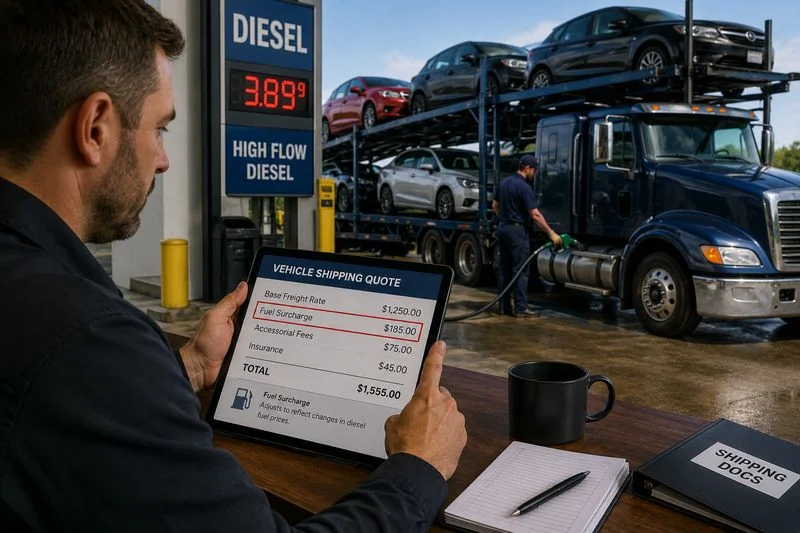
What Does a Fuel Surcharge Cover?
A fuel surcharge is an additional charge that helps cover the cost of the diesel or gasoline used to transport a shipment. Since fuel is one of the largest operating expenses for trucking companies, changes in fuel prices can have a major impact on transportation costs.
Instead of increasing their base shipping rates every time fuel prices rise, carriers typically add a separate fuel surcharge. This allows the transportation cost to adjust based on current market conditions.
A fuel surcharge may help cover expenses such as:
- Diesel or gasoline used during transportation
- Long-distance truck operations
- Higher fuel costs caused by market fluctuations
- Additional operating expenses related to changing fuel prices
It is important to understand that a fuel surcharge is not extra profit for the carrier. It is intended to offset higher fuel expenses so carriers can continue providing reliable transportation without constantly renegotiating shipping rates.
For example, imagine you purchase a vehicle at an online auction and arrange transportation across several states. If diesel prices increase before your shipment begins, the transportation company may apply a fuel surcharge to reflect the higher cost of completing the trip.
Why Do Fuel Prices Affect Shipping Costs?
Almost every truck delivering freight depends on fuel. When diesel prices increase, transportation becomes more expensive for carriers.
Unlike fixed business expenses such as office rent or insurance, fuel costs can change quickly. Prices may increase from one week to the next due to seasonal demand, refinery production, weather events, or changes in the global energy market.
Because trucking companies purchase thousands of gallons of fuel every month, even a small increase in price per gallon can significantly affect operating costs.
For example, imagine a carrier moving vehicles from Georgia to Texas. If diesel prices rise by only a few cents per gallon, the additional fuel expense across hundreds of miles and multiple shipments can become substantial.
Without fuel surcharges, carriers would have only two options:
- Increase their standard shipping rates for every customer.
- Absorb the higher fuel costs themselves.
Neither option works well over the long term. Fuel surcharges provide a more flexible solution by adjusting only the fuel-related portion of the transportation cost.
This system allows base freight rates to remain relatively stable while accounting for changing fuel prices separately.
How Can Fuel Surcharges Protect Both Carriers and Customers?
Although many customers see fuel surcharges as an additional expense, they actually benefit both sides of the shipping process.
For carriers, fuel surcharges reduce the financial risk of sudden increases in diesel prices. This allows trucking companies to continue operating without constantly changing their base pricing or reducing service quality.
Customers also benefit because fuel surcharges create greater transparency. Instead of wondering why shipping prices change unexpectedly, they can clearly see which portion of the invoice is directly related to fuel.
Fuel surcharges also support longer-term transportation agreements.
For example, a dealership that ships vehicles every month may negotiate a freight rate with a carrier for the entire year. During that time, diesel prices are likely to change several times. Rather than rewriting the transportation contract whenever fuel prices move, both parties simply adjust the fuel surcharge according to the agreed pricing method.
This approach makes budgeting easier while keeping freight rates fair for everyone involved.
How Are Fuel Surcharges Calculated?
Fuel surcharge calculations can look confusing at first, but the basic idea is simple. A shipping company compares the current fuel price with an agreed base fuel price. If fuel costs are higher than the base price, the difference is used to calculate an added charge.
This charge may be added as a percentage of the freight rate or as a cost per mile. The exact method can vary from one company to another because fuel surcharge formulas are usually set by agreement between the shipper and the transportation provider.
For customers, the most important thing is not memorizing every formula. It is understanding what affects the surcharge and why the amount may change over time.
Which Factors Affect Fuel Surcharge Rates?
Several factors can affect the final fuel surcharge on a shipment. The most common ones include fuel prices, distance, equipment type, vehicle condition, route, and the carrier's fuel efficiency.
For example, shipping a compact running car for 300 miles will usually require less fuel than moving a heavy non-running SUV across several states. The heavier or more complex the shipment is, the more fuel and planning may be required.
Common factors that influence fuel surcharges include:
- Current diesel or gasoline prices
- Shipment distance
- Base fuel price used in the calculation
- Truck fuel mileage
- Type of equipment needed
- Weight of the load
- Route difficulty
- Pickup and delivery location
- Empty miles before or after the load
- Market demand for trucks
For vehicle shipping, the surcharge may also depend on whether the car runs and drives. A non-running auction vehicle may require special loading equipment, extra time, or a specific carrier. These details can affect the total transportation cost, even if the fuel surcharge itself is based on a standard formula.
This is why two similar shipments may not always have the same final price.
What Formula Do Most Companies Use?
There is no single fuel surcharge formula used by every shipping company. However, many transportation providers use a simple method based on three numbers:
- Base fuel price
- Current fuel price
- Truck fuel mileage
The base fuel price is the price already included in the standard freight rate. The current fuel price is the updated market price. Fuel mileage shows how many miles the truck can travel on one gallon of fuel.
A common formula looks like this:
Fuel surcharge per mile = (Current fuel price - Base fuel price) ÷ Miles per gallon
Here is a simple example.
Suppose the base fuel price is $2.00 per gallon, and the current diesel price is $3.00 per gallon. The difference is $1.00 per gallon.
If the truck gets 5 miles per gallon, the fuel surcharge would be:
$1.00 ÷ 5 = $0.20 per mile
That means the added fuel surcharge is 20 cents per mile.
If the shipment is 500 miles, the estimated fuel surcharge would be:
500 miles × $0.20 = $100
This example is simplified, but it shows how rising fuel prices can increase the final shipping cost.
Some companies may calculate the surcharge as a percentage of the base freight rate instead. For example, if the freight rate is $1,000 and the fuel surcharge is 15%, the fuel surcharge would be $150.
Both methods are common. The key is knowing which method is being used before you compare quotes.
How Does the U.S. Energy Information Administration (EIA) Influence Fuel Surcharges?
Many transportation companies use fuel price data from the U.S. Energy Information Administration, often called the EIA. The EIA publishes national and regional fuel price averages, including diesel price updates.
The EIA does not tell carriers how much they must charge. It also does not create one official fuel surcharge formula for the entire freight industry.
Instead, companies often use EIA fuel price data as a reference point. This helps make surcharge calculations more consistent and transparent.
For example, a carrier may update fuel surcharges every week based on the latest published diesel price average. If the national diesel average increases, the surcharge may increase. If the average decreases, the surcharge may go down as well.
This approach gives both customers and carriers a shared source for fuel pricing. It also reduces confusion because the surcharge is connected to a public fuel price index rather than a random number.
For budget-conscious shippers, this matters. When you understand the fuel price source, it becomes easier to ask clear questions and compare quotes from different providers.
Can Fuel Surcharges Change From Week to Week?
Yes, fuel surcharges can change from week to week. Since fuel prices move regularly, many transportation companies update surcharge rates on a weekly basis.
This is one reason a shipping quote may not stay the same forever. A quote you receive today may be different next week if fuel prices change or truck availability becomes tighter.
For example, imagine you are planning to ship a vehicle from an auction. You request a quote on Monday but wait two weeks before booking the shipment. During that time, diesel prices increase. The carrier may need to adjust the fuel surcharge to reflect the new fuel cost.
This does not mean the company is changing the price without reason. It usually means the cost of completing the shipment has changed.
To avoid surprises, always ask:
- Is the fuel surcharge included in the quote?
- Is it calculated per mile or as a percentage?
- How often is it updated?
- Which fuel price index is used?
- How long is the quote valid?
These questions can help you understand the real cost before booking transportation.
Which Numbers Do You Need to Calculate a Fuel Surcharge?
To understand a fuel surcharge, you need more than the current diesel price. The final number usually depends on several basic details: the base fuel price, the current fuel price, the distance of the shipment, and the truck’s fuel mileage.
For a customer shipping a vehicle, this helps explain why a quote may change when fuel prices rise. For a carrier or business owner, these numbers help show whether the surcharge is enough to cover the real cost of moving the load.
The goal is simple: the fuel surcharge should help cover the extra fuel cost caused by higher fuel prices. It should make the shipment fair for both sides.
Why Is Knowing Your Actual Cost Per Mile So Important?
Your actual cost per mile is the amount it costs to operate a truck for each mile driven. This number is important because fuel is only one part of the total cost.
A carrier also has to pay for:
- Truck payments
- Insurance
- Maintenance
- Tires
- Repairs
- Driver pay
- Permits
- Dispatch
- Equipment replacement
- Empty miles
- Administrative costs
If a carrier does not know the real cost per mile, it becomes easy to underprice a shipment. That can create a problem. The load may look profitable at first, but after fuel, maintenance, and other expenses, the carrier may actually lose money.
This also matters for customers. When carriers underprice loads, service quality can suffer. A very low quote may lead to delayed pickup, poor communication, or a carrier canceling because the shipment no longer makes financial sense.
For example, a person buying a budget vehicle at an auction may choose the lowest shipping quote to save money. But if that quote does not properly account for fuel costs, the shipment may be delayed while the broker searches for a carrier willing to accept the load.
A fair fuel surcharge helps reduce that risk. It gives the carrier a better chance to complete the shipment reliably while giving the customer a clearer view of the real transportation cost.
How Does Fuel Mileage Affect the Final Surcharge?
Fuel mileage shows how far a truck can travel on one gallon of fuel. In fuel surcharge calculations, this number is very important.
The lower the fuel mileage, the higher the surcharge per mile may be. The higher the fuel mileage, the lower the surcharge per mile may be.
For example, a truck that gets 5 miles per gallon uses more fuel than a truck that gets 7 miles per gallon over the same distance. If both trucks drive 500 miles, the truck with better fuel mileage uses less fuel and has a lower fuel cost.
Several factors can affect fuel mileage, including:
- Truck type
- Trailer type
- Load weight
- Route conditions
- Traffic
- Weather
- Driving speed
- Empty miles
- Stop-and-go driving
This is especially important in vehicle shipping. Moving a small running sedan is not the same as moving a heavy pickup truck, an inoperable SUV, or equipment that needs special loading. Heavier or more complex shipments may affect fuel use and overall transportation cost.
For customers, this explains why distance is not the only factor in a shipping quote. Two vehicles traveling the same route may still have different total costs if one requires more equipment, time, or fuel to transport.
Can You Calculate a Fuel Surcharge With a Simple Example?
Yes. A simple example can make the calculation easier to understand.
Let’s say a carrier uses these numbers:
- Base fuel price: $2.00 per gallon
- Current fuel price: $3.50 per gallon
- Fuel price difference: $1.50 per gallon
- Truck fuel mileage: 6 miles per gallon
- Shipment distance: 600 miles
First, subtract the base fuel price from the current fuel price:
$3.50 - $2.00 = $1.50
This means fuel costs are $1.50 higher per gallon than the amount already built into the base rate.
Next, divide the fuel price difference by the truck’s fuel mileage:
$1.50 ÷ 6 miles per gallon = $0.25 per mile
The fuel surcharge is 25 cents per mile.
Now multiply the surcharge per mile by the shipment distance:
$0.25 × 600 miles = $150
In this example, the fuel surcharge would be $150.
This does not mean every company will calculate the charge exactly this way. Some use a percentage of the freight rate instead of a per-mile formula. Others may use different base fuel prices, fuel mileage assumptions, or update schedules.
Still, this example shows the basic logic behind the charge. When fuel prices rise, the surcharge helps cover the extra fuel cost needed to complete the shipment.
What Changes If You Lease With a Company Like YK Freight?
If you lease with a company or work under a larger transportation operation, the fuel surcharge process may be simpler for you. The company may already have a set formula, published fuel surcharge schedule, or established method for calculating the charge.
In that case, your main job is to compare the total pay against your actual cost per mile.
This means looking at:
- Base load rate
- Fuel surcharge
- Total miles
- Empty miles
- Fuel cost
- Operating expenses
- Expected profit
For example, if a load pays $1,200 plus a $150 fuel surcharge, the total is $1,350. If your full cost to complete the shipment is $1,050, the load may still make sense. But if your true cost is close to or higher than the total pay, the shipment may not be worth taking.
For customers, working with a logistics company can also make fuel charges easier to understand. Instead of trying to guess how diesel prices affect transportation costs, you can ask how the surcharge is calculated and whether it is already included in the quote.
How Can Businesses Reduce the Impact of Fuel Surcharges?
Fuel surcharges are a normal part of the transportation industry, and businesses cannot control fuel prices. However, they can control many of the decisions that affect their total shipping costs.
The goal is not to avoid fuel surcharges altogether. Instead, it is to build a more efficient shipping process that reduces unnecessary expenses and gets the best value from every shipment.
Small improvements in planning, communication, and carrier selection can make a noticeable difference over time. For companies shipping vehicles regularly, these savings can add up to hundreds or even thousands of dollars each year.
How Can Better Route Planning Lower Fuel Costs?
One of the easiest ways to reduce transportation costs is through better route planning.
The shortest route is not always the least expensive. Heavy traffic, construction zones, steep terrain, and unnecessary detours can increase fuel consumption and delivery times.
Experienced logistics providers analyze multiple factors before selecting a route, including:
- Distance
- Road conditions
- Traffic patterns
- Pickup and delivery schedules
- Truck availability
- Load type
- Fuel efficiency
Good planning also helps reduce empty miles. Empty miles occur when a truck travels without carrying freight. Since fuel is still being consumed, these miles increase operating costs without generating revenue.

For example, imagine a customer buying two vehicles from different auction locations in the same region. If pickups are scheduled separately without planning, two trucks may be required. By coordinating both pickups into one route whenever possible, transportation can become more efficient and the overall shipping cost may decrease.
Planning shipments in advance can also help lower costs. Last-minute transportation requests often provide fewer carrier options and may result in higher prices, especially during busy shipping seasons.
Why Does Choosing the Right Logistics Partner Matter?
Not every logistics provider manages fuel costs the same way.
An experienced logistics partner looks beyond the freight rate and focuses on the total cost of transportation. This includes carrier selection, scheduling, routing, communication, and shipment coordination.
The right provider can help businesses by:
- Finding competitive carrier rates
- Improving pickup scheduling
- Reducing unnecessary delays
- Matching the shipment with the right equipment
- Explaining pricing clearly
- Monitoring changing market conditions
For example, a business that regularly ships auction vehicles may receive several transportation quotes. The lowest quote is not always the best choice if it comes with poor communication, delayed pickups, or unexpected fees.
An experienced logistics provider helps customers compare the overall value instead of focusing only on the initial price.
Working with a trusted partner also reduces the time spent searching for carriers, negotiating rates, and solving transportation problems, allowing businesses to focus on serving their customers.
What Mistakes Can Increase Your Overall Shipping Expenses?
Many shipping costs are not caused by fuel prices alone. In many cases, avoidable mistakes make transportation more expensive than it needs to be.
Some of the most common mistakes include:
- Booking shipments at the last minute
- Providing incorrect pickup or delivery information
- Choosing carriers based only on the lowest price
- Ignoring shipment tracking
- Failing to plan multiple shipments together
- Underestimating loading requirements
- Waiting too long to schedule transportation
- Not asking whether fuel surcharges are included in the quote
Consider a buyer who wins a vehicle at auction but waits several days before arranging transportation. During that time, carrier availability may decrease, fuel prices may rise, and storage fees may begin accumulating at the auction yard.
In another situation, a customer may choose the cheapest carrier without confirming whether the quote includes fuel surcharges or additional service fees. The final invoice could end up being higher than expected.
Understanding the complete transportation cost—not just the advertised freight rate—helps businesses make better financial decisions.
How Can YK Freight Help You Keep Transportation Costs Under Control?
Managing transportation costs requires more than watching diesel prices. It requires careful planning, reliable communication, and access to dependable carriers.
YK Freight helps businesses control shipping expenses by focusing on efficient logistics rather than simply arranging truck transportation.
The company works with customers to:
- Plan shipments efficiently
- Match freight with qualified carriers
- Coordinate pickups and deliveries
- Reduce unnecessary delays
- Provide clear and transparent pricing
- Keep customers informed throughout the shipping process
For example, a dealership purchasing vehicles from multiple auctions may need transportation from several states over the course of a month. Instead of arranging every shipment separately, YK Freight can help coordinate transportation more efficiently, reducing administrative work while helping customers make better use of available carrier capacity.
This approach can also improve budget planning. When customers understand how freight rates, fuel surcharges, and transportation services fit together, they are better prepared to estimate the true cost of shipping before booking a load.
How Can You Better Manage Shipping Costs in the Long Run?
Fuel prices will always change, and fuel surcharges will continue to be part of the transportation industry. While businesses cannot control the price of diesel, they can make smarter decisions that reduce overall shipping expenses and create more predictable transportation budgets.
Long-term cost management is about looking beyond a single shipment. Companies that consistently review their logistics process, plan shipments carefully, and work with reliable transportation partners are often able to lower costs over time.
Whether you ship one vehicle each month or manage freight every day, understanding how transportation costs are built helps you make better business decisions.
Should You Focus Only on the Lowest Freight Rate?
Choosing the lowest freight rate may seem like the easiest way to save money, but the cheapest quote is not always the most affordable option in the long run.
A low price can sometimes come with trade-offs, including:
- Slower pickup times
- Poor communication
- Limited shipment tracking
- Hidden fees
- Higher risk of delays
- Fewer carrier options
For example, imagine you buy a vehicle from an auction and receive two shipping quotes. One company offers a price that is $75 lower, but the quote does not clearly explain whether fuel surcharges, storage fees, or additional services are included.
The second quote is slightly higher but includes transparent pricing, regular shipment updates, and reliable scheduling.
In many cases, the second option provides better overall value because there are fewer unexpected costs and less risk of delays.
Instead of asking only, "Which quote is the cheapest?" consider asking:
- What services are included?
- Is the fuel surcharge already included?
- Are there any additional fees?
- How experienced is the carrier?
- How reliable is the delivery schedule?
Looking at the complete transportation package—not just the base freight rate—helps businesses avoid expensive surprises later.
How Can Fuel-Efficient Shipping Improve Your Bottom Line?
Fuel-efficient shipping benefits everyone involved in the transportation process.
For carriers, using fuel more efficiently reduces operating expenses. For customers, improved efficiency can help keep transportation rates more competitive over time.
Fuel-efficient shipping often comes from better planning rather than simply using less fuel.
Some practical ways to improve efficiency include:
- Planning shipments in advance
- Combining multiple shipments when possible
- Reducing empty miles
- Choosing efficient transportation routes
- Avoiding unnecessary delays
- Matching the right truck to the shipment
- Improving pickup and delivery scheduling
For example, a dealership purchasing several vehicles throughout the month may reduce overall transportation costs by scheduling shipments together instead of arranging each vehicle separately.
Similarly, businesses that provide accurate pickup information, flexible scheduling, and complete shipment details often help carriers operate more efficiently. These small improvements can reduce unnecessary travel time, improve truck utilization, and lower overall transportation expenses.
Over dozens or even hundreds of shipments each year, these savings can have a meaningful impact on a company's bottom line.
What Should Be Your Next Step If You Want More Predictable Shipping Costs?
The first step toward more predictable transportation costs is understanding how your current shipping process works.
Review your recent shipments and ask yourself questions such as:
- How much of the total shipping cost comes from fuel?
- Are fuel surcharges explained clearly on your invoices?
- Do you regularly compare total transportation costs instead of only freight rates?
- Could better planning reduce last-minute shipping?
- Are delays increasing your overall expenses?
- Is your current logistics process helping your business grow?
The answers can help identify opportunities to improve efficiency and reduce unnecessary costs.
If your business ships vehicles or freight on a regular basis, working with an experienced logistics provider can also simplify transportation planning. Instead of managing changing fuel prices, carrier availability, and shipment coordination on your own, you gain access to professional support and a broader transportation network.
YK Freight helps businesses build more predictable shipping strategies through transparent pricing, efficient transportation planning, and dependable carrier coordination. Whether you need to move a single vehicle or manage ongoing freight shipments, the company works to find practical logistics solutions that balance cost, reliability, and service.
Understanding how fuel surcharges are calculated is only one part of controlling transportation expenses. By planning ahead, comparing the full value of each shipping option, and partnering with experienced logistics professionals, businesses can reduce uncertainty, make smarter financial decisions, and keep shipping costs under control over the long term.
Further Reading
Freight Shipping Cost Explained: How to Save Money on Every Shipment
How to Get the Best Freight Shipping Rates Today – Save with YK Freight
Spot Market vs Contract Freight Rates: How to Save on Shipping
How a 3PL Can Help You Get Lower Freight Rates and Save on Shipping


ASK YOUR QUESTIONS