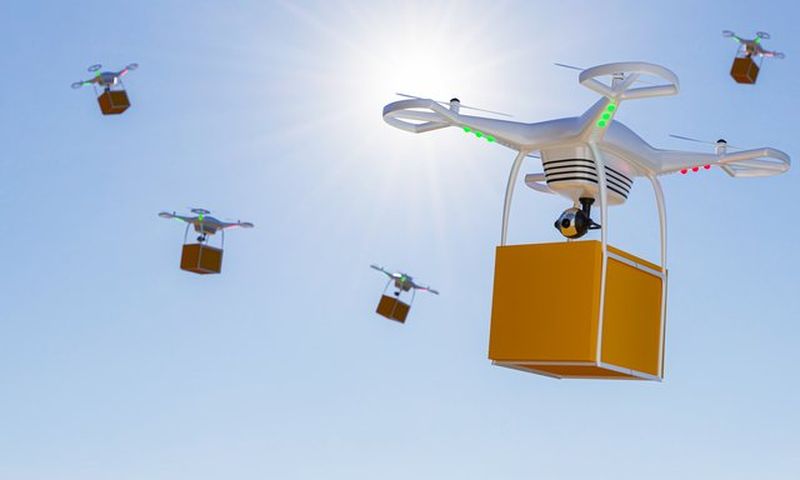
Drone delivery is changing how goods move by making some shipments faster, smarter, and more efficient. But can drones replace traditional freight transportation? This guide explains how drone delivery works, where it is already being used, its benefits and challenges, and what businesses and customers can realistically expect from this rapidly evolving logistics technology.
Table of Content:
- What Is Drone Delivery in the Shipping Industry?
- Where Is Drone Delivery Being Used Today?
- What Are the Main Benefits and Challenges of Drone Delivery?
- How Could Drone Technology Change the Future of Logistics?
- Is Drone Delivery the Future of Freight Transportation?
What Is Drone Delivery in the Shipping Industry?
Technology is changing the shipping industry faster than ever before. GPS tracking, warehouse automation, artificial intelligence, and electric vehicles have already become part of modern logistics. Drone delivery is one of the newest innovations that could make freight transportation even faster and more efficient.
Unlike traditional delivery methods that rely on trucks or vans for every shipment, drones can transport packages through the air. This reduces travel time, avoids traffic congestion, and provides access to locations that are difficult to reach by road.
While drone delivery is still developing, many logistics companies are already testing how it can improve their operations. Instead of replacing trucks completely, drones are expected to work alongside traditional transportation methods. For example, a truck may transport freight to a regional hub, while drones complete the final leg of delivery to nearby customers.
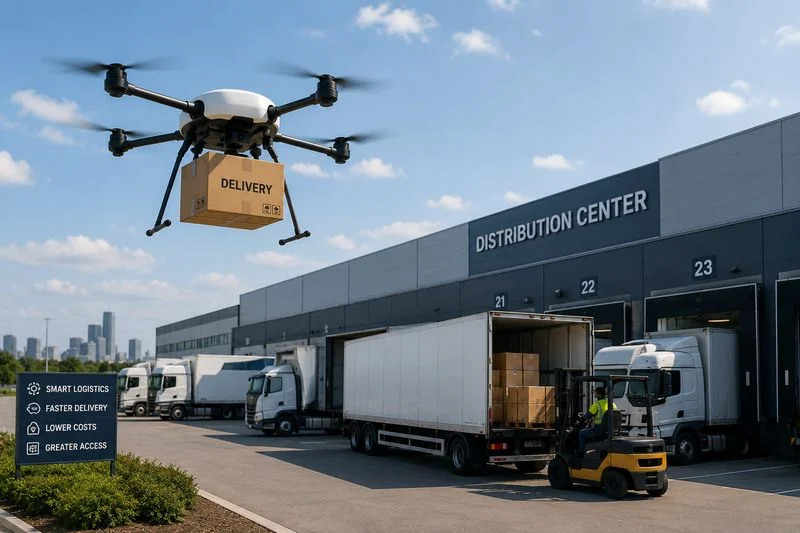
For businesses, this technology could improve delivery speed and lower operating costs. For customers, especially those looking to reduce shipping expenses, greater efficiency may eventually lead to more affordable delivery options. Companies like YK Freight continue to monitor new technologies that have the potential to improve freight transportation while maintaining reliable service.
What Is a Cargo Freight Drone?
A cargo freight drone is an unmanned aerial vehicle (UAV) designed to transport goods without a pilot onboard. Unlike small consumer drones used for photography, cargo drones are built specifically for commercial deliveries and can carry loads ranging from just a few pounds to several thousand pounds, depending on their size and design.
Most cargo drones use electric motors and rechargeable batteries, making them quieter and producing fewer emissions than traditional delivery vehicles. This makes them an attractive option for companies looking to reduce fuel consumption and support more environmentally friendly transportation.
Modern cargo drones are equipped with advanced navigation systems that combine GPS, onboard sensors, cameras, and artificial intelligence. These technologies allow drones to follow planned routes, avoid obstacles, and land safely with minimal human intervention.
Today, cargo drones are commonly tested for transporting medical supplies, emergency equipment, small consumer packages, and critical replacement parts. As battery technology improves and payload capacity increases, they may eventually handle larger shipments and support more commercial freight operations.
How Does Drone Delivery Work?
Drone delivery starts at a warehouse, distribution center, or fulfillment hub. Once an order is packed, the package is securely attached to the drone. Before takeoff, the system calculates the safest and most efficient flight path using GPS data, weather information, airspace restrictions, and delivery coordinates.
The drone then flies directly to its destination, often following a much shorter route than a delivery truck would need to take. Upon arrival, it can either land in a designated area or carefully lower the package to the ground using a cable system, depending on the delivery location.
Although this process sounds simple, it relies on sophisticated software that constantly monitors battery levels, wind conditions, nearby aircraft, and unexpected obstacles. Human operators may also supervise flights remotely and take control if necessary.
For larger shipments, drone delivery is unlikely to replace trucks. Instead, many experts expect a hybrid logistics model. A freight carrier transports cargo over long distances using trucks, trains, or ships, while drones perform short-distance deliveries from local distribution centers. This combination allows companies to use each transportation method where it is most effective.
Why Are Logistics Companies Investing in Drone Technology?
The biggest reason logistics companies are investing in drones is the growing demand for faster deliveries. Online shopping has changed customer expectations, and many buyers now expect orders to arrive within one or two days. Businesses are searching for ways to shorten delivery times without dramatically increasing shipping costs.
Drone technology offers several potential advantages. It can reduce travel time by flying directly to delivery locations, eliminate delays caused by traffic congestion, and lower labor costs for certain types of deliveries. Drones can also reach rural communities, islands, construction sites, and disaster areas where conventional vehicles may face significant delays.
Another important factor is warehouse efficiency. Some companies already use drones inside distribution centers to scan inventory, monitor storage locations, and perform stock checks much faster than manual inspections. This helps reduce errors and improves inventory accuracy throughout the supply chain.
Where Is Drone Delivery Being Used Today?
Drone delivery is already being tested and used in several parts of the shipping world, but it is not yet common for every type of freight. Today, drones are mostly used for small packages, medical supplies, urgent parts, food orders, and deliveries to remote areas. These are situations where speed matters more than heavy cargo capacity.
For example, a drone may be useful when a customer needs medicine delivered quickly, when a warehouse needs to move a small replacement part, or when a rural area is difficult to reach by road. In these cases, a drone can avoid traffic and take a more direct route.
However, drone delivery is still not ready to handle large shipments like cars, heavy equipment, or full truckloads. A vehicle still needs a carrier, a flatbed, a container, or another traditional freight method. This is important for budget-conscious customers to understand. Drone delivery may help reduce some smaller logistics costs in the future, but it will not replace standard auto transport anytime soon.
For companies like YK Freight, drone technology is not just about flying packages. It is part of a larger shift toward faster, smarter, and more efficient logistics.
How Is Amazon Prime Air Shaping the Future of Delivery?
Amazon Prime Air is one of the best-known examples of drone delivery. Amazon began testing drone delivery years ago with the goal of moving small packages from its facilities directly to customers. The idea is simple: instead of waiting for a van to make many stops, a drone can carry one package and deliver it quickly to a nearby location.
This project has helped bring drone delivery into public discussion. Many people first heard about delivery drones because of Amazon. Even though the service has faced challenges, including safety rules, technical limits, weather issues, and delivery area restrictions, it has pushed the industry forward.
Amazon’s work shows what drone delivery could become in the future. A customer could order a small item online and receive it much faster than with a regular delivery truck. This could be useful for urgent items such as phone chargers, small tools, medical products, or household supplies.
Still, Amazon Prime Air also shows the limits of drone delivery. Most drones cannot carry large or heavy products. They also need safe landing areas, clear flight routes, and approval from aviation authorities. That means drone delivery works best for smaller packages over shorter distances.
For someone trying to save money on shipping, this matters because drone delivery is not a magic solution for every shipment. It may help reduce costs for small parcel delivery over time, but shipping a vehicle still requires planning, proper equipment, and reliable freight coordination.
Which Industries Benefit Most from Drone Shipping?
The industries that benefit most from drone shipping are usually the ones that need fast delivery of small, high-value, or time-sensitive items. Medical logistics is one clear example. Hospitals, clinics, and laboratories can use drones to move blood samples, medicine, vaccines, and emergency supplies. In this type of delivery, saving time can be more important than saving money.
Retail and eCommerce can also benefit from drone shipping. Small online orders may be delivered faster, especially in areas close to warehouses. A customer who orders a lightweight product could receive it the same day or even within a shorter time window if drone delivery becomes widely available.
Agriculture is another area where drones are useful. Farms can use drones to move small tools, monitor fields, inspect crops, and deliver supplies across large properties. This can save time when roads are rough or when equipment is spread across many acres.
Construction and repair businesses may also use drones for urgent parts delivery. For example, if a mechanic needs a small part to finish a repair, a drone could bring it from a nearby warehouse instead of waiting for a truck route. This could reduce downtime and help workers complete jobs faster.
For auto shipping customers, the benefit is more indirect. A drone will not carry a car from an auction to a port or from one state to another. But drones may help warehouses, terminals, repair shops, and parts suppliers work faster. If small delays are reduced across the supply chain, the whole transportation process can become more efficient.
Can Drones Support Freight Operations Alongside Traditional Trucking?
Yes, drones can support freight operations, but they are most useful as a helper technology, not as a full replacement for trucks. Traditional trucking is still necessary for heavy, oversized, and long-distance cargo. Cars, containers, machinery, and pallets need equipment that drones cannot provide at scale today.
The most realistic future is a combined logistics model. Trucks, trains, and ships will continue to handle large freight. Drones may handle smaller tasks around them. For example, a drone could move documents between facilities, inspect a container yard, deliver a small replacement part, or help check inventory inside a warehouse.
This kind of support can make freight operations smoother. A trucking company may still move the main shipment, but drones could reduce waiting time in other parts of the process. Less waiting can mean better scheduling, fewer delays, and potentially lower costs over time.
A simple example is a customer buying a used vehicle at an auction and trying to keep shipping costs low. The car itself still needs to be picked up by a carrier. But if technology helps the logistics team track vehicles faster, inspect yards more efficiently, or process small items without delay, the customer benefits from a more organized shipping process.
What Are the Main Benefits and Challenges of Drone Delivery?
Drone delivery has strong potential, but it is not a perfect solution for every shipping need. It can make some deliveries faster, cleaner, and more efficient. At the same time, drones have limits related to weight, distance, weather, safety, and regulations.
For the shipping industry, the value of drones depends on where and how they are used. A drone may be a smart choice for a small urgent package. It may not make sense for a heavy shipment, a long-distance move, or vehicle transportation.
For customers trying to save money, this distinction matters. Drone delivery may lower costs in some parts of logistics, especially last-mile delivery and warehouse support. But larger freight, including cars, still needs traditional transport methods such as trucks, carriers, rail, or ocean shipping.
How Can Drone Delivery Reduce Shipping Costs and Delivery Times?
Drone delivery can reduce delivery time because drones do not have to follow the same roads as trucks. They can fly a more direct route from a warehouse, terminal, or distribution point to the delivery location. This helps avoid traffic, road closures, and long delivery routes with many stops.
For small packages, this can make a big difference. A delivery van may need to serve dozens of addresses in one area. A drone can take one urgent item directly to the customer. This is especially useful for medicine, small replacement parts, documents, or lightweight online orders.
Drone delivery can also reduce some operating costs. A drone does not need fuel in the same way a truck does. Many drones use electric power, which may lower energy costs for short trips. In some cases, drones may also reduce the need for extra vehicles or extra labor on simple local deliveries.
For example, imagine a budget-conscious customer waiting for a small car part before their vehicle can be loaded or repaired. If that part can be delivered faster by drone from a nearby warehouse, the customer may avoid extra storage days, missed pickup windows, or delays in the shipping process.
However, drones do not remove all costs. Companies still need trained operators, maintenance, insurance, software, charging stations, and approval to fly. So drone delivery can reduce costs in specific situations, but it does not automatically make every shipment cheaper.
Can Drones Improve Last-Mile Delivery in Remote Areas?
Drones may be especially useful for last-mile delivery in remote or hard-to-reach areas. Last-mile delivery means the final step of a shipment, when the item moves from a local hub to the customer’s address or final destination.
This step is often one of the most expensive parts of shipping. A truck may have to drive far from its main route to deliver one small package. If the location is rural, mountainous, or difficult to access, the trip can take even longer and cost more.
Drones can help by flying directly to the delivery point. They do not need paved roads, bridges, or short local routes. This makes them useful for rural homes, islands, farms, construction sites, emergency zones, and areas affected by storms or floods.
For example, a person living outside a major city may pay more for certain deliveries because carriers must travel farther for fewer customers. In the future, drones could help reduce the cost of small final-mile deliveries in areas where truck routes are inefficient.
Still, drones are not a full solution for remote freight. If someone needs to ship a car from an auction to a rural property, a drone cannot complete that job. But drone technology could support the process by delivering paperwork, small parts, keys, or inspection tools faster than traditional local delivery.
What Are the Biggest Challenges Facing Drone Delivery?
The biggest challenges facing drone delivery are regulation, safety, payload limits, battery life, weather, and infrastructure. These issues must be solved before drones can become a common part of everyday shipping.
Regulation is one of the main barriers. Drones share airspace with planes, helicopters, emergency aircraft, and other drones. Aviation authorities need clear rules to prevent accidents and protect people on the ground. Companies cannot simply launch drones anywhere they want.
Payload is another major limit. Most delivery drones can only carry small or medium-size packages. Heavy freight, pallets, vehicles, and oversized cargo still require trucks and specialized equipment. This means drone delivery will support freight operations, not replace them.
Battery life also affects performance. A drone may be fast, but it can only travel a certain distance before it needs to recharge. This makes drones more practical for short local routes than for long-distance transportation.
Weather can also create problems. Strong winds, heavy rain, snow, lightning, or extreme heat may make drone flights unsafe. A truck can often keep moving in conditions that would ground a drone.
There are also practical concerns. Companies need landing zones, charging systems, maintenance teams, tracking software, and trained staff. These investments can be expensive, especially at the early stage of adoption.
For customers focused on saving money, this means drone delivery should be viewed realistically. It may improve certain parts of logistics over time, but it is not yet a universal low-cost replacement for traditional shipping.
Are Drone Deliveries Safe and Environmentally Friendly?
Drone deliveries can be safe and environmentally friendly when they are properly managed, but the answer depends on the type of drone, the delivery route, and the safety systems used.
From an environmental point of view, many drones have an advantage because they run on electricity instead of gasoline or diesel. For short deliveries, this can reduce fuel use and emissions compared with a van or truck making a special trip for one small package.
Drones can also reduce traffic on local roads if they replace some small-package delivery routes. Fewer short vehicle trips may help lower congestion, especially in busy urban areas.
Safety is more complex. A delivery drone must be able to avoid buildings, power lines, trees, birds, aircraft, and people. It also needs backup systems in case of a battery issue, GPS problem, or sudden weather change. That is why drone delivery requires careful testing and strong regulation.
There are also privacy and security concerns. Some people worry about drones flying over homes, recording video, or dropping packages in unsafe locations. Companies need clear policies to protect customers and prevent misuse.
For large freight and vehicle shipping, traditional transportation will remain essential. A car cannot be moved by a small delivery drone, and heavy cargo requires professional handling. But drones may still help make the overall shipping system cleaner and more efficient by handling smaller tasks that do not require a full truck trip.
How Could Drone Technology Change the Future of Logistics?
Drone technology has the potential to reshape many parts of the logistics industry, even if it never becomes the primary way to move freight. The biggest changes will likely happen behind the scenes, where drones can help companies work faster, reduce manual tasks, and improve supply chain visibility.
As drone technology becomes more advanced, businesses may combine it with artificial intelligence, real-time tracking, warehouse automation, and smart inventory systems. Instead of operating independently, drones will become one part of a connected logistics network that helps move information and goods more efficiently.
For customers, these improvements may not always be visible, but they can still make a difference. Better coordination between warehouses, carriers, and distribution centers can reduce delays, improve shipment tracking, and create a smoother shipping experience.
How Will Drones Transform Warehouses and Inventory Management?
Warehouses are expected to be one of the first places where drones become widely used. Instead of spending hours manually checking inventory, warehouse teams can use drones equipped with cameras and barcode scanners to inspect shelves and storage areas automatically.
A drone can fly through warehouse aisles, scan inventory labels, verify stock levels, and compare the results with warehouse management software. This process is much faster than traditional manual inventory counts and can reduce human error.
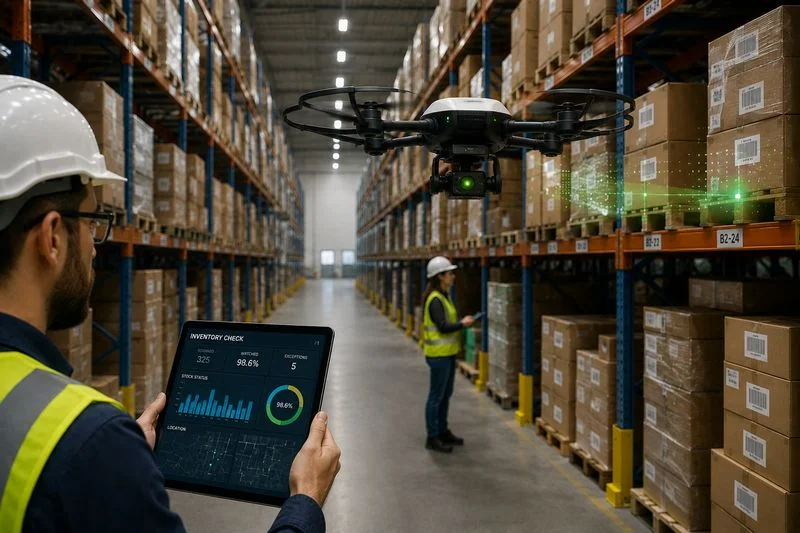
Drones may also help locate misplaced products. In a large warehouse with thousands of items, finding one missing pallet or storage container can take valuable time. An autonomous drone can quickly search the facility and identify the correct location.
Another advantage is improved safety. Employees often need ladders or forklifts to inspect inventory stored on high warehouse racks. Drones can perform these inspections without requiring workers to climb or operate heavy equipment, reducing the risk of workplace accidents.
For freight companies, better warehouse management means fewer shipping mistakes, faster order processing, and more accurate inventory records. These improvements can help reduce unnecessary costs throughout the supply chain.
What Could Drone Delivery Mean for Retailers and eCommerce?
Retailers and eCommerce companies are always looking for ways to deliver orders faster while controlling costs. Drone delivery offers another option for shipping lightweight products directly to customers without relying entirely on traditional delivery vehicles.
Faster delivery can improve customer satisfaction. If shoppers know they can receive certain products within hours instead of days, they may be more likely to complete their purchase. This could encourage more online shopping, especially for everyday items or urgent replacements.
Drone delivery may also help retailers reduce pressure on local delivery fleets during busy shopping seasons. Instead of sending additional vans for small orders, companies could use drones for selected deliveries within a limited service area.
Inventory management could improve as well. Drones working inside warehouses can monitor stock levels continuously, helping retailers identify shortages before products sell out. Better inventory accuracy also reduces the chances of customers ordering items that are no longer available.
However, not every online purchase is suitable for drone delivery. Large appliances, furniture, building materials, and vehicles will still require trucks or specialized freight services. Drone delivery is most effective for lightweight, high-priority shipments where speed provides the greatest value.
Will Drones Replace Delivery Trucks and Human Drivers?
One of the most common questions about drone technology is whether it will eventually replace delivery trucks and professional drivers. The most likely answer is no.
Trucks remain the most practical solution for transporting heavy cargo over long distances. A single truck can carry thousands of pounds of freight, multiple customer orders, or even several vehicles at once. Current drone technology cannot match this capacity.
Professional drivers also perform tasks that drones cannot handle. They inspect cargo, secure loads, communicate with customers, adjust routes when necessary, and respond to unexpected situations during transportation. These responsibilities require experience and decision-making that automated systems cannot fully replace.
Instead of replacing drivers, drones are more likely to become another tool that supports logistics operations. For example, drones may handle inventory inspections, deliver urgent replacement parts, or complete short last-mile deliveries while trucks continue transporting the main shipment.
This partnership allows each transportation method to focus on what it does best. Trucks provide reliable long-distance freight transportation, while drones improve speed and efficiency for smaller tasks.
For vehicle transportation, this distinction is especially important. Whether someone purchases a car from an auction or ships a vehicle across several states, professional carriers remain essential. Drones simply do not have the capacity to transport automobiles or other heavy freight.
How Could Drone Delivery Affect Customers in the Future?
Customers are likely to notice several changes as drone technology becomes more common. One of the biggest improvements could be shorter delivery times for eligible products. Instead of waiting several days for a small package, customers may receive certain orders within hours if they live near a distribution center.
Shipment tracking may also become more accurate. Drones generate detailed flight data that can provide customers with real-time delivery updates and more precise estimated arrival times.
Another possible benefit is improved service in rural communities. Areas that currently experience longer delivery times because of limited transportation infrastructure may gain faster access to certain products through drone-supported logistics.
For budget-conscious customers, the financial impact may be gradual rather than immediate. As logistics companies improve efficiency and reduce unnecessary operating expenses, some of those savings could eventually help lower delivery costs for selected services. At the same time, advanced drone technology requires significant investment, so cost reductions may take time to reach consumers.
Customers should also expect new regulations and delivery procedures. Drone deliveries may require designated drop-off locations, secure landing areas, or specific delivery windows to ensure safe operations.
Is Drone Delivery the Future of Freight Transportation?
Drone delivery is one of the most exciting developments in modern logistics, but it is only one part of the industry's future. As technology continues to evolve, drones will likely become more capable, more affordable, and more widely used for specific transportation tasks. However, they are unlikely to replace the freight systems that move the world's largest shipments.
The future of logistics is expected to be built on a combination of technologies. Artificial intelligence, automation, GPS tracking, warehouse robotics, electric vehicles, and drones will all work together to improve efficiency across the supply chain. Rather than competing with trucks, railroads, ships, and aircraft, drones will complement these transportation methods by handling jobs that match their strengths.
For businesses and customers alike, the goal remains the same: move freight safely, quickly, and at a reasonable cost. Drone technology can help achieve that goal, but reliable freight transportation will continue to depend on multiple transportation modes working together.
What Types of Freight Will Still Require Trucks and Intermodal Shipping?
Many types of freight are simply too large, too heavy, or too complex for drone transportation. Vehicles, shipping containers, construction materials, industrial equipment, machinery, oversized cargo, and palletized freight all require trucks or intermodal transportation.
Vehicle shipping is one of the clearest examples. Whether someone purchases a car from an auction, relocates to another state, or ships commercial vehicles between distribution centers, professional carriers remain essential. Cars require secure loading equipment, specialized trailers, proper tie-down procedures, and experienced drivers to ensure safe transportation.
Intermodal shipping will also continue to play an important role. Combining trucks with rail transportation or ocean shipping allows companies to move freight efficiently over long distances while controlling transportation costs. Drones cannot replace cargo trains or container ships that carry thousands of tons of freight every day.
Even for smaller commercial shipments, trucks offer advantages that drones currently cannot match. A delivery truck can complete dozens of deliveries on one route while carrying hundreds or even thousands of packages. It can also operate in different weather conditions and travel much farther without needing to recharge.
As drone technology improves, it may handle more specialized deliveries, but heavy freight transportation will continue to rely on proven trucking and intermodal solutions for the foreseeable future.
How Is YK Freight Using Modern Logistics Technology to Improve Shipping?
Modern logistics involves much more than moving freight from one location to another. Technology now plays an important role in planning routes, tracking shipments, managing warehouse operations, and improving communication throughout the supply chain.
YK Freight uses modern logistics tools to help improve transportation efficiency and provide customers with dependable freight services. GPS tracking, digital dispatch systems, electronic documentation, and real-time shipment monitoring allow freight to move more efficiently while keeping customers informed throughout the transportation process.
Advanced route planning helps reduce unnecessary mileage and improve equipment utilization. Better scheduling also allows drivers to spend less time waiting at terminals or customer facilities, improving productivity while reducing operating costs.
Digital communication between dispatchers, drivers, warehouses, and customers helps identify potential issues earlier and respond more quickly when unexpected situations occur. Instead of relying on manual paperwork and phone calls alone, logistics teams can make decisions based on real-time information.
As new technologies become available, including drone-supported warehouse operations and automated inventory systems, companies like YK Freight continue evaluating solutions that improve service quality while maintaining the reliability customers expect from professional freight transportation.
What Should Businesses Expect from Drone Delivery Over the Next Decade?
Over the next ten years, drone delivery is expected to become more common, but its growth will likely be gradual rather than revolutionary. Businesses should expect steady improvements in drone capabilities as battery technology, automation, artificial intelligence, and aviation regulations continue to evolve.
More companies may begin using drones inside warehouses to perform inventory checks, inspect facilities, and monitor stock levels. This type of automation can improve accuracy while reducing repetitive manual work.
Outside the warehouse, drone deliveries will probably expand in urban areas, business parks, medical campuses, and selected rural communities where lightweight shipments can be delivered efficiently. Businesses that rely on urgent replacement parts or time-sensitive products may benefit the most.
At the same time, companies should not expect drones to replace traditional freight transportation. Long-distance shipping, heavy cargo, and commercial vehicle transportation will continue to depend on trucks, railroads, ports, and intermodal networks.
Businesses that prepare for the future will likely focus on integrating new technology with existing transportation systems instead of replacing proven logistics methods altogether. The companies that adapt successfully will combine automation with experienced logistics professionals to create faster, more reliable supply chains.
Why Does YK Freight Continue to Invest in Efficient and Reliable Freight Solutions?
The logistics industry is constantly changing, and customer expectations continue to grow. Businesses want faster deliveries, greater shipment visibility, and dependable transportation without unnecessary costs. Meeting these expectations requires ongoing investment in technology, equipment, and operational improvements.
YK Freight continues to invest in efficient freight solutions because reliability remains one of the most important factors in transportation. While emerging technologies such as drone delivery offer exciting possibilities, successful freight operations still depend on careful planning, experienced professionals, and dependable transportation networks.
By combining modern logistics technology with proven freight practices, YK Freight helps businesses move cargo safely and efficiently across regional and long-distance routes. Digital tracking, optimized dispatching, and continuous process improvements allow customers to benefit from better visibility and smoother transportation.
As the shipping industry evolves, new technologies will continue to create opportunities for greater efficiency. Drone delivery may become an important part of logistics for selected applications, particularly in warehouse operations and lightweight last-mile deliveries. At the same time, trucking and intermodal transportation will remain the foundation of commercial freight movement for years to come.
For businesses looking for dependable freight transportation today while keeping an eye on tomorrow's innovations, choosing a logistics partner that embraces both reliability and technological progress is the best way to build a stronger supply chain for the future.
Further Reading
What Are Cobots? How Collaborative Robots Are Transforming Logistics
How to Cut Costs on Last Mile Delivery: Smart Tips for Savings
How Automation Improves Container Drayage Processes
Technologies Improving Container Drayage


ASK YOUR QUESTIONS