LTL freight class is one of the most important factors affecting your shipping costs, yet many shippers are unfamiliar with how it works. Choosing the wrong freight class can lead to higher rates, reclassification fees, and delivery delays. This guide explains how freight classes are determined, what factors influence classification, and how to avoid common mistakes that can increase your transportation expenses.
Table of Content:
- What Is LTL Freight Class and Why Does It Matter?
- How Are LTL Freight Classes Determined?
- What Factors Affect Your LTL Freight Class?
- How Can You Avoid Freight Reclassification and Extra Charges?
- How Can YK Freight Help You Manage LTL Shipping More Efficiently?
What Is LTL Freight Class and Why Does It Matter?
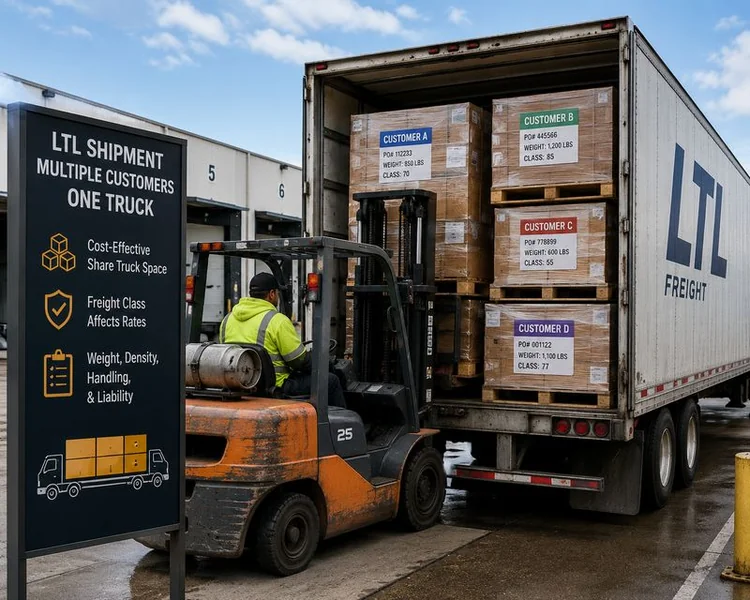
LTL shipping allows multiple customers to share space on the same truck, making it a cost-effective option for smaller shipments. However, unlike full truckload shipping, LTL rates depend on several factors beyond distance and weight. One of the most important factors is freight class.
Freight class helps carriers evaluate how easy or difficult a shipment is to transport. It affects pricing, handling requirements, and overall shipping efficiency. Understanding freight class can help shippers avoid unexpected fees and make more informed transportation decisions.
What Is a Freight Class in LTL Shipping?
A freight class is a standardized classification used in Less-Than-Truckload (LTL) shipping. It is assigned through the National Motor Freight Classification (NMFC) system and helps carriers determine the transportation characteristics of a shipment.
Freight classes range from 50 to 500. Lower classes generally apply to freight that is dense, easy to handle, and simple to transport. Higher classes are assigned to freight that is lightweight, fragile, difficult to store, or requires special handling.
Every type of product has an associated NMFC code and freight class. These classifications create a common language between shippers and carriers, helping both parties calculate shipping costs consistently.
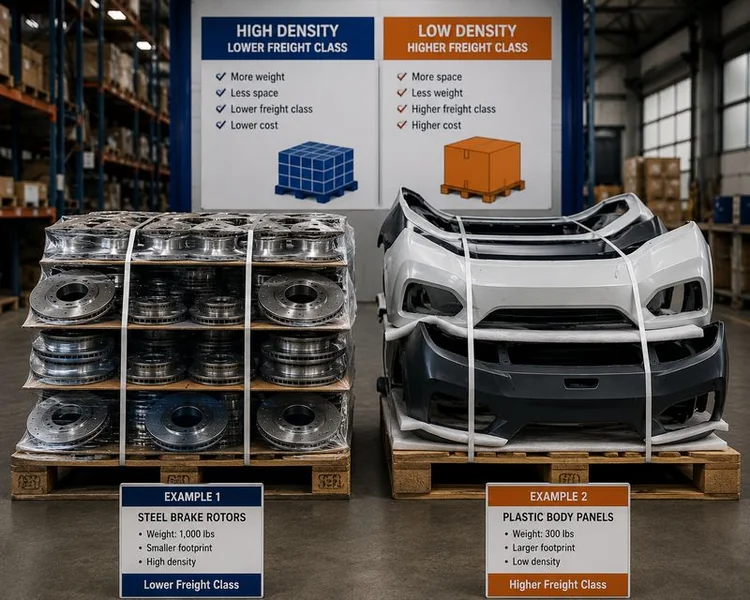
For example, a pallet of automotive brake rotors may qualify for a lower freight class because the freight is dense and compact. In contrast, a pallet containing lightweight vehicle body panels may receive a higher freight class because it occupies more trailer space relative to its weight.
Why Do Carriers Use Freight Classes to Calculate Shipping Rates?
Carriers use freight classes because not all shipments require the same amount of trailer space, labor, or risk management. Two shipments with identical weights may have very different transportation costs depending on their characteristics.
Freight class helps carriers evaluate several key factors, including:
- Density of the shipment
- Ease of handling
- Storage and stowability requirements
- Risk of damage or theft
- Packaging quality
- Overall transportation complexity
For example, a 1,000-pound pallet of engines may take up relatively little space and stack easily with other freight. A shipment of large plastic vehicle parts weighing the same amount may require significantly more trailer space and special handling. As a result, the two shipments could have different freight classes and different shipping rates.
By using a standardized classification system, carriers can provide more accurate pricing while managing available trailer capacity efficiently.
How Can Choosing the Wrong Freight Class Increase Shipping Costs?
Incorrect freight classification is one of the most common causes of unexpected LTL shipping charges.
When a shipment arrives at a carrier terminal, it is often inspected, measured, and weighed. If the carrier determines that the freight class listed on the Bill of Lading (BOL) is inaccurate, the shipment may be reclassified.
This process can lead to additional charges, known as reclassification fees, along with higher transportation costs.
Imagine you purchase several pallets of used auto parts from an auction and estimate the freight class yourself. To secure a lower quote, you accidentally select a class that is too low. Once the carrier verifies the shipment dimensions and density, the freight is assigned a higher class. The final invoice may be significantly higher than the original quote.
Incorrect classifications can also create delays. Carriers may need additional time to review shipment details, update paperwork, and adjust billing before the freight continues moving through the network.
To avoid these issues, shippers should accurately measure dimensions, verify weight, provide detailed freight descriptions, and confirm packaging information before booking an LTL shipment. Taking a few extra minutes before shipping can help prevent costly surprises later.
How Are LTL Freight Classes Determined?
Freight class is not assigned randomly. Carriers and logistics providers use a standardized system to evaluate a shipment and determine how much it should cost to transport. The classification process helps create consistent pricing across the LTL industry while accounting for the unique characteristics of different types of freight.
Several factors influence freight class, including density, handling requirements, liability risk, packaging, dimensions, and how efficiently the freight can be loaded alongside other shipments. Understanding how this system works can help shippers avoid costly mistakes and choose the correct freight class from the start.
What Is the National Motor Freight Classification (NMFC) System?
The National Motor Freight Classification (NMFC) system is the standard used throughout the United States to classify commodities for LTL shipping. Developed and maintained by the National Motor Freight Traffic Association (NMFTA), the system assigns a unique code to thousands of different products.
Each commodity is associated with an NMFC code and a corresponding freight class. These classifications help carriers evaluate transportation requirements and calculate shipping rates more accurately.
The NMFC system creates consistency across the industry. Without a common classification standard, every carrier would need its own method for pricing freight, making rate comparisons difficult for shippers.
For example, an automotive transmission, a pallet of brake components, and a shipment of vehicle body panels all have different NMFC classifications because they vary in density, handling requirements, and transportation risks.
When requesting an LTL quote, carriers often ask for a product description or NMFC code to ensure the shipment is classified correctly before pickup.
How Do Freight Classes Range From Class 50 to Class 500?
LTL freight classes range from Class 50 to Class 500. In general, lower classes are less expensive to ship, while higher classes usually result in higher transportation costs.
Class 50 typically includes dense, compact, and easy-to-handle freight. These shipments occupy less trailer space relative to their weight and can often be stacked efficiently with other freight.
As freight becomes lighter, more fragile, more difficult to store, or more challenging to handle, its class increases. Freight classified as Class 500 is usually lightweight, bulky, fragile, or requires special transportation considerations.
While every shipment is unique, the general relationship between freight class and shipping cost remains straightforward:
- Lower freight class = lower shipping rates
- Higher freight class = higher shipping rates
Consider two automotive-related shipments:
A pallet of steel engine blocks may weigh over 1,500 pounds while occupying relatively little trailer space. Because of its high density, it may qualify for a lower freight class.
A shipment of lightweight aftermarket bumpers may weigh far less but take up a large amount of trailer space. Even though the shipment weighs less, it could receive a higher freight class and cost more to transport.
This is one reason many first-time shippers are surprised by LTL pricing. Freight class is not based solely on weight.
What Information Do Shippers Need Before Assigning a Freight Class?
Before assigning a freight class, shippers should gather as much accurate shipment information as possible. Even small errors can result in reclassification fees, billing adjustments, and shipping delays.
The most important details include:
Product description
Carriers need to know exactly what is being shipped. A general description such as "auto parts" may not be enough. More specific information helps determine the correct NMFC code and freight class.
Weight
Accurate shipment weight is essential. LTL shipments typically range from 200 to 5,000 pounds, but precise weight measurements help carriers classify freight correctly.
Dimensions
Length, width, and height should be measured carefully and rounded to the nearest inch. These dimensions help calculate density and determine how much trailer space the shipment requires.
Packaging type
Shippers should specify whether freight is packaged on pallets, in crates, boxes, or other containers. Proper packaging not only protects freight but can also affect classification.
Number of handling units
The number of pallets, crates, or packages included in the shipment helps carriers plan loading and unloading operations.
Special handling requirements
Fragile, hazardous, oversized, or unusually shaped freight may require additional handling and could impact the assigned freight class.
For example, a budget-conscious buyer who purchases an engine through an online auction may assume that knowing the weight is enough to request a quote. However, without accurate dimensions, packaging information, and a proper product description, the carrier may not be able to assign the correct freight class.
What Factors Affect Your LTL Freight Class?
Freight class is determined by more than just the weight of a shipment. Carriers evaluate several characteristics to understand how much space the freight will occupy, how difficult it will be to transport, and what risks may be involved during transit.
These factors help create a fair pricing system for LTL shipping. A shipment that is easy to handle and efficient to transport will usually receive a lower freight class. Freight that requires extra space, special handling, or presents a higher risk may be assigned a higher class and cost more to ship.
Understanding these factors can help shippers estimate costs more accurately and avoid unexpected reclassification charges.
How Does Freight Density Impact Classification and Cost?
Density is one of the most important factors used to determine freight class. In simple terms, density measures how much a shipment weighs compared to the amount of space it occupies.
Dense freight generally receives a lower freight class because it uses trailer space efficiently. Low-density freight often receives a higher freight class because it takes up more room without adding much weight.
For example, a pallet of steel brake rotors may weigh 1,000 pounds while occupying a relatively small footprint. Since the shipment is dense and compact, it may qualify for a lower freight class.
Now compare that to a pallet of lightweight plastic body panels. The shipment may weigh only a few hundred pounds but take up a large amount of trailer space. Even though it weighs less, it could receive a higher freight class and cost more to transport.
This is why two shipments with similar dimensions can have very different shipping rates.
For budget-conscious shippers, understanding density is important because it often has the greatest impact on freight classification and pricing.
Why Do Stowability and Trailer Space Matter?
Stowability refers to how easily freight can be loaded, stored, and transported with other shipments inside a trailer.
LTL carriers move freight from many customers on the same truck. To maximize efficiency, shipments must fit together safely and use trailer space effectively. Freight that creates loading challenges may receive a higher freight class.
Several factors can affect stowability:
- Unusual shapes
- Excessive length or width
- Protruding parts
- Non-stackable freight
- Hazardous materials
- Freight requiring separation from other cargo
For example, a palletized transmission can usually be stacked and loaded alongside many other shipments without problems. On the other hand, a long vehicle bumper or oversized body panel may prevent other freight from being loaded nearby, reducing available trailer space.
Since trailer capacity is limited, freight that uses space inefficiently often costs more to transport.
How Does Freight Handling Affect Its Classification?
Most freight can be loaded and unloaded using standard warehouse equipment such as forklifts and pallet jacks. However, some shipments require extra care, specialized equipment, or additional labor.
The more difficult a shipment is to handle, the higher its freight class may be.
Handling challenges may include:
- Fragile products
- Irregular shapes
- Heavy individual pieces
- Hazardous materials
- Freight requiring special lifting equipment
- Items that cannot be stacked
For example, a pallet of boxed auto parts can typically be moved quickly through a carrier's network. In contrast, a crate containing a delicate automotive windshield may require special attention during loading and unloading to avoid damage.
Extra handling increases labor costs and transportation risk, which is why it plays a role in freight classification.
Why Is Liability Considered When Determining Freight Class?
Liability refers to the potential financial risk associated with transporting a shipment. Carriers consider how likely freight is to be damaged, stolen, or cause damage to other shipments.
Freight with higher liability risks often receives a higher freight class because the carrier assumes greater responsibility during transportation.
Factors that may increase liability include:
- High-value products
- Fragile goods
- Perishable items
- Hazardous materials
- Products susceptible to theft
- Freight that could damage nearby cargo
For example, a shipment of replacement vehicle mirrors may be more vulnerable to damage than a pallet of steel suspension components. Even if both shipments weigh the same amount, the more fragile freight may receive a different classification because of the increased risk.
Similarly, shipments containing expensive automotive electronics may present a higher theft risk than standard mechanical parts.
Liability helps carriers account for these risks when calculating shipping rates.
How Do Weight, Dimensions, and Packaging Influence Freight Class?
Weight, dimensions, and packaging are closely connected to freight classification because they affect density, handling, and transportation efficiency.
Carriers need accurate measurements to determine how much space the shipment will occupy and whether the freight can be transported safely alongside other cargo.
Before requesting an LTL quote, shippers should know:
- Total shipment weight
- Length
- Width
- Height
- Number of pallets or crates
- Packaging type
Proper packaging is equally important. Freight that is securely packaged on pallets or inside crates is easier to handle and less likely to be damaged during transit.
For example, an engine secured on a sturdy pallet is easier to move and stack than the same engine shipped without proper support. Better packaging can improve handling efficiency and reduce the risk of damage.
Many reclassification fees occur because shipment dimensions or weight were estimated incorrectly when the shipment was booked. A few inches or a few pounds may seem insignificant, but they can affect density calculations and lead to a different freight class.
How Can You Avoid Freight Reclassification and Extra Charges?
One of the biggest frustrations in LTL shipping is receiving a final invoice that is higher than the original quote. In many cases, these additional charges occur because the shipment was measured incorrectly, classified improperly, or packaged in a way that differs from the information provided when the shipment was booked.
Fortunately, most reclassification fees and billing adjustments can be avoided with proper preparation. Understanding how carriers verify freight and what information they check can help shippers keep costs predictable and prevent unnecessary delays.
What Happens When a Carrier Reweighs or Reclassifies a Shipment?
After a shipment is picked up, it often passes through one or more carrier terminals before reaching its final destination. During this process, carriers may inspect, weigh, and measure the freight to verify that the information listed on the Bill of Lading (BOL) matches the actual shipment.
If the carrier discovers discrepancies, the shipment may be reweighed, remeasured, or assigned a different freight class.
Common reasons for reclassification include:
- Incorrect shipment weight
- Incorrect dimensions
- Wrong freight class
- Incomplete commodity descriptions
- Undisclosed packaging changes
- Freight occupying more trailer space than reported
When a shipment is reclassified, the carrier recalculates the shipping charges based on the corrected information. This often results in additional fees that are added to the final invoice.
For example, a buyer purchases several automotive body panels from an auction and estimates the shipment dimensions before pickup. Once the freight arrives at the terminal, the carrier measures the shipment and discovers that it occupies significantly more space than originally reported. The shipment is assigned a higher freight class, increasing the final transportation cost.
In some situations, reclassification can also delay delivery because paperwork and billing records must be updated before the shipment continues through the carrier's network.
How Can Accurate Measurements Help Prevent Unexpected Fees?
Accurate shipment information is one of the simplest ways to avoid billing adjustments and reclassification charges.
Before requesting an LTL quote, shippers should carefully measure and document:
- Total shipment weight
- Length
- Width
- Height
- Number of pallets or crates
- Packaging type
Even small measurement errors can affect freight density calculations and lead to a different freight class.
For example, a pallet that measures 48 inches high may qualify for one density category. If the actual height is 58 inches, the shipment occupies more space and may fall into a different classification.
The same principle applies to weight. Guessing shipment weight instead of using a scale can result in inaccurate freight class calculations and unexpected charges later.
Many budget-conscious shippers try to save time by estimating measurements, but this approach often creates larger expenses in the long run. Spending a few extra minutes collecting accurate information before booking a shipment can help avoid costly surprises after pickup.
What Packaging Practices Reduce Shipping Problems?
Proper packaging protects freight throughout the shipping process and helps carriers handle shipments more efficiently.
Unlike full truckload shipping, LTL freight is typically loaded, unloaded, and transferred multiple times while moving through the carrier's network. Because shipments are handled more frequently, proper packaging becomes especially important.
Recommended packaging practices include:
- Secure freight on sturdy pallets
- Use crates for fragile or high-value items
- Strap freight tightly to prevent shifting
- Shrink-wrap pallets for additional stability
- Protect sharp edges and corners
- Clearly label shipment contents when necessary
For example, an automotive engine mounted securely on a pallet is easier and safer to transport than an engine placed loosely on a skid without proper support. Similarly, vehicle electronics packed in reinforced containers are less likely to be damaged than components shipped in standard cardboard boxes.
Proper packaging can also improve freight handling and stowability, which may help prevent classification disputes during transit.
Most importantly, well-packaged freight reduces the likelihood of damage claims, delivery delays, and costly shipping interruptions.
What Are Common Freight Class Mistakes Budget-Conscious Shippers Make?
Many freight classification problems occur because shippers are trying to reduce costs or simplify the booking process. While these mistakes are often unintentional, they can lead to higher expenses than the original savings.
Some of the most common mistakes include:
Using estimated measurements
Estimating dimensions instead of measuring accurately can result in incorrect density calculations and freight class assignments.
Guessing shipment weight
Many first-time shippers assume vehicle parts or equipment weigh less than they actually do. Carriers routinely verify weight at their terminals.
Selecting a lower freight class to obtain a cheaper quote
While it may seem like an easy way to lower shipping costs, carriers frequently identify classification errors during inspections and adjust the final invoice accordingly.
Providing vague product descriptions
Descriptions such as "auto parts" or "equipment" may not provide enough information to determine the correct NMFC classification.
Ignoring packaging details
The type of packaging used can affect handling, stowability, and freight class calculations.
Failing to verify information before pickup
Last-minute changes to shipment dimensions, weight, or packaging often lead to discrepancies that trigger reclassification.
Consider a small dealership purchasing engines and transmissions from online auctions. To save time, an employee enters estimated dimensions when requesting a quote. After pickup, the carrier discovers the freight is larger than reported and assigns a different freight class. The dealership ends up paying more than it would have if the shipment had been measured correctly from the beginning.
How Can YK Freight Help You Manage LTL Shipping More Efficiently?
LTL shipping can be an excellent way to reduce transportation costs, especially when you do not have enough freight to fill an entire trailer. However, many shippers discover that understanding freight classes, NMFC codes, density calculations, and carrier requirements can be challenging.
A small mistake during the quoting process can lead to reclassification fees, unexpected charges, or shipping delays. This is why working with an experienced logistics provider can make the process much easier.
YK Freight helps customers navigate the complexities of LTL shipping by providing guidance on freight classification, shipment preparation, and transportation planning. Whether you are shipping automotive parts, equipment, or commercial freight, having the right information before booking can help you avoid costly mistakes and keep shipping expenses under control.
How Can Understanding Freight Class Help You Save Money on Shipping?
Freight class directly impacts how much you pay for LTL transportation. The more accurately your freight is classified, the more accurate your shipping quote will be.
Many shippers focus only on finding the lowest rate, but understanding freight class can often save more money than choosing the cheapest quote.
When freight is classified correctly:
- Shipping quotes are more accurate
- Reclassification fees are less likely
- Billing disputes are reduced
- Deliveries move through carrier networks more efficiently
- Transportation budgets become more predictable
For example, a buyer purchases several pallets of automotive components from an online auction. By accurately measuring the freight and identifying the correct class before shipping, they avoid additional charges that could have increased the total transportation cost after pickup.
In many cases, preventing one reclassification fee can save more money than spending hours searching for slightly lower freight rates.
When Should You Ask for Help Determining a Freight Class?
While some shipments are straightforward, others can be difficult to classify correctly without industry experience.
It may be helpful to seek professional assistance when:
- Shipping a product for the first time
- Transporting unusual or oversized freight
- Shipping automotive parts with irregular dimensions
- Unsure which NMFC code applies to the shipment
- Unsure how packaging affects classification
- Comparing multiple freight options
For example, a shipment of boxed brake pads may be relatively easy to classify. However, a shipment containing engines, transmissions, bumpers, or mixed vehicle components may require additional review to determine the correct freight class.
Asking questions before booking is almost always less expensive than dealing with reclassification charges after the shipment is already in transit.
How Does YK Freight Help Customers Avoid Costly Classification Errors?
One of the most common causes of unexpected shipping costs is inaccurate shipment information. YK Freight works with customers to identify potential classification issues before freight is booked with a carrier.
This process may include reviewing:
- Product descriptions
- Shipment dimensions
- Freight weight
- Packaging methods
- Pallet configurations
- Handling requirements
By verifying these details upfront, customers can reduce the risk of billing adjustments later.
For example, if a customer is shipping a pallet of automotive body parts, YK Freight can help ensure that dimensions and packaging details are reported accurately. This allows carriers to provide more accurate pricing and reduces the chance of unexpected charges during transit.
The goal is not simply to obtain a shipping quote, but to make sure the quote reflects the actual shipment being transported.
What Should You Check Before Booking Your Next LTL Shipment?
Before scheduling any LTL shipment, it is important to review all freight details carefully. A few minutes spent verifying information can help prevent delays, billing adjustments, and unnecessary expenses.
A simple pre-shipment checklist should include:
- Confirm the exact product being shipped
- Verify the correct NMFC classification if available
- Measure length, width, and height accurately
- Confirm total shipment weight
- Check pallet or crate dimensions
- Secure freight properly for transport
- Verify the number of handling units
- Review carrier requirements before pickup
For example, if you recently purchased a transmission from an auction and need it shipped to your repair shop, make sure it is securely palletized, weighed accurately, and measured correctly before requesting a quote. These simple steps can significantly reduce the risk of freight class disputes later.
LTL shipping does not have to be complicated. By understanding how freight classes work, preparing shipments properly, and verifying details before pickup, shippers can avoid many common problems that increase transportation costs.
When additional guidance is needed, YK Freight can help customers navigate the classification process, reduce the risk of costly mistakes, and move freight more efficiently from pickup to delivery.
Further Reading
What is Freight Class 85?
What Does LTL Mean?
How Many Pallets is LTL?
What Is Volume LTL Freight? Save Time & Money on Larger Shipments


ASK YOUR QUESTIONS