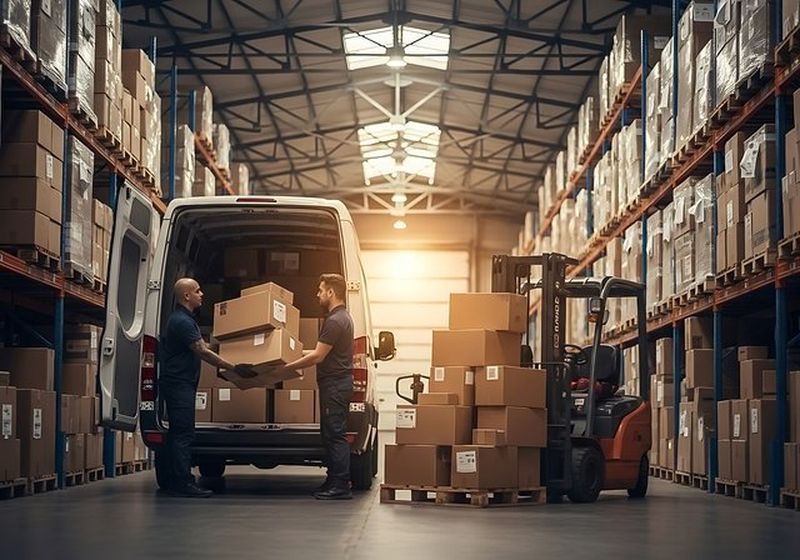
A 3PL provider can help businesses save time, reduce shipping costs, and manage freight with less stress. This guide explains what 3PL companies do, when outsourcing logistics makes sense, and how the right partner can make transportation easier, especially for businesses working with a tight budget.
Table of Content:
- What Is a 3PL Provider and Why Does Your Business Need One?
- Which Logistics Services Can a 3PL Provider Handle?
- Why Do Companies Choose YK Freight for Their Logistics Needs?
- How Do You Choose the Right 3PL Provider?
- Is YK Freight the Right Logistics Partner for Your Business?
What Is a 3PL Provider and Why Does Your Business Need One?
Managing transportation is much more than moving freight from one location to another. Every shipment requires carrier selection, scheduling, paperwork, tracking, communication, and problem-solving. As a business grows, these tasks become more difficult and time-consuming. Hiring additional staff or building an in-house logistics department is often expensive, especially for companies trying to keep operating costs under control.
This is why many businesses work with third-party logistics (3PL) providers. Instead of managing every shipment themselves, they rely on logistics experts to handle transportation while they focus on serving customers and growing their business.
Whether you ship auto parts, vehicles, construction equipment, or other freight, partnering with an experienced logistics company can help simplify operations, reduce costs, and improve delivery performance.
What Does a 3PL Provider Actually Do?
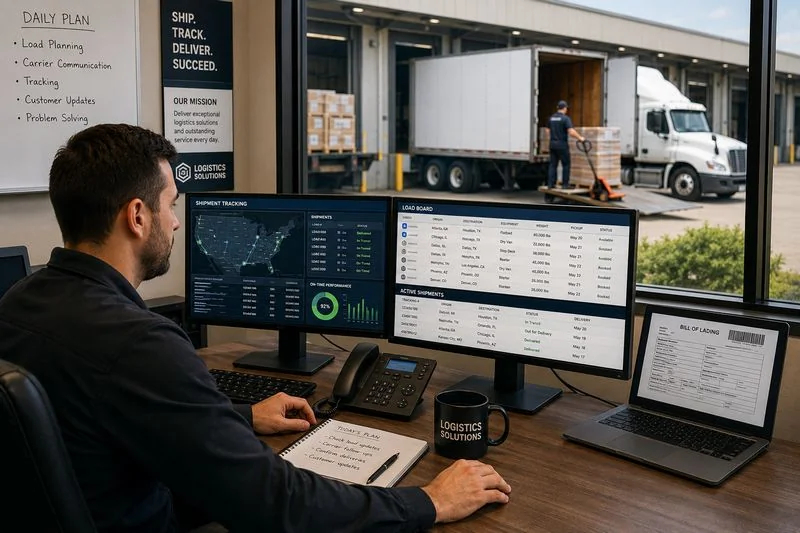
A third-party logistics (3PL) provider is a company that manages transportation and logistics services on behalf of another business. Depending on your needs, a 3PL can oversee a single shipment or handle your entire transportation process.
Rather than spending hours searching for carriers, comparing rates, tracking shipments, and solving unexpected issues, you work with one logistics partner that coordinates everything for you.
Common services offered by a 3PL include:
- Freight transportation
- Carrier selection and rate negotiation
- Shipment planning and dispatching
- Load tracking and communication
- Warehousing and inventory management
- Freight consolidation
- Supply chain coordination
- Documentation and reporting
For example, imagine a small used car dealership that buys vehicles from auctions across several states. Instead of contacting multiple trucking companies every week and comparing prices, the dealership works with one logistics provider that schedules pickups, finds available carriers, monitors deliveries, and keeps transportation costs under control.
The result is less administrative work, fewer delays, and more time to focus on selling vehicles instead of managing freight.
Why Do More Companies Outsource Their Logistics?
Many companies start by handling logistics themselves. This approach may work when shipping only a few loads each month. However, as shipment volume grows, logistics quickly becomes more complex.
Businesses often face challenges such as:
- Rising transportation costs
- Limited carrier availability
- Delivery delays
- Time-consuming paperwork
- Difficulty tracking multiple shipments
- Seasonal capacity shortages
Managing all of these responsibilities internally requires experienced staff, transportation software, and strong carrier relationships. Building those resources can be expensive.
Outsourcing logistics allows businesses to access professional expertise without investing in their own logistics department.
For example, a company that regularly ships salvaged vehicles from auctions may struggle during peak seasons when truck capacity is limited. Finding available carriers at reasonable rates can take hours and delay customer deliveries. By working with YK Freight, the company gains access to an established carrier network, making it easier to secure transportation even during busy periods.
Outsourcing also helps businesses remain flexible. Instead of hiring additional employees when shipment volume increases, they can scale transportation services up or down as needed while paying only for the services they use.
How Is a 3PL Different From a 4PL?
Although the terms 3PL and 4PL are often used together, they describe different types of logistics services.
A 3PL focuses on executing transportation and day-to-day logistics operations. This includes arranging shipments, selecting carriers, managing freight, coordinating warehouses, and solving shipping issues as they arise.
A 4PL operates at a higher strategic level. Rather than managing only transportation, a 4PL oversees the entire supply chain. It may coordinate multiple logistics providers, develop long-term supply chain strategies, analyze performance, and manage logistics operations from beginning to end.
The difference can be summarized simply:
|
3PL |
4PL |
|
Manages transportation and logistics operations |
Oversees the complete supply chain |
|
Works directly with carriers |
Manages multiple logistics providers |
|
Focuses on execution |
Focuses on strategy and optimization |
|
Best for companies that need transportation support |
Best for large organizations with complex global supply chains |
For many small and medium-sized businesses, a 3PL provides everything they need. Companies that regularly transport vehicles, machinery, or freight often benefit more from reliable transportation management than from a fully outsourced supply chain strategy.
Which Logistics Services Can a 3PL Provider Handle?
A 3PL provider can handle many parts of the shipping process. Some companies use a 3PL only for transportation. Others need help with dispatch, load planning, warehousing, tracking, or regular freight coordination.
The main idea is simple: a 3PL takes the most time-consuming logistics tasks off your plate. Instead of managing every carrier call, pickup time, delivery update, and shipping document yourself, you work with one logistics partner that helps organize the process.
For businesses with a limited budget, this can be especially useful. A small company may not have the money to hire a full-time logistics manager, buy transportation software, or build relationships with many carriers. A 3PL gives access to these resources without the same fixed costs.
What Transportation and Freight Management Services Are Included?
Transportation management is one of the main services a 3PL provides. This means the provider helps plan, book, coordinate, and monitor shipments from pickup to delivery.
A 3PL can help with:
- Finding available carriers
- Comparing transportation rates
- Scheduling pickups and deliveries
- Coordinating dispatch
- Managing load details
- Tracking shipments
- Handling communication between drivers, customers, and shippers
- Solving problems when delays or changes happen
For example, imagine a small auto dealer buying vehicles from different auctions. One car is in Georgia, another is in Texas, and another is in Florida. Calling separate carriers for each pickup can take a lot of time. Prices may also vary greatly, especially if the shipment is urgent.
A 3PL can help combine planning, compare available options, and choose a carrier that fits the schedule and budget. This does not always mean choosing the cheapest option. It means finding the best balance between price, timing, reliability, and equipment availability.
This is important for vehicle shipping because not every carrier can move every type of vehicle. A running sedan, a non-running salvage vehicle, a heavy pickup, and equipment at an auction yard may all require different handling. A 3PL helps match the shipment with the right carrier and the right equipment.
How Do Warehousing and Inventory Management Improve Efficiency?
Some 3PL providers also offer warehousing and inventory support. This can be helpful for companies that need a place to store goods before final delivery or shipping.
Warehousing services may include:
- Short-term storage
- Long-term storage
- Inventory organization
- Loading and unloading
- Freight consolidation
- Preparing goods for final delivery
- Managing product movement between locations
For companies shipping vehicles or auto-related freight, storage can be useful when timing does not line up perfectly. For example, a buyer may win several vehicles at auction, but not all of them are ready for pickup on the same day. Or a business may need to wait before sending freight to another state or port.
Instead of rushing every shipment separately, warehousing or storage support can help organize freight more efficiently. In some cases, it may also reduce costs because shipments can be grouped or scheduled more carefully.
Inventory management also helps businesses avoid confusion. When freight is moving between multiple locations, it is easy to lose track of what has been picked up, what is still waiting, and what is already delivered. A 3PL can help keep this information organized so the business has a clearer picture of its operations.
How Can Technology Make Shipping Easier?
Technology is another important part of modern logistics. Many 3PL providers use transportation management systems, tracking tools, and digital communication platforms to make shipping easier to manage.
For a small business, buying and maintaining this type of software can be expensive. Working with a 3PL allows the business to benefit from logistics technology without having to build the system from scratch.
Technology can help with:
- Shipment tracking
- Faster quotes
- Route planning
- Delivery updates
- Document management
- Reporting
- Cost comparison
- Better communication
For example, if a customer asks where their vehicle is, the business should not have to call three different people just to get an update. With better tracking and communication, it becomes easier to know the shipment status and give customers clear answers.
Technology also helps reduce mistakes. When shipment details are handled manually, errors can happen. A wrong pickup address, missing contact number, or unclear delivery instructions can cause delays and extra costs. Digital tools help organize this information in one place and make the shipping process more predictable.
For budget-conscious businesses, fewer mistakes can mean real savings. Avoiding storage fees, missed pickups, rescheduling costs, and unnecessary delays can protect already tight margins.
When Should a Business Outsource Logistics Instead of Managing It In-House?
A business should consider outsourcing logistics when shipping starts taking too much time, causing too many problems, or becoming too expensive to manage internally.
Some signs that it may be time to work with a 3PL include:
- You spend too many hours looking for carriers
- Shipping prices are inconsistent
- Deliveries are often delayed
- Your team is making frequent logistics mistakes
- Customers keep asking for updates you cannot provide quickly
- You do not have enough carrier contacts
- Your shipment volume changes from month to month
- You want to grow but do not want to hire a full logistics department
For example, a small dealer may be able to manage one or two vehicle shipments per month alone. But if that number grows to ten, twenty, or more, the process becomes harder. More vehicles mean more pickup windows, more auction rules, more driver communication, more invoices, and more chances for mistakes.
In this situation, outsourcing can be more affordable than hiring a full-time employee. A 3PL gives the business access to experience, carrier relationships, and logistics support only when needed.
Why Do Companies Choose YK Freight for Their Logistics Needs?
Every business wants reliable shipping at a reasonable price. However, achieving both can be difficult without the right logistics partner. Rising transportation costs, limited truck availability, unexpected delays, and changing market conditions make freight management more challenging than ever.
Working with an experienced logistics provider helps businesses solve these problems without building an expensive in-house logistics department. Companies choose YK Freight because they want dependable transportation support, access to experienced carriers, and practical solutions that help control shipping costs while improving operational efficiency.
Whether you transport vehicles, auto parts, heavy equipment, or general freight, the right logistics partner can make every shipment easier to plan and manage.
How Can a 3PL Help Reduce Shipping Costs?
Lowering transportation costs is one of the biggest reasons companies partner with a 3PL. While many businesses focus only on finding the lowest freight rate, the true cost of shipping includes much more than the carrier's invoice.
Poor route planning, missed pickup appointments, storage fees, delivery delays, and unnecessary empty miles can quickly increase transportation expenses.
A professional 3PL works to reduce these hidden costs by improving the entire shipping process.
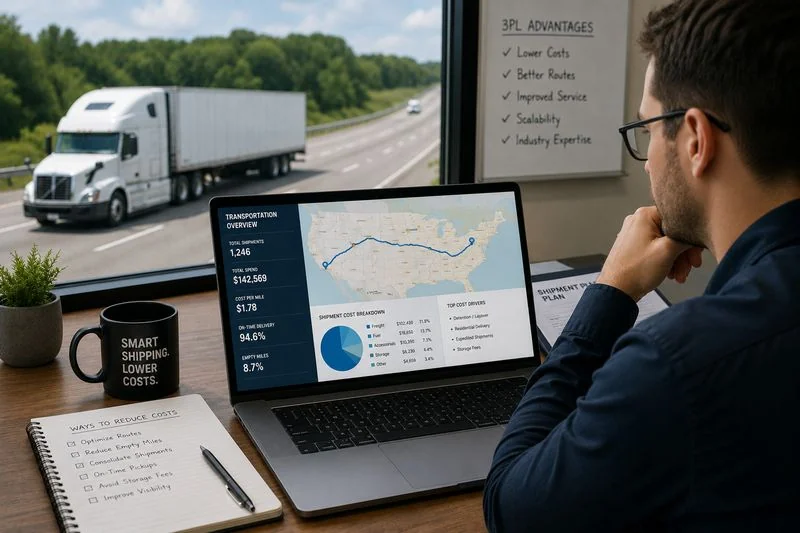
Some of the ways a 3PL helps lower expenses include:
- Negotiating competitive carrier rates
- Selecting the most efficient routes
- Matching shipments with available equipment
- Reducing unnecessary delays
- Consolidating freight whenever possible
- Preventing costly shipping errors
- Improving load planning
For example, imagine a dealer purchasing several vehicles from different auction locations. Booking each shipment separately may seem like the easiest option, but it often results in higher transportation costs. By coordinating pickups more efficiently, a logistics provider may reduce total mileage, improve scheduling, and lower the overall shipping cost.
Instead of simply looking for the cheapest carrier, a 3PL focuses on finding the best value. Reliable transportation at a fair price often saves more money than choosing the lowest quote and dealing with delays or service issues later.
How Does a 3PL Save Time and Simplify Daily Operations?
Time is one of the most valuable resources for any business. Every hour spent searching for carriers, comparing quotes, scheduling pickups, or resolving shipping problems is time that cannot be spent serving customers or growing the company.
A 3PL simplifies these daily responsibilities by acting as a single point of contact throughout the transportation process.
Instead of managing multiple conversations with different carriers, dispatchers, and drivers, businesses communicate with one logistics partner that coordinates everything behind the scenes.
Daily operations become easier because the 3PL handles tasks such as:
- Carrier communication
- Shipment scheduling
- Dispatch coordination
- Status updates
- Freight documentation
- Problem resolution
- Delivery coordination
Consider a small business that ships ten vehicles every week. Without logistics support, one employee may spend several hours every day arranging transportation. With a trusted logistics partner, much of that workload disappears, allowing employees to focus on customer service, sales, and inventory management instead.
Saving time also reduces stress. When experienced logistics professionals monitor shipments, businesses spend less time reacting to unexpected problems and more time planning future growth.
Why Is Access to a Large Carrier Network Important?
One of the greatest advantages of working with an established logistics provider is access to a broad carrier network.
No single trucking company can handle every shipment in every location. Different loads require different equipment, and carrier availability changes throughout the year.
A large carrier network provides greater flexibility because there are more transportation options available.
This becomes especially valuable during:
- Seasonal shipping peaks
- Holiday periods
- High-demand freight markets
- Last-minute transportation requests
- Shipments involving specialized equipment
For example, transporting a running sedan requires different equipment than moving a non-running salvage vehicle or oversized construction machinery. A logistics provider with relationships across many carriers can identify transportation solutions that match the shipment's specific requirements.
This flexibility often results in faster pickups, more reliable delivery schedules, and fewer delays caused by limited carrier availability.
Businesses also benefit from increased capacity as shipping volumes grow. Instead of searching for new transportation partners every time demand increases, they can rely on an existing logistics network that is already prepared to support additional freight.
How Does Better Shipment Visibility Improve Decision-Making?
Knowing where a shipment is at any given moment helps businesses make smarter decisions.
Shipment visibility gives companies access to important information throughout the transportation process, including pickup status, estimated delivery times, transit progress, and potential delays.
When this information is available, businesses can:
- Respond to customer questions more quickly
- Plan deliveries more accurately
- Adjust schedules when delays occur
- Improve inventory planning
- Reduce uncertainty across operations
Imagine a customer waiting for a recently purchased vehicle. Instead of giving a vague delivery estimate, the business can provide updated shipment information based on real transportation progress.
Better visibility also improves internal planning. If one shipment is delayed, businesses can adjust future deliveries, prepare warehouse space, or notify customers before problems become larger.
For companies managing multiple shipments every week, accurate transportation information supports better decision-making and improves overall customer satisfaction.
How Can Continuous Logistics Optimization Increase Profits?
Successful logistics is not only about moving freight. It is about continuously improving the shipping process over time.
Every shipment creates valuable information that can help businesses identify opportunities to reduce costs, improve efficiency, and eliminate unnecessary work.
Continuous logistics optimization may include:
- Improving delivery routes
- Reducing transit times
- Increasing trailer utilization
- Eliminating repetitive shipping problems
- Improving scheduling
- Lowering detention and storage costs
- Finding more efficient carrier options
Small improvements may seem insignificant individually, but together they can have a meaningful impact on operating costs.
For example, reducing average transportation costs by even a small amount across hundreds of annual shipments can generate significant savings over the course of a year. Similarly, improving pickup scheduling may reduce vehicle storage fees and help inventory reach customers more quickly.
Companies that treat logistics as an ongoing process instead of a one-time transaction often become more competitive over time.
How Do You Choose the Right 3PL Provider?
Not every logistics provider offers the same level of service. Choosing the right 3PL is about more than comparing shipping rates. The right partner should understand your business, provide dependable transportation, communicate clearly, and help your company grow over time.
A poor logistics partner can lead to delayed deliveries, higher transportation costs, unhappy customers, and unnecessary stress. A reliable provider helps prevent these problems by becoming an extension of your business rather than simply arranging shipments.
Before choosing a 3PL, take time to evaluate several important factors instead of making a decision based only on price.
Why Does Industry Experience Matter?
Experience plays a major role in logistics because transportation rarely goes exactly as planned. Weather, traffic, equipment availability, and changing schedules can affect shipments every day.
An experienced logistics provider knows how to respond quickly when unexpected situations arise. Instead of reacting to problems after they happen, experienced teams often identify potential issues early and find alternative solutions before they become costly delays.
Industry experience also means understanding different freight types and transportation requirements.
For example, transporting a running passenger vehicle is very different from moving:
- Salvage vehicles
- Heavy equipment
- Construction machinery
- Oversized freight
- Time-sensitive shipments
Each type of freight requires different equipment, planning, permits, or handling procedures.
A provider that regularly works with these shipments is more likely to recommend practical solutions that save both time and money.
When researching a logistics company, consider questions such as:
- How long has the company been in business?
- What types of freight do they transport most often?
- Do they regularly serve businesses similar to yours?
- Can they handle your shipping volume as your business grows?
Choosing an experienced provider reduces uncertainty and gives businesses greater confidence that their shipments will be handled professionally.
Which Services Should You Look For?
Every business has different logistics needs, so there is no universal list of required services. The best approach is to first understand your own transportation challenges before evaluating potential providers.
Some businesses only need help arranging truck transportation. Others require warehousing, shipment tracking, freight consolidation, dispatch coordination, or ongoing logistics planning.
A reliable 3PL should offer services that match both your current operations and your future growth plans.
Depending on your business, useful services may include:
- Freight transportation
- Dispatch and load management
- Warehousing
- Inventory support
- Shipment tracking
- Carrier management
- Freight consolidation
- Route planning
- Logistics consulting
For example, a dealership purchasing vehicles from multiple auction locations may benefit from transportation scheduling, shipment tracking, and dispatch support. A manufacturing company may place greater value on inventory management and warehouse coordination.
Choosing a provider with flexible service options makes it easier to adapt as your shipping requirements change.
How Can You Evaluate a Provider's Carrier Network?
One of the biggest strengths of any logistics provider is the quality of its carrier network.
A strong network gives businesses more transportation options, greater flexibility, and improved reliability.
Rather than relying on a small group of carriers, experienced logistics providers maintain relationships with many transportation companies serving different regions and freight types.
When evaluating a provider, consider questions such as:
- Can they arrange transportation nationwide?
- Do they work with carriers experienced in your type of freight?
- Can they handle seasonal increases in shipping volume?
- Are different equipment types available when needed?
- Can they respond quickly to urgent shipments?
A broad carrier network also reduces the risk of delays caused by limited truck availability.
For example, if one carrier cannot accept a shipment because of scheduling conflicts, another carrier within the network may be available without requiring the business to restart the search from the beginning.
This flexibility often results in faster pickups, better pricing, and more consistent delivery performance.
Why Are Customer Service and Communication So Important?
Even the best transportation plan can change unexpectedly. A pickup may be delayed, weather conditions may affect delivery times, or a customer may request schedule adjustments.
When these situations occur, communication becomes just as important as transportation itself.
A dependable logistics provider keeps customers informed throughout the shipping process instead of leaving them wondering what is happening.
Good customer service includes:
- Fast responses to questions
- Clear shipment updates
- Honest communication about delays
- Practical solutions when problems arise
- Reliable support before, during, and after delivery
Imagine waiting for a vehicle purchased at auction with no updates for several days. Most customers would become frustrated, even if the shipment eventually arrived on time.
Now imagine receiving regular progress updates along with revised delivery estimates whenever necessary. The overall shipping experience becomes much less stressful.
Strong communication builds confidence and allows businesses to provide better service to their own customers.
Which Company Values Lead to Long-Term Partnerships?
Successful logistics partnerships are built on more than transportation services. They are built on trust.
Businesses often work with the same logistics provider for years because consistency creates better results over time. As the provider becomes familiar with shipping patterns, preferred routes, and customer expectations, transportation becomes more efficient.
Some of the most important qualities to look for include:
- Integrity
- Reliability
- Accountability
- Transparency
- Flexibility
- Problem-solving
- Commitment to customer success
Price is always important, but it should not be the only factor when selecting a logistics partner. The lowest shipping quote does not always provide the best overall value if communication is poor or deliveries become unreliable.
The best partnerships are built with providers that consistently deliver dependable service, communicate openly, and focus on long-term relationships instead of one-time transactions.
Is YK Freight the Right Logistics Partner for Your Business?
Finding the right logistics partner is not simply about moving freight from one place to another. It is about working with a company that understands your transportation goals, helps control costs, and supports your business as it grows.
Every shipment affects your bottom line. Delays can lead to unhappy customers, higher operating expenses, and lost opportunities. On the other hand, reliable transportation helps improve customer satisfaction, keeps inventory moving, and allows your business to operate more efficiently.
Whether you ship vehicles, auto parts, construction equipment, or general freight, partnering with an experienced logistics provider can make transportation more predictable and less stressful.
If your business spends too much time managing shipments or struggles with rising freight costs, it may be the right time to consider professional logistics support.
What Types of Businesses Can Benefit From Working With YK Freight?
Nearly every company that moves freight can benefit from working with an experienced logistics provider. While large corporations often have dedicated transportation departments, many small and medium-sized businesses do not have the same resources.
For these businesses, outsourcing logistics provides access to experienced transportation professionals without the expense of hiring additional staff.
Companies that commonly benefit from logistics support include:
- Auto dealerships
- Vehicle auction buyers
- Auto parts suppliers
- Equipment dealers
- Construction companies
- Manufacturers
- Distributors
- Retail businesses
- Importers and exporters
- E-commerce companies
For example, a small dealership purchasing vehicles from auctions in several states may only have a few employees. Instead of assigning one person to spend hours arranging transportation every week, the dealership can rely on YK Freight to coordinate pickups, communicate with carriers, and manage deliveries.
The same principle applies to businesses shipping heavy equipment, commercial freight, or regular truckloads. As shipping volume increases, professional logistics support becomes increasingly valuable.
Even companies with occasional transportation needs can benefit from expert guidance, especially when handling specialized shipments or time-sensitive deliveries.
How Can YK Freight Help You Build a More Cost-Effective Supply Chain?
Reducing logistics costs is rarely about making one major change. Instead, it comes from improving many small parts of the transportation process.
YK Freight helps businesses build a more efficient supply chain by focusing on practical improvements that reduce unnecessary expenses while maintaining reliable service.
These improvements may include:
- Selecting the right carrier for each shipment
- Improving transportation planning
- Reducing unnecessary mileage
- Coordinating shipments more efficiently
- Providing shipment visibility
- Responding quickly to unexpected changes
- Helping businesses avoid common shipping mistakes
Over time, these improvements can produce measurable savings.
For example, if a business regularly ships vehicles across multiple states, better scheduling alone may reduce detention charges, minimize storage fees, and improve truck utilization. While each improvement may seem small, together they help lower overall transportation costs.
A cost-effective supply chain is also a flexible one. As shipment volume changes throughout the year, businesses need logistics solutions that can adapt without requiring major investments in new staff or infrastructure.
This flexibility allows companies to grow while keeping transportation expenses under control.
What Should Be Your Next Step If You Want to Lower Shipping Costs?
Improving logistics does not always require completely changing the way your business operates. Often, the first step is simply understanding where time and money are being lost.
Start by reviewing your current shipping process.
Ask yourself questions such as:
- Are transportation costs increasing each month?
- Do shipments experience frequent delays?
- Is your team spending too much time arranging freight?
- Are customers regularly asking for shipment updates?
- Could better planning reduce transportation expenses?
- Would expert logistics support free up your employees for more valuable work?
Answering these questions can help identify opportunities for improvement.
If your business is experiencing any of these challenges, speaking with a logistics provider is a practical next step. An experienced team can review your transportation needs, discuss available options, and recommend solutions that fit both your shipping requirements and your budget.
Rather than offering a one-size-fits-all approach, YK Freight works with businesses to understand their transportation goals and develop logistics solutions that support long-term growth. Whether you need occasional freight coordination or ongoing transportation management, the right logistics strategy can help reduce costs, improve efficiency, and give you greater confidence in every shipment.
Further Reading
What is 3PL Experience? Benefits of Third-Party Logistics
5 Benefits of 3PL for Small Businesses: Save Time, Money & Improve Shipping
How a 3PL Can Help You Get Lower Freight Rates and Save on Shipping
3PL vs. Freight Broker: Which Saves More Money on Vehicle Shipping?


ASK YOUR QUESTIONS