A Bill of Lading (BOL) is one of the most important documents in freight transportation. It serves as a receipt, a shipping contract, and a record of the goods being moved. Understanding how a BOL works can help shippers avoid delays, prevent costly mistakes, and ensure accurate delivery. This guide explains the different types of Bills of Lading, the information they contain, and why proper documentation is essential for a smooth shipping process.
Table of Content:
- What Is a Bill of Lading (BOL) and Why Is It Important?
- How Does a Bill of Lading Work From Pickup to Delivery?
- What Information Should Be Included on a Bill of Lading?
- What Are the Different Types of Bill of Lading?
- How Can a Properly Prepared Bill of Lading Help Avoid Delays and Extra Costs?
What Is a Bill of Lading (BOL) and Why Is It Important?
Whether you are shipping a single vehicle, a piece of equipment, or a full truckload of freight, one document plays a critical role in the transportation process: the Bill of Lading (BOL). Although many people focus on shipping rates and delivery times, the Bill of Lading is just as important because it helps ensure the shipment is transported correctly and reaches the intended destination.
A Bill of Lading serves as a legal document that records essential shipment details and establishes responsibilities between the parties involved. It helps prevent misunderstandings, supports accurate billing, and provides documentation if questions or disputes arise during transportation.
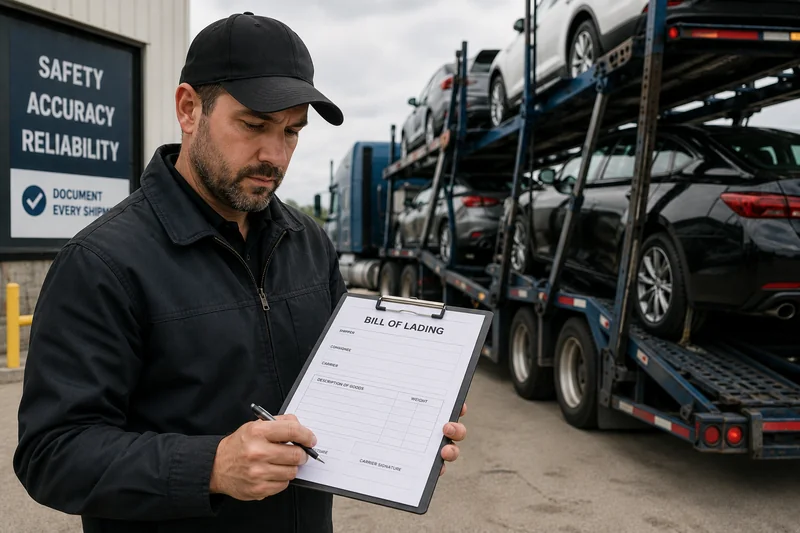
For customers looking to control shipping costs, understanding how a BOL works can help avoid costly mistakes, delays, and administrative issues that may increase transportation expenses.
What Is a Bill of Lading and What Information Does It Contain?
A Bill of Lading is a legal shipping document issued by the carrier that transports the freight. It acts as a receipt for the shipment, a transportation contract, and a record of the goods being moved.
The BOL contains detailed information that helps carriers process and deliver freight accurately. This information allows everyone involved in the shipment to understand exactly what is being transported and where it needs to go.
A standard Bill of Lading typically includes:
- Shipper's name and address
- Consignee's name and address
- Pickup and delivery locations
- Shipment date
- Number of pieces or units being shipped
- Packaging type
- Description of the goods
- Shipment weight
- Freight classification
- Special handling instructions
- Hazardous material information, if applicable
- Declared shipment value
For example, if a customer ships a vehicle from Georgia to Texas, the BOL may include the vehicle's make, model, VIN number, pickup location, destination address, and any notes regarding the vehicle's condition. This information helps ensure the shipment is handled properly throughout the transportation process.
Because the BOL contains critical shipment details, accuracy is essential. Even small mistakes can create confusion, delays, or additional charges later in the shipping process.
Why Is a Bill of Lading Considered One of the Most Important Shipping Documents?
The Bill of Lading is often considered the most important document in freight transportation because it serves several functions simultaneously.
First, it acts as a receipt. When the carrier accepts the shipment, the BOL confirms that the freight was received for transportation. This creates a record of what was picked up and when the shipment entered the carrier's custody.
Second, it serves as a transportation contract. The document outlines the agreement between the shipper and the carrier, including the shipment details and transportation responsibilities.
Third, it functions as proof of ownership or title in certain situations. Depending on the type of Bill of Lading being used, it may establish who has the right to receive the shipment at delivery.
Without a properly completed Bill of Lading, transportation companies may be unable to process, move, or invoice a shipment correctly. This can lead to delays, billing disputes, and delivery problems.
Consider a customer trying to save money by shipping a vehicle to another state. If the destination address or vehicle information is entered incorrectly on the BOL, the shipment could be delayed or rerouted. Correcting these issues may require additional administrative work and increase overall transportation costs.
A properly completed Bill of Lading helps protect all parties by creating a clear record of the shipment from pickup through final delivery.
Who Uses a Bill of Lading During the Transportation Process?
Several parties rely on the Bill of Lading throughout the transportation process. Each party uses the document for different reasons, but all depend on the information it contains.
The shipper uses the BOL to provide shipment details and ensure the freight is described accurately. The shipper is typically responsible for supplying information regarding the goods, quantity, weight, and special handling requirements.
The carrier uses the BOL to plan transportation, verify shipment information, process deliveries, and generate invoices. Drivers often reference the document throughout transit to confirm delivery instructions and shipment details.
The consignee, or receiver, uses the BOL to verify that the shipment delivered matches the shipment originally ordered. At delivery, the consignee may review and sign the document to acknowledge receipt of the goods.
Freight brokers and logistics providers may also use the Bill of Lading to coordinate transportation and maintain shipment records. These parties often help ensure documentation remains accurate throughout the shipping process.
For example, if someone purchases a vehicle online and arranges transportation through a logistics provider, the Bill of Lading becomes the primary document connecting the vehicle owner, transportation company, and receiving party. Everyone involved relies on the information it contains to ensure a successful delivery.
How Does a Bill of Lading Work From Pickup to Delivery?
A Bill of Lading follows a shipment throughout its entire journey, from the moment freight is picked up until it reaches the final destination. It serves as a central document that helps everyone involved verify shipment details, track responsibilities, and confirm successful delivery.
Many people think of a Bill of Lading as simply a shipping form, but it actually plays a much larger role. It helps establish the transportation agreement, provides shipment instructions, and creates a documented record of the freight at every stage of the process.
Understanding how a BOL works can help shippers avoid delays, prevent disputes, and ensure their shipment reaches its destination without unnecessary complications.
Who Issues a Bill of Lading and Who Receives It?
The carrier is generally responsible for issuing the Bill of Lading. Once shipment information is provided and transportation arrangements are confirmed, the carrier prepares the document and provides it to the appropriate parties.
The shipper receives a copy of the BOL and is responsible for verifying that all shipment details are accurate before the freight is transported. This includes checking names, addresses, shipment descriptions, weights, quantities, and any special instructions.
Depending on the transportation arrangement, a freight broker or freight forwarder may also receive copies of the document to help coordinate the shipment. However, not all freight forwarders have the authority to issue Bills of Lading themselves.
The consignee, or receiver, typically receives the document at delivery and may be required to sign it to acknowledge receipt of the shipment.
For example, if a vehicle owner arranges transportation of a car to another state, the carrier may issue a Bill of Lading that includes the vehicle information, pickup location, delivery address, and vehicle condition notes. Copies of the document may then be shared with the vehicle owner, logistics provider, and receiving party.
Every party relies on the same document to ensure the shipment moves according to plan.
What Happens After a Bill of Lading Is Signed?
Once the Bill of Lading is reviewed and signed at pickup, the transportation process officially begins. The signed document confirms that the carrier has accepted the shipment and agrees to transport it according to the information listed on the BOL.
The carrier uses the document throughout transit as a reference for shipment details and delivery instructions. Drivers and dispatch teams may rely on the BOL to verify destinations, quantities, handling requirements, and other important information.
As the shipment moves through the transportation network, the Bill of Lading serves as the primary record connecting the freight to the transportation agreement.
When the shipment reaches its destination, the consignee reviews the freight and compares it against the information listed on the BOL. If everything matches, the consignee signs the document to acknowledge receipt.
For vehicle shipments, this process often includes inspecting the vehicle upon arrival and comparing its condition to any notes recorded at pickup. Any differences can be documented immediately, helping protect all parties involved.
The completed and signed Bill of Lading then becomes part of the shipment record and may be used for invoicing, auditing, compliance purposes, or future reference if questions arise.
How Does a BOL Help Protect Shippers, Carriers, and Consignees?
One of the most important functions of a Bill of Lading is protecting the interests of everyone involved in the shipment.
For shippers, the BOL provides proof that the carrier accepted the freight for transportation. It documents what was shipped, where it was supposed to go, and any special instructions associated with the shipment.
For carriers, the document helps demonstrate that the shipment was transported according to the agreed terms. It also provides evidence of the freight's condition when accepted and delivered.
For consignees, the BOL helps verify that the correct shipment was received. It allows receivers to compare the delivered goods against the original shipment information and identify any discrepancies.
Consider a customer transporting a vehicle across the country. If the vehicle arrives with damage that was not noted at pickup, the Bill of Lading can help determine when the damage may have occurred. Likewise, if the shipment arrives exactly as documented, the BOL provides proof that the carrier fulfilled its responsibilities.
Without this documentation, resolving disagreements about shipment conditions, quantities, or delivery requirements can become significantly more difficult.
What Problems Can Occur If a Bill of Lading Contains Incorrect Information?
Because the Bill of Lading serves as the primary shipping document, even small errors can create major problems during transportation.
Incorrect delivery addresses can result in delays, rerouting charges, or failed delivery attempts. Inaccurate shipment descriptions may create confusion about what is being transported. Errors in weight or freight classification can lead to unexpected billing adjustments and additional fees.
For example, if a vehicle's VIN number is entered incorrectly on the Bill of Lading, identifying and verifying the shipment may become more complicated. Similarly, if a shipment's weight is underestimated, the carrier may need to adjust transportation charges after the shipment has already been picked up.
Missing special instructions can also create issues. If a shipment requires specific handling procedures and those instructions are not included on the BOL, delays or operational problems may occur during transportation.
In some cases, inaccurate information can even create compliance issues, especially when hazardous materials or regulated freight are involved.
To avoid these problems, shippers should carefully review every section of the Bill of Lading before signing it. Taking a few minutes to verify the information can help prevent costly mistakes, reduce delays, and ensure the shipment moves smoothly from pickup to final delivery.
What Information Should Be Included on a Bill of Lading?
A Bill of Lading is only as useful as the information it contains. Since this document guides the shipment from pickup to delivery, every detail must be accurate and complete. Missing or incorrect information can cause delays, billing issues, delivery problems, and even legal disputes.
Think of a Bill of Lading as a roadmap for the shipment. It tells the carrier what is being transported, where it is going, how it should be handled, and who is responsible for receiving it. The more accurate the information, the smoother the transportation process will be.
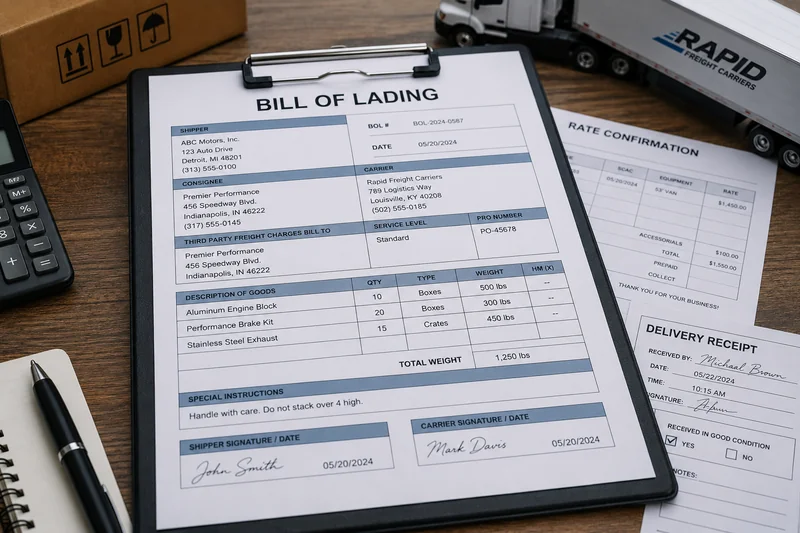
Whether you are shipping freight, equipment, or a vehicle, understanding what belongs on a Bill of Lading can help you avoid costly mistakes and ensure your shipment reaches its destination without unnecessary complications.
Which Shipment Details Must Be Listed on a BOL?
A Bill of Lading contains the essential information required to identify, transport, and deliver a shipment. This information allows carriers, shippers, brokers, and receivers to coordinate transportation efficiently.
Most Bills of Lading include:
- Shipper's name, address, and contact information
- Consignee's name, address, and contact information
- Pickup location
- Delivery location
- Shipment date
- Purchase order or tracking numbers
- Number of packages, pallets, or units
- Packaging type
- Freight description
- Shipment weight
- Freight classification
- Declared value of the goods
- Special handling instructions
For vehicle transportation, the Bill of Lading may also include:
- Vehicle make and model
- Year of manufacture
- Vehicle Identification Number (VIN)
- Odometer reading
- Existing damage notes
- Pickup and delivery inspection details
For example, if someone purchases a used vehicle from another state and arranges transportation, the BOL should clearly identify the vehicle and document its condition before loading. This information helps prevent confusion and provides a record that can be referenced throughout the shipping process.
Every piece of information on the document serves a purpose, helping carriers transport and deliver the shipment correctly.
Why Are Accurate Freight Descriptions and Shipment Weights Important?
Accurate shipment descriptions and weight information are critical because transportation rates, equipment requirements, routing decisions, and safety procedures often depend on them.
Carriers use shipment descriptions to determine how freight should be handled during transit. They also rely on weight information to ensure trucks are loaded safely and comply with transportation regulations.
If shipment details are inaccurate, several problems can occur. Freight may be assigned the wrong classification, billed incorrectly, loaded onto inappropriate equipment, or delayed while corrections are made.
For example, if a shipment is listed as weighing 2,000 pounds but actually weighs 3,000 pounds, the carrier may need to revise the freight charges after pickup. This can result in unexpected costs for the shipper.
Similarly, vague descriptions such as "auto parts" may not provide enough information for proper handling. A more detailed description helps carriers understand the shipment's characteristics and transportation requirements.
Accurate information benefits everyone involved. It reduces the risk of billing disputes, improves transportation planning, and helps shipments move through the supply chain more efficiently.
For customers focused on controlling shipping expenses, accurate freight descriptions can prevent costly reclassification fees and other avoidable charges.
How Do Special Instructions and Hazardous Material Declarations Affect Transportation?
Not all shipments can be handled the same way. Some freight requires special loading procedures, additional documentation, temperature controls, or safety precautions. This information must be clearly listed on the Bill of Lading.
Special instructions may include:
- Liftgate requirements
- Appointment-only deliveries
- Limited access pickup locations
- Temperature-sensitive handling
- Fragile freight requirements
- Vehicle loading restrictions
Providing these instructions in advance allows carriers to prepare the appropriate equipment and resources for the shipment.
Hazardous material declarations are even more important. Federal regulations require hazardous materials to be properly identified and documented before transportation. Failure to disclose hazardous materials can create serious safety risks and regulatory violations.
For example, certain automotive products such as batteries, chemicals, and flammable liquids may require special handling procedures during transportation. If these materials are not properly declared, shipments may be delayed, rejected, or subject to penalties.
Including accurate instructions on the Bill of Lading helps ensure the shipment is handled safely and transported in compliance with applicable regulations.
What Should Vehicle Owners Verify Before Signing a Bill of Lading?
Vehicle transportation involves additional considerations because the Bill of Lading often serves as both a shipping document and a vehicle condition report.
Before signing the document, vehicle owners should carefully review all information and verify its accuracy. Taking a few minutes to inspect the BOL can help prevent disputes later.
Vehicle owners should confirm:
- Vehicle make, model, and year
- VIN number
- Pickup and delivery addresses
- Odometer reading if listed
- Existing scratches, dents, or damage
- Vehicle operating condition
- Personal items inside the vehicle, if allowed
- Contact information for all parties involved
One of the most important steps is reviewing the vehicle condition section. Any existing damage should be noted before transportation begins. Photos taken during pickup can provide additional documentation and help support the information listed on the Bill of Lading.
For example, if a vehicle already has a dent on the rear bumper, that damage should be documented before loading. If it is not recorded, determining when the damage occurred may become more difficult later.
Vehicle owners should never rush through the signing process. Once the document is signed, it becomes an official record of the vehicle's condition and shipment details.
What Are the Different Types of Bill of Lading?
Not all Bills of Lading serve the same purpose. While every BOL helps document and manage a shipment, different types of Bills of Lading determine how ownership, payment, and delivery responsibilities are handled.
Choosing the correct type of Bill of Lading is important because it affects who can receive the shipment, when ownership transfers, and what conditions must be met before delivery is completed.
Although there are several specialized BOL variations used throughout the transportation industry, two of the most common and important types are the Straight Bill of Lading and the Order Bill of Lading. Understanding the differences between them can help shippers avoid confusion and ensure freight is handled correctly.
What Is a Straight Bill of Lading?
A Straight Bill of Lading is a non-negotiable shipping document. This means the shipment is assigned to a specific consignee, and only that designated party can receive the freight upon delivery.
In most cases, a Straight Bill of Lading is used when payment for the goods has already been completed before shipment begins. Since ownership and payment arrangements have already been settled, there is no need to transfer control of the shipment while it is in transit.
For example, a vehicle owner who hires a transportation company to move a car from Georgia to Florida after paying all transportation charges upfront may use a Straight Bill of Lading. The carrier is instructed to deliver the vehicle directly to the designated recipient listed on the document.
Because this type of BOL is non-negotiable, ownership rights cannot be transferred to another party during transportation. The shipment remains tied to the consignee identified on the document.
Straight Bills of Lading are widely used for domestic freight shipments because they are simple, efficient, and appropriate when payment arrangements have already been completed.
What Is an Order Bill of Lading?
An Order Bill of Lading is a negotiable shipping document that allows ownership rights to be transferred while the shipment is still in transit.
Unlike a Straight Bill of Lading, an Order Bill of Lading is typically consigned "to the order of" a specific party rather than directly to a final receiver. This provides flexibility because ownership of the goods can be transferred through endorsement of the document.
Order Bills of Lading are commonly used in international trade, commercial transactions, and situations where payment has not yet been finalized before shipment begins.
For example, a supplier may ship goods to a buyer but retain ownership until payment is received. Once payment is completed, ownership rights can be transferred by endorsing the Order Bill of Lading. This process provides additional security for sellers and financial institutions involved in the transaction.
Because ownership can change during transportation, carriers must carefully verify delivery authorization before releasing the shipment. This additional level of control helps protect parties involved in higher-value or more complex transactions.
Although Order Bills of Lading are less common in routine vehicle transportation, they remain an important tool in global logistics and commercial shipping operations.
Which Type of Bill of Lading Is Used Most Often for Freight Shipments?
For most domestic freight and vehicle shipments, the Straight Bill of Lading is the most commonly used option.
Many transportation transactions involve known shippers and receivers who have already completed payment arrangements before the shipment moves. In these situations, there is typically no need to transfer ownership during transit, making a Straight Bill of Lading the simplest and most practical solution.
For example, when a customer arranges transportation for a recently purchased vehicle, construction equipment, or household goods, the shipment is usually delivered directly to the intended recipient listed on the BOL. The carrier simply follows the instructions contained in the document and completes delivery accordingly.
Order Bills of Lading are generally used in situations involving:
- International trade
- Import and export transactions
- Financing arrangements
- Commercial inventory transfers
- Shipments requiring ownership control during transit
For everyday freight transportation within the United States, Straight Bills of Lading remain the preferred choice because they simplify the shipping process and reduce administrative complexity.
How Do Different BOL Types Affect Ownership and Payment Responsibilities?
One of the most important differences between Bill of Lading types involves ownership rights and payment obligations.
With a Straight Bill of Lading, ownership is generally predetermined. The shipment is delivered directly to the named consignee, and payment has usually been completed before transportation begins. The carrier's primary responsibility is transporting and delivering the freight according to the instructions listed on the document.
With an Order Bill of Lading, ownership can remain with the seller or another authorized party until certain conditions are met. These conditions often involve payment, financing approval, or transfer authorization.
This distinction is particularly important when large financial transactions are involved. Sellers may use an Order Bill of Lading to protect themselves against non-payment, while buyers gain assurance that ownership will transfer once contractual obligations are fulfilled.
For example, a company exporting equipment overseas may retain ownership until payment clears through a bank. The carrier cannot release the shipment until the appropriate documentation authorizes the transfer.
For most consumers shipping vehicles or freight domestically, ownership transfer is usually straightforward, and a Straight Bill of Lading is sufficient. However, understanding the difference between negotiable and non-negotiable Bills of Lading helps shippers make informed decisions and avoid misunderstandings during transportation.
How Can a Properly Prepared Bill of Lading Help Avoid Delays and Extra Costs?
Many shipping problems can be traced back to one simple issue: inaccurate documentation. While a Bill of Lading may seem like a routine form, it directly affects how a shipment is processed, transported, billed, and delivered.
A properly prepared Bill of Lading helps carriers understand exactly what is being shipped, where it needs to go, and how it should be handled. It also creates a clear record that all parties can reference throughout the transportation process.
For customers trying to keep transportation costs under control, paying attention to the BOL can be one of the easiest ways to avoid unexpected expenses. Incorrect shipment information can lead to delays, additional fees, reclassification charges, delivery failures, and disputes that may take time and money to resolve.
Taking the time to prepare an accurate Bill of Lading helps ensure shipments move smoothly from pickup to delivery while reducing the risk of costly mistakes.
What Are the Most Common Bill of Lading Mistakes Shippers Make?
Many Bill of Lading errors are preventable, yet they occur frequently because shipment details are entered too quickly or reviewed insufficiently before pickup.
One of the most common mistakes is entering incorrect addresses. A wrong delivery location, missing suite number, or inaccurate contact information can delay delivery and create additional transportation costs.
Another frequent issue involves inaccurate shipment descriptions. If freight is described too broadly or important details are omitted, carriers may have difficulty determining the correct handling procedures and freight classification.
Incorrect shipment weights are another common problem. Since freight rates often depend on weight and classification, inaccurate measurements can result in billing adjustments after pickup.
Vehicle shipments can present additional challenges. Errors involving VIN numbers, vehicle descriptions, or condition reports can create confusion and make it more difficult to resolve questions later.
Common Bill of Lading mistakes include:
- Incorrect pickup or delivery addresses
- Missing contact information
- Inaccurate shipment weights
- Improper freight classifications
- Incomplete shipment descriptions
- Missing special handling instructions
- Failure to document existing vehicle damage
- Incorrect vehicle identification information
Even a small error can create significant complications later in the shipping process. Reviewing the document carefully before signing can help prevent many of these issues.
How Can a Correct BOL Improve Delivery Accuracy and Reduce Disputes?
A correctly prepared Bill of Lading creates clarity for everyone involved in the shipment. When information is accurate and complete, carriers can transport freight more efficiently, and receivers know exactly what to expect upon delivery.
Accurate documentation improves delivery accuracy by ensuring drivers have the correct addresses, contact information, and shipment instructions. This reduces the likelihood of misrouted freight, missed appointments, and failed delivery attempts.
A correct BOL also helps reduce disputes. Because the document records shipment details at pickup, it provides a reliable reference if questions arise later.
For example, if a customer claims that a shipment arrived incomplete, the Bill of Lading can be used to verify the original quantity of freight accepted by the carrier. If a vehicle arrives with damage, the pickup inspection documented on the BOL may help determine whether the damage existed before transportation began.
The document also helps eliminate misunderstandings about:
- Shipment contents
- Delivery requirements
- Freight quantities
- Transportation responsibilities
- Vehicle condition at pickup and delivery
- Billing calculations
When all parties rely on the same accurate information, disagreements become easier to resolve and less likely to occur in the first place.
When Should You Ask YK Freight for Help With Shipping Documentation?
While many shipments are straightforward, some situations involve more complex documentation requirements. In these cases, working with an experienced transportation provider can help avoid costly mistakes.
It may be beneficial to seek assistance when:
- Shipping high-value vehicles or equipment
- Transporting freight across multiple states
- Handling oversized or specialized cargo
- Shipping hazardous materials
- Coordinating multiple shipments simultaneously
- Unsure about freight classification requirements
- Preparing documentation for first-time shipments
For example, someone transporting a recently purchased vehicle may not be familiar with the information that should be recorded on a vehicle Bill of Lading. Missing VIN information, incorrect vehicle descriptions, or incomplete condition reports can create unnecessary complications later.
Similarly, businesses shipping freight for the first time may not fully understand freight classifications, weight requirements, or documentation standards. Seeking guidance before shipment pickup can help prevent issues that could lead to delays or additional charges.
Obtaining professional assistance early is often less expensive than correcting documentation errors after the shipment is already in transit.
How Does YK Freight Help Ensure Bills of Lading Are Accurate and Compliant?
Accurate documentation plays a critical role in successful transportation operations. YK Freight works with shippers to help ensure Bills of Lading contain the information necessary for efficient freight movement and accurate shipment processing.
By reviewing shipment details before transportation begins, potential issues can often be identified and corrected early. This helps reduce the likelihood of billing adjustments, delivery delays, and operational disruptions.
For vehicle shipments, accurate documentation of vehicle information and condition reports helps create a clear record from pickup through delivery. For freight shipments, proper descriptions, weights, classifications, and handling instructions support smoother transportation planning.
YK Freight also helps coordinate communication between the parties involved in a shipment, ensuring that important information is properly documented and available when needed.
The benefits of accurate BOL preparation include:
- Fewer shipment delays
- Improved delivery accuracy
- Reduced billing disputes
- Better shipment visibility
- More efficient freight processing
- Easier claims resolution when necessary
- Improved regulatory compliance
A Bill of Lading may seem like a simple form, but it serves as the foundation for the entire shipping process. Ensuring that it is complete, accurate, and properly prepared can save both time and money while helping shipments move efficiently from origin to destination.
For budget-conscious shippers, avoiding documentation errors is one of the most effective ways to prevent unnecessary transportation costs and ensure a smoother shipping experience.
Further Reading
Documents & Deadlines for a Smooth and Successful Container Move
What Does FOB Mean in Freight Shipping? Simple Guide for Budget Shippers
What is Freight and Logistics?
What You Need to Know About Customs Procedures in Container Drayage


ASK YOUR QUESTIONS