
Choosing the right trailer can lower shipping costs, protect your freight, and prevent delays. This quick guide compares dry van, flatbed, refrigerated, and other trailer types so you can understand the pros, cons, and best uses before booking transportation.
Table of Content:
- What Are the Main Types of Freight Trailers and How Do They Differ?
- What Are the Pros and Cons of Dry Van, Flatbed, and Refrigerated Trailers?
- How Does Trailer Choice Affect Shipping Cost and Delivery?
- How Should You Choose the Right Trailer for Your Freight?
- What Should You Know Before Booking a Trailer With a Logistics Provider?
What Are the Main Types of Freight Trailers and How Do They Differ?
Freight trailers are designed for different types of cargo. The right trailer depends on what you are shipping, how large or heavy it is, whether it needs protection from weather, and how much you want to spend.
The three most common trailer types are dry van, flatbed, and refrigerated trailers. Each one serves a different purpose.
A dry van is usually the best choice for standard freight that needs protection. A flatbed works well for large, heavy, or oddly shaped cargo. A refrigerated trailer is used when the freight must stay within a controlled temperature range.
Choosing the correct trailer from the beginning can help avoid extra charges, loading problems, and delays. For budget-conscious shippers, that can make a major difference in the final transportation cost.
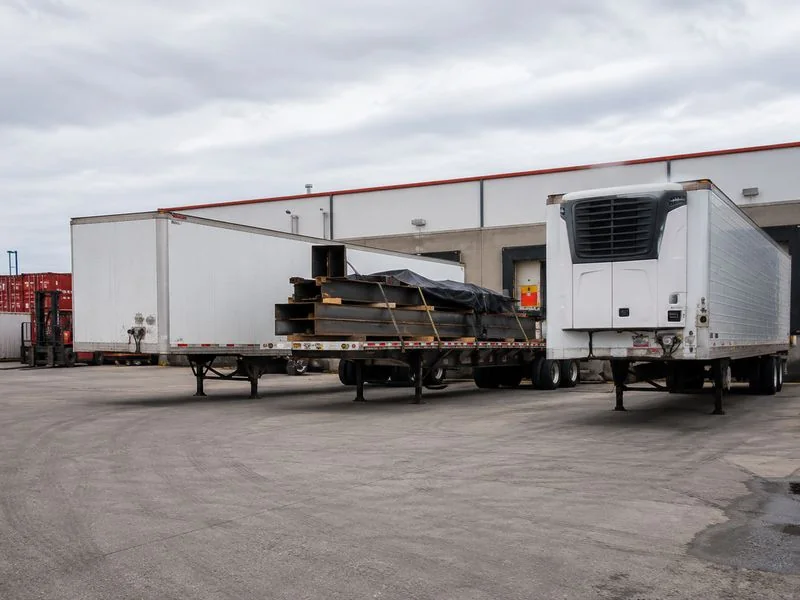
What Is a Dry Van Trailer Best Used For?
A dry van is an enclosed trailer with walls, a roof, and rear doors. It is one of the most common trailer types used in over-the-road freight transportation.
Most dry vans are 48 or 53 feet long and are designed to carry standard palletized or boxed freight.
Dry vans are commonly used for:
- Packaged goods
- Auto parts
- Electronics
- Furniture
- Clothing
- Building materials
- Non-perishable food
- Household products
The biggest advantage of a dry van is protection.
Because the trailer is fully enclosed, the cargo is protected from rain, snow, wind, and road debris. It also provides better security than an open trailer.
For example, imagine a small auto parts business needs to move several pallets of parts from a warehouse to another location. The cargo does not require temperature control and fits within standard trailer dimensions. A dry van would usually be a practical and cost-effective option.
Dry vans are also widely available, which can help keep rates competitive on common routes.
However, they are not suitable for every load. Oversized equipment may not fit through the doors or inside the trailer. Perishable goods that require specific temperatures also need a different trailer type.
For standard freight, a dry van is often one of the simplest and most economical choices.
What Is a Flatbed Trailer Best Used For?
A flatbed trailer has an open platform without permanent walls or a roof.
This design makes it easier to load cargo from the sides, rear, or top. Cranes and forklifts can access the freight more easily than they can with an enclosed trailer.
Flatbeds are commonly used for:
- Heavy machinery
- Construction equipment
- Steel
- Lumber
- Large vehicle parts
- Industrial equipment
- Oversized cargo
- Freight with unusual shapes
Flatbeds are especially useful when cargo cannot fit inside a dry van.
For example, suppose a business needs to transport a large piece of equipment that is too tall for an enclosed trailer. A flatbed may allow the load to be secured directly to the deck without the height restrictions of a dry van.
This flexibility comes with extra responsibilities.
Cargo on a flatbed must be secured properly with straps, chains, or other equipment. Because the trailer is open, freight may also need tarps or other protection from rain and snow.
Flatbed transportation can cost more than standard dry van shipping, especially for oversized or heavy loads. Specialized permits, route planning, and loading equipment may also increase the price.
For customers trying to save money, the key is to use a flatbed only when the cargo actually requires it. Paying for specialized equipment when a standard trailer would work can increase the shipping cost unnecessarily.
What Is a Refrigerated Trailer Best Used For?
A refrigerated trailer, often called a reefer, looks similar to a dry van but includes a temperature-control system.
The refrigeration unit helps maintain a specific temperature during transportation.
Refrigerated trailers are commonly used for:
- Fresh food
- Frozen products
- Dairy
- Meat
- Produce
- Flowers
- Pharmaceuticals
- Certain chemicals
- Other temperature-sensitive products
The main reason to use a reefer is product protection.
If freight must stay cold, frozen, or within a narrow temperature range, a standard dry van may not be safe.
For example, a distributor transporting frozen food cannot choose a dry van simply because the rate is lower. If the cargo warms during transit, the entire shipment could become unusable.
That could cost far more than the savings from choosing a cheaper trailer.
Refrigerated trailers are generally more expensive to operate because the cooling equipment requires fuel, maintenance, and monitoring.
They may also require more time before loading because the trailer sometimes needs to reach the correct temperature first.
For budget-conscious shippers, a reefer makes sense when temperature control is truly necessary. If the freight does not need climate control, a dry van will often be the more affordable choice.
What Other Trailer Types Should Shippers Know About?
Dry vans, flatbeds, and refrigerated trailers cover many common shipments, but there are several other trailer types worth knowing.
A step deck trailer is similar to a flatbed but has a lower main deck. This design allows taller cargo to be transported while staying within legal height limits.
A double drop trailer has an even lower section between the front and rear wheels. It is often used for very tall or heavy machinery.
A removable gooseneck trailer, or RGN, allows the front section of the trailer to detach. Heavy equipment such as excavators or loaders can sometimes be driven directly onto the trailer.
A power-only setup is different because the carrier provides only the tractor. The customer or another company provides the trailer. This can be useful when a loaded trailer already needs to be moved from one location to another.
There are also specialized trailers for vehicles, containers, livestock, liquids, and other types of cargo.
The more specialized the equipment, the more important it is to provide accurate information before booking.
Cargo dimensions, weight, loading method, and pickup location can all affect which trailer is required.
For example, a shipper may assume that a standard flatbed is enough for a piece of equipment. If the load turns out to be too tall, a step deck or double drop trailer may be required instead. Changing equipment at the last minute can lead to delays and higher costs.
This is why YK Freight and other transportation providers need accurate cargo details before scheduling a truck.
What Are the Pros and Cons of Dry Van, Flatbed, and Refrigerated Trailers?
Dry van, flatbed, and refrigerated trailers are built for different shipping needs. Each type has clear advantages, but each also comes with limits that can affect cost, loading, delivery time, and cargo protection.
For budget-conscious shippers, choosing the right trailer is important because the cheapest option is not always the best value. A dry van may be affordable for standard freight, but it will not work for oversized equipment. A flatbed may handle large cargo, but it can require extra securement and weather protection. A refrigerated trailer protects temperature-sensitive goods, but usually costs more to operate.
The best choice depends on the type of freight, how it needs to be loaded, how much protection it requires, and whether special handling is necessary.
What Are the Advantages and Disadvantages of Dry Van Trailers?
Dry van trailers are one of the most common choices for standard freight because they are enclosed, widely available, and suitable for many types of cargo.
Their biggest advantage is versatility.
A dry van can carry many products that do not require refrigeration or special loading. This includes auto parts, furniture, packaged goods, electronics, building materials, and other general freight.
Another advantage is protection.
The enclosed trailer helps keep cargo away from rain, snow, road debris, and direct exposure to the outside environment. It also provides better security than an open trailer.
Dry vans can also be cost-effective because they are common throughout the trucking industry. On popular routes, greater availability may make it easier to find capacity at a competitive rate.
For example, if a small business needs to move several pallets of auto parts between two warehouses, a dry van may provide the right balance between price and protection.
However, dry vans also have disadvantages.
The trailer has fixed walls, a roof, and door dimensions, so oversized or unusually shaped freight may not fit. Loading is also usually limited to the rear unless the trailer has special side access.
Dry vans are not suitable for freight that requires controlled temperatures.
They can also face capacity shortages during busy shipping periods. When demand is high, rates may increase.
The main pros of dry vans include:
- Good protection from weather
- Better security for enclosed freight
- Wide availability
- Suitable for many standard cargo types
- Often economical for regular shipments
The main cons include:
- Limited height and width
- Not suitable for oversized cargo
- No temperature control
- Loading access can be limited
- Rates may rise when capacity is tight
For standard cargo that fits easily inside the trailer, a dry van is often one of the most practical choices.
What Are the Advantages and Disadvantages of Flatbed Trailers?
Flatbed trailers are designed for freight that is too large, heavy, or awkward for an enclosed trailer.
Their open design is their biggest advantage.
Cargo can be loaded from the rear, side, or top. This makes flatbeds useful for machinery, construction materials, large vehicle parts, steel, lumber, and other freight that may require a crane or forklift.
Flatbeds also give shippers more flexibility with unusual dimensions.
For example, a business may need to transport a large piece of machinery that is too tall to fit inside a dry van. A flatbed can make loading possible without the restrictions of walls or a roof.
However, open trailers also create more exposure.
Cargo may need tarps or other protection from rain, snow, dust, or road debris. This can add time and cost to the shipment.
Load securement is another important issue.
Freight must be properly secured with chains, straps, binders, or other equipment. Poor securement can damage the cargo and create a serious safety risk.
Oversized loads can also require permits, special routes, escorts, or additional planning.
These requirements can increase transportation costs.
The main pros of flatbed trailers include:
- Easy loading from multiple directions
- Suitable for oversized and irregular freight
- Good access for cranes and forklifts
- Flexible for heavy equipment and machinery
- Fewer height restrictions than enclosed trailers
The main cons include:
- Less protection from weather
- More complicated load securement
- Higher costs for oversized freight
- Possible permit requirements
- More specialized handling may be needed
For customers trying to save money, a flatbed is usually best when the freight truly requires open-deck transportation. Using one for standard cargo that fits in a dry van may add unnecessary cost.
What Are the Advantages and Disadvantages of Refrigerated Trailers?
Refrigerated trailers are designed for freight that needs temperature control during transportation.
Their biggest advantage is the ability to maintain a controlled environment.
This makes them essential for products such as frozen food, fresh produce, dairy, flowers, pharmaceuticals, and other temperature-sensitive goods.
A reefer also provides the same enclosed protection as a dry van. Cargo is protected from rain, wind, road debris, and outside exposure.
Some refrigerated trailers can also carry dry freight when temperature control is not needed, which gives carriers some flexibility.
The main disadvantage is cost.
Refrigerated trailers use cooling equipment that requires fuel, maintenance, and monitoring. This generally makes reefer transportation more expensive than standard dry van service.
Loading can also take longer.
The trailer may need to be pre-cooled before the freight is loaded. Drivers and shippers may also need to check temperatures before, during, and after transportation.
Mechanical problems can create serious risks.
If the refrigeration system fails and the cargo moves outside the required temperature range, the shipment may be damaged or rejected.
The main pros of refrigerated trailers include:
- Temperature-controlled transportation
- Protection from weather and outside conditions
- Suitable for perishable and sensitive freight
- Can sometimes carry both refrigerated and dry cargo
- Helps reduce spoilage when used correctly
The main cons include:
- Higher transportation costs
- More maintenance and fuel use
- Temperature monitoring is required
- Loading may take longer
- Cooling system failures can damage valuable freight
A refrigerated trailer should usually be used only when the cargo requires it. Paying for temperature control that is not necessary can increase the shipping bill without adding real value.
Which Trailer Type Offers the Best Protection for Your Freight?
The best trailer for cargo protection depends on what kind of protection the freight needs.
For most general freight, a dry van provides strong protection from weather, theft, and road conditions. Its enclosed design makes it a good option for products that need to stay dry and secure.
For temperature-sensitive freight, a refrigerated trailer offers the highest level of protection because it combines an enclosed body with climate control.
A flatbed provides the least protection from outside conditions because the cargo is exposed. However, it may still be the safest and most practical option for freight that cannot fit inside another trailer.
For example, a pallet of boxed auto parts will usually be better protected inside a dry van than on a flatbed.
A large piece of construction equipment may not need full weather protection and may be impossible to load into an enclosed trailer. In that case, a flatbed is the better choice.
A shipment of temperature-sensitive products may require a reefer even if the freight would physically fit inside a dry van.
The key is to match the protection level to the actual risk.
Choosing more protection than necessary can increase the cost. Choosing too little protection can lead to damaged freight and even larger expenses.
How Does Trailer Choice Affect Shipping Cost and Delivery?
Trailer choice can change both the price of a shipment and how easy it is to deliver. The right trailer helps avoid special handling, unnecessary equipment, and last-minute changes. The wrong one can lead to delays, extra fees, or even a failed pickup.
For budget-conscious shippers, trailer selection should be part of the cost calculation from the beginning. It is not enough to compare only the base freight rate.
A lower quote can become expensive if the load does not fit, needs extra securement, requires temperature control, or must be transferred to a different trailer.
The best option is usually the trailer that meets the real needs of the cargo without adding features you do not need.
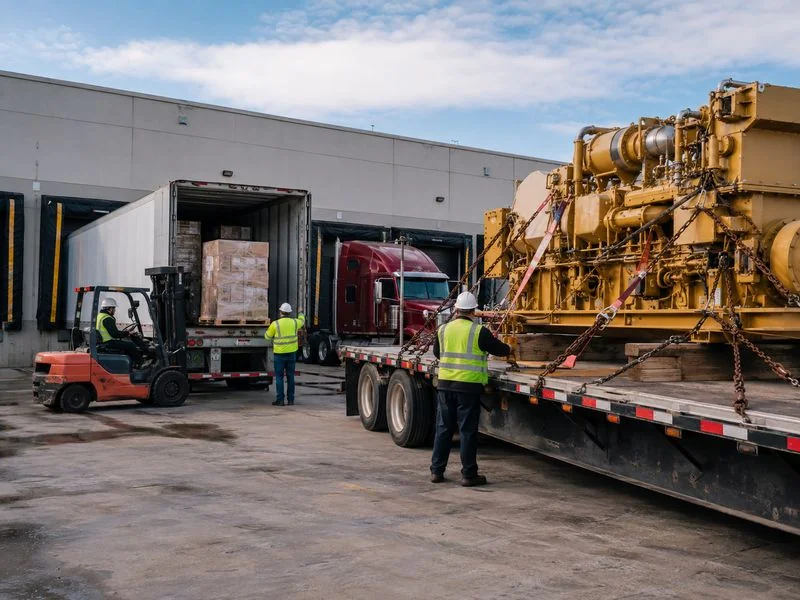
Which Trailer Types Are Usually the Most Affordable?
For standard freight, dry van trailers are often among the most affordable options.
They are widely used, easy to find on many routes, and suitable for a large range of general cargo. If your freight fits inside a standard dry van and does not need temperature control, there may be no reason to pay for more specialized equipment.
Flatbed trailers can cost more because they often carry larger, heavier, or irregular freight. These loads may require extra securement, tarps, special loading, or permits.
Refrigerated trailers also tend to cost more than dry vans because they use temperature-control equipment. The carrier must pay for fuel, maintenance, and monitoring of the refrigeration system.
For example, if you need to move boxed auto parts that fit inside a standard trailer, a dry van will usually make more sense than a reefer or flatbed.
Paying for equipment that the shipment does not require can increase the total cost without improving the delivery.
However, the cheapest trailer type on paper is not always the cheapest final option. Route, market demand, timing, and cargo requirements can all affect the actual rate.
How Do Trailer Availability and Demand Affect Shipping Rates?
Trailer rates change based on supply and demand.
If many shippers need the same type of trailer in the same area, available capacity can become limited. When fewer trucks are available, rates may rise.
Seasonality can also affect demand.
Refrigerated trailers may become more expensive during periods when large volumes of produce, food, or other temperature-sensitive goods need to move. Flatbed demand can increase when construction or industrial activity is strong.
Dry van capacity can also tighten during busy retail or holiday shipping periods.
Location matters too.
A trailer type that is easy to find near a major freight hub may be much harder to find in a remote area.
This can affect both price and pickup time.
For example, imagine you need a flatbed in a location where few flatbed carriers regularly operate. A driver may need to travel empty for a long distance just to reach the pickup point. That extra distance can be reflected in the rate.
Booking earlier can sometimes help.
More planning time gives the transportation provider a better chance to find suitable equipment and avoid expensive last-minute options.
For shippers on a limited budget, flexibility with pickup dates can also help when the shipment is not urgent.
How Can Cargo Size, Weight, and Shape Change the Cost?
Cargo dimensions and weight are some of the most important factors in trailer selection.
A standard load that fits easily inside a dry van is usually simpler to transport than oversized or unusually shaped freight.
Larger or heavier cargo may require:
- Flatbed equipment
- Step deck trailers
- Double drop trailers
- Special permits
- Additional securement
- Heavy-duty loading equipment
- Route planning
- Escort vehicles in some cases
Each additional requirement can increase the cost.
Shape matters as well.
A piece of freight may not be extremely heavy, but it could still be too tall or wide for a standard enclosed trailer.
For example, suppose a piece of machinery weighs only a moderate amount but is too tall to fit through dry van doors. A flatbed or step deck may be required.
That changes the price even though the weight itself is not unusual.
Vehicle condition can create similar issues.
A non-running vehicle may need a winch or other loading assistance. Oversized vehicles can also require more trailer space or specialized equipment.
This is why accurate dimensions and weight should be provided before the shipment is booked.
Estimating or guessing can lead to a trailer arriving that cannot legally or safely carry the load.
When Can Choosing the Wrong Trailer Lead to Extra Fees or Delays?
Choosing the wrong trailer can cause problems before the freight even leaves the pickup location.
One of the most common issues is incorrect cargo information.
If a dry van arrives and the load is too tall to fit, the truck may have to leave without the freight. A different trailer must then be found.
This can lead to:
- Truck order not used charges
- Additional waiting time
- Rescheduling fees
- Storage charges
- Higher last-minute rates
- Missed delivery appointments
The same problem can happen if a flatbed arrives without the securement equipment the load requires.
Temperature-sensitive freight creates another risk. If a shipper books a dry van for cargo that should have traveled in a reefer, the product could be damaged or rejected.
For someone shipping on a limited budget, these mistakes can be especially painful because one failed pickup can erase the savings from choosing a lower rate.
For example, saving $150 on the original quote does not help if a wrong trailer choice later creates $400 in storage, rescheduling, and additional transportation charges.
Providing complete cargo information at the start is usually much cheaper than correcting the shipment after the truck arrives.
How Can Better Trailer Selection Help Budget-Conscious Shippers Save Money?
Better trailer selection helps shippers avoid paying for equipment they do not need while still protecting the cargo properly.
The first step is to understand the shipment before asking for a quote.
Know the cargo type, dimensions, weight, loading method, pickup location, and delivery requirements.
Then ask whether a standard trailer can handle the load safely.
For example, if standard palletized freight can travel in a dry van, there may be no reason to use a more expensive refrigerated or open-deck trailer.
At the same time, trying to force oversized freight into the cheapest trailer can create even higher costs later.
Budget-conscious shippers can also save by being flexible.
If the delivery is not urgent, a wider pickup window may make it easier for the carrier to match the shipment with available capacity.
Planning ahead also reduces the risk of premium last-minute rates.
It is also useful to compare the total cost instead of only the transportation quote. Think about loading, storage, securement, waiting time, special permits, and possible delays.
A trailer that costs slightly more upfront may still be cheaper if it avoids extra handling or a second pickup attempt.
The goal is not to choose the lowest rate at any cost. It is to choose the most efficient trailer for the actual shipment.
How Should You Choose the Right Trailer for Your Freight?
Choosing the right trailer starts with understanding the cargo. You need to know its size, weight, shape, loading method, delivery deadline, and whether it needs protection from weather or temperature changes.
The cheapest trailer is not always the best choice. If the equipment does not match the shipment, you may face delays, failed pickups, storage fees, or the cost of sending another truck.
For budget-conscious shippers, the best approach is to match the trailer to the actual needs of the load. Avoid paying for specialized equipment when a standard option will work, but do not choose a cheaper trailer if it creates a risk of damage or extra charges.
What Type of Trailer Should You Use for Standard Dry Freight?
A dry van is usually the best choice for standard freight that does not need temperature control.
It works well for cargo such as:
- Boxed goods
- Palletized freight
- Auto parts
- Furniture
- Electronics
- Packaged materials
- Non-perishable products
Dry vans are enclosed, so they protect the load from rain, snow, road debris, and direct exposure during transit.
They are also common on many freight routes, which can make them easier to book than more specialized trailer types.
For example, if you need to move several pallets of auto parts between warehouses, a dry van is usually a practical choice. The freight fits inside the trailer, does not need refrigeration, and benefits from being protected from the weather.
A dry van may not work if the cargo is too tall, too wide, or difficult to load through the rear doors.
Before booking, confirm the dimensions and loading method. This can help prevent a truck from arriving with equipment that cannot handle the load.
When Is a Flatbed Better for Oversized or Irregular Cargo?
A flatbed is usually a better option when freight cannot fit inside an enclosed trailer.
This may include:
- Construction equipment
- Heavy machinery
- Large vehicle components
- Steel
- Lumber
- Industrial equipment
- Oversized freight
- Cargo with unusual shapes
The open design allows loading from the side, rear, or top. This is useful when a crane or forklift is needed.
For example, imagine you need to transport a large machine that is too tall to fit inside a dry van. A flatbed may allow the equipment to be loaded and secured directly to the deck.
Flatbeds can also make loading easier when the freight is too wide or awkward for standard trailer doors.
However, the flexibility can come at a higher cost.
Oversized loads may require permits, special routes, stronger securement, tarps, or specialized equipment. These requirements can increase the final rate.
For budget-conscious shippers, it is important to know the exact size of the cargo before requesting a flatbed. If the freight can safely fit in a dry van, paying for open-deck equipment may be unnecessary.
When Do You Need a Refrigerated Trailer?
A refrigerated trailer is necessary when cargo must stay within a specific temperature range.
Common examples include:
- Frozen food
- Fresh produce
- Dairy products
- Meat
- Flowers
- Pharmaceuticals
- Certain chemicals
- Other temperature-sensitive goods
A reefer is not only about keeping cargo cold. Some products must be kept within a narrow temperature range and protected from both heat and freezing conditions.
For example, if a shipment must remain at a controlled temperature during a long trip, a standard dry van may put the entire load at risk.
Trying to save money by avoiding refrigerated transportation can become very expensive if the cargo is damaged or rejected.
Reefer service usually costs more because the trailer uses fuel and equipment to maintain the required temperature. It may also require pre-cooling and regular monitoring.
If your freight does not require climate control, a dry van is usually the more economical option.
The key is to use a refrigerated trailer when it is necessary, not simply because it provides extra protection.
What Should You Consider About Weather, Security, and Cargo Protection?
Cargo protection should be part of the trailer decision from the start.
Different trailer types provide different levels of protection.
A dry van protects freight from most normal weather conditions and provides an enclosed space that can reduce exposure to theft.
A refrigerated trailer provides similar physical protection while also controlling temperature.
A flatbed leaves the cargo more exposed. Loads may need tarps or other coverings to protect them from rain, snow, or road debris.
Think about how sensitive the shipment is.
For example, boxed electronics usually need more protection from moisture than heavy construction equipment.
Weather conditions can also affect the decision.
A flatbed shipment that is acceptable during dry weather may need additional protection during a period of heavy rain or snow.
Security is another factor.
High-value cargo may be better suited to an enclosed trailer when possible. While no trailer can remove every risk, an enclosed load is generally less visible and less accessible than freight on an open deck.
For budget-conscious customers, protection should be based on real risk. Paying for unnecessary features increases the price, but choosing too little protection can lead to damaged freight and much higher losses.
How Should Distance, Delivery Time, and Loading Requirements Affect Your Choice?
Distance, timing, and loading conditions can change which trailer makes the most sense.
Longer trips may increase the importance of cargo protection. Freight that travels hundreds or thousands of miles will spend more time exposed to weather, vibration, and changing road conditions.
Delivery time also matters.
If the shipment is urgent, you may need to choose equipment that is available quickly, even if another option would normally cost less.
If the delivery date is flexible, you may have more time to compare rates and wait for the right trailer.
Loading requirements are equally important.
Ask questions such as:
- Is there a loading dock?
- Is a forklift available?
- Does the cargo need a crane?
- Can it be loaded from the rear?
- Does the freight require a winch?
- Is there enough space for a large truck to access the pickup location?
For example, a dry van may be suitable for the cargo itself, but it may not be practical if the shipment must be loaded from the side with a crane.
A flatbed could be the better option even if the freight would physically fit inside an enclosed trailer.
The same applies at delivery.
A trailer that can be loaded easily at the pickup location must also be practical to unload at the destination.
The best choice combines cargo requirements with route, timing, and loading conditions.
What Should You Know Before Booking a Trailer With a Logistics Provider?
Booking the right trailer is easier when you know exactly what your shipment needs before contacting a logistics provider.
The most important details are the cargo type, dimensions, weight, pickup location, delivery location, loading method, and timing. These factors affect which trailer can safely handle the load and how much the shipment may cost.
For budget-conscious shippers, preparing this information in advance can help avoid extra fees and last-minute changes.
A low quote is not very useful if the wrong trailer arrives, the cargo does not fit, or special equipment is needed after the truck is already on site.
The goal is to choose equipment that matches the shipment from the beginning.
What Questions Should You Ask Before Booking a Trailer?
Before booking, ask questions that help you understand what equipment you are getting and what is included in the price.
Useful questions include:
- What trailer type do you recommend for this cargo?
- Will the freight fit within standard trailer dimensions?
- Are there weight limits I should know about?
- Is loading or unloading equipment required?
- Are tarps, straps, chains, or other securement included?
- Could permits be required?
- Are there extra charges for waiting time?
- What happens if the cargo dimensions are different from those provided?
- How flexible is the pickup window?
- How will I receive shipment updates?
- What could cause the final price to change?
These questions are especially important when the load is oversized, heavy, non-running, temperature-sensitive, or difficult to load.
For example, a shipper may request a flatbed for a piece of machinery but forget to mention that a crane is required at pickup.
If the loading requirement is discovered only after the truck arrives, the shipment may need to be rescheduled.
That can create waiting charges, storage costs, or another dispatch fee.
It is usually cheaper to solve these issues before the truck is sent.
How Can You Compare Trailer Options Without Looking Only at the Lowest Rate?
The lowest quoted rate is not always the lowest final cost.
Two transportation providers may offer different prices because their quotes include different services or equipment.
For example, one flatbed rate may include standard securement, while another may charge extra for tarps or special equipment.
The cheaper quote may become more expensive after those charges are added.
When comparing trailer options, look at the full picture:
- Base transportation rate
- Trailer type
- Loading requirements
- Securement needs
- Permits
- Waiting time policies
- Extra stops
- Delivery window
- Cargo protection
- Possible accessorial charges
Reliability also matters.
Saving $100 on the original quote may not be worthwhile if the carrier misses the pickup and the shipment begins collecting storage fees.
For a customer with a limited budget, predictability can be just as important as the starting price.
Suppose Provider A quotes $900 but may charge separately for tarps and waiting time. Provider B quotes $980 with those services already included.
Provider A looks cheaper at first, but the final bill could easily exceed Provider B's rate.
Compare expected total cost rather than one advertised number.
Why Are Accurate Cargo Details Important Before Scheduling Pickup?
Accurate cargo information helps the logistics provider choose the correct trailer and plan the shipment properly.
Small differences in dimensions or weight can completely change the equipment required.
Before booking, provide:
- Exact length
- Width
- Height
- Weight
- Cargo type
- Number of pieces
- Loading method
- Whether the cargo can be moved or driven
- Any special handling requirements
This is particularly important for oversized cargo and vehicles.
For example, a shipper may describe a vehicle as a standard SUV, but added equipment, oversized tires, or modifications may make it taller or wider than expected.
If the carrier arrives with equipment that cannot safely handle it, pickup may fail.
The same problem can happen with industrial equipment.
A machine that is only a few inches too tall for a dry van may require a flatbed or step deck instead.
Incorrect weight can also create legal and safety problems.
If the load is heavier than expected, the carrier may need different equipment, additional permits, or another truck.
Guessing the dimensions to get a quick quote can therefore cost more later.
Taking a few minutes to confirm the details before scheduling is one of the simplest ways to prevent avoidable transportation expenses.
How Can YK Freight Help You Choose a Cost-Effective Trailer Option?
YK Freight can help customers match the trailer to the actual needs of the shipment instead of automatically choosing the most expensive or specialized option.
The process starts with the cargo details.
Once the size, weight, pickup conditions, delivery requirements, and freight type are understood, it becomes easier to decide whether the shipment needs a dry van, flatbed, power-only service, or another available transportation solution.
This matters for customers trying to control costs.
If standard equipment can safely handle the freight, there is little reason to pay for specialized capacity.
At the same time, using equipment that is too small or unsuitable can create failed pickups and additional charges.
For example, a business may assume it needs specialized open-deck equipment for a load that can actually travel safely in a standard dry van. Choosing the simpler option may help reduce the rate.
The opposite can also happen. If freight is too large for an enclosed trailer, identifying that early allows the correct equipment to be arranged before pickup.
YK Freight can also help customers think about timing and route requirements. A flexible pickup window may provide more options than an urgent same-day request.
The goal is to choose a practical solution based on the shipment rather than paying for features that add no real value.
How Can YK Freight Help Make Freight Transportation More Predictable and Affordable?
Predictable transportation starts with clear information and realistic planning.
YK Freight helps customers organize shipments by confirming important details before dispatch and keeping the transportation process easier to understand.
That includes knowing what equipment is required, when the freight should be ready, where it needs to go, and what conditions could affect the shipment.
Early planning can help reduce avoidable costs such as:
- Failed pickup attempts
- Excessive waiting time
- Last-minute equipment changes
- Unnecessary storage
- Repeated handling
- Emergency transportation rates
Communication also helps control costs.
If a delay or scheduling problem appears, knowing about it early gives the customer more time to adjust.
For example, if a warehouse appointment changes, early communication may allow the truck schedule to be updated before the driver reaches the location.
That is much easier than dealing with hours of unexpected waiting.
For budget-conscious customers, affordability is not only about finding the lowest trucking quote. It is about reducing the chances of extra charges that were never part of the original plan.
By matching the trailer to the freight, planning the move carefully, and keeping customers informed, YK Freight can help make transportation more predictable from pickup through delivery.
Further Reading
Dry Van vs Flatbed vs Reefer: Pros and Cons for Smart Shipping Decisions
Reefer Truck vs Dry Van: Which to Choose?
Dry Van vs. Other Trucking Options: Which One Is Best for Your Freight?
Dry Van Trailers: 8 Essential Facts to Cut Shipping Costs and Protect Freight


ASK YOUR QUESTIONS