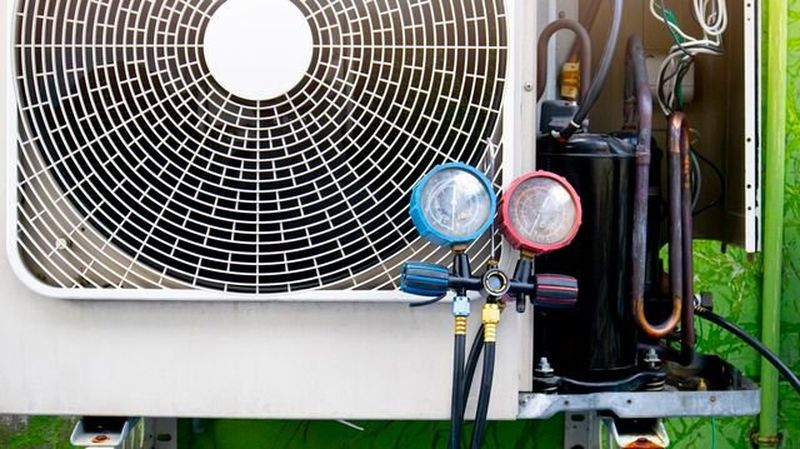
Shipping HVAC equipment can be tricky and expensive, especially for small contractors or business owners on a budget. Improper handling can lead to damage, delays, and extra costs. This guide explains step by step how to pack, transport, and ship HVAC systems safely, helping you save money, avoid mistakes, and ensure your equipment arrives on time and in perfect condition.
Table of Content:
- What Is HVAC Equipment and Why Is It Difficult to Ship?
- What Makes HVAC Equipment Shipping Different from Regular Freight?
- How Should HVAC Equipment Be Properly Packaged for Transport?
- Should You Use Pallets or Crates for HVAC Systems?
- What Is the Best Transportation Method for HVAC Equipment?
- Is Full Truckload (FTL) Better Than LTL for HVAC Shipping?
- Why Is a Dry Van Trailer Often the Best Choice?
- What Documents and Compliance Requirements Should You Prepare?
- How YK Freight manages freight coordination
- How Can You Lower HVAC Shipping Costs Without Increasing Risk?
What Is HVAC Equipment and Why Is It Difficult to Ship?
HVAC stands for Heating, Ventilation, and Air Conditioning. This includes air conditioners, heat pumps, furnaces, rooftop units, compressors, ventilation systems, and other climate control equipment. These systems are used in homes, apartment buildings, offices, warehouses, and retail spaces. In short, HVAC equipment keeps indoor spaces warm in winter, cool in summer, and comfortable all year.
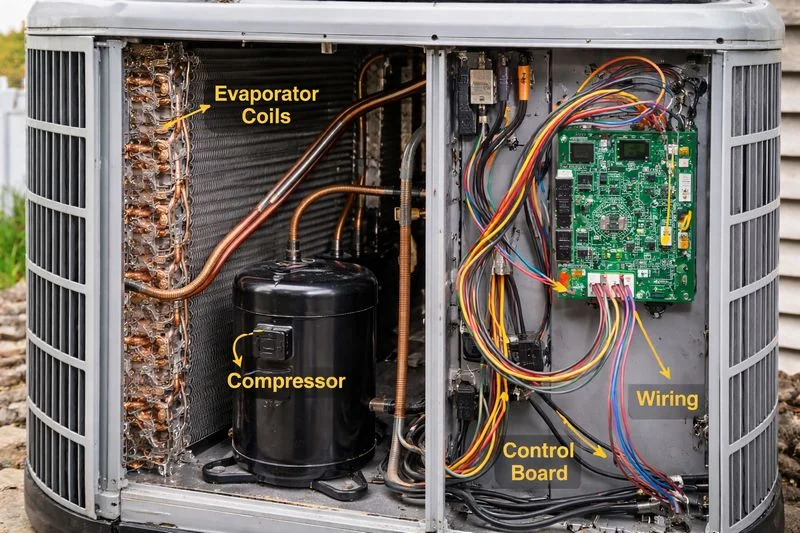
At first glance, an outdoor AC unit or furnace may look like a simple metal box. But inside, it contains delicate components — coils, compressors, wiring, control boards, and refrigerant lines. One strong impact during loading or transport can damage internal parts that are expensive to repair or replace.
 Another challenge is size and weight. Many HVAC units are bulky and heavy. A residential air conditioning condenser can weigh over 150 pounds, while commercial rooftop units can weigh several thousand pounds. Because of this, they require proper lifting equipment, secure palletizing, and careful trailer placement. Improper handling can lead not only to equipment damage but also to safety risks.
Cost is another major factor. HVAC systems are not cheap. Even a standard residential unit can cost thousands of dollars. If it arrives damaged, the buyer may reject it. That means return shipping, replacement costs, delays, and unhappy customers. For small contractors or business owners working on tight margins, one damaged unit can wipe out the profit from an entire project.
Demand for HVAC equipment also stays high year-round. In summer, customers rush to install or replace air conditioners. In winter, furnaces and heating systems are in high demand. During peak seasons, shipping capacity becomes tight. Freight rates may increase, and delivery timelines can stretch longer than expected.
What Makes HVAC Equipment Shipping Different from Regular Freight?
Shipping HVAC equipment is not the same as shipping boxes of tools or packaged consumer goods. These systems come with unique challenges that can quickly turn into costly problems if not handled correctly.
Large Dimensions and Heavy Weight
Many HVAC units are oversized and heavy. Even a standard residential condenser takes up significant space on a pallet. Commercial rooftop units can require forklifts, cranes, or loading docks for proper handling.
Because of their size, these units may:
- Require special loading equipment
- Limit how much freight fits in one truck
- Increase freight classification and shipping costs
For a small contractor trying to save money, choosing a cheaper option without checking weight limits or space requirements can lead to rebooking fees, delays, or extra handling charges.
Fragile Internal Components
Although HVAC equipment looks solid on the outside, the inside tells a different story. Coils can bend, compressors can shift, and control boards can crack if the unit is dropped or shaken during transit.
Unlike standard freight, you cannot simply “repackage” damaged HVAC equipment. If internal components are affected, the entire system may fail after installation. This creates warranty disputes, unhappy customers, and expensive replacements.
For example, a small HVAC installer may choose LTL shipping to cut costs. But if the unit is transferred between multiple terminals and gets bumped several times, the savings disappear the moment damage is discovered.
Seasonal Shipping Peaks
HVAC demand spikes during extreme weather. In summer, everyone wants air conditioning installed immediately. In winter, heating systems become urgent.
During peak seasons:
- Truck capacity becomes limited
- Freight rates increase
- Transit times may extend
If shipments are not planned in advance, businesses may end up paying premium rates for last-minute deliveries. For contractors working on tight budgets, these unexpected costs can hurt profitability.
Strict Delivery Deadlines
HVAC equipment is often tied to construction schedules or emergency replacements. A delayed shipment can stop an entire project.
How Should HVAC Equipment Be Properly Packaged for Transport?
Proper packaging is the foundation of safe HVAC shipping. No matter how good the carrier is, if the equipment is not prepared correctly, the risk of damage increases. And in most cases, packaging is the shipper’s responsibility — not the carrier’s.
If a unit is poorly secured and gets damaged during transit, the freight claim may be denied. That means the financial loss falls on you. For small contractors or business owners working with tight budgets, this is a risk you cannot afford.
Why Correct Packaging Is the Shipper’s Responsibility
Freight carriers transport what they receive. They do not rebuild packaging or reinforce unstable loads. If the unit tips over because it was not properly secured to a pallet, the carrier may argue improper packaging.
This is why preparation before pickup is critical. Spending a little more time and money upfront protects you from much larger costs later.
When to Use Pallets, Crates, or Reinforced Cardboard
The right packaging depends on the size, weight, and value of the HVAC equipment.
- Pallets are commonly used for residential units. They allow forklift access and keep the unit elevated off the floor.
- Crates offer stronger protection. They are ideal for high-value or fragile commercial systems that need extra security.
- Reinforced cardboard can protect surfaces from scratches and minor impacts but should not be the only support for heavy equipment.
For example, a contractor trying to save money might skip crating a high-end rooftop unit. But if internal components shift during transit, repair costs can be far higher than the price of the crate.
Why Shrink-Wrapping Is Important
Shrink-wrapping keeps the unit stable on the pallet. It prevents small movements that can turn into bigger problems during a long trip.
It also:
- Protects against dust and moisture
- Keeps loose parts secured
- Adds another layer of stability
However, shrink wrap alone is not enough. It must be combined with proper strapping and solid base support.
How to Prevent Shifting and Vibration Damage
Trucks move, brake, and turn. Without proper securing, HVAC equipment can shift even if it looks stable at pickup.
To prevent this:
- Use heavy-duty straps to secure the unit to the pallet
- Make sure weight is evenly distributed
- Avoid empty space inside crates
- Reinforce weak points
Vibration over hundreds of miles can loosen components. Proper stabilization reduces this risk significantly.
The Importance of Corner Protectors and Padding
Corners are the most vulnerable parts during transport. One impact can dent metal panels or damage coils behind them.
Corner protectors and foam padding:
These materials are inexpensive compared to the cost of replacing damaged equipment.
Should You Use Pallets or Crates for HVAC Systems?
Choosing between pallets and crates is one of the most important decisions when shipping HVAC equipment. Both options work — but they serve different purposes. If you are trying to control shipping costs, the key is knowing when it’s safe to save and when extra protection is worth the money.
Pallet Shipping: More Affordable and Faster
Pallet shipping is the most common option for residential HVAC equipment. It is cost-effective and allows easy handling with forklifts. Most carriers are set up to move palletized freight quickly.
Best for:
- Standard outdoor AC units
- Residential furnaces
- Light commercial equipment
When properly strapped and shrink-wrapped, pallets provide stable support. They also reduce loading and unloading time, which helps keep freight costs lower.
For example, a small HVAC contractor ordering two residential condensers for a home installation may not need full crating. If the units are factory-packaged and securely palletized, pallet shipping is usually enough.
However, pallet shipping does expose the equipment to some risk. The unit is still visible and more vulnerable to impact from other freight.
Crate Shipping: Higher Protection, Higher Cost
Crating provides an additional layer of protection. A wooden crate surrounds the equipment and shields it from external impacts. It also reduces the risk of internal shifting during transport.
Best for:
- High-value compressors
- Sensitive components
- Large commercial rooftop systems
- Long-distance or multi-stop shipments
Crates are especially useful when shipping expensive or delicate equipment that cannot afford even minor damage. Yes, crating adds to packaging costs and slightly increases weight. But for certain shipments, it can prevent major financial losses.
Imagine shipping a large commercial rooftop unit worth tens of thousands of dollars. Trying to save a few hundred dollars by skipping a crate could result in thousands in repair or replacement costs if something goes wrong.
What Works Best for Each Type of Equipment?
- Outdoor AC Units: Pallets usually work well if the unit is factory-boxed and properly secured.
- Furnaces: Pallet shipping is often sufficient for residential models. Add corner protection and proper strapping.
- Compressors: These are heavy and sensitive. Crating is often the safer choice, especially for long-distance freight.
- Large Commercial Systems: Crating is strongly recommended due to size, value, and handling risks.
What Is the Best Transportation Method for HVAC Equipment?
Choosing the right transportation method plays a major role in both cost and safety. HVAC equipment is heavy, valuable, and often time-sensitive. The wrong shipping choice can lead to delays, damage, or unnecessary expenses.
Let’s look at the main freight options and how they compare.
Truck Freight (Most Common in the US)
Truck freight is the most widely used method for domestic HVAC shipping. It offers flexibility, direct delivery, and strong protection when the right trailer is selected.
Benefits of truck freight:
- Door-to-door delivery
- Faster transit times compared to rail
- Lower cost compared to air freight
- Flexible scheduling
- Easier tracking and communication
For example, if a contractor in Texas orders AC units from a manufacturer in Georgia, truck shipping allows direct delivery to the job site or warehouse. There is no need for additional transfers between transportation modes.
Truck freight is especially practical for:
- Residential HVAC units
- Commercial systems within the US
- Shipments that need reliable delivery windows
For most budget-conscious businesses, truck shipping offers the best balance between cost and protection.
Rail Shipping
Rail freight is typically used for very large, heavy shipments moving long distances. It can be cost-effective per mile for bulk cargo.
However, HVAC equipment rarely moves exclusively by rail. In most cases, it requires truck transport before and after the rail portion. This adds extra handling steps.
More handling means:
- Higher risk of damage
- Longer transit times
- Less flexibility in scheduling
Rail may work for large-scale commercial projects shipping multiple heavy units across the country, but it is not the most practical choice for typical HVAC deliveries.
Air Freight
Air freight is the fastest option, but also the most expensive. It is usually reserved for urgent shipments, replacement parts, or emergency situations.
For example, if a critical component fails in a hospital or data center, air freight might be justified. Speed becomes more important than cost.
But for standard HVAC systems, air shipping is rarely cost-effective. The weight and size of most units make air transport very expensive.
Why Truck Shipping Is Usually the Best Choice
For domestic deliveries, truck freight is typically the most practical and budget-friendly option. It minimizes transfers, reduces handling risks, and keeps costs predictable.
Small contractors and business owners often try to save money by choosing the absolute cheapest rate available. But the real savings come from choosing the method that reduces risk while staying within budget.
Is Full Truckload (FTL) Better Than LTL for HVAC Shipping?
When shipping HVAC equipment by truck, you usually choose between Full Truckload (FTL) and Less-Than-Truckload (LTL). The right option depends on your shipment size, budget, and risk tolerance.
Both methods can work. The key is understanding the trade-offs.
What Is Full Truckload (FTL) Shipping?
FTL means your shipment fills the entire truck, or you reserve the whole trailer for your freight. The truck moves directly from pickup to delivery with minimal stops.
Why FTL reduces handling damage:
- The freight is loaded once and unloaded once
- No terminal transfers
- No mixing with other shippers’ cargo
- Less shifting and repositioning
For HVAC equipment, fewer touches mean lower damage risk.
For example, if you are shipping multiple rooftop units to a commercial job site, FTL is often the safest choice. The equipment stays in one trailer for the entire trip. That stability protects coils, compressors, and control panels.
FTL also offers more predictable delivery times. This is important if installation crews are scheduled and delays would cost you money.
The downside? FTL can cost more upfront, especially if you are only shipping one small unit.
What Is Less-Than-Truckload (LTL) Shipping?
LTL means your freight shares trailer space with shipments from other companies. You only pay for the space you use.
When LTL helps save money:
- Shipping one or two smaller residential units
- Shorter shipping distances
- Non-urgent deliveries
For a small HVAC contractor ordering a single furnace, LTL may be the most budget-friendly solution.
However, LTL involves more handling. Your equipment may:
- Be transferred between terminals
- Be moved between trucks
- Share space with heavier freight
Each transfer increases the chance of bumps, vibration, or shifting.
How Multiple Transfers Increase Risk
HVAC equipment is not like boxed retail goods. Even if the outside looks strong, internal parts can be sensitive.
With LTL shipping, freight may be:
- Loaded at the origin terminal
- Unloaded and sorted at a hub
- Reloaded onto another truck
- Possibly transferred again before final delivery
Every step adds handling. Every handling step adds risk.
For example, saving a few hundred dollars on LTL might seem smart. But if the condenser arrives with internal damage due to repeated transfers, repair or replacement costs can be far higher than the savings.
Which Option Is Right for Your Budget?
For small businesses, the decision usually comes down to balancing cost and risk.
- If you are shipping high-value commercial systems or tight-deadline projects, FTL often provides better protection and reliability.
- If you are shipping smaller, well-packaged residential units and want to reduce upfront costs, LTL can make financial sense — as long as packaging is strong.
The goal is not to automatically choose the cheapest rate. It’s to choose the option that protects your equipment and your profit.
Why Is a Dry Van Trailer Often the Best Choice?
When shipping HVAC equipment by truck, the type of trailer matters more than many people realize. Choosing the wrong trailer can expose your shipment to weather damage, shifting, or even theft. For most HVAC deliveries, a dry van trailer is the safest and most practical option.
What Is a Dry Van Trailer?
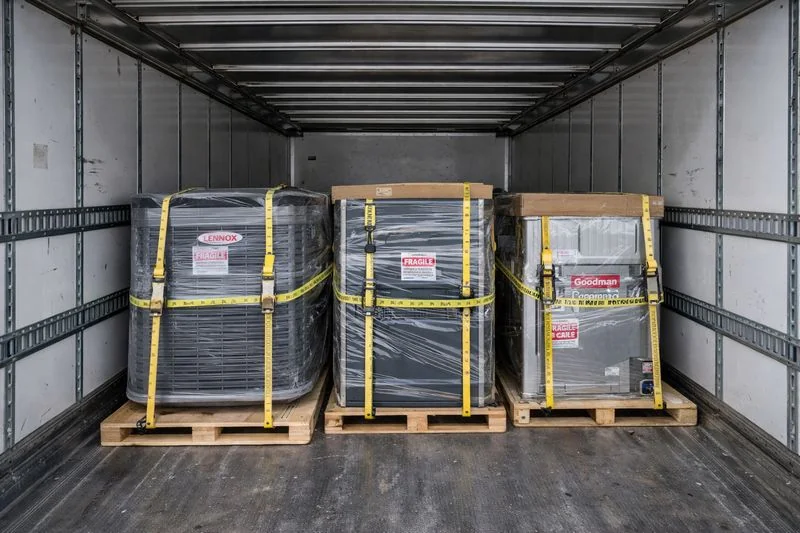
A dry van is a fully enclosed trailer with solid walls, a roof, and locking rear doors. It protects freight from outside elements and keeps the cargo secure during transit.
Inside, the trailer provides a stable, enclosed space where HVAC equipment can be properly strapped and positioned. Most domestic HVAC shipments in the US move in dry vans because they offer the right balance of protection and cost.
How a Dry Van Protects HVAC Equipment
HVAC systems are sensitive to moisture, dust, and debris. Even small exposure to rain can damage electrical components or cause corrosion.
A dry van helps by:
- Protecting against rain, snow, and road spray
- Shielding equipment from wind and debris
- Reducing exposure to extreme weather conditions
- Providing a controlled, enclosed space for secure strapping
For example, imagine shipping several air conditioning units during storm season. Using an open trailer to save a small amount of money could result in water damage. That “small savings” quickly turns into expensive repairs or rejected deliveries.
Why Open Trailers Are Risky
Flatbed or open trailers expose equipment to the environment. While they may be suitable for certain construction materials, they are risky for HVAC systems.
Risks include:
- Rain or humidity entering electrical components
- Road debris hitting coils or panels
- Tarps loosening during transit
- Higher theft risk
Even if the equipment is covered with a tarp, it is not fully sealed. Wind can shift covers, and moisture can still get inside.
For a small contractor working with limited margins, one damaged unit due to weather exposure can eliminate profit from the entire project.
When Specialized Trailers May Be Required
In some cases, specialized trailers are necessary.
Examples include:
- Oversized commercial rooftop units that exceed standard trailer height
- Extremely heavy equipment requiring reinforced flooring
- Temperature-sensitive components that need climate control
For very large or unusual shipments, a step-deck or specialized heavy-haul trailer may be required. However, these situations are less common for standard residential and light commercial HVAC systems.
Why Trailer Selection Matters
Proper trailer selection reduces two major risks: moisture damage and impact damage.
An enclosed dry van minimizes exposure to external elements and allows equipment to be tightly secured inside. Less exposure and less movement mean fewer problems at delivery.
For most HVAC shipments, a dry van offers the safest and most cost-effective solution. Trying to cut corners by choosing an open trailer may lower the freight rate slightly — but it significantly increases the risk.
What Documents and Compliance Requirements Should You Prepare?
Shipping HVAC equipment is not just about packaging and transportation. Proper paperwork is just as important. Missing or incorrect documents can delay your shipment, increase storage fees, or even cause delivery refusal.
For small contractors and business owners working on tight schedules, paperwork mistakes can be expensive.
Let’s look at the key documents you should prepare.
Bill of Lading (BOL)
The Bill of Lading is one of the most important shipping documents. It acts as:
- A receipt for the freight
- A contract between shipper and carrier
- A document listing shipment details
It includes information such as:
- Pickup and delivery addresses
- Description of the HVAC equipment
- Weight and dimensions
- Freight class
- Special handling instructions
If the BOL contains incorrect information — for example, wrong weight or freight class — you may face additional charges later. In some cases, the carrier may refuse pickup until the issue is corrected.
Accuracy here prevents billing surprises.
Commercial Invoice
If you are shipping internationally, a commercial invoice is required. Even for domestic shipments, clear pricing documentation is helpful.
A commercial invoice includes:
- Seller and buyer information
- Description of the equipment
- Unit value and total value
- Country of origin
Incorrect or incomplete invoices can cause customs delays, inspections, or additional duties. For businesses operating on project deadlines, customs delays can stop installation work entirely.
Insurance Coverage
HVAC equipment is high-value freight. Basic carrier liability coverage may not fully cover the replacement cost.
Before shipping, confirm:
- What the carrier’s liability limits are
- Whether additional cargo insurance is needed
- The declared value of the shipment
For example, if a rooftop unit worth $15,000 is damaged and the carrier’s liability only covers a fraction of that amount, you may be responsible for the difference.
Insurance may seem like an extra expense, but compared to replacing expensive equipment, it is often a smart investment.
Inspection Reports
Documenting the condition of the equipment before shipping is critical. Take clear photos at pickup showing:
- The packaging
- The pallet or crate condition
- Any visible marks or dents
This protects you if damage occurs during transit. Without proof of the original condition, it becomes harder to file a successful claim.
For small businesses, denied claims can mean absorbing the full loss.
How Missing Paperwork Increases Costs
Incomplete or incorrect documentation can lead to:
- Shipment delays
- Storage or detention fees
- Reclassification charges
- Customs holds
- Denied insurance claims
Imagine scheduling an installation crew only to find out the shipment is delayed due to paperwork errors. Labor costs increase, customers get frustrated, and project timelines shift.
In shipping HVAC equipment, paperwork is not just a formality — it is protection. Preparing accurate documents in advance helps avoid delays, unexpected fees, and financial losses.
How Can a 3PL Like YK Freight Help Reduce Shipping Risks?
Shipping HVAC equipment safely and on budget can be complicated. Between packaging, trailer selection, documentation, and tight delivery schedules, even small mistakes can become costly. That’s where a third-party logistics provider (3PL) like YK Freight comes in. They handle the complex parts of shipping so you can focus on your business.
What a 3PL Does
A 3PL acts as a bridge between shippers and carriers. They don’t just move freight — they coordinate the entire shipping process. Their role includes:
- Choosing the right transportation method
- Selecting the appropriate trailer type
- Advising on packaging and load protection
- Managing pickup and delivery schedules
For small contractors or business owners, this means you don’t have to become an expert in freight logistics overnight. YK Freight’s experience reduces the risk of damage, delays, and unexpected costs.
How YK Freight Manages Freight Coordination
YK Freight ensures every shipment moves efficiently from origin to destination. This includes:
- Booking the right carrier based on size, weight, and urgency
- Determining whether FTL or LTL is best for your budget and risk tolerance
- Coordinating pickup times to align with installation or project schedules
- Providing guidance on securing HVAC equipment for transit
For example, if you’re shipping a rooftop unit to a commercial project, YK Freight can plan a full truckload shipment with proper strapping and a dry van trailer, ensuring the unit arrives on time and undamaged.
Assistance with Warehousing, Documentation, Tracking, and Scheduling
Beyond transportation, YK Freight offers support in areas that small businesses often overlook:
- Warehousing: Temporary storage if your installation site isn’t ready
- Documentation: Handling bills of lading, commercial invoices, and insurance paperwork correctly
- Tracking: Real-time updates so you know exactly where your shipment is
- Scheduling: Coordinating delivery to match installation crews
This level of support prevents common issues like shipments sitting in terminals, missing paperwork, or units arriving after scheduled installation dates.
How Working with Experts Prevents Costly Mistakes
Without a 3PL, small businesses may make mistakes such as:
- Choosing the wrong trailer or shipping method
- Underestimating packaging needs
- Missing critical documentation
- Overlooking delivery timing
Each mistake can result in damages, delays, re-shipments, or even lost customers. With YK Freight, these risks are minimized. They help you make smart decisions, avoid unnecessary costs, and protect your profit margin.
How Can You Lower HVAC Shipping Costs Without Increasing Risk?
Shipping HVAC equipment can be expensive, especially for small contractors and business owners working on tight budgets. The key is to save money wisely, not by taking shortcuts that increase the risk of damage or delays. Here are practical tips to reduce costs while keeping your equipment safe.
Plan Shipments Before Peak Season
HVAC demand spikes in summer and winter. Waiting until the last minute means:
- Higher freight rates
- Limited truck availability
- Longer delivery times
Planning shipments ahead allows you to book lower rates and secure timely delivery. For example, ordering air conditioners a few weeks before the summer rush helps avoid premium fees and ensures your job sites stay on schedule.
Use Proper Packaging the First Time
Cutting corners on packaging might save a few dollars upfront, but it often leads to higher costs later due to damage claims or re-shipments. Properly palletizing or crating equipment, shrink-wrapping, and using padding from the start protects your freight and your budget.
For example, a contractor who properly secures a rooftop unit with corner protectors and straps avoids costly repairs if the truck hits a bump in transit.
Consolidate Freight When Possible
If you are shipping multiple units or sending equipment to the same region, consolidating shipments can save money:
- One full truckload is often cheaper than multiple LTL shipments
- Fewer trips reduce fuel costs
- Reduced handling lowers the risk of damage
Consolidation works especially well for contractors who regularly deliver to multiple project sites in the same city or state.
Compare FTL vs. LTL
Understanding when to choose Full Truckload (FTL) versus Less-Than-Truckload (LTL) helps balance cost and safety:
- FTL: Fewer handling points, lower damage risk, predictable delivery, slightly higher cost
- LTL: Cheaper for smaller shipments, but more handling can increase the risk of damage
For small shipments, LTL may make sense if the units are properly packaged. For high-value or fragile equipment, investing in FTL often prevents expensive problems later.
Work with a Reliable Logistics Partner
Partnering with an experienced logistics provider like YK Freight can help you save both time and money. They:
- Optimize shipping routes
- Recommend the best packaging and trailer types
- Handle documentation and insurance
- Track shipments and coordinate deliveries
Working with experts reduces mistakes that lead to extra costs and keeps shipments on schedule.
Smart Savings vs. Risky Shortcuts
The goal is not to cut every penny possible. Risky shortcuts — like skipping packaging steps, choosing the cheapest carrier, or shipping last-minute during peak season — often result in higher expenses down the line.
Further Reading
How to Properly Prepare a Container for Transportation
What is Intermodal Trucking?
Refrigerated Container Drayage: How to Keep Your Cargo Fresh?
Discover the Top Benefits of Intermodal Transport for Safe and Cost-Effective Shipping


ASK YOUR QUESTIONS