Shipping larger loads doesn’t have to break the bank. Volume LTL freight is a smart middle-ground between standard LTL and full truckload shipping, letting you move bigger shipments efficiently and cost-effectively. In this guide, we’ll explain what volume LTL is, how it works, and how it can save you time, money, and hassle—perfect for budget-conscious shippers.
Table of Content:
- What Is Volume LTL Freight?
- How Is Volume LTL Different from Regular LTL and FTL?
- How Can Volume LTL Save You Money?
- Can Volume LTL Speed Up Your Shipments?
- How Flexible Is Volume LTL Shipping?
- When Should You Choose Volume LTL Freight?
- What Are the Common Misconceptions About Volume LTL?
What Is Volume LTL Freight?
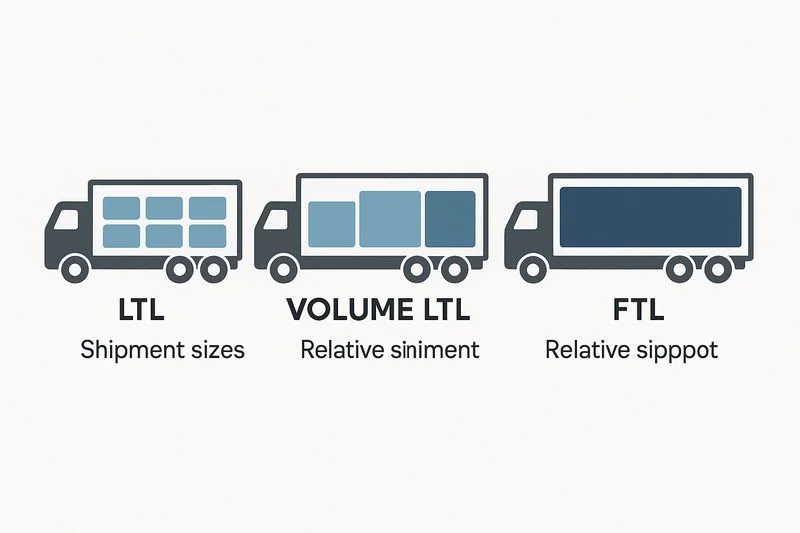
Volume LTL freight is a way to ship larger loads that don’t quite fill an entire truck. Think of it as a middle ground between standard less-than-truckload (LTL) shipping and full truckload (FTL) shipping. Unlike regular LTL, which is designed for small shipments that only take up a few pallets, volume LTL is for shipments that are bigger—usually between 6 and 30 pallets, or around 5,000 to 30,000 pounds. At the same time, it’s not enough to justify paying for a full truck.
The key difference is in how you pay and how your shipment is handled. With volume LTL, you pay only for the space your freight actually uses, rather than for an entire truck or based on freight class like in regular LTL. This means you can move bigger loads more efficiently and often at a lower cost than FTL.
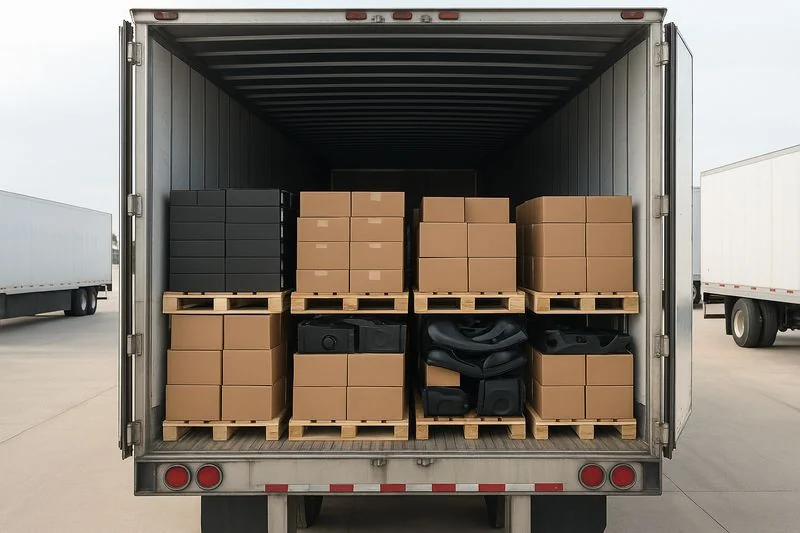
For example, imagine you need to ship 15 pallets of car parts or auto accessories to a dealership. With traditional LTL, you might have to split the shipment or pay extra because it’s too big for standard LTL. Full truckload would be too expensive for a partial load. Volume LTL lets you send all 15 pallets at once, pay only for the space they take, and save money compared to booking a whole truck. YK Freight makes this process simple, providing clear pricing and a smooth shipping experience for shippers who want to move more without overspending.
How Is Volume LTL Different from Regular LTL and FTL?
Volume LTL sits between regular less-than-truckload (LTL) shipping and full truckload (FTL) shipping. Understanding the differences can help you decide which option works best for your shipments.
Regular LTL is designed for small shipments—usually just a few pallets or less than 5,000 pounds. Your freight is combined with other shipments in the same truck, and carriers often calculate the cost based on freight classification, which depends on factors like density, value, and fragility. Because LTL loads make multiple stops along the route, transit times can be longer, and your cargo is handled more often.
Full truckload (FTL), on the other hand, is when you rent an entire truck for your shipment, even if you don’t fill it. FTL is ideal for very large shipments, but it can be expensive for partial loads. You pay for the full truck regardless of whether you use all the space.
Volume LTL fills the gap between these two. It’s meant for shipments larger than standard LTL but smaller than a full truck—usually between 6 and 30 pallets, weighing 5,000–30,000 pounds, or occupying 12–53 linear feet of trailer space. You can move a bigger load without paying for a full truck and without splitting your shipment into multiple LTL orders.
How Can Volume LTL Save You Money?
One of the biggest reasons shippers choose volume LTL is the cost savings. Unlike full truckload (FTL) shipping, where you pay for the entire truck regardless of how much space you use, volume LTL allows you to pay only for the space your shipment actually occupies. This can make a huge difference, especially if you’re moving larger loads but don’t need a full truck.
Another benefit is upfront spot pricing. With YK Freight, you get a clear price for your shipment before it even leaves the dock. There are no surprises or hidden fees that can add up after delivery. This transparency helps budget-conscious shippers plan their expenses and avoid unexpected costs, which is particularly important when shipping valuable or bulky items like auto parts.
For example, imagine you need to ship 12 pallets of car accessories to a regional dealership. Booking a full truck would be expensive, while splitting the shipment into multiple LTL orders could increase both cost and transit time. With volume LTL, you can send all 12 pallets in one shipment, pay only for the space you use, and know the total cost upfront. This way, you save money and avoid the hassle of multiple shipments or expensive full-truck pricing.
Can Volume LTL Speed Up Your Shipments?
Volume LTL can also help you move shipments faster compared to regular less-than-truckload (LTL) shipping. Standard LTL often makes multiple stops at terminals along the route to drop off and pick up other shipments. Each stop adds extra handling time and can delay delivery. Volume LTL, on the other hand, usually travels dock-to-dock, meaning your freight goes directly from the pickup location to the delivery destination with fewer stops along the way.
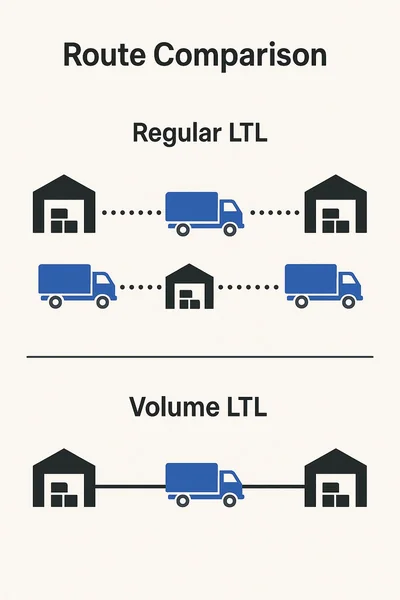
This faster transit isn’t just convenient—it also reduces the risk of damage. With standard LTL, freight is loaded and unloaded multiple times, increasing the chance of scratches, dents, or other issues. Fewer stops mean your shipment stays safer, which is especially important for fragile or high-value items like auto parts, car accessories, or specialty tools.
For example, if you’re sending 10 pallets of aftermarket car parts to a dealership, regular LTL could take several extra days as the shipment is routed through multiple terminals. With volume LTL through YK Freight, your shipment goes straight from your warehouse to the dealership, arriving faster and with less handling. This not only saves time but also gives you peace of mind knowing your freight is less likely to be damaged in transit.
How Flexible Is Volume LTL Shipping?
Volume LTL shipping is a flexible solution for shippers who want more control over their shipments without paying for a full truck. With standard LTL, you may face long transit times, density-based pricing, and complicated freight class calculations. Full truckload (FTL) shipments, while faster, often require lengthy negotiations and commitment to pay for an entire truck—even if you don’t need all that space. Volume LTL lets you avoid these common headaches.
With YK Freight, you get visibility and adaptability throughout the shipping process. You can track your shipment, know exactly how much space you’re paying for, and adjust your plans as needed. This is especially helpful for businesses that ship irregular or seasonal loads.
For example, imagine you need to send 18 pallets of auto parts to a regional garage. A full truckload would be costly and more than you need, while splitting the load into multiple LTL shipments could take extra time and increase handling. With volume LTL, you can ship all 18 pallets at once, pay for the space you actually use, and enjoy a simpler, more predictable process.
When Should You Choose Volume LTL Freight?
Volume LTL is a great option when your shipment is too big for standard LTL but not large enough to fill a full truckload. This “middle ground” makes it perfect for shippers who want to save money while still moving larger loads efficiently.
Ideal scenarios include:
- Budget-conscious shipping: If you’re trying to move multiple pallets of auto parts, car accessories, or tools without paying for an entire truck, volume LTL lets you pay only for the space you use.
- Seasonal shipments: During busy periods, like holiday promotions or end-of-year sales, volume LTL can help you send larger quantities quickly without the high cost of FTL.
- Multiple orders in one shipment: If you regularly ship to dealerships, garages, or parts distributors, volume LTL allows you to consolidate shipments, saving both time and money while reducing handling.
For example, a small auto parts reseller may need to send 12 pallets to several regional garages. Using volume LTL through YK Freight, they can send the shipment in one go, avoid splitting orders, and pay a fair rate for the space they use. This approach is both cost-effective and practical, making it an excellent choice for shippers who want bigger shipments without the full-truck price.
What Are the Common Misconceptions About Volume LTL?
Even though volume LTL has been around for a while, many shippers still have misconceptions about it. Clearing these up can help you see why it might be the right choice for your shipments.
Myth 1: “Volume LTL is only for large businesses.”
Some people think that only big companies with huge shipping needs can use volume LTL. The truth is, it’s perfect for smaller shippers too. Even if you’re sending 6–30 pallets of auto parts or accessories, you can take advantage of volume LTL pricing. It’s flexible enough to suit businesses of all sizes, from small resellers to regional dealerships.
Myth 2: “Volume LTL is more expensive than regular LTL.”
Another common misconception is that volume LTL costs more than standard LTL. In reality, because you pay only for the space your shipment takes, volume LTL is often cheaper than full truckload and can even be more cost-effective than splitting shipments into multiple LTL orders. Plus, with YK Freight, you get upfront pricing with no hidden fees, which makes it easier to budget and plan your shipments.
For example, a small auto parts shop might need to ship 10 pallets to a neighboring state. Instead of booking two smaller LTL shipments or a full truck, volume LTL allows them to send all 10 pallets in one go at a clear, fair rate. This demonstrates that volume LTL is practical, affordable, and accessible for anyone looking to ship larger loads without overpaying.
Further Reading
What Does LTL Mean?
What is FTL in Trucking?
How Many Pallets is LTL?
What Is Partial Truckload Shipping? Benefits, Costs & Is It Right for You?


ASK YOUR QUESTIONS