Shipping a car or goods can be confusing with terms like FOB appearing on every invoice. Understanding FOB (Free on Board) helps you know who’s responsible, who pays for shipping, and when liability transfers. This guide breaks it down in simple terms, so you can avoid surprises, save money, and ship confidently with YK Freight.
Table of Content:
- What Does FOB Stand For in Freight Shipping?
- Why Does FOB Matter for Your Shipments?
- How Is FOB Used in Freight Shipping?
- What’s the Difference Between FOB and CIF Agreements?
- How Do Origin and Destination Points Affect Liability?
- What Do Freight Collect and Freight Prepaid Mean?
- How Can Understanding FOB Help You Save on Shipping?
What Does FOB Stand For in Freight Shipping?
FOB stands for “Free on Board,” a common term used in freight shipping to show when ownership and responsibility for a shipment transfer from the seller to the buyer. Simply put, it tells you who is liable for the goods at different points of the shipping process.
Sometimes people see the term “Freight on Board” and assume it’s the same thing, but that term is not officially recognized in shipping regulations. Only Free on Board (FOB) is defined in recognized legal frameworks like Incoterms (international commercial terms) and the Uniform Commercial Code (UCC) in the United States. This makes FOB the standard term shippers use worldwide to avoid confusion and clearly outline responsibilities.
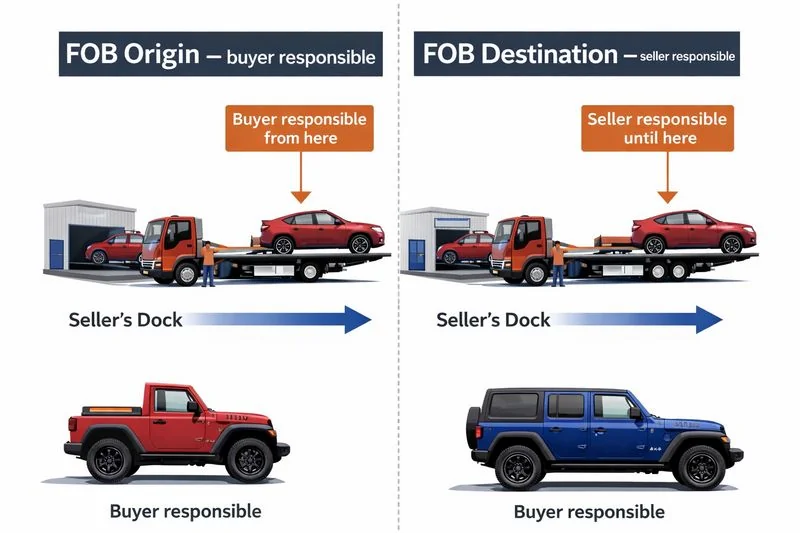
For example, if you are buying a used car from an auction in another state and plan to ship it with YK Freight, the FOB term in your contract will tell you exactly when the car becomes your responsibility. If it’s an FOB origin shipment, you’re responsible for the car as soon as it leaves the seller’s dock. If it’s FOB destination, the seller retains responsibility until the car reaches your location. Knowing this helps prevent unexpected costs if the shipment is lost or damaged during transport.
Why Does FOB Matter for Your Shipments?
Understanding FOB is crucial because it tells you who is responsible for your shipment, who pays the shipping costs, and when the liability for the goods transfers from the seller to you. Without this knowledge, you could end up paying for damage you shouldn’t be responsible for, or dealing with confusing claims if something goes wrong during transport.
For example, imagine you bought a used car from an online auction and arranged shipping with YK Freight. If your contract says FOB Origin, the moment the car leaves the seller’s location, the responsibility for it is yours. That means if the car gets damaged while in transit, you handle the claim or repairs. On the other hand, if it’s FOB Destination, the seller is responsible until the car arrives at your doorstep. Only after delivery does the liability transfer to you.
Knowing FOB terms also affects how shipping costs are handled. Depending on the agreement, either the buyer or the seller may pay for transportation. Understanding this prevents surprises on your invoice and helps you plan your budget more accurately.
How Is FOB Used in Freight Shipping?
FOB is never used alone. It is always paired with an origin or destination point and a payment term, which is either freight collect or freight prepaid. These details tell you who is responsible for the goods and who pays for shipping at different stages of transport. Understanding this can save you money and prevent confusion when shipping cars, parts, or other cargo with YK Freight.
Here are the four main FOB combinations:
-
FOB Origin (Freight Collect)
- The buyer is responsible for the shipment as soon as it leaves the seller’s location.
- The buyer also pays for shipping costs.
- Example: You buy a used car from an auction in another state. The car leaves the seller’s lot, and you are now responsible for it during transit. If the car gets damaged, you handle the claim, and you also pay YK Freight for transportation.
-
FOB Origin (Freight Prepaid)
- The buyer is still responsible for the goods once they leave the seller, but the seller pays for the shipping costs upfront.
- Example: You purchase a car, and the auction covers the YK Freight shipping charges. You are liable for any damage after the car leaves the seller’s location, but you don’t pay the shipping invoice.
-
FOB Destination (Freight Collect)
- The seller is responsible for the goods until they reach your location, but you pay for the shipping.
- Example: Your car is shipped via YK Freight with this term. If the car is damaged during transit, the auction or seller handles claims. However, you pay YK Freight once the car arrives.
-
FOB Destination (Freight Prepaid)
- The seller is responsible for both the goods and the shipping costs until the shipment arrives at your location.
- Example: The auction arranges and pays YK Freight to deliver your car safely. Any damage or loss during transit is the seller’s responsibility. You only take ownership once the car is delivered.
What’s the Difference Between FOB and CIF Agreements?
Many people confuse FOB with CIF, but they are very different terms in freight shipping. FOB (Free on Board) mainly defines when liability for the goods transfers from the seller to the buyer. It tells you who is responsible for the shipment and who pays shipping costs at each stage.
CIF (Cost, Insurance, Freight), on the other hand, is more comprehensive. Under a CIF agreement, the seller is responsible for the cost, insurance, and freight of the shipment until it reaches the buyer’s destination. This means the seller covers both shipping expenses and insurance, protecting the goods from loss or damage during transit.
Here’s a simple example:
- You buy a used car through an online auction and arrange shipping with YK Freight.
- If the contract is FOB Origin, you become responsible for the car as soon as it leaves the seller’s location. Any damage during transit is your responsibility, and you may need to handle claims or repairs yourself.
- If the contract is CIF, the seller pays for YK Freight shipping and insurance. You only take responsibility when the car arrives at your location. If anything goes wrong in transit, the seller’s insurance covers it.
How Do Origin and Destination Points Affect Liability?
In freight shipping, the point of origin and the destination point are key in determining who is responsible for the shipment at each stage. These points work together with FOB terms to show exactly when liability transfers from the seller to the buyer. Understanding this can prevent confusion and costly mistakes, especially when shipping vehicles or other valuable cargo through YK Freight.
- Origin Point: If the FOB term specifies the origin, the buyer becomes responsible for the goods as soon as they leave the seller’s location. This means that any damage or loss during transit is the buyer’s responsibility.
- Destination Point: If the FOB term specifies the destination, the seller retains responsibility until the shipment reaches the buyer’s location. The buyer only assumes liability once the shipment is delivered safely.
Example 1 – FOB Origin: You buy a used car from an online auction and ship it with YK Freight under FOB Origin. The car leaves the seller’s lot, but during transport, it gets damaged in an accident. Since liability transferred at the point of origin, you handle the claim and cover any repair costs.
Example 2 – FOB Destination: The same car is shipped under FOB Destination. If it gets damaged before arriving at your location, the seller is responsible for filing the claim and covering repair costs. You only take ownership once the car is delivered safely.
What Do Freight Collect and Freight Prepaid Mean?
When you see freight collect or freight prepaid on a shipping document, it tells you who pays for the transportation and who is responsible for the cargo during transit. These terms work hand in hand with FOB to make it clear who handles costs and liability.
- Freight Collect: The receiver (buyer) pays for the shipping. Responsibility for the cargo depends on whether the shipment is FOB Origin or FOB Destination. For example, if the shipment is FOB Origin and freight collect, you pay YK Freight for the delivery and take responsibility as soon as the car leaves the seller’s location.
- Freight Prepaid: The shipper (seller) pays for the shipping. Again, liability is determined by the FOB term. If the shipment is FOB Destination and freight prepaid, the seller pays YK Freight and remains responsible for the car until it reaches you. You only assume ownership once the car is delivered safely.
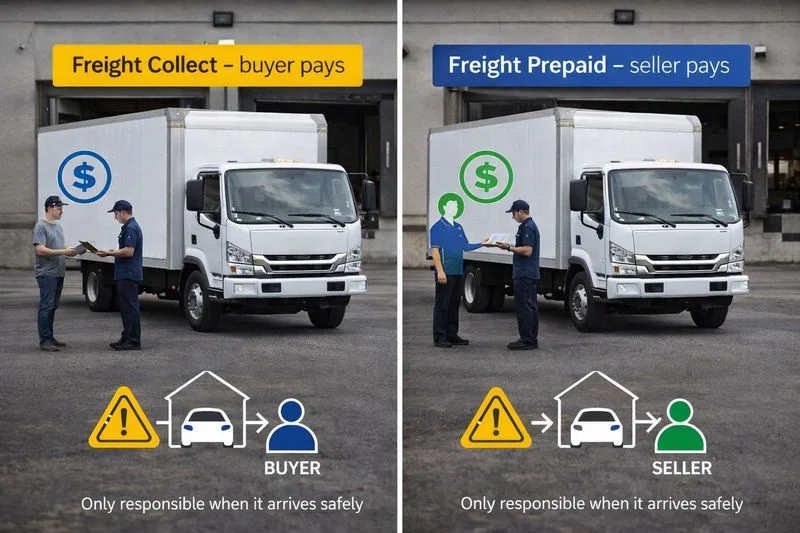
Example: You purchase a used car at an online auction and arrange shipping with YK Freight.
- If the auction sets freight collect, you pay the shipping invoice. If the car is FOB Origin, the moment it leaves the auction lot, it’s your responsibility during transit.
- If the auction sets freight prepaid, the auction pays the shipping costs. If the car is FOB Destination, the seller is responsible for the car while it’s in transit. You only take ownership when the car arrives at your location.
How Can Understanding FOB Help You Save on Shipping?
Knowing how FOB works isn’t just about understanding legal terms—it can directly help you save money when shipping vehicles or other goods, especially if you’re on a budget and using services like YK Freight. By choosing the right FOB terms, you can control who pays for shipping, who handles risk, and how much you might spend on insurance or claims.
Here are some practical tips:
-
Pick FOB Origin if You Can Handle Transit Responsibility:
- If you’re comfortable managing your shipment once it leaves the seller’s location, choosing FOB Origin can sometimes lower the overall cost. The seller only handles the loading and initial shipping steps, and you might be able to negotiate better shipping rates with YK Freight or another carrier.
-
Choose FOB Destination for Peace of Mind:
- If you’d rather avoid the risk of damage during transit, FOB Destination shifts responsibility to the seller until the shipment reaches you. This can save you money on potential repairs or claims if something goes wrong. For budget-conscious buyers, avoiding unexpected costs is just as important as saving on shipping itself.
-
Combine FOB with Freight Prepaid or Collect Smartly:
- By understanding freight collect vs. prepaid, you can plan your payments and responsibilities. For example, if you can cover shipping upfront, freight prepaid with FOB Destination ensures the seller handles any issues along the way, while you only pay for the car itself. This can prevent surprise expenses.
Example 1: You buy a used car from an online auction. The auction offers FOB Origin, Freight Prepaid. YK Freight handles the shipping costs, but you are responsible for the car as soon as it leaves the auction lot. You can save by choosing a carrier with competitive insurance or taking extra care during transit.
Example 2: You choose FOB Destination, Freight Collect. The seller is responsible for the car during transport, so if it’s damaged, the seller files the claim. You only pay YK Freight once the car arrives safely, avoiding unexpected repair bills.
Understanding FOB gives you control over both risk and cost. By carefully choosing the right FOB terms for your shipments with YK Freight, you can save money, avoid headaches, and ensure your cars or goods arrive safely.
Further Reading
What is Freight and Logistics?
What Does LTL Mean?
What is FTL in Trucking?
What is a Broker in Transportation?


ASK YOUR QUESTIONS