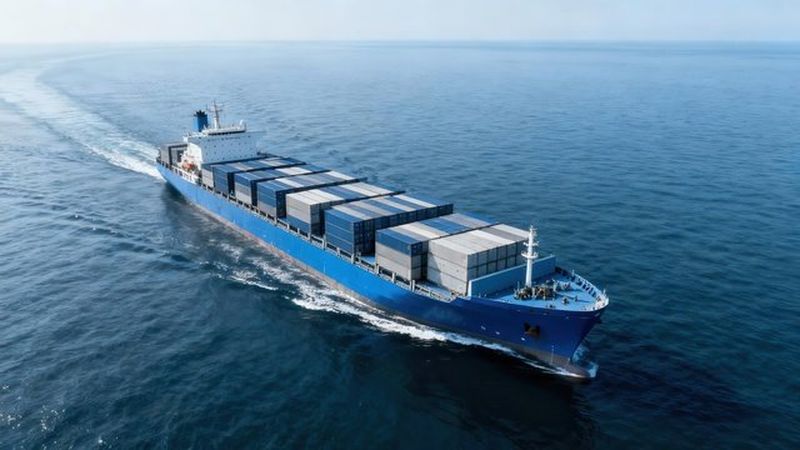
Shipping small cargo overseas doesn’t have to be expensive. LCL freight shipping lets you share container space and pay only for what you use. This guide explains what LCL is, how it works, and when it’s the smartest choice for budget-conscious buyers shipping car parts or small auto items internationally. Learn how to save money, avoid delays, and make shipping simple.
Table of Content:
- What Is LCL Shipping and How Does It Work?
- What Does LCL Stand For in Shipping?
- How Is LCL Different From FCL Shipping?
- How Are LCL Shipping Costs Calculated?
- What Are the Main Benefits of LCL Shipping?
- What Are the Drawbacks of LCL Shipping?
- When Should You Choose LCL Freight Shipping?
- How Can YK Freight Help With LCL Shipping?
What Is LCL Shipping and How Does It Work?
LCL shipping, or Less-Than-Container Load, is a way to ship goods by sea when you don’t have enough items to fill a full container. Instead of renting an entire container for yourself, your shipment shares space with other people’s cargo. The total cost of the container is divided among all the shippers, which makes it much more affordable for small shipments.
For budget-conscious buyers, LCL is a practical choice. Imagine you need to ship a few car parts from an auction overseas, like a set of tires, an engine component, or some auto accessories. Paying for a full container would be expensive because most of the space would be empty. With LCL, you only pay for the space your items take up, which can save a lot of money.
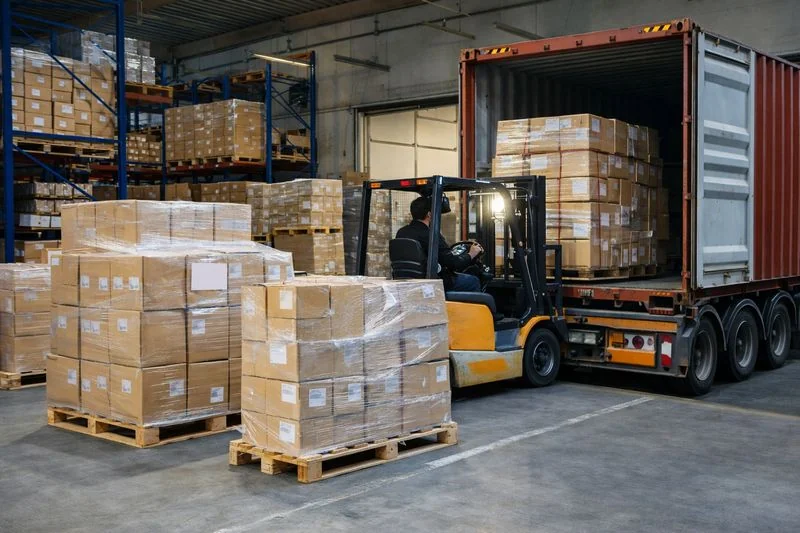
Here’s how it works in practice: you book your shipment with a provider like YK Freight, pack your goods securely, and deliver them to the consolidation warehouse. At the warehouse, your items are combined with shipments from other buyers. The full container is then sent to the destination port. Once it arrives, your goods are separated and delivered to your final address.
What Does LCL Stand For in Shipping?
LCL stands for “Less-Than-Container Load.” In simple terms, it means your shipment doesn’t take up a full shipping container—it only uses part of it. The remaining space in the container is shared with other shipments, and the total shipping cost is split among all the shippers.
A good way to understand LCL is to compare it to road freight. Many people are familiar with LTL, or “Less-Than-Truckload.” LTL works the same way for trucks: if you don’t have enough goods to fill an entire truck, your shipment shares space with others, making the cost more affordable. LCL is simply the sea freight version of this concept.
For example, if you’re shipping car parts, small engines, or auto accessories from the U.S. to another country, you likely won’t need a full container. LCL lets you pay only for the space your shipment occupies, just like LTL saves money when you ship a few pallets by truck instead of an entire vehicle.
How Is LCL Different From FCL Shipping?
LCL and FCL are two main ways to ship goods by sea, and the difference comes down to how much of the container you use.
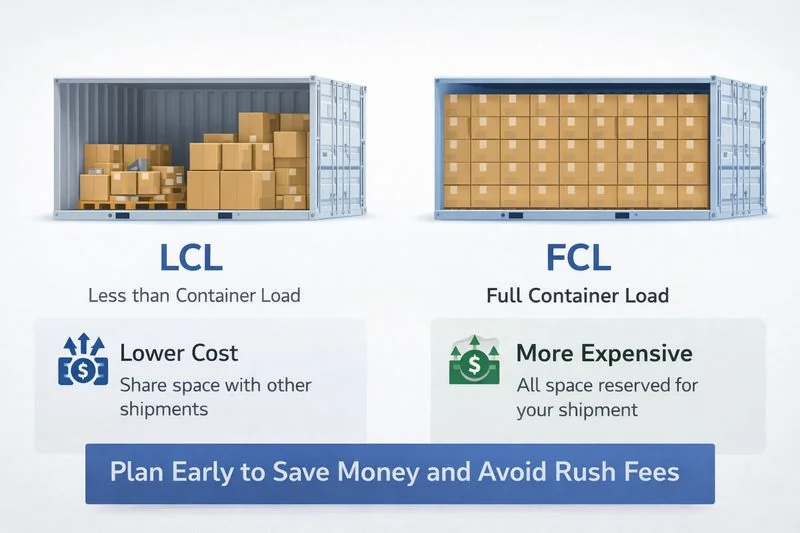
FCL, or Full Container Load, means you rent the entire container exclusively for your shipment. You control all the space inside, so nothing else is added. This is ideal if you have a large shipment or items that need special handling. FCL is generally cheaper per cubic meter when you fill most of the container because you’re paying for full capacity.
LCL, or Less-Than-Container Load, is when your shipment only uses part of a container and shares the space with other shippers. You pay only for the volume your items take up. While LCL costs more per cubic meter than FCL, it’s the better option for small shipments that wouldn’t fill a container.
For example, imagine you want to ship a single car engine part overseas. Using FCL would be expensive because you’d pay for an entire container that mostly stays empty. With LCL, your part shares space with other shipments, so you pay only for what you use. On the other hand, if you are shipping a full batch of car engines or multiple large auto parts that fill most of a container, FCL would be cheaper and more efficient.
How Are LCL Shipping Costs Calculated?
LCL shipping costs are calculated mainly based on volume, measured in cubic meters (CBM), rather than just weight. This is because sea containers can carry extremely heavy shipments, but space inside the container is limited. Your cost depends on how much room your goods take up, not only how heavy they are.
For budget-conscious buyers, understanding this is key to saving money. For example, if you’re shipping a few car parts or small auto accessories, LCL is often the cheaper option because you’re only paying for the space your items occupy. But if your shipment is large—say, over 10 CBM—it usually becomes more cost-effective to book an FCL (Full Container Load). At that point, the cost per cubic meter for the container may be less than paying for multiple LCL shipments.
Here’s a simple way to check: measure the length, width, and height of your shipment in meters, then multiply them to get the cubic meters (CBM). Compare this with the container size and the LCL rate per CBM. If your shipment is close to or exceeds 10 CBM, you should consider an FCL to save money.
For example, shipping a small engine part that takes up 2 CBM is cheaper via LCL, because you’re sharing a container. But shipping 12 CBM of auto parts in multiple boxes would be more affordable using a full container.
What Are the Main Benefits of LCL Shipping?
LCL shipping offers several advantages, especially for budget-conscious buyers who don’t need a full container. Here’s why it can be a smart choice:
1. Cost-efficient for small shipments
Since you only pay for the space your items take up, LCL is much cheaper than booking a full container for a small load. For example, if you’re shipping a few car parts or auto accessories from a U.S. auction, LCL allows you to share container space with other buyers and avoid paying for unused space.
2. Sea freight is cheaper than air freight for long distances
While air shipping is fast, it’s often very expensive, especially for heavier items. LCL shipping by sea offers a much more affordable alternative for long-distance or international shipments. You save money on transport without sacrificing reliability, making it ideal for buyers on a budget.
3. Flexible and available capacity
LCL shipments can be booked even if you don’t have enough cargo to fill a full container. This flexibility means you can ship whenever you’re ready without waiting to accumulate more items. It also helps when demand spikes at certain times, like during busy auction seasons, because you can still secure space in a shared container.
4. Ideal for long-distance or international shipments
LCL is perfect when you need to move goods across countries or continents but don’t have a large shipment. For example, shipping a small batch of auto parts from a U.S. auction to Europe or Asia is much easier and cheaper using LCL, because you only pay for your share of the container.
What Are the Drawbacks of LCL Shipping?
While LCL shipping is a cost-effective option for small shipments, it does come with some potential downsides that buyers need to consider. Understanding these drawbacks helps budget-conscious shippers plan better and avoid surprises.
1. Longer transit times due to consolidation
Since LCL shipments share a container with goods from other shippers, the container must often be loaded, unloaded, and consolidated at different warehouses before it reaches its destination. This can make transit times longer compared to shipping a full container (FCL), which goes directly from origin to destination. For example, a small car part shipped via LCL might take a few extra days or even a week longer than a full container shipment.
2. More handling increases the risk of minor damage
Because LCL shipments are consolidated with multiple other packages, your items are handled more often. They may be moved between warehouses or shifted within the container to make room for other cargo. While most carriers take precautions, there is a slightly higher chance of scratches or minor damage compared to FCL, where your shipment stays in a single container from start to finish.
3. Not ideal for high-volume shipments
If your shipment is large or close to filling a container, LCL becomes less cost-effective. Paying per cubic meter for a big shipment can end up more expensive than booking a full container, and the added handling can slow delivery.
When Should You Choose LCL Freight Shipping?
LCL freight shipping is a great option in certain situations, but it’s not the right choice for every shipment. Knowing when to use it helps budget-conscious buyers save money and avoid delays.
1. Best for small, heavy, non-urgent shipments
LCL works well when your shipment is too small to fill a container but still has significant weight. For example, if you’re shipping a few car engines, tires, or other auto parts from an auction overseas, LCL lets you pay only for the space your items take up instead of a full container. Because consolidation takes time, it’s best for shipments that are not extremely time-sensitive.
2. Ideal when cost is more important than speed
Sea freight is slower than air shipping, and LCL can take even longer due to consolidation. However, the cost savings are significant. If your priority is keeping shipping expenses low, LCL is an excellent choice. For instance, sending a small batch of auto accessories from the U.S. to Europe may take a few extra days compared to air shipping, but it will cost a fraction of the price.
3. Not suitable for fragile or high-volume freight
LCL involves more handling because shipments are loaded, unloaded, and shifted within containers alongside other cargo. Fragile items are at higher risk of damage, so LCL is not recommended for delicate auto parts. Similarly, if your shipment is large enough to nearly fill a container (over about 10 CBM), it’s usually cheaper and safer to book a full container (FCL).
How Can YK Freight Help With LCL Shipping?
Shipping small volumes by sea can be complicated, especially when you’re sharing a container with other buyers. That’s where YK Freight comes in. They simplify the entire LCL shipping process, making it easier, faster, and more affordable for budget-conscious buyers.
1. Planning shipments efficiently
YK Freight helps you plan your LCL shipment from the start. They can advise on the best shipping schedules, the right container space, and whether LCL is the most cost-effective option compared to a full container. This early planning helps avoid rush fees and storage charges at auctions or warehouses.
2. Coordinating container space
One of the biggest challenges in LCL shipping is coordinating with other shipments in the same container. YK Freight manages this for you, ensuring your cargo fits safely and efficiently alongside other items. This coordination reduces delays and makes sure your shipment moves smoothly from origin to destination.
3. Handling documentation
International LCL shipping requires paperwork like bills of lading, customs forms, and export documents. YK Freight handles all of this, helping prevent costly mistakes that can cause delays or additional fees. You don’t have to worry about complex forms or tracking multiple submissions—YK Freight keeps everything organized.
4. Tracking shipments
With YK Freight, you can track your LCL shipment throughout the entire journey. Knowing exactly where your cargo is at each stage reduces uncertainty and helps you plan for delivery. If any issue arises, YK Freight can act quickly to resolve it, minimizing delays and extra costs.
In short, YK Freight takes the stress out of LCL shipping. By planning carefully, coordinating space, handling all the paperwork, and providing real-time tracking, they help small buyers save time, avoid mistakes, and keep shipping costs as low as possible. For anyone shipping car parts or small auto cargo overseas, this support makes international shipping practical and affordable.
Further Reading
What Does LTL Mean?
What Is Cargo Consolidation and How It Saves You Money on Shipping
What is Managed Transportation?
Reducing Logistics Costs: Tips from YK Freight Expert


ASK YOUR QUESTIONS