The US-China trade war has reshaped global shipping and retail, affecting prices, delivery times, and product availability. For budget-conscious buyers and vehicle shippers, understanding these changes is crucial to avoid unexpected costs. This guide breaks down how tariffs, supply chain shifts, and international trade disruptions impact shipping and retail, helping you make smarter, more cost-effective decisions.
Table of Conent:
- Why Did the US-China Trade War Start Affecting Retail First?
- How Did Higher Tariffs Change Prices for US Retailers and Consumers?
- Which Major US Retailers Were Hit the Hardest by the Trade War?
- Why Can’t Retailers Easily Move Manufacturing Out of China?
- What Did Industry Experts Say About China’s Long-Term Manufacturing Role?
- How Did the Trade War Disrupt International Shipping Routes?
- How Did the US-China Trade War Affect Shipping Between the US and Canada?
- Why Did Some Canadian Industries Benefit From the Trade War?
- What Challenges Do Canadian Manufacturers Still Face Despite the Benefits?
- Which Countries Benefited Most From the US-China Trade Conflict?
- What Does This Mean for Budget-Focused Vehicle Shipping Customers?
- How Can Shippers Adapt to Trade War Uncertainty Today?
Why Did the US-China Trade War Start Affecting Retail First?
The US-China Trade War began with rising political and economic tensions between the United States and China. The main issue was trade imbalance. The U.S. argued that China was exporting far more goods than it imported and that American companies were losing money and jobs because of it.
To push back, the U.S. introduced import tariffs on Chinese products. These were not small fees. At one point, about $250 billion worth of Chinese goods were hit with tariffs as high as 25%. That meant any company importing those products had to pay much more just to bring them into the country.
Retail was affected first because it sits at the end of the supply chain. Retailers import finished goods, not raw materials. When tariffs were added, the cost jumped immediately. There was no buffer.
Even more important, the tariffs targeted everyday items:
- Clothing
- Shoes
- Electronics
- Household goods
These are products people buy all the time. They also rely heavily on Chinese manufacturing because China can produce large volumes at low cost and stable quality. When tariffs hit these goods, retailers had no easy alternatives.
For small and mid-size businesses, this was especially painful. Imagine a store owner who imports electronics accessories. Overnight, their import costs rise by 20–25%. They have two bad options:
Big retailers faced the same problem, just on a larger scale. They couldn’t change suppliers quickly, and they couldn’t stop importing without empty shelves.
How Did Higher Tariffs Change Prices for US Retailers and Consumers?
When the US-China Trade War led to 25% tariffs on roughly $250 billion worth of Chinese goods, the impact on prices was almost immediate. These tariffs were paid at the border, not by factories in China, but by U.S. importers. That detail matters, because it explains why prices inside the U.S. went up so fast.
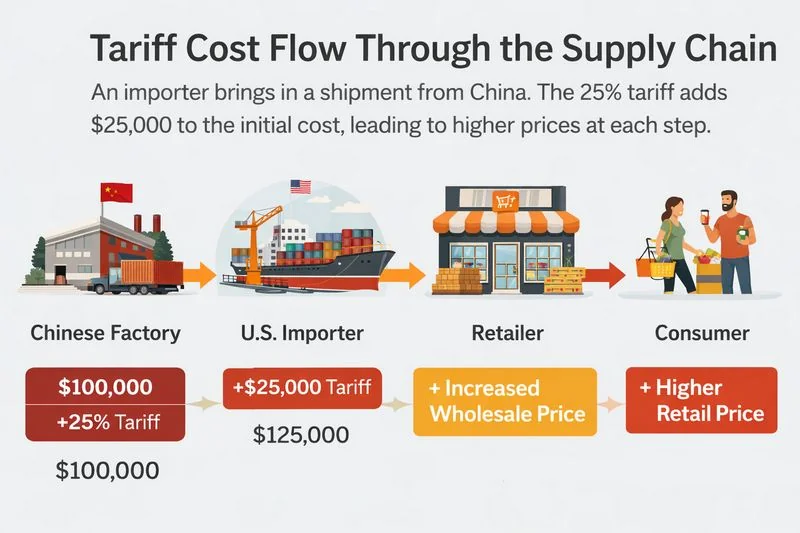
Here’s how the cost moved through the supply chain.
A retailer orders products from China at an agreed price. When the shipment arrives in the United States, customs applies a 25% tariff. The importer must pay that fee before the goods are released. On a $100,000 shipment, that’s an extra $25,000 upfront — cash out of pocket.
Retailers rarely absorb this cost for long. Their margins are already thin. Instead, the higher expense is passed step by step:
- Importers raise wholesale prices
- Retailers pay more to stock shelves
- Final prices increase for consumers
This is why everyday items like electronics, clothing, and home goods became more expensive, even though demand didn’t change.
For consumers on a tight budget, the effect was noticeable. A laptop costs $50–$100 more. Shoes go on sale less often. Discounts shrink or disappear. The price jump doesn’t look dramatic at once, but it adds up over time.
Smaller retailers were hit the hardest. They lack negotiating power and don’t import at massive scale. Some had to cut inventory, delay shipments, or stop selling certain products altogether. Larger chains could spread the cost across thousands of stores, but even they couldn’t fully hide the increase.
Shipping costs added another layer of pressure. Higher tariffs reduced overall trade volume, leading to fewer sailings and less stable freight rates. For customers importing vehicles or goods internationally, this meant higher delivery costs and less predictable pricing — exactly the kind of risk budget-conscious buyers try to avoid.
Which Major US Retailers Were Hit the Hardest by the Trade War?
The US-China Trade War didn’t just hurt small businesses. Some of the biggest U.S. retailers also felt serious pressure. Even well-known brands with strong supply chains struggled once tariffs started raising costs across the board.
Large department stores were among the first to show problems. Macy’s and Nordstrom both saw sales drop by around 7%. These stores rely heavily on imported apparel, shoes, and accessories — exactly the categories hit by tariffs. When costs went up, they couldn’t raise prices too much without pushing customers away.
Electronics retailers were hit even harder. Best Buy reported declines close to 10%. Electronics are complex products with parts sourced from multiple countries, but final assembly often happens in China. Tariffs increased costs fast, and electronics buyers are very price-sensitive. Even a small price increase can delay a purchase.
Office supply chains faced similar issues. Office Depot also saw sales fall by about 10%. Many everyday office products — cables, printers, accessories — come from China. These items don’t have large profit margins, so absorbing tariff costs wasn’t an option.
So why did even big brands struggle?
First, they couldn’t switch suppliers overnight. Years of production were tied to Chinese factories. Moving manufacturing takes time, money, and risk.
Second, customers changed behavior. When prices rose, people delayed purchases, waited for sales, or bought less. Budget-conscious shoppers felt the pressure first.
Third, inventory planning became harder. Retailers didn’t know if tariffs would increase again, so many reduced imports. That led to fewer products on shelves and weaker sales.
Why Can’t Retailers Easily Move Manufacturing Out of China?
When the US-China Trade War raised tariffs, many people assumed retailers would simply move production out of China. In reality, this turned out to be far more difficult than expected.
The biggest reason is cost versus quality. China offers a balance that few countries can match. Factories can produce large volumes, keep quality consistent, and meet tight deadlines — all at competitive prices. Even when wages rise, efficiency and scale keep total costs low.
Another major factor is deep, established supply chains. In China, everything is close together:
- Raw materials
- Component suppliers
- Assembly plants
- Ports and logistics hubs
This setup reduces delays and transport costs. If one supplier has a problem, another is often nearby. Few countries offer this level of integration.
Some retailers tried moving production to Vietnam or Cambodia. These moves worked only in limited cases, mostly for basic products like simple clothing items. But even there, problems appeared:
- Limited factory capacity
- Higher logistics costs
- Less experience with complex products
For more advanced goods — electronics, accessories, outerwear — alternatives were scarce. Many factories outside China depend on Chinese components anyway. That means tariffs still affect costs, just in a different way.
There is also the issue of time and risk. Setting up a new factory relationship takes years. Retailers must train workers, test quality, and ensure reliability. For big brands importing millions of units, one mistake can mean empty shelves and lost revenue.
What Did Industry Experts Say About China’s Long-Term Manufacturing Role?
According to industry experts, the US-China Trade War may have changed pricing, but it did not change the fundamentals of global manufacturing. One of the clearest explanations came from Sheng Lu, Associate Professor of Fashion and Apparel Studies at the University of Delaware.
His key point is simple: tariffs make Chinese goods more expensive, but they don’t make China easy to replace.
China remains highly competitive because of its ability to handle complex and large-scale production. For basic items like T-shirts, underwear, or simple pants, U.S. retailers can shift orders to other countries more easily. That’s why some sourcing moved to places like Vietnam or Cambodia.
But when it comes to more sophisticated products, the situation changes fast. Items such as outerwear, accessories, electronics, or products with many components require advanced skills, stable quality control, and reliable timelines. Very few countries can match China in all these areas at once.
Another reason China stays strong is speed and flexibility. Chinese manufacturers can adjust production quickly, scale orders up or down, and meet tight shipping deadlines. For retailers, this reduces risk. Delays or quality issues can cost millions, especially during peak seasons.
Professor Lu also pointed out that short-term shifts don’t equal long-term change. Even if some orders move away from China, rebuilding the same manufacturing ecosystem elsewhere would take many years and massive investment. Until then, China remains the most dependable option for many retailers.
How Did the Trade War Disrupt International Shipping Routes?
The US-China Trade War didn’t just change prices — it disrupted how goods physically move around the world. Once tariffs were introduced, shipping routes that had worked smoothly for years became unstable almost overnight.
The first problem was uncertainty. Importers didn’t know when new tariffs might start or increase. To avoid higher costs, many rushed shipments before deadlines. This caused sudden spikes in cargo volume, port congestion, and delays. After that rush, volumes dropped sharply, forcing carriers to cancel sailings or reduce capacity.
These changes led to rerouted cargo flows. Shipping lines shifted vessels away from U.S.–China routes to other markets they saw as more profitable. Fewer ships on key routes meant less space and higher prices for the cargo that still needed to move.
Freight costs went up for several reasons:
- Less available vessel capacity
- Higher operational risk for carriers
- Longer and less direct routes
- Congested ports and longer storage times
Even when tariffs didn’t apply directly to shipping services, the knock-on effect was real. Moving goods became slower and more expensive.
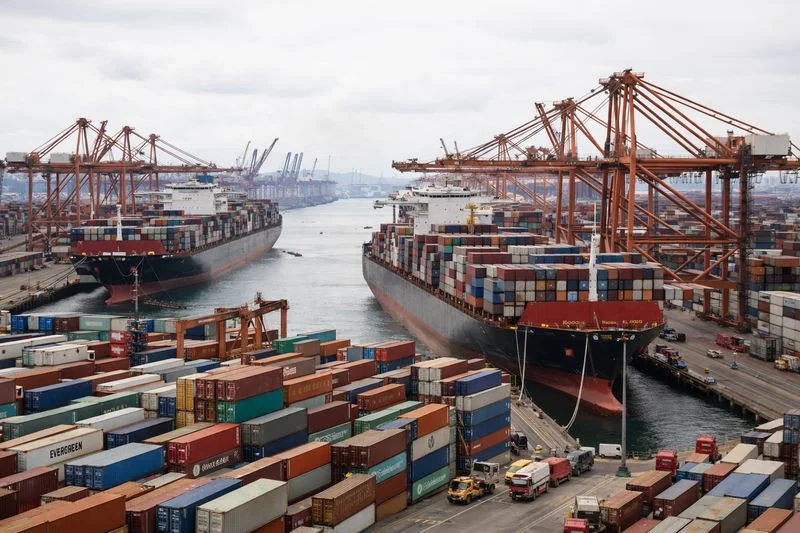
For vehicle shipping, the impact was especially noticeable. Cars, trucks, and heavy equipment depend on predictable schedules and specialized vessels. When routes changed or sailings were canceled, vehicles waited longer at ports. Storage fees increased. Delivery timelines became harder to guarantee.
This is where experienced logistics providers like YK Freight play a critical role. When trade disruptions hit, simply booking the cheapest route no longer works. Shipments may need to move through alternative ports, different countries, or adjusted schedules to avoid delays and control costs.
For budget-conscious customers shipping vehicles, the trade war meant:
- Higher freight quotes with little warning
- Longer transit times
- More importance placed on planning and flexibility
How Did the US-China Trade War Affect Shipping Between the US and Canada?
The US-China Trade War changed trade flows not only between the United States and China, but also along the northern border with Canada. Once tariffs pushed U.S. prices higher, shipping patterns between the U.S. and Canada began to shift in noticeable ways.
For Canadian buyers, American goods became more expensive. U.S. retailers importing Chinese products had to raise prices, and Canadian importers felt that increase when buying from the U.S. Add cross-border shipping costs and taxes, and many U.S. products stopped making financial sense. As a result, Canadian businesses and consumers started looking for alternatives.
One option was buying locally. Higher prices on imported electronics, clothing, and household goods made Canadian-made products more attractive. This helped local retailers and reduced some cross-border shipping demand.
Another option was going directly to China. Some Canadian companies realized it was cheaper to import goods straight from Chinese suppliers instead of buying the same products through U.S. distributors who were already paying tariffs. This redirected shipping volumes away from U.S. routes and toward direct Asia–Canada lanes.
On the other side of the border, U.S. consumers reacted differently. As prices rose at home, Canadian goods looked like better deals. Lower prices on similar products encouraged more U.S. buyers to purchase from Canada, increasing southbound shipments. This created new opportunities for Canadian exporters but also added pressure to cross-border logistics.
For shipping companies, this meant less predictable trade flows. Some routes slowed down, others picked up. Planning became harder, transit times less consistent, and pricing more volatile.
Why Did Some Canadian Industries Benefit From the Trade War?
While the US-China Trade War created challenges for many businesses, it also opened doors for certain Canadian industries. One of the clearest examples is the seafood sector, especially fishing and lobster exports.
Before the trade war, the United States was a major supplier of lobster to global markets, including China. Once tariffs were imposed, U.S. lobster became more expensive for Chinese buyers. Demand didn’t disappear — it simply shifted.
This is where Canada stepped in.
Canadian lobster exporters were not hit by the same tariffs, which made their products more price-competitive overnight. Chinese importers, restaurants, and wholesalers turned to Canadian suppliers to avoid higher costs. As a result, demand for Canadian lobster surged, pushing prices to record levels.
The fishing industry benefited in several ways:
- Higher export volumes
- Stronger international demand
- Better pricing power for producers
For Canadian fishing companies, this was a rare advantage during a global trade disruption.
However, this benefit was industry-specific. It worked because Canada could supply a product that global buyers still wanted, without the added tariff burden. Other sectors with similar conditions also saw gains, particularly those exporting raw or minimally processed goods.
That said, the advantage didn’t apply to everyone. Canadian manufacturers who import components from China and then export finished goods to the U.S. still faced tariffs. So while fishing and seafood exports thrived, other industries continued to struggle.
What Challenges Do Canadian Manufacturers Still Face Despite the Benefits?
While some Canadian industries, like fishing and lobster exports, saw a boost from the US-China Trade War, not all sectors benefited. Canadian manufacturers that import components from China and then export finished products to the U.S. faced serious challenges, despite being geographically close to the U.S. market.
The main issue is tariffs on Chinese goods. Even if a Canadian company assembles products domestically, many components — electronics, textiles, and specialized parts — still come from China. Tariffs raise the cost of these imported inputs, which squeezes profit margins. For example:
- A Canadian electronics manufacturer importing screens and chips from China must pay higher fees at customs.
- The finished product’s cost rises, making it harder to compete in the U.S. market.
Shipping complexity also increased. Carriers, ports, and freight forwarders had to adjust to:
- Changing trade flows
- New customs procedures
- Higher rates for shipments containing Chinese components
For companies relying on just-in-time inventory, delays in parts from China can halt production lines, creating additional storage costs or forcing rushed, expensive shipping alternatives.
Even though Canada had some advantages, these manufacturers couldn’t escape the ripple effects of the trade war. Profits were squeezed, delivery schedules became less predictable, and logistical planning became more critical.
For budget-conscious customers and businesses shipping goods — including vehicles — this meant extra attention was required. Working with experienced logistics providers like YK Freight became essential to navigate cross-border shipments efficiently, reduce unexpected fees, and keep delivery timelines on track.
Which Countries Benefited Most From the US-China Trade Conflict?
The US-China Trade War created challenges for many businesses, but it also opened opportunities for other countries that could act as alternative suppliers or shipping hubs. When U.S. companies faced higher tariffs on Chinese goods, they began looking elsewhere to source products, creating a ripple effect across global trade.
Australia, Mexico, Brazil, Canada, Taiwan, and Vietnam were among the biggest beneficiaries. Here’s how each gained:
- Australia and Brazil: These countries supplied raw materials and agricultural goods that were in demand but not subject to high tariffs. U.S. importers seeking to diversify away from China found new partners in these regions.
- Mexico: With its proximity to the U.S., Mexico became an attractive alternative for manufacturers who wanted to avoid shipping delays and high tariffs. Many companies shifted production or sourcing to Mexico to maintain faster turnaround times and reduce costs.
- Canada: As discussed earlier, Canadian industries such as seafood exports gained directly from shifting global demand. Additionally, Canadian manufacturers acting as intermediaries for Chinese components or final products sometimes benefited by stepping into supply chain gaps.
- Taiwan and Vietnam: Both countries became key alternatives for electronics and apparel manufacturing. Vietnam, for example, could handle some basic clothing and footwear production previously dominated by China, while Taiwan supplied specialized components and electronics at competitive quality and cost.
The common advantage across these countries was the combination of:
- Lower tariffs or none at all, making their products cheaper for U.S. and global buyers.
- Existing manufacturing or export infrastructure, allowing them to scale quickly.
- Strategic location, which reduced shipping times and costs compared to sourcing from China under tariffs.
For logistics and vehicle shipping, this shift also affected trade routes. Carriers, including YK Freight, had to adjust schedules, ports, and cargo priorities to accommodate changing flows. New export hubs meant more options for shipping goods efficiently, but also more planning to navigate evolving routes and regulations.
What Does This Mean for Budget-Focused Vehicle Shipping Customers?
The US-China Trade War didn’t just impact retail stores or manufacturers — it also changed the way vehicles and other goods move across the globe. For budget-conscious customers shipping cars, trucks, or heavy equipment, these shifts have very real consequences.
First, freight rates increased. Tariffs and disrupted trade flows meant fewer available vessels on certain routes and higher demand for others. As a result, shipping costs rose, sometimes unexpectedly. For someone importing a vehicle from Asia or even Canada, the final invoice could be significantly higher than anticipated.
Second, port congestion and route changes became common. Shipping lines adjusted schedules, canceled sailings, or redirected cargo to alternative ports to avoid bottlenecks. This meant longer transit times, more paperwork, and sometimes additional inland transport — all of which added to the overall cost and complexity.
Third, delivery timelines became less predictable. Budget-conscious shippers planning for a specific arrival date could suddenly face delays of days or even weeks. For buyers relying on timely delivery to meet sales deadlines, registration deadlines, or seasonal demand, this unpredictability was a real problem.
That’s where an experienced logistics partner like YK Freight becomes invaluable. With knowledge of global shipping trends, port conditions, and alternative routing options, YK Freight can help customers:
- Identify the most cost-effective shipping routes
- Plan shipments to avoid peak congestion periods
- Navigate customs efficiently to reduce delays
- Bundle or consolidate shipments to save money
In practical terms, working with an experienced provider can mean the difference between paying hundreds of dollars extra or keeping your vehicle shipping costs under control. For anyone trying to save money without sacrificing reliability, understanding these global trade shifts and choosing the right logistics partner is essential.
How Can Shippers Adapt to Trade War Uncertainty Today?
The US-China Trade War has made global shipping more unpredictable, but there are practical strategies for shippers — especially those trying to keep vehicle shipping costs low — to navigate this uncertainty effectively. Here are key ways to adapt:
1. Flexible Routing
Shipping routes that were once predictable can now face delays or cancellations. By being flexible, shippers can choose alternative paths or ports to avoid congestion. For example, if the usual port in Los Angeles is overcrowded, a car shipment could be rerouted through Houston or Vancouver. This flexibility helps avoid storage fees and unexpected delays.
2. Early Booking
With fewer vessels available on high-demand routes, waiting until the last minute can be costly. Booking shipments early guarantees space and often locks in better rates. For budget-conscious customers, early planning prevents sudden price spikes caused by limited availability.
3. Consider Alternative Ports
Some ports handle cargo more efficiently under current trade conditions. Smaller or less congested ports can save both time and money. YK Freight can help identify these alternatives, ensuring vehicles reach their destination faster and at lower cost.
4. Strategic Planning
Understanding global trade patterns and potential tariff changes allows shippers to plan smarter. This can include:
- Consolidating shipments to maximize container usage
- Timing imports around seasonal surges or off-peak periods
- Monitoring customs updates to avoid delays
5. Work With Experienced Logistics Partners
An experienced partner like YK Freight provides insight and guidance. They can:
- Recommend cost-effective shipping methods
- Handle paperwork and customs efficiently
- Alert customers to potential delays or additional charges
For someone shipping a car internationally, these steps make a real difference. They help avoid surprise fees, reduce waiting times at ports, and ensure shipments arrive safely and on budget.
Further Reading
Reducing Logistics Costs: Tips from YK Freight Experts
How to Optimize Your Oil and Gas Supply Chain for Cost and Efficiency
Spot Market vs Contract Freight Rates: How to Save on Shipping
3 Reasons to Use a 3PL for Your Retail Supply Chain


ASK YOUR QUESTIONS