Choosing the right system to manage shipments can save time, money, and stress. This guide explains API vs EDI in simple terms, helping you understand which integration method fits your supply chain, reduces delays, and keeps deliveries smooth and cost-efficient with YK Freight.
Table of Content:
- What Are API and EDI, and Why Do They Matter in Supply Chains?
- What Is an API and How Does It Work?
- What Is EDI and How Does It Work?
- API vs EDI: Which Is Better for Your Supply Chain?
- How Can Choosing the Right Integration Save Money and Time?
- How YK Freight Uses Integration to Make Deliveries Smarter and Cheaper
What Are API and EDI, and Why Do They Matter in Supply Chains?
Supply chains today involve many moving parts — warehouses, carriers, software systems, and customers all need to stay in sync. To make sure deliveries happen on time and costs stay low, these systems need to exchange information quickly and accurately. This is where integration comes in.
Integration allows different systems to “talk” to each other, sharing data about shipments, inventory, orders, and delivery status. Without it, businesses face delays, duplicate paperwork, miscommunication, and higher costs — problems that directly affect anyone trying to ship a car or goods on a budget.
Two major technologies handle this integration: APIs (Application Programming Interfaces) and EDI (Electronic Data Interchange). Both serve the same purpose — moving information between systems — but they do it in very different ways. Choosing the right method can make your supply chain faster, more reliable, and cheaper, while using the wrong one can create headaches and extra costs.
What Is an API and How Does It Work?
An API, or Application Programming Interface, is like a bridge that lets different software systems communicate with each other in real time. In supply chains, this means orders, shipment updates, and inventory information can flow automatically between carriers, warehouses, and customers without delays or manual input.
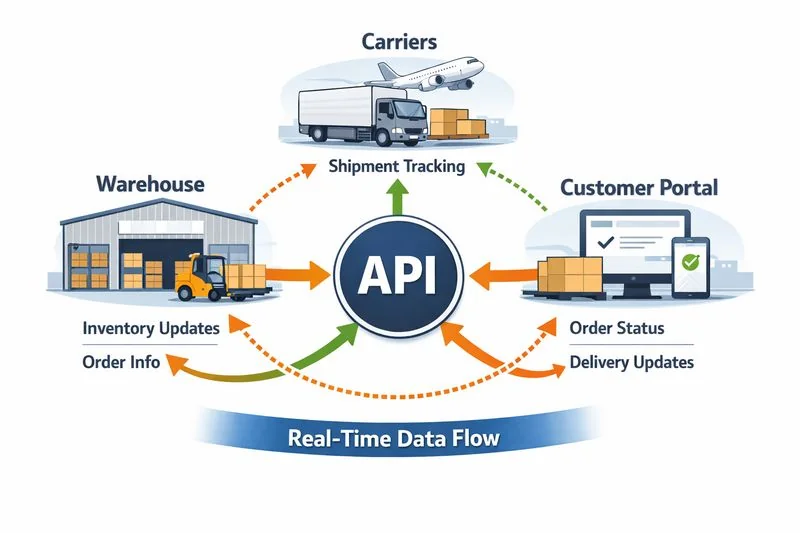
For example, with an API, a client shipping a car can see live updates on their vehicle’s location, and the logistics team can automatically update multiple platforms at once. There’s no need to create custom software or manually send spreadsheets to different partners. APIs make these processes faster, more flexible, and often more cost-efficient than older methods, helping save time and reduce errors in deliveries.
What Are the Advantages of Using APIs?
APIs offer several key benefits for supply chains:
- Real-time updates: Shipment statuses, inventory changes, or route adjustments happen instantly. For a customer, this means knowing exactly when their car will arrive without constant follow-ups.
- Faster data transfer: Information moves immediately between systems, cutting delays and preventing miscommunication.
- Easier integration with multiple partners: APIs can connect warehouses, carriers, and online platforms without custom-built software for each connection.
- Scalability: As your shipping volume grows, APIs can handle more data and more partners without major changes to the system.
A practical example: YK Freight can sync delivery updates directly to the customer’s account, allowing real-time tracking while also optimizing routes for fuel efficiency, saving both time and money.
What Are the Challenges of APIs?
While APIs are powerful, they also come with some considerations:
- Initial setup: Integrating an API requires technical work, which can take time and planning.
- Varying quality: Not all APIs are well-built, and poor-quality integrations can cause errors or downtime.
- Technical expertise: Some knowledge is needed to maintain and troubleshoot the system.
- Possible hidden costs: While cheaper in the long run, API adoption can have upfront development costs.
For small-budget clients or occasional shipments, a complex API may not be necessary. Sometimes, simpler solutions like EDI or manual updates are sufficient, keeping costs low while still maintaining reliable deliveries.
What Is EDI and How Does It Work?
EDI, or Electronic Data Interchange, is an older method for exchanging structured data between systems. First developed in the 1970s, it has been the backbone of supply chain communication for decades. Using EDI, companies can send shipment orders, invoices, confirmations, and other standardized documents electronically between partners without manual input.
Despite being older technology, EDI is still widely used because it is reliable and simple. For businesses that prefer proven methods over new technology, EDI provides a familiar, stable way to handle data. Many carriers and smaller logistics operations continue to rely on EDI to manage shipments efficiently, even if it lacks some of the speed and flexibility of modern APIs.
What Are the Advantages of Using EDI?
EDI has several benefits, especially for established or low-tech operations:
- Cost-effectiveness for existing processes: Once set up, EDI allows businesses to exchange data without investing in new software.
- Simplicity: EDI systems are straightforward to operate and require less technical expertise than APIs.
- Compatibility with many carriers: Because it’s been around for decades, most carriers and partners can work with EDI.
For example, a smaller shipment company shipping a few cars a month can continue using EDI to send orders and invoices without paying for complex API integration or extra software development. It’s a low-cost, dependable solution for occasional or routine shipments.
What Are the Limitations of EDI?
While reliable, EDI comes with some downsides:
- Slower processing: EDI typically doesn’t provide real-time updates. Customers or partners may wait for batch reports instead of seeing live shipment status.
- Limited flexibility: Making changes or adapting to new partners often requires extra setup and may not support modern digital features.
- Extra manual work: Tracking shipments can involve manual checks, spreadsheets, or follow-ups, which can be frustrating for clients shipping cars or goods on a budget.
API vs EDI: Which Is Better for Your Supply Chain?
Choosing between an API and EDI depends on your shipping needs, budget, and how often you move goods. Both technologies help different systems exchange information, but they do it in very different ways.
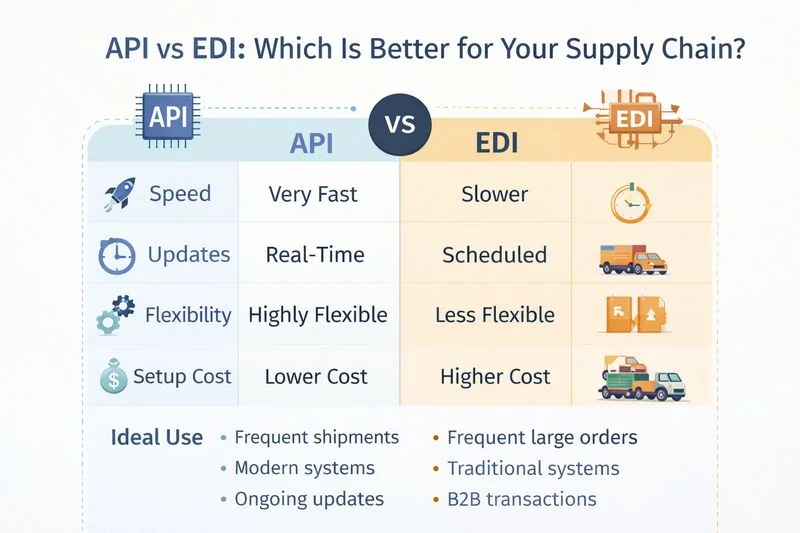
APIs are faster and more modern. They allow real-time updates, instant communication between systems, and easy integration with multiple partners. This makes APIs ideal for businesses with frequent shipments, multiple partners, or customers who want live tracking and fast notifications. For example, a logistics company handling daily car deliveries across states can use APIs to automatically update order statuses, optimize routes, and reduce fuel costs.
EDI, on the other hand, is simpler and low-cost. It works well for businesses that don’t need real-time updates or complex integrations. Smaller operators or occasional shippers benefit from its stability and reliability without investing in new software. For instance, someone shipping a single car a few times a month may find EDI sufficient for sending orders, invoices, and confirmations without the need for an API.
How to Choose the Right Option?
- Shipment volume: High-volume shippers benefit from APIs; low-volume shippers may prefer EDI.
- Frequency of shipments: Daily or weekly deliveries favor real-time API updates; occasional shipments are fine with EDI.
- Budget: APIs may require initial investment and technical support, while EDI is generally cheaper to maintain.
How Can Choosing the Right Integration Save Money and Time?
Selecting the right integration system — whether an API or EDI — can directly impact efficiency, costs, and customer satisfaction in your supply chain. The right choice ensures information flows smoothly between systems, reduces errors, and speeds up processes, all of which save both time and money.
For example, using an API for real-time updates can eliminate duplicate paperwork. Instead of manually entering shipment details in multiple systems, data is automatically shared between the warehouse, carrier, and customer. This reduces errors, saves labor hours, and prevents delays caused by miscommunication.
Similarly, faster order confirmations allow logistics teams and customers to plan better. A car owner knows immediately when their vehicle is scheduled for pickup or delivery, while the carrier can adjust routes and schedules to avoid unnecessary trips.
Better tracking of shipments is another key benefit. APIs provide live updates, while even EDI allows consistent batch updates, helping businesses identify potential delays early and respond quickly. Fewer delays mean lower fuel costs, fewer overtime hours for staff, and improved reliability for customers.
How YK Freight Uses Integration to Make Deliveries Smarter and Cheaper
At YK Freight, integration tools like APIs and EDI are used to streamline operations and improve delivery efficiency. By connecting different systems — from warehouses to carriers to customer portals — YK Freight ensures that shipment data flows smoothly and accurately at every step.
For example, real-time updates through APIs allow drivers to follow optimized routes, reducing fuel consumption and travel time. At the same time, EDI continues to handle routine documentation like invoices and confirmations efficiently for clients who don’t need real-time tracking.
These integration practices help reduce delays and prevent errors, so shipments arrive on time and in good condition. Customers benefit from faster updates, reliable schedules, and lower operational costs, all without paying extra. Even those shipping on a tight budget can enjoy smarter, smoother, and more cost-effective deliveries.
By combining modern APIs with reliable EDI systems where appropriate, YK Freight balances speed, accuracy, and cost savings, ensuring every shipment — from occasional car deliveries to frequent high-volume orders — is handled efficiently.
Further Reading
What is Managed Transportation?
Digital vs. Human: Will Online Services Replace Freight Brokers in Shipping?
How Technology Is Changing Truck Drivers’ Lives and Improving Shipping Costs
How Blockchain Transforms Logistics: Faster, Safer, and More Affordable Shipping


ASK YOUR QUESTIONS